Six Application Scenarios for Aluminum Foil Woven Vacuum Laminate
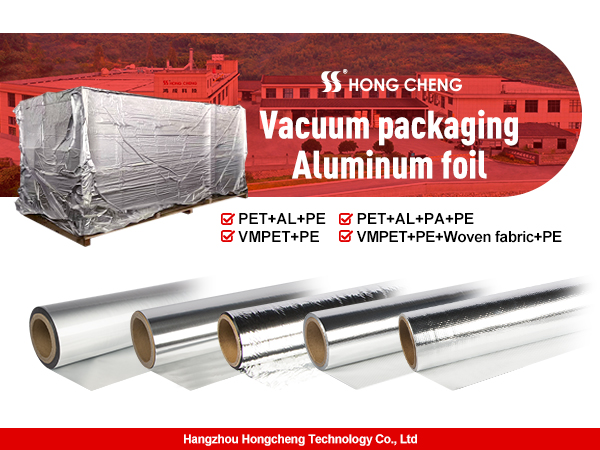
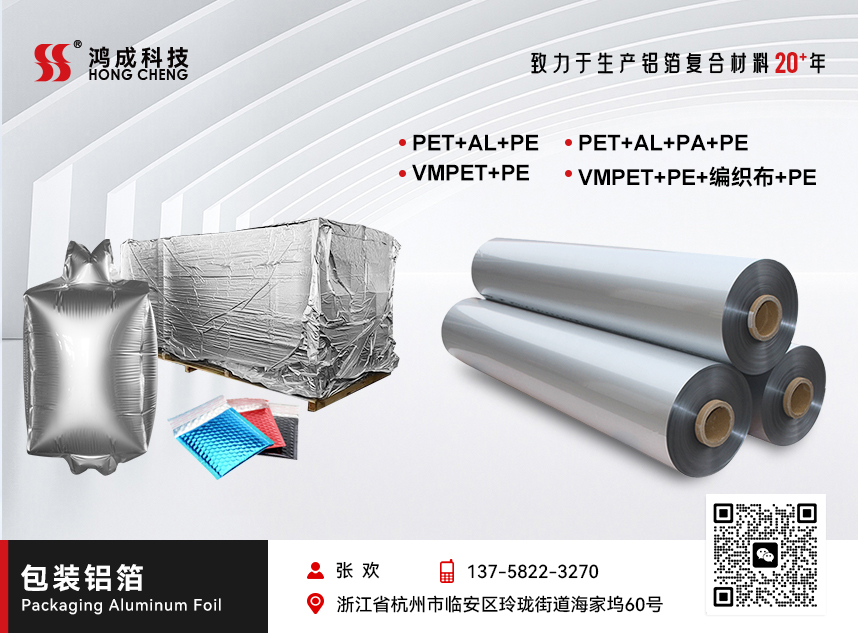
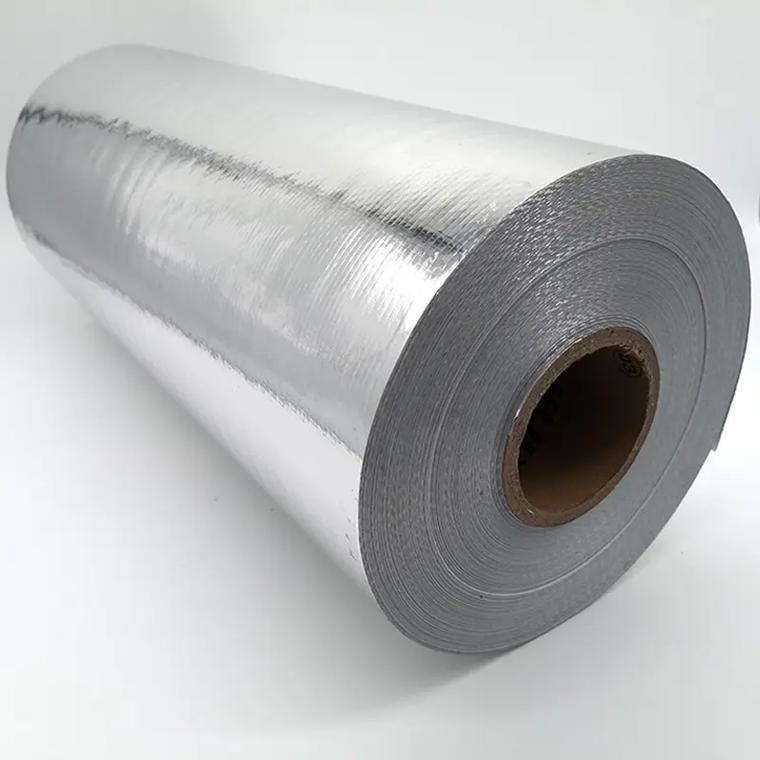
In industrial export and long-distance logistics, moisture, oxygen, salt spray and mechanical impact are the main causes of cargo damage. Aluminum foil woven vacuum laminate — typically PET/AL/PE or AL/PE bonded to woven fabric — combines high barrier performance, puncture resistance and tear strength, making it the core material for vacuum packaging heavy machinery, precision instruments and chemical raw materials. Hangzhou Hongcheng Technology Co., Ltd. supplies aluminum-plastic composite film rolls to bag makers, packaging engineering companies and export traders as a raw material supplier; we do not manufacture finished vacuum bags. The following six real-world scenarios help buyers select the right structure for their applications.
Pure aluminum foil laminate offers excellent barrier but limited mechanical strength. By laminating foil to woven polypropylene or polyethylene fabric, the material gains tear resistance and puncture resistance without sacrificing the moisture and gas barrier that aluminum provides.
- Ocean Export of Heavy Machinery
Machine tools, construction equipment and wind-power components are heavy, bulky and subject to long ocean transits. These loads require high water-vapor barrier, high puncture resistance and high tensile strength. A PET/AL/PE plus high-strength woven fabric composite is recommended: PET provides printability and mechanical protection, the aluminum foil layer at the conventional 6μm-9μm thickness (heavy grade 9μm) provides the main barrier, and the PE layer enables heat sealing and bonding to the woven fabric. Woven fabric weight typically ranges from 80g/m² to 140g/m²; heavy equipment should use 120g/m² or more to resist sharp edges during lifting and container loading.
Ocean containers experience wide temperature swings; as air cools, moisture condenses on cargo surfaces, a phenomenon known as container rain. A well-specified aluminum foil woven laminate keeps the internal relative humidity below the corrosion threshold, especially when combined with a calculated amount of desiccant. For shipments lasting 30-60 days, the laminate's water vapor transmission rate should be well below 0.5 g/m²·day at 38°C and 90% RH.
- Precision Instruments and Electronic Components
Semiconductor equipment, optical instruments and controllers are sensitive to static electricity, dust and micro-vibration, so flexibility and cleanliness matter more than extreme puncture resistance. AL/PE or VMPET/PE film can be used as the inner liner, with an outer woven fabric layer for cushioning. Aluminum thickness can be reduced to 6μm, but pinhole rate and surface resistance must be tightly controlled. Buyers should request dust-free slitting and clean roll edges to avoid dust generation on high-speed bag-making lines.
In cleanroom or semi-cleanroom environments, particle shedding from the packaging material itself can be a concern. A smooth PET or PE outer surface reduces fiber release compared with exposed woven fabric. When electrostatic discharge is a risk, specify a dissipative or anti-static PE layer with surface resistance between 10⁶ and 10¹¹ ohms. This is particularly important when packaging printed circuit boards or precision optics.
- Moisture-Proof Packaging for Chemicals and Pharmaceutical Intermediates
Fertilizers, pigments and pharmaceutical intermediates are powders or granules that demand extremely low water-vapor transmission and resistance to mild chemical corrosion. A PET/AL/PE triple laminate with a high-seal PE layer is preferred; heat-seal strength should be ≥15N/15mm so the seal does not fail under stacking pressure. If the contents release mildly corrosive volatiles, consider a chemically resistant PE grade or increase the PE layer to 30μm-50μm.
Not every PE grade resists the same chemicals. For mildly alkaline fertilizers or ammonium compounds, linear low-density polyethylene often performs better than low-density PE. For pigments containing organic solvents, a co-extruded PE with an EVOH or PA inner layer may be considered, although this moves beyond standard aluminum foil woven laminates. Always run a 30-day chemical compatibility test at 40°C before committing to a bulk order.
- Food Raw Materials and Agricultural Products
Coffee beans, nuts, dehydrated vegetables and feed additives require food-contact compliance in addition to barrier performance. The composite film rolls should meet GB 4806.7, EU food-contact regulations or FDA 21 CFR 177.1390. The PE heat-seal layer must be food-grade virgin resin, odorless and migration-safe. AL/PE or PET/AL/PE structures are commonly used, with widths customized to automatic filling lines.
Beyond moisture, food and agricultural products are sensitive to oxygen and light. Aluminum foil blocks virtually all UV and visible light, preventing photo-oxidation of oils and vitamins. For coffee and nuts, an oxygen transmission rate below 0.1 cm³/m²·day helps preserve aroma and crispness. When the product is hygroscopic, such as dehydrated vegetables, the seal integrity matters as much as the barrier layer.
- Container Dry Bulk Liners and FIBC Inner Liners
Bulk granules, minerals and plastic pellets need container liners and FIBC inner liners with wide width, high mechanical strength and stacking stability. Aluminum foil woven laminate is available in widths up to 1.5m-2.2m; roll diameter and splice count directly affect changeover efficiency on bag-making lines. Buyers should check woven fabric mesh density, tensile strength and laminate peel strength (recommended ≥1.5N/15mm) to avoid delamination during filling and lifting.
FIBC inner liners must also comply with handling standards such as ISO 21898 for safe working loads and safety factors. For flammable powders, a Type C conductive liner with ground tabs may be required, and the aluminum layer can be part of a static-dissipative construction.
- Long-Term Sealed Storage of Metal Parts
Molds, bearings and automotive spare parts are prone to rust during long-term warehousing. Vacuum packaging combined with desiccants or volatile corrosion inhibitor paper is highly effective. These applications place the highest demands on aluminum pinhole rate and laminate adhesion; 9μm heavy-grade foil is recommended, with heat-seal integrity sampling. For storage beyond 12 months, increase PE thickness and use an aging-resistant adhesive to prevent delamination under temperature and humidity cycling.
Vacuum alone does not stop corrosion; it must be part of a preservation system. Desiccants lower the dew point inside the package, while VCI paper emits corrosion inhibitors that adsorb onto metal surfaces. The aluminum foil woven laminate's role is to prevent external moisture from re-entering during storage. Accelerated aging tests at 60°C and 90% RH for 21 days can simulate roughly one year of warehouse conditions.
Selection Tips and Purchasing Advice
Whatever the scenario, buyers of aluminum foil woven vacuum laminate rolls should verify four hard indicators: actual aluminum thickness within the 6μm-9μm range, peel strength ≥1.5N/15mm, heat-seal window compatible with the bag-making machine, and roll width/diameter matching production layout. Avoid three common misconceptions: brighter film does not mean better barrier, thicker is not always stronger, and unit price alone ignores structure.
When qualifying a new supplier, request a full technical data sheet, a roll sample and a certificate of analysis for the latest batch. Run the sample on your own bag-making line to confirm heat-seal temperature range, line speed and seal appearance. For critical applications, specify acceptance criteria for aluminum thickness, peel strength, heat-seal strength and width tolerance directly in the purchase order. This reduces disputes and ensures that every batch meets the same standard.
By matching the laminate structure to the actual transport and storage conditions, packaging engineers can reduce cargo claims, extend shelf life and improve customer satisfaction.
Hangzhou Hongcheng Technology Co., Ltd. specializes in R&D and production of aluminum foil composites and PE laminated composites. We supply PET/AL/PE, AL/PE, VMPET/PE and woven fabric laminates in custom widths, aluminum thicknesses and PE formulations. For samples or technical data, contact +86 13758223270 or email wendy@hcdxcl.com.cn.
Using AL/PET Shielding Tape on FTP/STP Cable Lines: A Practical Guide for Cable Makers
Aluminum Foil Laminate for Insulation Products: Five Incoming Quality Checks for Manufacturers