Using AL/PET Shielding Tape on FTP/STP Cable Lines: A Practical Guide for Cable Makers
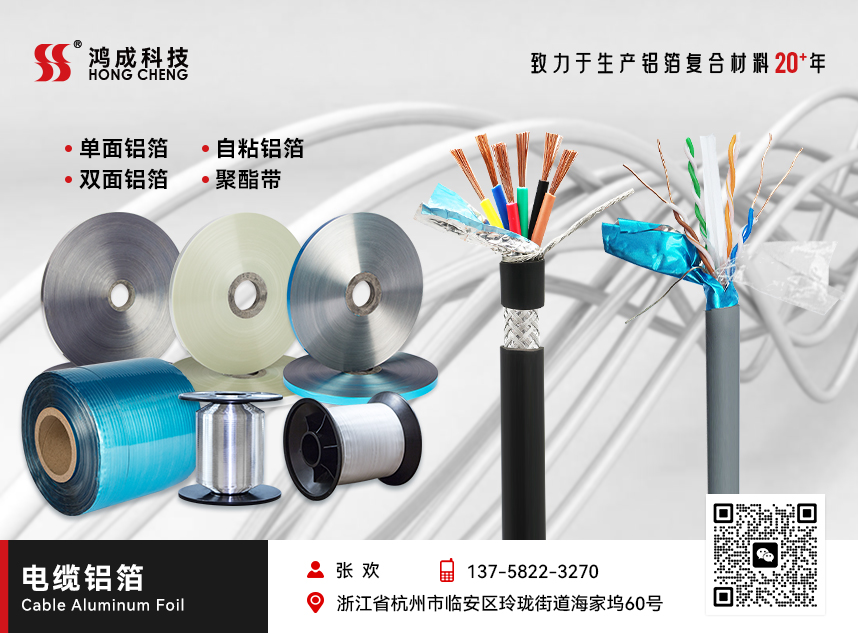
Two cable plants can buy the same AL/PET aluminum foil polyester laminated tape and get completely different results. One runs thousands of kilometers without a stop; the other keeps fighting tape breaks and batches of shielded cable that fail crosstalk testing. The difference is usually not the tape itself, but how it is used on the line. Pair shielding is the core process in FTP and STP LAN cable production, and getting the foil tape right — structure, overlap, orientation, tension — is what decides whether shielding and crosstalk performance passes on the first try. This article walks through the practical points that cable plant purchasing and process teams should know.
- Understand the structure: three layers, three jobs
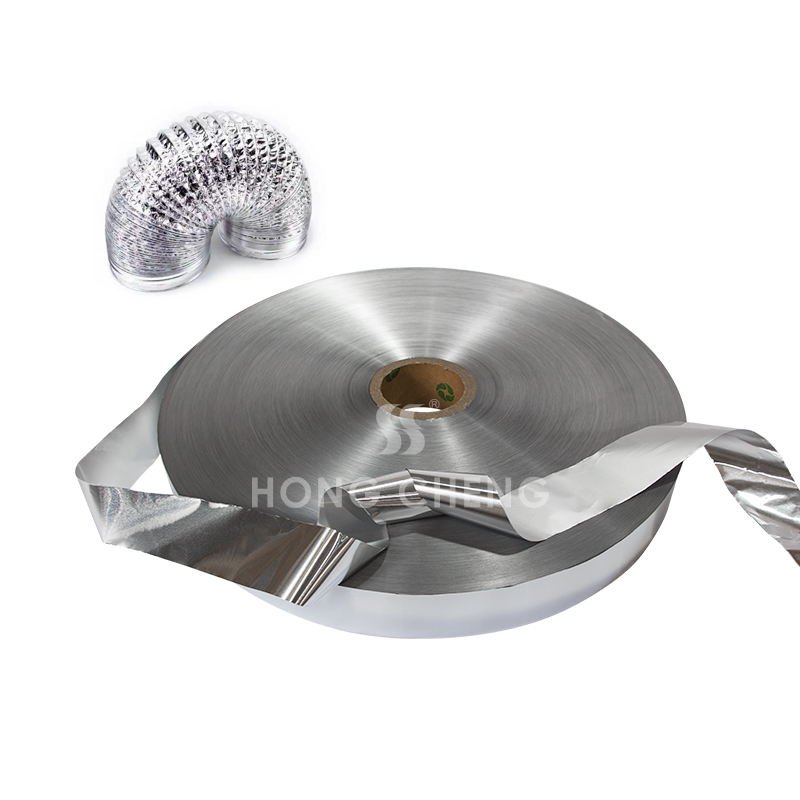
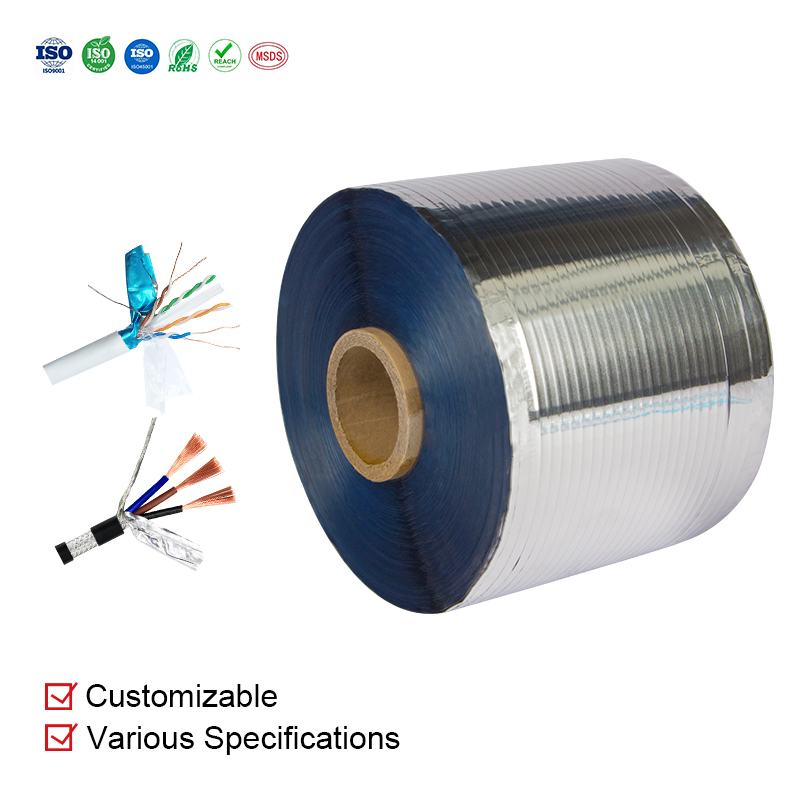
The foil tape used for pair shielding — commonly called AL/PET shielding tape or aluminum mylar tape — is a three-layer laminate. The aluminum foil layer is the conductive shielding body, at a conventional thickness of 6μm-9μm; for demanding applications, the heavy grade of 9μm gives fewer pinholes and more stable shielding. The PET layer provides tensile strength, insulation support and surface wear resistance, so the tape does not snap during high-speed payoff and does not create unintended contact with the conductor. The adhesive layer bonds the overlap and holds the drain wire in place, and its heat resistance must survive the jacket extrusion process downstream. When comparing suppliers, check the three-layer configuration against your cable specification first, and only then discuss price.
Aluminum foil laminate remains the default choice for pair shielding not by habit but by economics and physics. At LAN frequencies, thin foil provides an effective electrostatic barrier at a fraction of the cost of heavier alternatives, and its flexibility lets it follow tightly twisted pairs without adding stiffness that would deform the cable geometry. The PET backing carries the mechanical load, so the foil itself only needs to do the electrical job. This division of labor is why the tape structure — not just the foil thickness — decides real-world performance, and why a low-priced tape with the wrong PET or adhesive layer can still fail on the line even when its foil thickness measures correctly.
- Prefer longitudinal wrapping, and control overlap at 20%-30%
Longitudinal wrapping is the mainstream method for pair shielding in LAN cables: the tape is formed along the lay direction of the twisted pair, which is fast and material-efficient. Conventional wrapping still appears on larger diameters or slower lines. For longitudinal wrapping, overlap is the parameter to watch, generally controlled between 20% and 30%. Too little overlap and the seam can open up in downstream processes, leaving a "window" in the shield that immediately drops crosstalk performance. Too much overlap wastes material, increases the finished cable diameter, and affects jacket eccentricity and impedance consistency. The overlap is held by the adhesive layer; a peel strength of at least 1.5N/15mm is recommended. Before running production, tear open a sample to see whether the adhesive transfers evenly — that alone tells you a lot.
Overlap also interacts with line speed. As speed rises, the forming ring, tape stiffness and adhesive tack all need to match; a tape that holds overlap at 100 m/min may slip at 200 m/min if the adhesive softens under friction heat. Whenever you raise line speed on an existing line, re-run the overlap check before committing to full production.
- Foil side in, drain wire on the foil
Reversing the tape is the most common mistake among new operators. The correct orientation is aluminum foil side facing the conductor, PET side facing out: the aluminum layer conducts and therefore forms the shield, while the PET face outside is wear-resistant and insulating, preventing accidental contact with adjacent structures. The drain wire must sit against the foil surface, so that at termination the shield can be grounded through it. If the foil faces outward, the drain wire rests on the insulating PET layer, the shield is effectively ungrounded, and shielding test results are void. On modern lines the drain wire is laid continuously under the tape in the same pass, so foil orientation and drain wire position are controlled in one operation — which is exactly why orientation errors propagate so fast: one reversed roll can turn out a full length of cable with an ungrounded shield before anyone notices. Have operators confirm orientation at every reel change and shift handover. It costs nothing and prevents real rework.
- Tension, slitting, splices: the three sources of tape breaks
Most on-line tape breaks trace back to three things. First, payoff tension: too high and the aluminum layer stretches, pinholes multiply and the tape can snap on the spot; too low and the tape wanders and wrinkles, with overlap fluctuating. Set magnetic-particle tension according to the roll specification and run at low speed before ramping up. Second, slitting quality: burrs on the slit edge are a direct cause of breaks, and uneven winding creates tension fluctuation — inspect edge quality and wind-up on every incoming roll. Third, splices: rolls with many splices raise stoppage risk. Agree on minimum roll length and a splice-count limit in the purchase contract.
Three misconceptions to avoid
Misconception one: thinner tape runs better. Foil below the conventional thickness range loses pinhole resistance, shielding effectiveness drops and break rates rise. Misconception two: the bigger the overlap, the safer. Excessive overlap wastes material, inflates diameter and can cause diameter fluctuation. Misconception three: peel strength in the lab is enough. A passing lab report does not guarantee a smooth line. When switching suppliers or receiving a new batch, first run a small roll on your own line to confirm tension compatibility, stable overlap and continuous payoff without breaks, then place the bulk order.
Three practical suggestions for cable plant buyers: first, specify tape width based on the twisted-pair outer diameter and the forming die rather than forcing a generic size — a width matched to the die keeps overlap automatic and reduces operator adjustment; second, put line performance into the acceptance terms, including a successful trial run before bulk supply, so that smooth running becomes a contractual standard instead of a verbal promise; third, archive a sealed sample from every batch so incoming rolls can be checked against it — aluminum thickness, peel strength and slit-edge quality, batch by batch. Keep simple tension settings posted at each payoff stand so operators do not have to re-learn them after every changeover.
Hangzhou Hongcheng Technology Co., Ltd. specializes in aluminum foil composites and PE laminated composites, supplying AL/PET shielding tape, aluminum mylar tape and related foil laminates to the cable industry with custom widths, foil thicknesses and structures. For samples or technical data, contact +86 13758223270 or email wendy@hcdxcl.com.cn.
How to Judge Duct Facing Quality: Five Inspection Checks for Flexible Duct Manufacturers
Six Application Scenarios for Aluminum Foil Woven Vacuum Laminate