Classification and Application of Aluminum Foil in the Duct Industry
In the duct industry, aluminum foil has become an indispensable key material due to its excellent thermal insulation, moisture resistance, and airtightness. Its diverse types can be classified through different dimensions, each with unique characteristics and applicable scenarios, playing a crucial role in the performance of duct systems.
Classification by Alloy Composition
The alloy composition of aluminum foil is a core factor determining its performance, directly affecting strength, ductility, and corrosion resistance. The main types commonly used in the duct industry are as follows:
Series 1 pure aluminum foils, represented by models such as 1060 and 1100, have a purity of over 99%. This characteristic gives them excellent ductility, a smooth surface, a reflectivity of over 85% for infrared radiation, and strong corrosion resistance. Therefore, series 1 pure aluminum foils are very suitable as reflective layers for duct insulation, which can effectively reduce heat and cold loss by reflecting heat. They are widely used in scenarios with high requirements for thermal insulation performance, such as air - conditioning ducts and ventilation pipes.
Series 8 aluminum foils, such as 8011, contain a small amount of alloying elements like iron and silicon. Compared with series 1 pure aluminum foils, they have slightly higher strength, stable processing performance, are not easy to crack, and have relatively lower costs. Based on these characteristics, series 8 aluminum foils are often used in combination with insulation materials such as centrifugal glass wool and phenolic boards, as the outer or inner layer of ducts. They can not only balance strength but also play a good moisture - proof role, and are more common in industrial ventilation, smoke exhaust ducts and other scenarios.
Classification by Processing State
The processing state of aluminum foil is determined by the treatment process after rolling, mainly reflected in the difference in hardness, which in turn affects its formability. It is mainly divided into the following two types:
Annealed (O - state) aluminum foil becomes soft and has excellent ductility after annealing treatment. It can be bent at will, can closely fit the curved surface of the duct, and is not easy to break. This characteristic makes annealed aluminum foil suitable for scenarios that need to fit the special - shaped structures of the duct, such as elbows and reducers, so as to ensure that the aluminum foil is in close contact with the duct surface and reduce heat loss caused by gaps.
Hard (H - state, such as H18) aluminum foil is not annealed, so it has high hardness, high strength, and good tensile resistance, but poor ductility and is easy to brittle fracture. Due to these characteristics, the application scenarios of hard aluminum foil are relatively few, and it is only used for local structures that need support in the duct, such as the aluminum foil reinforcing layer at the flange edge.
Classification by Surface Treatment
In order to enhance the bonding force between aluminum foil and other materials, or improve its functions such as moisture resistance and weather resistance, the surface of aluminum foil will be specially treated, mainly including the following types:
The surface of coated aluminum foil is coated with adhesives or resin layers such as acrylate and polyurethane. This treatment can enhance the adhesion between aluminum foil and insulation cotton and plates, effectively preventing falling off after compounding. In composite ducts such as phenolic composite ducts and glass magnesium composite ducts, coated aluminum foil is often used as the inner or outer layer to ensure that the aluminum foil is firmly combined with the base material.
Laminated aluminum foil is a layer of PE (polyethylene) or PET (polyester) film compounded on the surface. This layer of film significantly improves the friction resistance, aging resistance, and moisture resistance of aluminum foil, because the film can block water vapor more thoroughly. Therefore, laminated aluminum foil is suitable for ducts in humid environments, such as basements and kitchen exhaust pipes, which can prevent aluminum foil oxidation or insulation layer from getting damp.
The surface of embossed aluminum foil is pressed with patterns such as diamonds and stripes. This design increases the surface area and friction of the aluminum foil, can improve its 咬合 degree with insulation materials, and reduce sliding. When compounded with fiber - based insulation materials such as glass wool and rock wool, embossed aluminum foil can enhance the stability of the overall structure.
Untreated aluminum foil (bright foil) has no additional treatment on its surface, only retaining the smooth surface after rolling, so its reflectivity is the highest. In practical applications, untreated aluminum foil is directly used as the reflective layer of the duct insulation layer, relying on its own smooth surface to reflect heat.
Classification by Functional Characteristics
According to the core role of aluminum foil in the duct, it can be divided into the following categories:
The core function of thermal insulation aluminum foil is to reduce heat radiation transfer through high reflectivity, for example, reducing heat and cold loss in air - conditioning ducts. When used with the insulation layer, it can form a "reflection + heat insulation" double insulation system. Series 1 bright foil and O - state annealed foil are typical representatives of thermal insulation aluminum foil.
Moisture - proof aluminum foil mainly uses the "waterproof and airtight" characteristics of aluminum foil to block external water vapor from entering the insulation layer, avoiding the increase in thermal conductivity of insulation materials due to moisture. Laminated aluminum foil and series 8 hard foil (because of its high strength, it is more stable in resisting water vapor penetration) are common types of moisture - proof aluminum foil.
Airtight aluminum foil, as the inner liner or outer layer of the duct, can fill the gaps in the duct splicing, reduce air leakage, and play an important role in clean ducts, smoke prevention and exhaust ducts and other scenarios. Coated aluminum foil is a typical representative of airtight aluminum foil because it is closely bonded to the duct base material and has strong sealing performance.
Classification by Composite Form
In order to improve the comprehensive performance of aluminum foil, it is often used in combination with other materials, mainly in the following two forms:
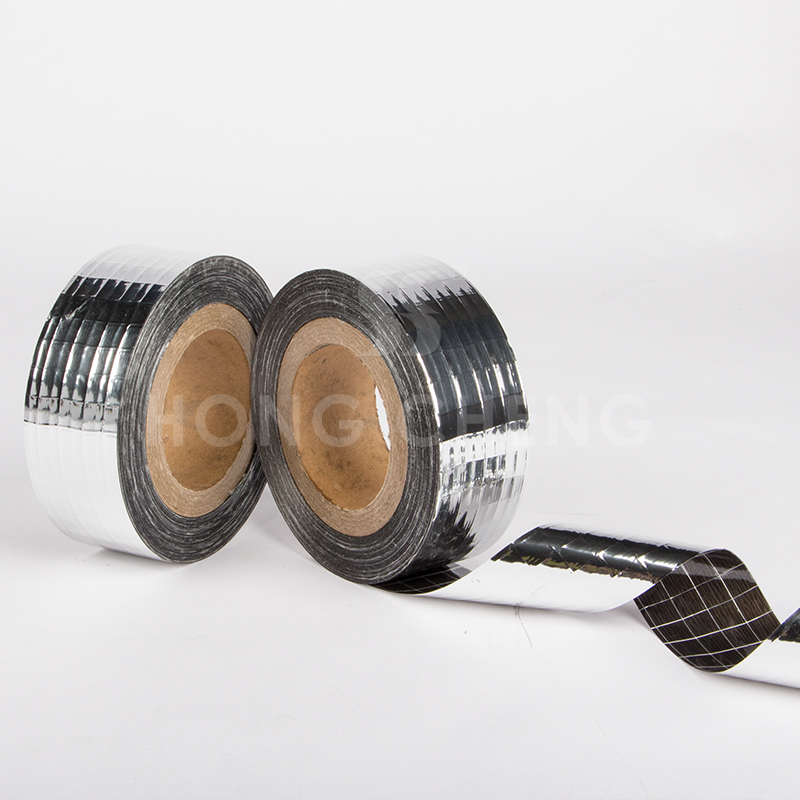
Pure aluminum foil is a single aluminum foil layer, usually with a thickness between 10 - 50μm. Too thin aluminum foil is easy to break, and too thick will increase the cost. Pure aluminum foil is directly used for duct surface or insulation layer wrapping.
Composite aluminum foil is a combination of aluminum foil and other materials. For example, the combination of aluminum foil and glass fiber cloth enhances the tear resistance of aluminum foil by using fiber cloth, which is suitable for duct expansion sections and can avoid aluminum foil breaking due to vibration; the combination of aluminum foil and non - woven fabric can improve flexibility and is suitable for wrapping irregular ducts; the combination of aluminum foil and aluminum foil (multi - layer composite) increases thickness and strength through superposition, and is suitable for high - pressure ducts, such as industrial dust removal ducts.
To sum up, there are various types of aluminum foil in the duct industry. In practical applications, it is necessary to select the appropriate type of aluminum foil according to the needs of specific scenarios, considering thermal insulation, moisture resistance, airtightness and other properties as well as cost factors, so as to ensure the efficient and stable operation of the duct system.
How to Distinguish the Quality of Roof Insulation Aluminum Foil
Composition of Cable Aluminum Foil