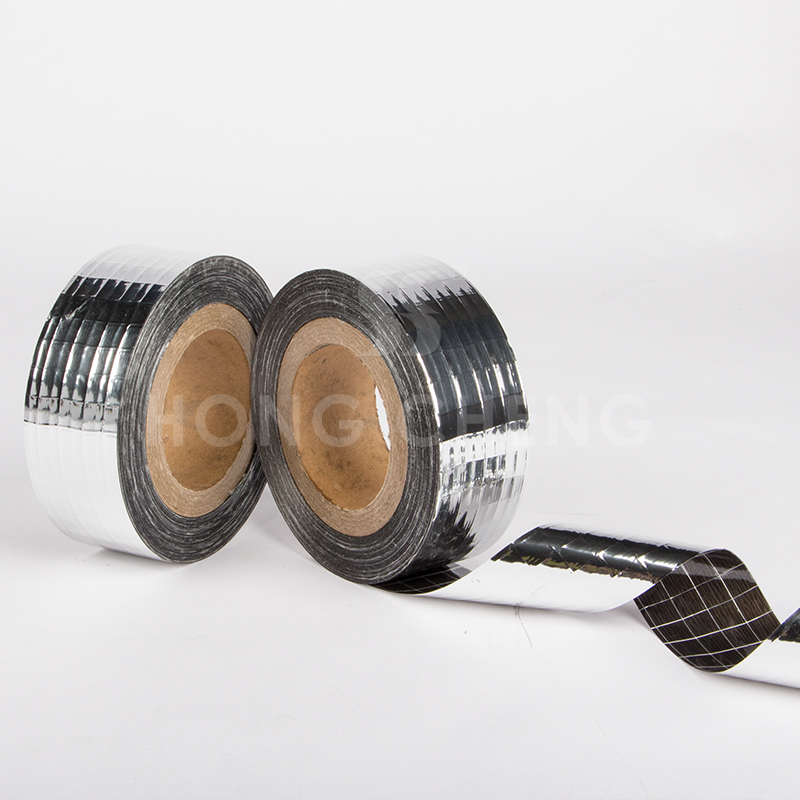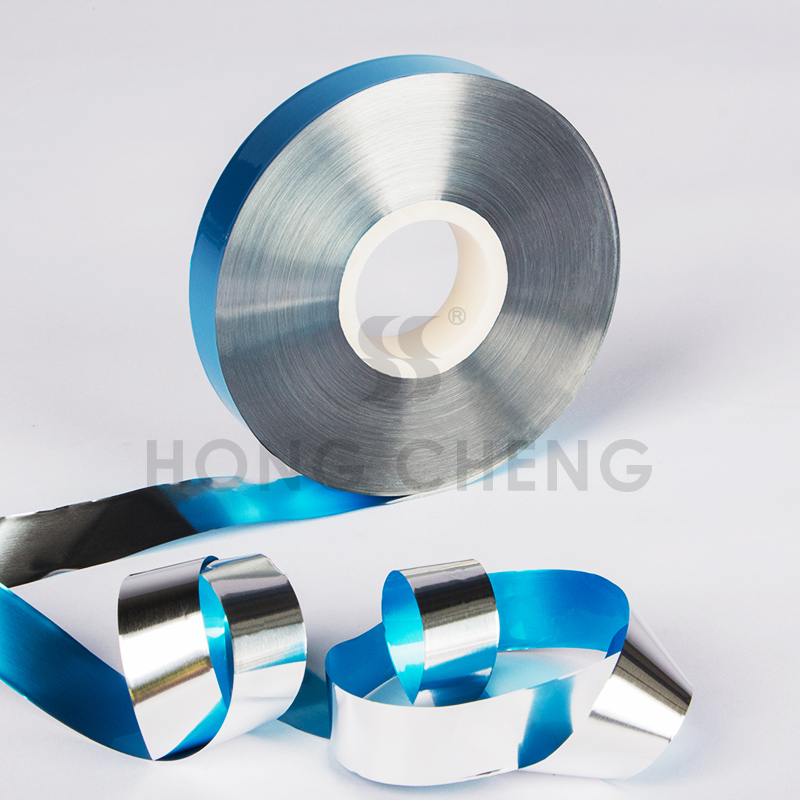
Al/PET/PE laminated aluminium roll
Al/PET/PE laminated aluminium roll is a specially designed material composed of aluminum foil, polyester (PET), and polyethylene (PE) layers. This laminated composite offers excellent barrier properties, high tensile strength, and durability, finding wide applications in packaging, food, cosmetic, and pharmaceutical industries.
Structurally, its three-layer configuration creates a synergistic effect with complementary functions. The aluminum foil layer, typically 6-9μm thick in soft state, leverages its metallic density to achieve an oxygen transmission rate as low as 0.01 cm³/(m²·24h) and water vapor transmission rate below 0.1 g/(m²·24h), serving as the core barrier against gases and moisture. The intermediate PET layer, 12-25μm thick and biaxially oriented, not only provides 200-250MPa tensile strength but also offers an excellent printing substrate—its surface tension reaches 40-50 dynes/cm after corona treatment, enabling perfect adherence of 8+ color gravure printing with no peeling in 3M tape tests. The inner PE layer, 20-50μm thick and made of LLDPE, features a wide heat-sealing range (120-160℃) and 35N/15mm seal strength, ensuring packaging integrity while meeting food contact standards with heavy metal content below 0.01mg/kg.
This composite structure enables Al/PET/PE rolls to provide superior protection for packaged products against oxygen, moisture, and UV rays. In the food industry, it delays lipid oxidation and microbial growth, extending the shelf life of fried snacks like potato chips to over 12 months—50% longer than ordinary plastic packaging. For moisture-sensitive products such as tea and coffee, its moisture resistance controls water content within 3%, preserving original flavors and aromas. In pharmaceuticals, when used for blister packaging of tablets and capsules, the aluminum layer's light barrier property (transmittance <0.1%) prevents degradation of photosensitive ingredients, while the PE layer's chemical resistance withstands organic acids common in medicines.
The material exhibits excellent processability, customizable in total thickness (20-100μm) and width (300-1200mm) to match high-speed automatic packaging machines (up to 300 packs/min). Surface printing uses food-grade inks that release no odors after 121℃ retorting, meeting stringent requirements for infant food packaging. Additionally, its 80N puncture resistance protects against sharp objects, making it suitable for nuts, hard candies, and other angular products.
Environmental friendliness is another key advantage. Aluminum components can be separated from recycled waste via magnetic separation with over 95% recovery rate; PET layers can be recycled into fiber materials after crushing and cleaning; PE layers enable secondary utilization through melt granulation. It complies with EU CE PLAST 2025 directive's ≥80% recycling rate requirement and China's GB/T 35798-2018 recyclable design standards. Amid carbon neutrality trends, composite rolls using recycled aluminum (30% recycled content) have reduced production carbon emissions by 22%.
Applications in niche sectors are diverse: in cosmetics, it serves as outer packaging for cream hoses, with the aluminum layer blocking UV rays to extend vitamin C serum's active shelf life to 18 months; in chemicals, as liners for solvent packaging, the PE layer's corrosion resistance prevents leakage of ethanol and acetone; in electronics, its electromagnetic shielding properties protect precision components from moisture. In cold chain logistics, when laminated with EVA hot-melt adhesive, it maintains flexibility at -40℃ to avoid low-temperature embrittlement.
Technological advancements continue to enhance Al/PET/PE rolls. Variants with 0.5% nano-silver in PE layers offer antibacterial properties (>99% E. coli inhibition) for fresh produce packaging; versions with laser easy-tear lines (5-8N opening force) improve user convenience. These innovations drive an 8% annual growth in high-end packaging market share, making it the preferred alternative to traditional aluminum-plastic composites.
Building Insulation Materials with Excellent Resistance to Water, Moisture, Corrosion, and UV Aging
Kraft paper with PE Coating