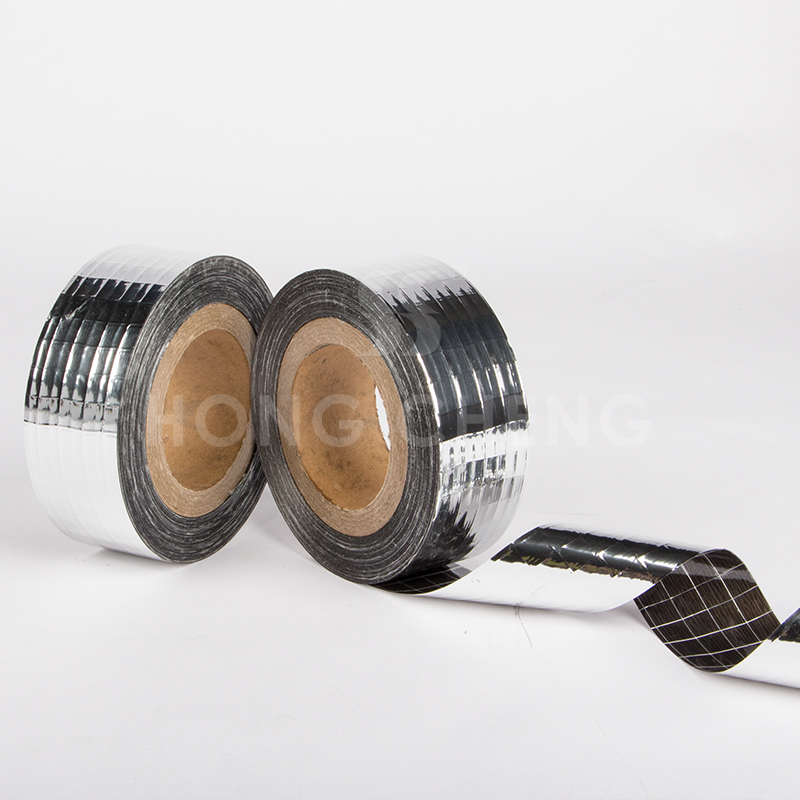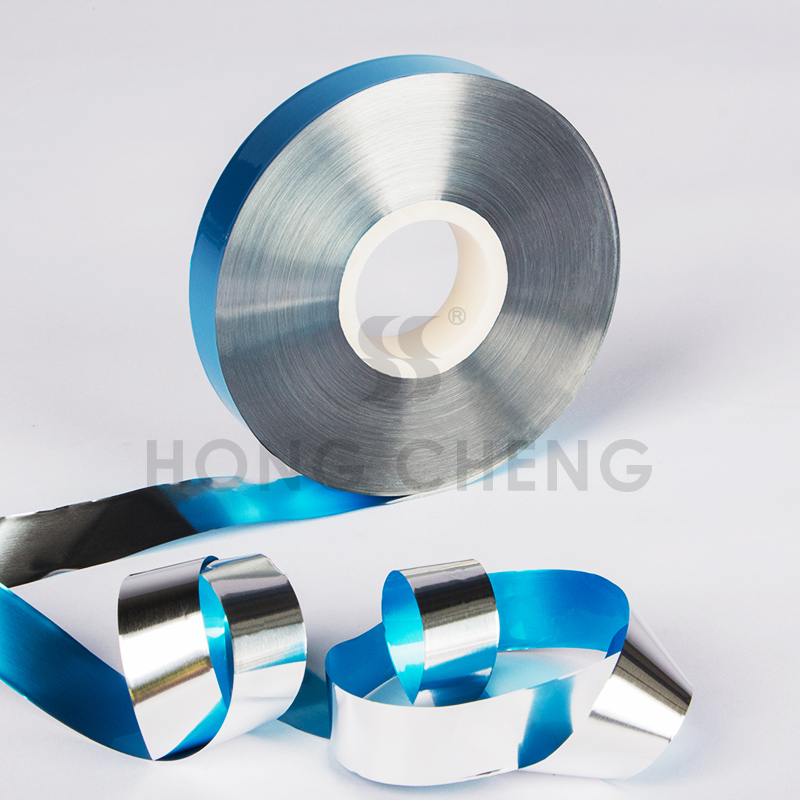
VMPET Metalized Film in HVAC Flexible Duct: Application Advantages and Selection Guide
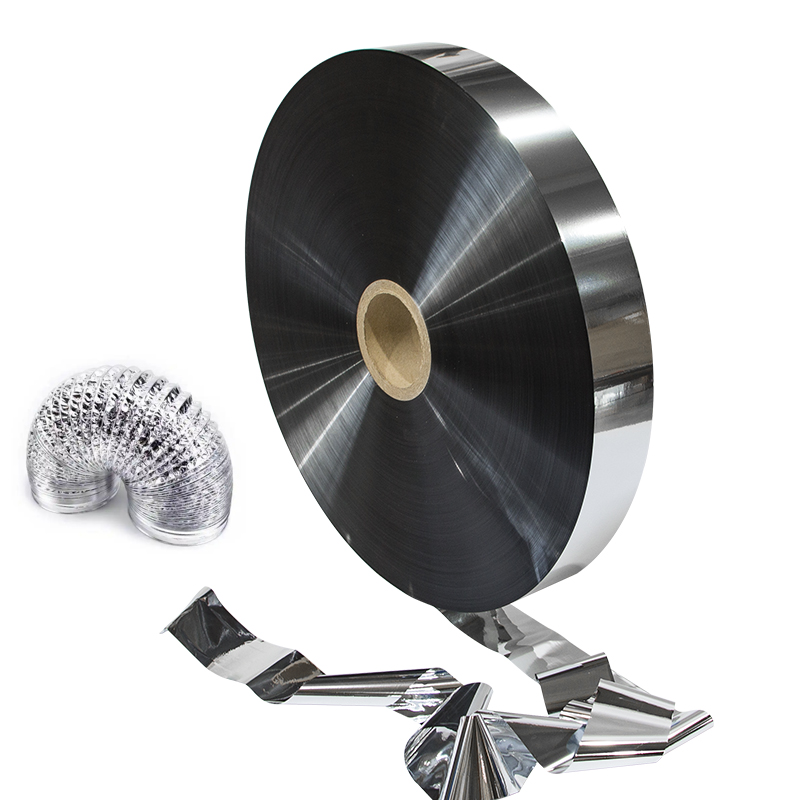
In HVAC systems, flexible ducts are critical components connecting main ductwork to terminal air outlets, widely used in commercial buildings, residential renovations, and industrial facilities for supply and return air distribution. The outer jacket material of a flexible duct directly determines the product's reflective insulation performance, weathering resistance, and service life. Among available materials, metalized polyester film (VMPET)—produced by vacuum-depositing a thin aluminum layer onto a PET substrate—has become one of the mainstream choices for flexible duct outer jackets, owing to its high cost-performance ratio and well-balanced comprehensive properties.
Functional Positioning of Flexible Duct Outer Jacket Materials
Flexible ducts in actual service must fulfill three functions: blocking moisture intrusion, reflecting radiant heat, and protecting the internal insulation layer. Structurally, a flexible duct typically consists of a perforated inner core (or non-woven inner liner), a fiberglass or rock wool insulation layer, and an outer jacket, from inside to outside. The performance of the outer jacket material directly affects the overall service life of the duct, ease of installation, and ultimate thermal performance.
Aluminum foil facing, VMPET metalized film, and AL/PE composite film are the three mainstream outer jacket materials in the current market, each with distinct characteristics in terms of cost, processability, and weathering resistance.
Material Structure of VMPET
VMPET is a composite material formed by vacuum-depositing an extremely thin aluminum layer (typically 30–50 nm) onto a PET polyester film substrate. Although the deposited aluminum layer is far thinner than a solid aluminum foil layer, the PET substrate itself provides excellent mechanical properties, giving the overall material outstanding tensile strength and tear resistance.
Compared with solid aluminum foil facing, VMPET metalized film has the following structural characteristics:
High Substrate Strength — The PET polyester film substrate has a tensile strength of 150–200 MPa, making it highly resistant to breakage during handling and long-term service. Solid aluminum foil facing of the same thickness has significantly lower tensile resistance than a PET-based material.
Aluminum Layer Adhesion — In high-quality VMPET products, the bond between the deposited aluminum layer and the PET substrate must pass cross-cut tests and folding tests; the aluminum layer should not delaminate or crack under normal bending and handling operations.
Lamination Compatibility — VMPET can be laminated with PE, EVA, or other hot-melt adhesive layers, facilitating continuous wrapping processes on flexible duct production lines.
Application Forms of VMPET in Flexible Ducts
In flexible duct manufacturing, VMPET metalized film is primarily used in two forms:
Form 1: VMPET Single-Layer Outer Jacket
VMPET metalized film is used directly as the outermost protective jacket of the duct, with an inner PE heat-seal layer laminated to the insulation batting. This structure is suitable for mid-to-low-end residential HVAC systems, where cost advantage is significant. The VMPET facing reflects radiant heat to reduce surface heat loss and blocks external moisture from entering the insulation layer.
Form 2: VMPET Composite Outer Jacket
VMPET is further laminated with aluminum foil, PE, or other layers to form a multi-layer outer jacket structure. For example, laminating a thin aluminum foil layer (6–9 μm) over the VMPET outer side combines the high strength of VMPET with the high reflectivity of aluminum foil, suitable for commercial projects with higher insulation performance requirements.
Key Selection Parameters
When sourcing VMPET metalized film as a duct outer jacket material, the following parameters require close attention:
PET Substrate Thickness — Common specifications are 12 μm, 19 μm, and 25 μm. Thicker substrates provide higher tensile strength at increased cost. For general residential HVAC ducts, 12–19 μm is sufficient; for industrial facilities or harsh installation environments, 25 μm is recommended.
Aluminum Layer Thickness (Optical Density) — Optical density (OD value) typically ranges from 1.8 to 2.5. Higher OD values improve the film's resistance to light and heat penetration, but excessively high OD adds cost with diminishing performance returns. For standard HVAC applications, OD 1.8–2.2 is adequate.
Laminate Layer Structure — When used as a duct outer jacket, VMPET usually requires lamination with a PE or EVA hot-melt adhesive layer, typically 15–25 μm thick. The laminate layer must be compatible with the duct production line's wrapping process parameters to ensure bond strength and line speed.
Width and Roll Length — Determined according to duct diameter and production line speed. Common widths are 1000–1500 mm; roll length is generally no less than 1000 m to minimize roll change frequency and improve production efficiency.
Market Trend: Lightweight and High Performance
In recent years, demand for flexible duct outer jacket materials in the HVAC industry has shown two distinct trends:
Lightweighting — Reducing material basis weight while maintaining performance saves cost and facilitates installation. VMPET metalized film, with the high-strength characteristics of its PET substrate, can achieve better mechanical properties than thick aluminum foil at lower thicknesses, making it a preferred material for lightweight solutions.
Improved Weathering Resistance — With increasing export orders, overseas customers impose higher requirements on UV resistance, high-temperature, and high-humidity performance of duct jackets. Applying a transparent PE protective film over the VMPET surface (i.e., coated VMPET) significantly improves weathering resistance and extends duct service life in outdoor or high-humidity environments.
Quality Acceptance Checklist
Upon receipt of VMPET metalized film, quality acceptance should cover the following points:
- Visual Inspection — Film surface should be smooth and clean, without bubbles, pinholes, or noticeable color variation;
- Aluminum Layer Adhesion — After applying and rapidly removing 3M tape, the aluminum layer should not detach from the PET substrate;
- Laminate Bond Strength — Peel strength between VMPET and PE/EVA laminate layer should be no less than 8 N/25 mm;
- Dimensional Tolerance — Thickness tolerance within ±5%; width tolerance within ±2 mm;
- Roll Condition — Core should be deformation-free; roll edges should be neat without telescoping.
Conclusion
VMPET metalized film continues to strengthen its position in the HVAC flexible duct outer jacket material market, leveraging its high cost-performance ratio, excellent mechanical strength, and good processability. As a professional composite material supplier, Hongcheng Technology provides customized VMPET metalized film solutions tailored to duct manufacturers' specific process conditions and end-use scenarios, helping customers enhance product competitiveness.
Phone/WeChat: +86 13758223270 Email: wendy@hcdxcl.com.cn
Decoding Aluminum Foil PET Substrates: The Material Behind Decorative Tapes
5G Expansion Enters New Phase: Rising Demand for Aluminum Mylar Shielding Tape in Coaxial Cables