AL/PE Composite Film for Flexible Duct Jackets: Structure Analysis & Material Guide
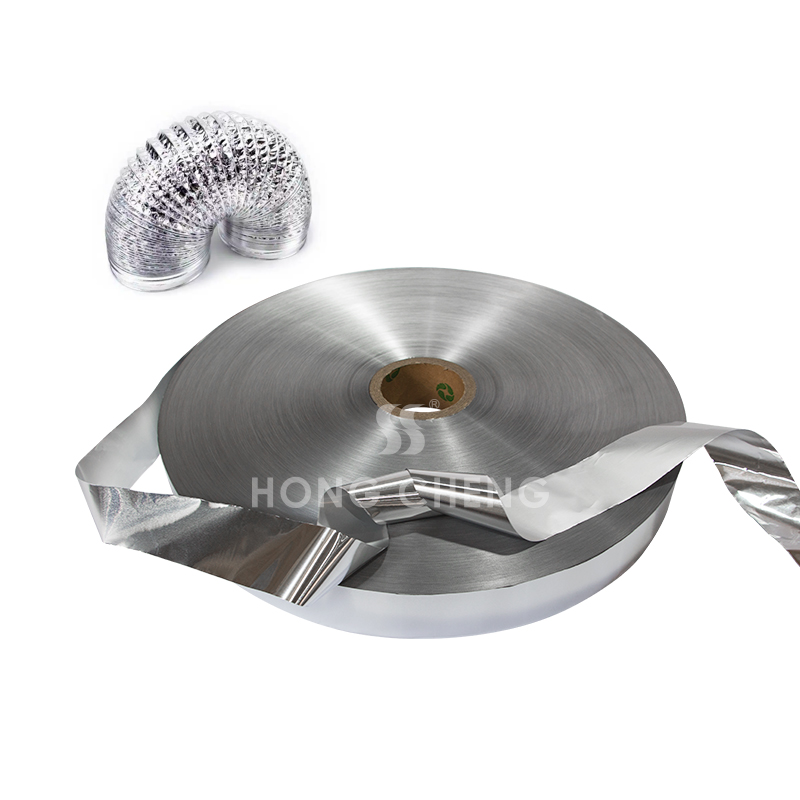
As green building standards and energy efficiency codes continue to tighten worldwide, the performance demands placed on HVAC flexible ducts are rising accordingly. The outer jacket of a flexible duct serves as the first line of defense — shielding the internal insulation from moisture, mechanical abrasion, and air infiltration, all while remaining lightweight and pliable enough for easy installation. Among the materials used for this purpose, aluminum-polyethylene (AL/PE) composite film has emerged as one of the most widely adopted solutions in modern flexible duct manufacturing.
What Is AL/PE Composite Film?
AL/PE composite film is a functional laminate produced by bonding an aluminum foil layer to one or more polyethylene (PE) film layers through extrusion coating (PE lamination) or dry lamination processes. The aluminum foil acts as the core barrier layer, typically ranging from 6 to 12 microns in thickness. The PE layer, usually between 20 and 50 microns, provides flexibility, heat-sealability, and mechanical protection.
In flexible duct applications, the composite film is wrapped around the outer surface of the duct structure — which consists of a spiral wire helix, polyester scrim reinforcement, and fiberglass or polyester wool insulation — with the aluminum foil facing outward and the PE layer bonded inward to the underlying layers.
Key Performance Advantages
1. Outstanding Moisture and Vapor Barrier
Aluminum foil has an inherently low water vapor transmission rate (WVTR), and when laminated with PE film, the composite maintains this barrier property even under varying temperature and humidity conditions. This prevents ambient moisture from penetrating into the insulation core, which would otherwise reduce thermal efficiency and promote microbial growth. This property is especially critical in high-humidity climates and in commercial HVAC systems operating at low supply air temperatures.
2. Flexibility and Installation Durability
Unlike plain aluminum foil, which is prone to cracking and pinholing when bent repeatedly, AL/PE composite film benefits from the ductility of the PE layer. The composite can withstand the bending, twisting, and compression that occurs during duct installation without developing structural failures. This translates to fewer leak points and a longer service life for the finished duct product.
3. Heat Sealability and Adhesive Compatibility
The PE surface of AL/PE composite film is thermally sealable, making it compatible with heat-sealing equipment used to close duct ends and lap seams. It also bonds well with pressure-sensitive adhesives and hot melt adhesives, providing flexible options for duct fabricators when it comes to sealing joints and end caps.
4. Chemical Resistance and Long-Term Stability
Polyethylene exhibits strong resistance to common acids, alkalis, and industrial chemicals found in building environments. The aluminum foil layer further blocks oxygen and corrosive gases. Together, the two layers provide a composite that maintains structural integrity and surface condition throughout the rated service life of the duct — typically 10 to 25 years depending on installation conditions.
Typical Structure Specifications
Flexible duct manufacturers generally select from several standard configurations based on their product requirements:
- Standard grade: Aluminum foil (7μm) + PE (30μm) — cost-effective option for residential and light commercial HVAC flexible ducts;
- Reinforced grade: PE (20μm) + Aluminum foil (9μm) + PE (30μm) — three-layer structure with PE on both sides for enhanced abrasion resistance and mechanical strength, suitable for industrial ventilation ducts;
- Lightweight grade: Aluminum foil (6μm) + PE (20μm) — minimized basis weight for applications where duct system weight is a critical design constraint.
Custom combinations are also available from specialized laminate suppliers to meet specific performance targets.
How AL/PE Film Compares to FSK Facing
The other major material category used in flexible duct outer jackets is FSK (foil-scrim-kraft) laminate — a composite of aluminum foil, fiberglass or polyester scrim, and kraft paper. The two materials serve overlapping but distinct markets:
- FSK facing is thicker and has higher tensile strength, making it better suited for rigid duct board facing and large-diameter duct wraps where dimensional stability under tension is required;
- AL/PE composite film is thinner, lighter, and more flexible, making it more appropriate for spiral-wound flexible duct jackets where conformability and heat-sealability are the primary requirements.
For small- to medium-diameter flexible ducts — the most common type used in residential and light commercial HVAC — AL/PE composite film is typically the preferred outer jacket material.
Procurement Considerations
Buyers sourcing AL/PE composite film for flexible duct jacket applications should evaluate the following parameters:
- Foil pinholes: High-quality aluminum foil used in barrier laminates should have a pinhole count below 3 per square meter to ensure consistent vapor barrier performance;
- Bond strength (peel strength): The adhesion between the foil and PE layers must remain stable in service; industry standard peel strength is typically ≥1.5 N/15mm;
- PE heat-seal temperature: Should match the duct manufacturer's sealing equipment; standard PE seals at 120–160°C;
- Roll width and thickness tolerances: Width tolerance ±2mm and thickness tolerance ±5% are industry norms; custom widths are available from most laminate manufacturers;
- Regulatory compliance: For export products, verify compliance with REACH (EU), RoHS, and any applicable building material certifications in the destination market.
Hongcheng Technology's Custom Supply Capabilities
Hangzhou Hongcheng Technology Co., Ltd. specializes in aluminum foil composite materials and PE-laminated composite films, operating dedicated production lines for AL/PE flexible duct jacket laminates. The company offers fully customizable specifications, including foil thickness (6–12μm), PE thickness (15–60μm), roll width (300–1600mm), single-sided or double-sided PE structures, and various surface finishes. Products are supplied in roll form to flexible duct manufacturers across Asia, the Middle East, Europe, and the Americas.
For technical inquiries, sample requests, or volume pricing, visit www.techfoil.com or contact our sales team directly.
Foil Bubble Composite Film for Insulated Box Liners: Structure, Performance and Material Selection Guide
Aluminum Polyester Shielding Tape for Cat5e/Cat6/Cat7 LAN Cables: Material Selection Guide