How to Choose AL/PE Duct Jacket for Summer HVAC Systems: Heat & Condensation Guide
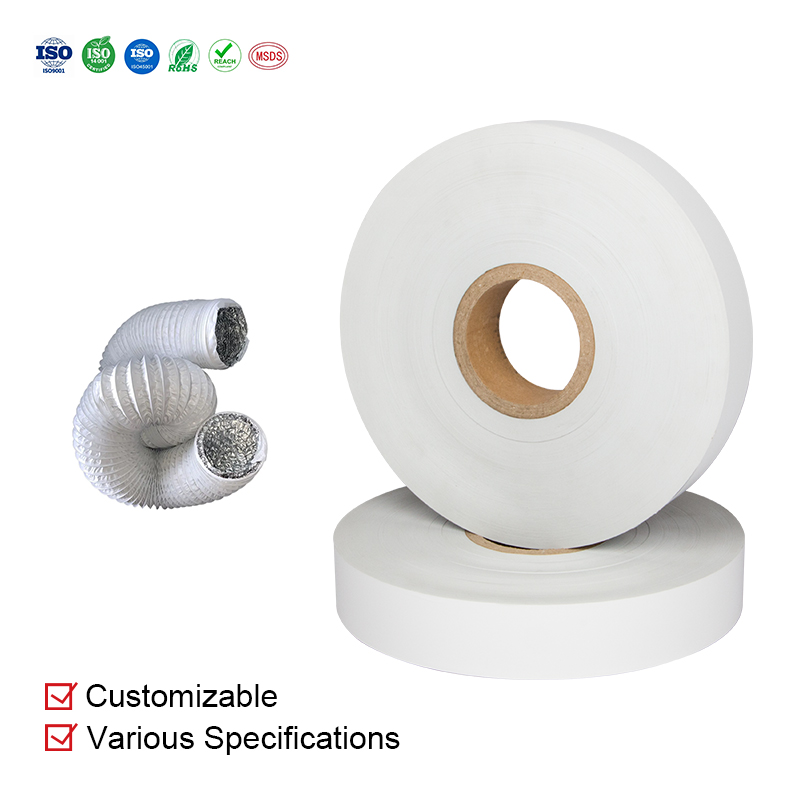
Every July, one question dominates our customer service inbox: "Why is our exposed HVAC duct jacket yellowing, bubbling, and delaminating this summer?" The answer almost never lies in the manufacturer — it lies in the selection of the wrong jacket material for hot, humid, high-dew-point conditions.
After more than a decade in the aluminum foil composite industry, Hongcheng Technology sees the same pattern every June through September: a wave of "seasonal failures" that could have been prevented with the right material specification. In this guide, we walk you through how to select AL/PE duct jacket for summer HVAC systems — covering heat resistance, condensation control, and UV durability.
Why Summer Is the "Stress Test" for Duct Jackets
Most buyers choose jacket by thickness and unit price, and pay the price in July. Three forces work against the jacket simultaneously:
- Solar heat loading: Exposed duct surfaces in direct summer sun can reach 65–75°C. Standard PE film (melting point ~110°C) survives short term, but softens and deforms over weeks of continuous heat.
- Thermal bridge condensation: Cold supply air (typically 18–22°C) meets a hot external surface (70°C+). When the inner duct wall drops below the ambient dew point, water vapor condenses on the inside of the aluminum foil layer — invisible at first, devastating over time.
- UV degradation: UV accelerates oxidation of both the PE layer and the adhesive bond, causing yellowing, embrittlement, and delamination within 2–3 months.
Key reminder: A thicker jacket is NOT better. Excessively thick PE insulates the aluminum foil from radiating heat outward, which actually worsens internal condensation by keeping the foil surface colder.
Match Structure to Scenario: 4 Common Summer Applications
Scenario 1: Basement / Semi-underground Ducts (small ΔT, high humidity)
- Recommended structure: AL7/PE25 single-side laminate (7μm aluminum + 25μm PE)
- Key parameters: Aluminum purity ≥99.35%, PE weight 18–22 g/m²
- Why it works: Below-grade spaces have limited thermal swing. PE here mainly serves as a moisture barrier and mechanical protection, so heavy PE is unnecessary.
Scenario 2: Standard Floor Exposed AC Ducts (moderate ΔT, moderate UV)
- Recommended structure: AL9/PE30 double-side laminate (aluminum sandwiched between two PE layers)
- Key parameters: Total thickness 75–85μm, peel strength ≥6 N/15mm
- Why it works: The double-PE design blocks internal condensation AND external UV — the best value-per-dollar option for typical commercial buildings.
Scenario 3: Rooftop / Plant Room Mains (extreme ΔT, severe UV)
- Recommended structure: AL9/PE40 with reinforcing fiber scrim
- Key parameters: Fiber denier ≥50D, tensile strength ≥80 N/15mm
- Why it works: Rooftop mains can exceed 75°C surface temperature. Thick PE plus fiber mesh is the only configuration that survives a full summer without delamination.
Scenario 4: Hospital / Food-Grade Cleanroom Ducts (hygiene critical)
- Recommended structure: AL9/PE30 with antimicrobial coating
- Key parameters: Antibacterial rate ≥99% (E. coli, S. aureus)
- Why it works: Beyond heat and UV, cleanroom supply air must be protected from mold and bacterial shedding.
3 Critical Specifications Buyers Must Check
1. Aluminum Foil Reflectivity (≥88%)
Summer heat is rejected mainly by the aluminum reflective surface. Each 5% drop in reflectivity raises wall temperature by 3–5°C. Hongcheng uses 1235 high-purity foil with post-anneal reflectivity consistently at 88–92%.
2. PE Melt Index (MI 0.5–2.0 g/10min)
Thicker PE is not the goal — the right MI is. MI above 3.0 means soft PE that sags in heat; MI below 0.3 means brittle PE that cracks on bending. For summer duct jackets, specify MI 1.0–1.5 g/10min.
3. Peel Strength (≥5 N/15mm)
This is the core indicator of laminate integrity. The simple field test: score a cross-hatch with a utility knife, press strong tape over it, and pull. If the foil visibly fuzzes up, the laminate is sound. Anything below 4 N/15mm will delaminate within 3 months in summer humidity.
3 Common Pitfalls for Procurement Teams
- Reading total thickness, ignoring foil thickness: Some suppliers pad total thickness with extra PE while skimping on the foil layer (a 9μm-marked product may contain only 6μm foil). Reflectivity suffers — and you cannot tell by eye.
- Substituting general-purpose PE for HVAC-grade PE: Standard packaging PE has 3–5x worse UV and aging resistance. Outdoor jacket made from it will chalk and crack within one summer.
- Overlooking adhesive temperature rating: Standard polyurethane adhesives tolerate only 80°C. Rooftop installations see them fail in 2 months. Hongcheng's modified adhesive is rated to 120°C, maintaining peel strength ≥4 N/15mm even at 80°C continuous service.
Storage and Shipping Tips for Summer
Jacket rolls should be stored at ≤35°C, ≤70% RH, away from direct sunlight, stacked no more than 5 rolls high. Excessive stack height causes compression marks on the foil surface, which show through as visible wrinkles on the finished duct.
Closing
Summer is peak season for HVAC jacket failure. Choosing the right material is not a matter of "buy the thickest one" — it requires balancing thermal swing, humidity, UV exposure, and cleanliness requirements together. As a source manufacturer with over a decade of expertise in aluminum foil composites, Hongcheng Technology offers a full range of custom AL/PE duct jackets from 8μm to 40μm, single-side to multi-layer reinforced structures, in roll widths from 500mm to 1500mm.
We welcome your inquiries and provide one-on-one custom specification support. Tel/WhatsApp/WeChat: +86 13758223270 Email: wendy@hcdxcl.com.cn
How to Choose Reflective Film for Underfloor Heating: Metalized vs AL/PE Laminates
What Thickness for Heating Cable AL/PE Shielding Sleeve? A Full Selection Guide