How to Choose AL/PE Flexible Duct Facing: A Buyer’s Guide

Procurement teams at flexible duct manufacturers often face three questions: What is the real difference between AL/PE foil laminate and VMPET duct facing? Is single-sided aluminum foil facing more durable? Can one production line handle multiple material structures? Choosing the wrong facing can lead to insufficient peel strength, failed flame-retardant tests, and lost price competitiveness in the end market. This guide compares AL/PE flexible duct facing, VMPET duct facing, and single-sided aluminum foil facing from the perspectives of material structure, application scenario, and key specifications.
1. Structure of the Three Main Duct Facing Materials
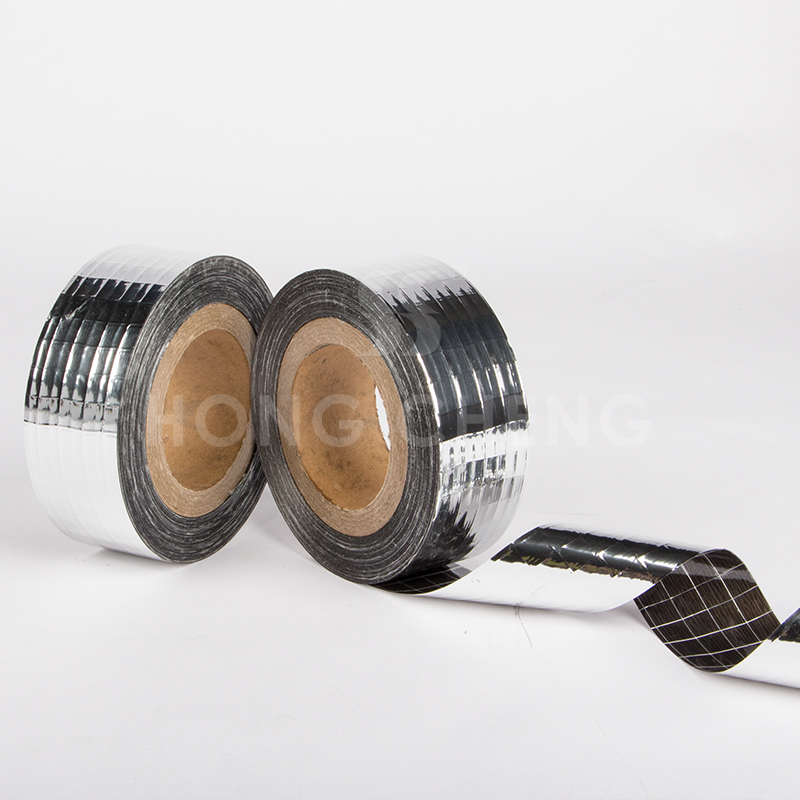
AL/PE flexible duct facing consists of an aluminum foil layer laminated with a PE film. The aluminum foil provides barrier and reflective properties, while the PE layer delivers heat-sealability and environmental aging resistance. It is currently the most common economical solution for residential and commercial HVAC flexible ducts, with typical widths of 1000–1250 mm and aluminum foil thicknesses from 7 μm to 25 μm paired with PE layers of 15 μm to 40 μm.
VMPET duct facing replaces aluminum foil with vacuum-metallized PET film. A thin aluminum layer is deposited onto a PET base film, which is then laminated with a PE heat-seal layer. Compared with AL/PE, VMPET is lighter and lower in cost, but its barrier performance and flex-crack resistance are slightly inferior. It is suitable for ordinary ventilation applications where cost sensitivity is high and operating conditions are mild.
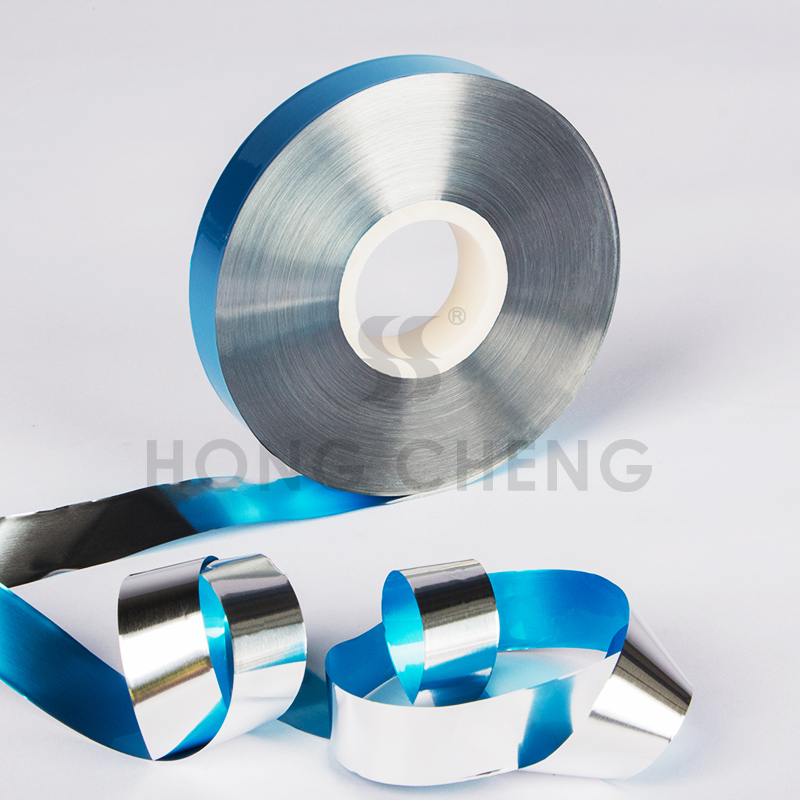
Single-sided aluminum foil facing usually adopts an aluminum foil plus PET or aluminum foil plus PE structure. The PET layer improves mechanical strength and dimensional stability, while the more continuous aluminum foil layer offers fewer pinholes and better barrier and temperature resistance than AL/PE and VMPET. It is commonly used in industrial exhaust, kitchen range hood ducts, and ventilation systems requiring higher odor barrier performance.
2. Selecting by Application Scenario
Residential and commercial air-conditioning ventilation: AL/PE flexible duct facing is the preferred choice. This scenario demands moderate barrier performance but is highly sensitive to cost and heat-sealing efficiency. AL/PE combines aluminum foil reflectivity with the convenience of PE heat sealing and offers the best production-line compatibility.
General industrial exhaust and temporary ventilation: VMPET duct facing can be considered. For projects with mild operating conditions and shorter service-life requirements, VMPET reduces raw-material cost while maintaining basic functionality.
Kitchen exhaust, clean rooms, and high-humidity environments: Single-sided aluminum foil facing is recommended. The PET or thicker PE support layer reduces the risk of foil cracking and provides better temperature resistance and anti-grease penetration.
3. Key Specification Comparison and Procurement Checklist
Peel strength is the core indicator of lamination quality. AL/PE and single-sided aluminum foil facing typically require ≥1.5 N/15 mm, while VMPET may be slightly lower due to the adhesion limits of the metallized layer. For temperature resistance, AL/PE generally performs from –20 °C to 80 °C long-term, single-sided aluminum foil facing can exceed 100 °C, and VMPET falls in between. Flame-retardant requirements must be confirmed according to the export market, commonly UL 181 Class 1 or relevant EN 13501 tests.
When purchasing, confirm simultaneously: aluminum foil or metallized layer thickness, PE material and thickness, roll width compatibility with the duct-forming machine, inner and outer roll diameters, and whether perforation or slitting is required. It is advisable to run a small trial batch to validate peel strength, heat-sealing temperature window, and finished-duct spring-back performance.
4. Common Selection Mistakes
Mistake one: focusing only on unit price while ignoring structure. VMPET has a lower unit price, but in high-humidity or high-flex applications the aluminum layer can detach, and rework costs can exceed any initial savings.
Mistake two: treating AL/PE and aluminum foil facing as interchangeable. The two differ significantly in temperature resistance, mechanical strength, and price and cannot be substituted blindly.
Mistake three: neglecting width and production-line matching. Different structures have different shrinkage rates, and running them directly on the same machine can cause edge wandering or poor heat sealing.
5. Supplier Capability Matters Just as Much
Stable aluminum foil sourcing, precise extrusion lamination, and strict slitting and quality control are the foundation for consistent duct facing performance. Hangzhou Hongcheng Technology Co., Ltd. specializes in the research and production of aluminum foil composite materials and PE extrusion laminated composites. We provide customized AL/PE flexible duct facing, VMPET duct facing, and single-sided aluminum foil facing in various widths, thicknesses, and lamination structures, widely used in flexible ducting, building insulation, and industrial packaging. For samples or technical consultation, please contact us at +86 13758223270 or Email: wendy@hcdxcl.com.cn.
How Car Sunshade Materials Block Summer Heat: A Technical Guide to Metallized Film and AL/PE Laminates
Dual Demand Drivers for AL/PET Shielding Tape in Cable Manufacturing