Aluminum Foil Building Insulation Materials: A Specifier's Guide to Reflective Thermal Barriers in 2026
In the global push toward higher-performance buildings, the insulation layer has become one of the most scrutinized components in the building envelope. Energy codes are tightening in virtually every major construction market, retrofit programs are expanding, and the materials science of insulation continues to evolve. Aluminum foil composite materials occupy a specific and important role in this landscape — not as the primary thermal resistance layer, but as the reflective vapor barrier component that modulates radiant heat transfer and moisture management within the building envelope assembly.
For architects, building envelope consultants, and insulation procurement teams, understanding where aluminum foil composites perform best — and what distinguishes a well-engineered product from a commodity fill-in — is increasingly important as the stakes around building energy performance rise.
How Aluminum Foil Works in a Building Insulation Assembly
The physics of aluminum foil's role in building insulation are straightforward but frequently misunderstood. Aluminum foil does not resist conductive or convective heat transfer in any meaningful way on its own. Its function is radiant: polished aluminum has an emissivity of approximately 0.05, meaning it reflects about 95% of radiant heat energy that strikes its surface. When positioned correctly in a building assembly — facing an airspace — this reflective function substantially reduces the radiant component of total heat transfer across that assembly.
This mechanism is most effective in roof and wall assemblies where radiant heat gain is the dominant thermal load. In hot climates, a reflective foil barrier in the roof assembly reduces the radiant heat load transmitted from a sun-heated roof deck into the living space below. In cold climates, the same principle applies in reverse: the foil surface facing the interior of a wall or roof assembly reflects body heat back into the conditioned space.
The critical installation parameter is the airspace. A reflective foil surface directly in contact with another material cannot reflect radiant heat — the adjacent material conducts heat directly across the interface. For the reflective function to work, there must be an air gap of at least 20–25mm on at least one side of the foil surface. Assemblies that specify reflective foil without providing the required airspace are not achieving the expected thermal benefit, and this specification error is more common in practice than it should be.
Aluminum Foil Composite Products Used in Building Insulation
In building applications, aluminum foil rarely appears as a standalone material. It is laminated into composite structures that combine the reflective function of aluminum with structural reinforcement, vapor barrier properties, and surface durability appropriate for the installation environment.
The principal aluminum foil composite configurations used in building insulation include:
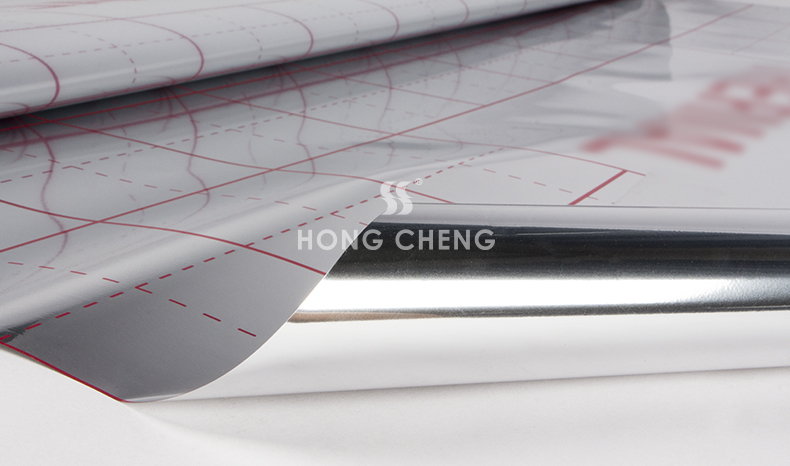
Foil-scrim-kraft (FSK) facing is the most widely used aluminum foil composite in building insulation. The combination of aluminum foil, woven polyester or fiberglass scrim, and kraft paper backing creates a facing material that provides reflective surface, vapor retarder function, and sufficient mechanical durability for handling in construction applications. FSK facing is used on fiberglass batts, rigid foam boards, and pipe insulation in commercial and industrial applications. The kraft paper layer provides staple-ability — allowing the facing to be attached to wood framing — and a surface suitable for duct tape and vapor barrier tape sealing.
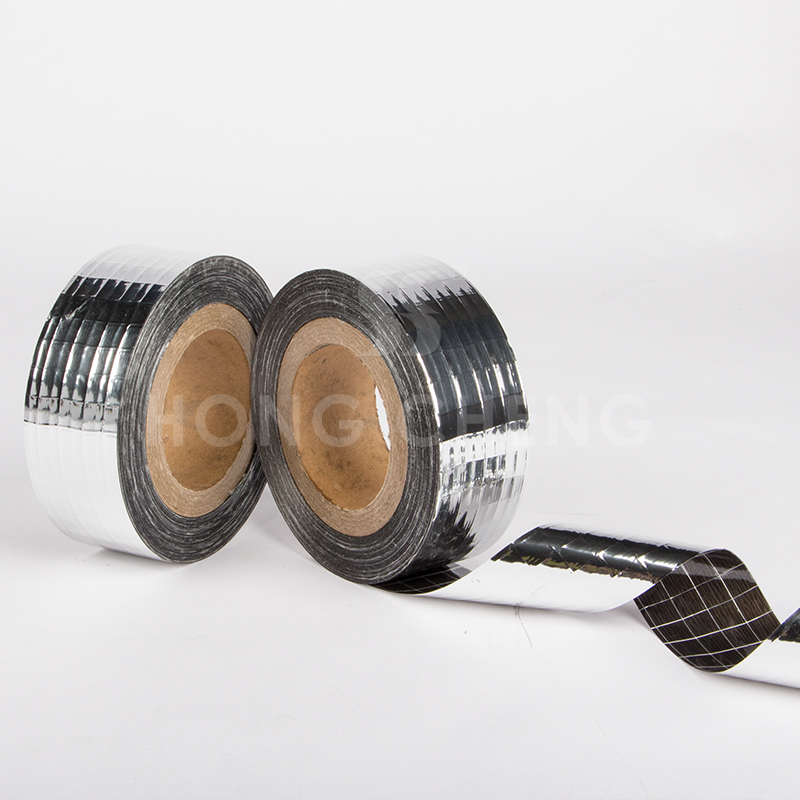
Reinforced aluminum foil (RAF) laminates, combining aluminum foil with a woven polyester or fiberglass scrim without kraft backing, are used where higher tear resistance and puncture resistance are required without the additional thickness and weight of kraft paper. RAF laminates are widely used as standalone vapor and radiant barriers in roof and wall assemblies — installed independently of the insulation layer, either as a separate air-and-radiant barrier or as a facing on rigid insulation boards.
Multi-layer reflective insulation systems use multiple layers of low-emissivity aluminum foil separated by spacer layers — typically polyethylene bubble film, woven fabric, or foam — to create assemblies with R-values derived primarily from the multiple air spaces and reflective surfaces. These products are marketed under various brand names and are used primarily in residential roof and wall applications in climates where radiant heat control is the primary thermal design objective.
Aluminum foil laminated onto rigid foam insulation boards — polyisocyanurate (PIR), extruded polystyrene (XPS), and expanded polystyrene (EPS) — uses the foil facing as a vapor control layer and radiant surface on the conditioned-space-facing side of the board. In PIR roof insulation boards, the aluminum foil facing is also a structural component of the board, affecting compressive strength and dimensional stability.
Performance Parameters for Building Insulation Applications
The performance of aluminum foil composite materials in building insulation is defined by parameters that differ significantly from industrial or HVAC applications. Specifiers and procurement teams should focus on:
Emissivity and reflectivity: The core function of the aluminum foil in a reflective insulation assembly. Polished aluminum foil achieves emissivity values of 0.03–0.05. Embossed, coated, or perforated foil surfaces will have higher emissivity values — sometimes significantly higher — which reduces the reflective insulation benefit. Products claiming reflective insulation performance should provide measured emissivity data; calculation-based or derived values should be treated with skepticism.
Vapor permeance: In building envelope applications, the aluminum foil composite acts as a vapor retarder or vapor barrier depending on the assembly design. The vapor permeance of the composite (measured in perms) should match the design requirement for the specific climate zone and wall or roof assembly. In most building applications, the aluminum foil layer is effectively vapor-impermeable; the overall composite vapor permeance is determined by the other layers. FSK composites typically achieve vapor permeance below 0.02 perms, which qualifies as a Class I vapor retarder under most building codes.
Fire performance: In building applications, aluminum foil composites used as facings or standalone barriers must comply with the applicable fire test standard. In the United States, ASTM E84 testing for flame spread index (≤25) and smoke developed index (≤50) is required for materials installed in accessible spaces and most plenum applications. In China, GB/T 8624 and GB/T 20286 establish the applicable fire classification framework. Specifiers should confirm that the actual tested assembly — not the foil alone — carries the required fire classification.
Peel strength and bond durability: In laminated insulation facings, the bond between foil and scrim or foil and backing must remain intact through the thermal cycling, humidity cycling, and mechanical stresses of a building's operational life. Peel strength data, preferably from accelerated aging test protocols, provides quality assurance evidence that correlates with long-term bond performance.
Dimensional stability: In roof insulation board applications, the foil facing affects the dimensional behavior of the board under temperature changes. Foil facings that maintain dimensional stability through the temperature range of roof surface exposure (which can reach 80–90°C in direct sun in many climates) help the insulation board maintain its design geometry and joint sealing integrity.
Compliance Framework: What Standards Apply in 2026
The standards landscape for aluminum foil composites in building insulation is jurisdiction-dependent, but the primary frameworks are:
In China: GB 50176 (Code for Thermal Design of Civil Buildings) establishes the thermal performance requirements for building envelopes. GB 50411 (Code for Acceptance of Energy Efficiency Work of Building Construction) governs the on-site inspection and acceptance of insulation installations. Materials used in the building envelope must carry fire performance certifications under GB/T 8624 appropriate to the building occupancy and construction type.
In North America: ASTM C1313 covers sheet reflective insulation for use in building construction. ASTM C727 covers the use and installation of aluminum foil vapor retarders. Energy code compliance is typically evaluated against the IECC (International Energy Conservation Code) or ASHRAE 90.1, which set prescriptive R-value requirements and air barrier continuity requirements for building envelopes.
In Europe: EN 16012 covers reflective insulation products for building applications and provides a framework for calculating the equivalent thermal resistance of reflective assemblies that include air spaces.
Market Context for Building Insulation in 2026
The building insulation market is one of the most policy-driven construction segments globally. In 2026, the following dynamics are shaping demand for aluminum foil composite materials:
Carbon neutrality targets are driving building renovation mandates across Europe, China, and North America. Retrofit programs that improve the thermal performance of existing building envelopes are expanding rapidly, creating demand for insulation materials — including reflective barriers — that can be installed in existing structures with minimal disruption to the occupied space.
Green building certification requirements are raising the specification baseline. LEED v4.1, BREEAM, and China's Three-Star Green Building Standard all require building envelope performance levels that exceed minimum code requirements, driving specifiers toward higher-performance insulation assemblies that benefit from aluminum foil composite components.
Extreme heat is shifting the insulation design priority in many climates. Building engineers who previously focused primarily on winter heating loads are now designing for cooling loads as well, and reflective foil barriers in roof and wall assemblies address radiant heat gain more directly than mass insulation products do.
The modular and industrialized construction trend is increasing demand for prefabricated insulation panels with integrated foil facings, as these allow faster installation and more consistent quality control than site-applied materials.
Hongcheng Technology supplies aluminum foil composite materials for building insulation applications, including FSK facings, reinforced aluminum foil laminates, and multi-layer reflective insulation components. Dry lamination process ensures consistent peel strength through temperature and humidity cycling. Technical data sheets and samples available on request.
Reference standards: GB 50176, GB 50411, GB/T 8624, ASTM C1313, ASTM C727, ASTM E84, EN 16012, ASHRAE 90.1, IECC.
Aluminum Foil Industrial Flexible Packaging Materials: A Selection Guide for Chemical, Agricultural, and Industrial Applications in 2026
Aluminum Foil Flexible Duct Materials: What HVAC Engineers and Procurement Teams Need to Specify in 2026