Aluminum Foil Composite Materials for Industrial Packaging: Barrier Performance, Structure Types, and Raw Material Selection Guide
In today's global manufacturing supply chain, effective moisture, rust, and corrosion protection for industrial goods can mean the difference between a profitable delivery and a costly claim. Whether it's metal components shipped across oceans, sensitive electronic assemblies, chemical powders, or specialty industrial materials — high-barrier packaging is the last line of defense preserving product value. And at the core of that defense lies aluminum foil composite materials.
1. Why Industrial Packaging Demands Superior Barrier Performance
Industrial packaging requirements differ fundamentally from consumer packaging in one critical way: the extreme demands placed on Water Vapor Transmission Rate (WVTR) and Oxygen Transmission Rate (OTR).
Metal components exported by sea must withstand weeks of maritime humidity — relative humidity often exceeds 95%. Precision electronics are vulnerable to oxidation and static damage. Chemical powders clump when moisture infiltrates. Military and automotive parts may also require protection from UV radiation.
Conventional packaging materials — standard PE film, kraft paper — lose their barrier properties rapidly under sustained heat and humidity. Aluminum foil, by contrast, is one of the finest gas and moisture barrier materials known: at thicknesses of 9 μm or above, the theoretical WVTR approaches zero (≈ 0 g/m²/day). However, pure aluminum foil is brittle and cannot be formed into practical packaging without lamination. Bonding foil with PE, PET, or other films creates a composite that combines the foil's barrier excellence with the flexibility, heat-sealability, and mechanical strength needed for real-world industrial packaging.
2. Common Aluminum Foil Composite Structures in Industrial Packaging
Based on the production needs of downstream packaging bag and barrier film manufacturers, the most widely used aluminum foil composite structures in industrial packaging include:
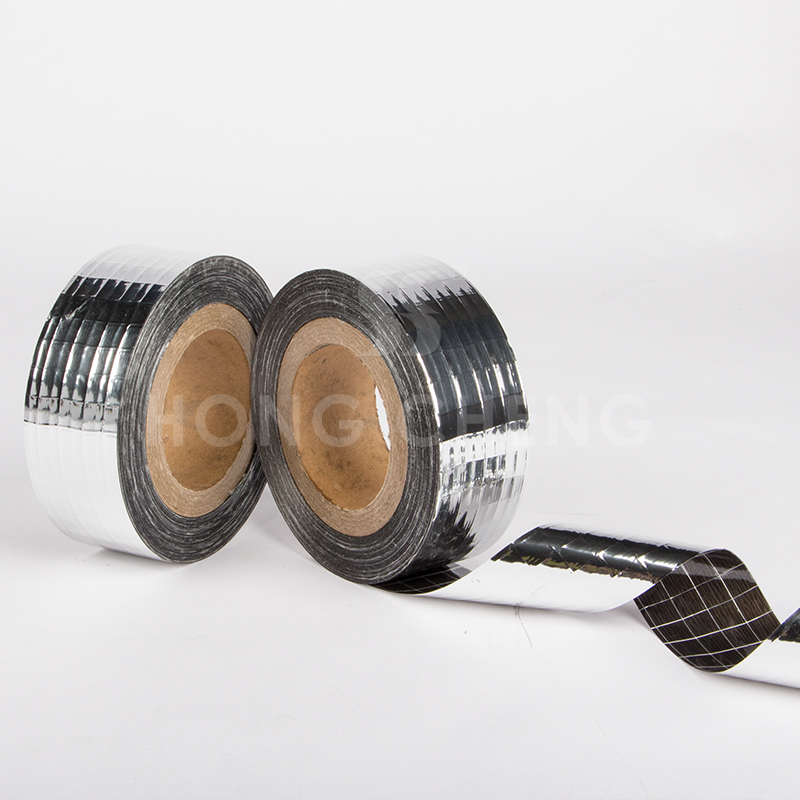
① AL/PE Two-Layer Laminate (Aluminum Foil + Polyethylene) The most basic industrial moisture-barrier structure. The outer aluminum foil layer provides barrier performance; the inner PE layer delivers heat-sealability and sealing integrity. Suitable for lightweight applications where cost efficiency is prioritized — powder liner bags, small electronics pouches. Typical specification: 7–12 μm aluminum foil + 25–60 μm PE.
② AL/PE/AL Three-Layer Laminate (Double-Sided Foil with PE Core) Dual aluminum foil layers provide bilateral barrier protection with a PE bonding layer in between. Compared to single-sided foil laminates, barrier performance is effectively doubled and reflectivity is higher. Ideal for long-term storage of metal parts, chemical raw material bulk bags, and engineering material moisture barriers.
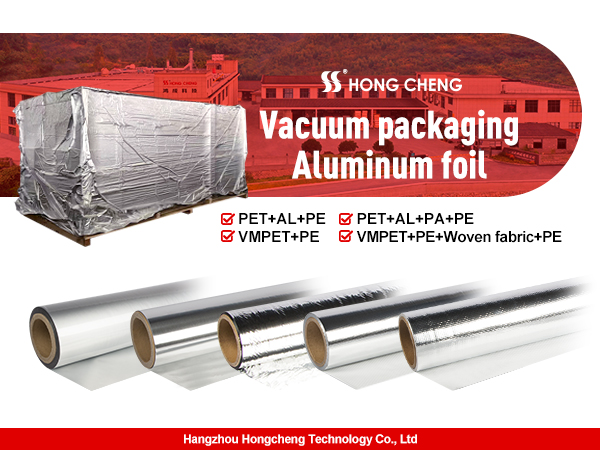
③ PET/AL/PE Three-Layer Laminate (Polyester + Aluminum Foil + PE) PET outer layer contributes excellent mechanical strength (tensile and puncture resistance) and printability. The aluminum foil middle layer handles barrier performance. PE inner layer enables heat sealing. This is currently the most widely adopted structure in heavy industrial packaging — used for vacuum bags for large exported equipment components and composite bags for liquid chemicals.
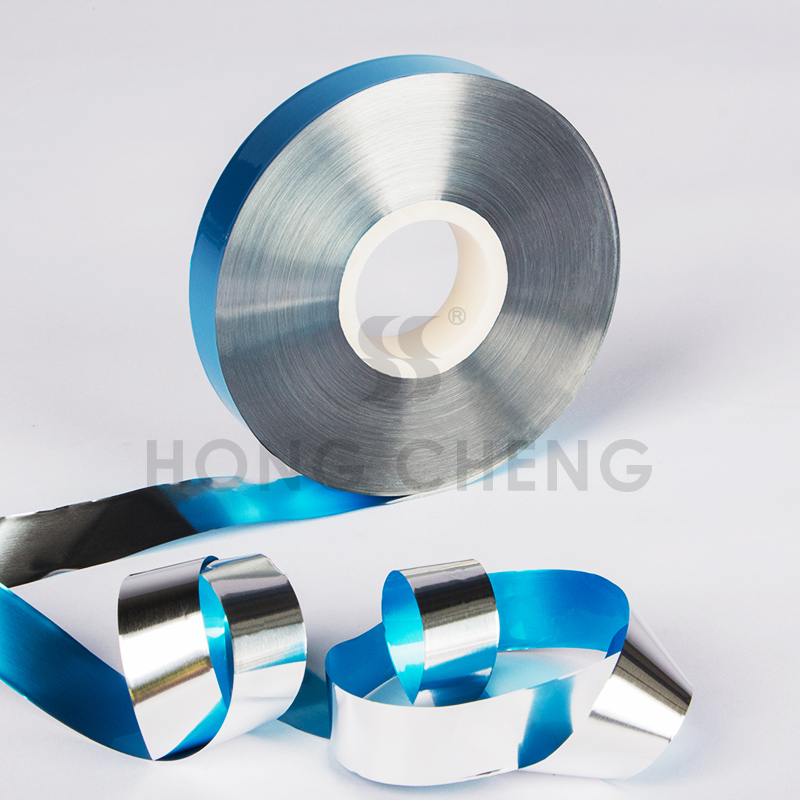
④ KPET/AL/PE (Metallized PET + Aluminum Foil + PE) KPET is PET film with a vacuum-deposited aluminum layer. When laminated with aluminum foil, it creates a reinforced high-barrier structure at a meaningfully lower raw material cost than full-foil constructions. Barrier performance is slightly lower than all-foil structures but remains highly effective for cost-sensitive industrial moisture protection.
3. How Aluminum Foil Thickness Drives Barrier Performance
Foil thickness is the single most critical specification parameter affecting barrier performance:
- 6–7 μm: The lower threshold for industrial packaging applications. Slightly higher pinhole rates; suited for short-term moisture protection.
- 9 μm: The most widely used specification for industrial barrier packaging. Represents the optimal balance between cost and barrier effectiveness.
- 12 μm and above: For demanding applications such as ocean freight export and long-term warehousing. 12 μm foil significantly reduces pinhole frequency, further compressing WVTR.
- 20 μm and above: Used in select heavy-duty applications where physical barrier robustness under extreme conditions is non-negotiable.
4. Raw Material Selection Criteria for Packaging Manufacturers
When sourcing aluminum foil composite films, packaging bag and laminate manufacturers should look beyond barrier specifications and evaluate:
Lamination Bond Strength (Peel Strength): Delamination is the most common failure mode in aluminum foil composite packaging. Bond strength at the PE/AL interface directly determines durability during low-temperature handling, folding, and filling operations. Industry minimum: ≥ 1.5 N/15mm.
Heat Seal Strength: Heavy industrial packaging — particularly bags for powder or liquid contents — places extreme demands on heat seal joints. Seal strength should typically meet ≥ 50 N/15mm for reliable closure integrity.
Custom Width and Thickness Combinations: Industrial packaging applications require diverse reel widths (600 mm to 2,000 mm) and varied combinations of foil and PE layer thickness. Raw material suppliers should offer robust customization capability across multiple specifications.
Regulatory Compliance: Packaging materials exported to North American and European markets must comply with regulations such as FDA food contact standards and the EU REACH regulation. Prioritize suppliers with documented certifications.
5. Market Outlook: Aluminum Foil Composite Packaging in 2026 and Beyond
Driven by nearshoring trends and supply chain resilience initiatives, global demand for precision industrial packaging continues to grow. Several dynamics are worth tracking:
EV Component Export Growth: Shipments of battery modules, motor stators, and power electronics are rising sharply — driving demand for moisture-barrier and anti-static composite packaging tailored to EV supply chain requirements.
Semiconductor Industry Expansion: Chip and wafer packaging demands exceptionally low pinhole rates and cleanroom-compatible materials, pushing demand for premium aluminum foil composite films.
Chemical Logistics Safety Upgrades: Tightening global regulations around hazardous materials transport are accelerating the replacement of standard woven bags with high-barrier aluminum composite bulk bags.
Lightweighting and Sustainability: Under the EU's Extended Producer Responsibility (EPR) framework, portions of the industrial packaging segment are exploring thinner foil structures (6–7 μm) combined with high-performance barrier coatings as a sustainability-aligned alternative.
Hangzhou Hongcheng Technology Co., Ltd. specializes in aluminum foil composite materials and PE laminated composite materials, offering stable production capacity and flexible customization across multiple specifications. We serve packaging film and bag manufacturers worldwide, providing consistent raw material quality and responsive technical support.
For samples, product specifications, or pricing inquiries, please contact us at www.techfoil.com.
Aluminum Mylar Tape Selection Guide: AL/PET vs AL/PE Shielding Foil for Cable Applications
How Aluminum Foil Composite Materials Boost Building Energy Efficiency