Aluminum Foil Flexible Duct Materials: What HVAC Engineers and Procurement Teams Need to Specify in 2026
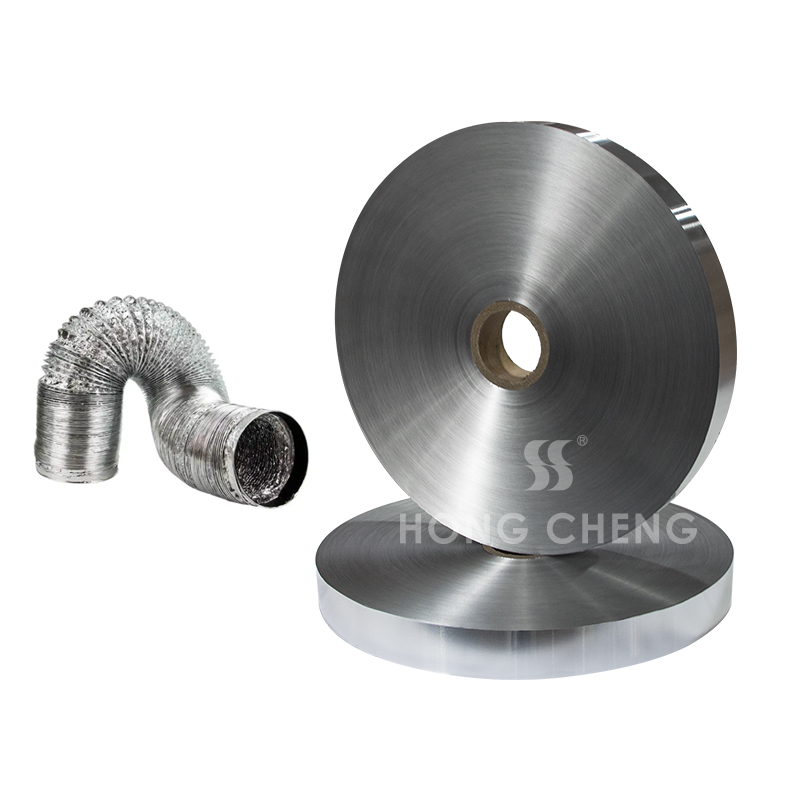
In HVAC and mechanical ventilation systems, flexible duct is one of those materials that professionals interact with every day but rarely stop to interrogate. It routes conditioned air, it bends around structural obstacles, it gets installed in plenum spaces where no one will ever look at it again — and it needs to perform for decades without failure. In 2026, the requirements on flexible duct materials are becoming more stringent, not less, as energy codes tighten, fire safety standards evolve, and indoor air quality expectations rise.
The aluminum foil composite layer is what makes modern flexible duct work. Understanding what distinguishes a well-specified foil composite from an inadequate one matters more than many specifying engineers realize — particularly as the market fills with products that meet the letter of a standard while missing the spirit of performance.
Why Aluminum Foil Composite Is the Core of Flexible Duct Construction
A standard flexible duct assembly consists of three functional layers: an inner liner, a helical wire support structure, and an outer jacket. The outer jacket — which faces the plenum or mechanical space — is almost universally constructed from aluminum foil composite material. It is the vapor barrier, the thermal reflector, and the first line of mechanical protection for the insulation beneath it.
The aluminum foil composite outer jacket performs multiple functions simultaneously:
Vapor barrier function is primary. In HVAC applications, maintaining the vapor barrier integrity of flexible duct prevents condensation from forming within the duct wall — a failure mode that leads to mold growth, insulation saturation, and eventual structural failure of the duct. A well-constructed aluminum foil composite jacket, with intact laminate bonds at every layer, maintains vapor permeability rates well below the thresholds required by ASHRAE 90.1 and similar energy standards.
Thermal reflectance contributes to system efficiency. The outer aluminum surface reflects radiant heat back toward the duct interior, reducing heat loss from the conditioned air stream. For flexible ducts in unconditioned spaces — attics, crawl spaces, mechanical rooms — this reflective function is a meaningful contributor to system efficiency. Foil surface emissivity is a relevant parameter, and suppliers who cannot provide emissivity data are signaling limited technical depth.
Mechanical durability protects the system during and after installation. Flexible duct gets handled roughly — pulled around corners, compressed into tight chases, occasionally stepped on during installation. The outer jacket absorbs these mechanical stresses. Tear resistance, puncture resistance, and the ability of the composite layers to stay bonded under bending stress are the relevant performance parameters.
The Composite Structure: What Layers Are Doing What
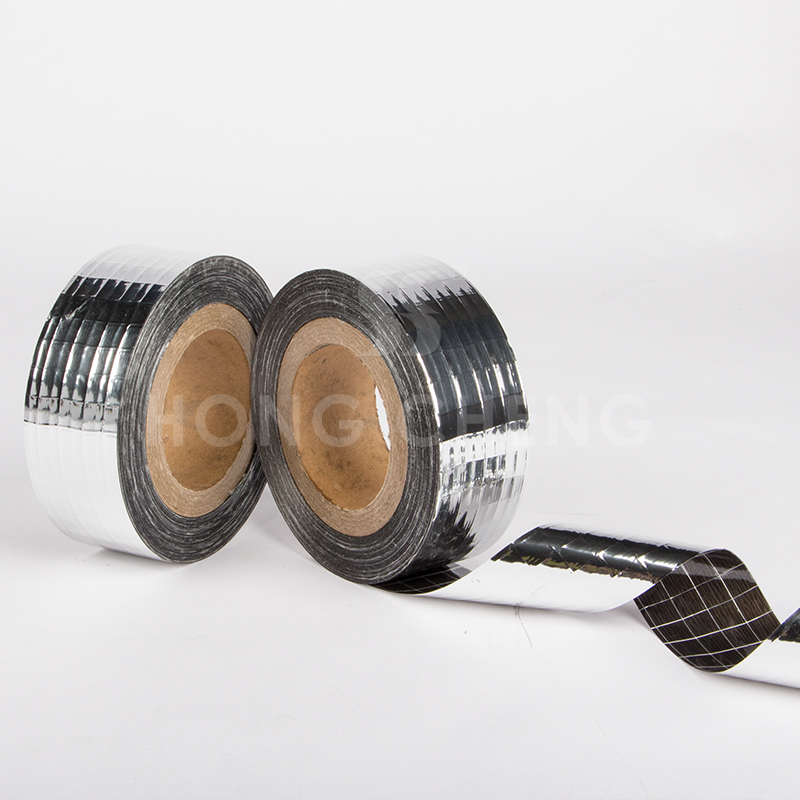
The aluminum foil composite used in flexible duct outer jackets typically combines aluminum foil with one or more supporting layers: woven polyester scrim, non-woven reinforcement, or foil-scrim-kraft (FSK) configurations.
Foil-only (unsupported) configurations are inappropriate for flexible duct applications. Without a reinforcing layer, bare foil tears under the bending and mechanical stresses of installation. This is not an edge case — it is a predictable failure mode.
Foil-scrim (FS) laminate, combining aluminum foil with a woven polyester or fiberglass scrim, is the standard for flexible duct outer jackets. The scrim arrests tear propagation and provides dimensional stability. The key variable within this configuration is scrim mesh count and yarn tensile strength — a coarser, heavier scrim handles higher tear loads. Specifiers should require minimum tear strength values, not simply accept "foil-scrim" as a sufficient material description.
Foil-scrim-kraft (FSK) laminate adds a kraft paper backing layer to the foil-scrim base. The kraft layer adds puncture resistance and provides a cleanly printable surface for labeling. FSK configurations are widely used in commercial HVAC applications and are referenced explicitly in UL 181 flexible duct standards.
Reinforced foil configurations, using polyester or fiberglass backing without kraft, offer the highest tear and puncture resistance in thinner overall profiles. These are appropriate for flexible ducts in high-handling-stress installations.
Standards Compliance: UL 181, NFPA 90A, and Energy Code Requirements
UL 181 (Factory-Made Air Ducts and Air Connectors) establishes the fundamental construction and performance requirements for flexible duct materials. Class 1 air ducts require materials tested for flame spread index ≤25 and smoke developed index ≤50 when tested per ASTM E84. The foil composite outer jacket must be tested as part of the complete duct assembly, not as a standalone material.
NFPA 90A governs where flexible duct can be installed. Plenum-rated installations require materials meeting NFPA 90A Class 1 standards. ASHRAE 90.1 sets maximum duct leakage and thermal performance standards.
In Chinese construction projects, GB/T 17393 and GB 50736 set the applicable framework for flexible duct materials and HVAC system design.
Specification Parameters for Procurement
Foil thickness for flexible duct applications is typically in the 7–12 micron range. For premium applications, specifying a minimum of 9–10 microns provides a meaningful performance margin. Scrim construction should be specified by fiber type, mesh count, and minimum tensile strength. Emissivity of the outer aluminum surface should be specified and verified where relevant. Dry lamination or thermal bond processes produce more stable long-term bond integrity than wet processes.
Market Outlook
Three trends are expanding demand in 2026: green building certification requirements raising the specification baseline, residential HVAC replacement cycles accelerating, and industrial ventilation applications expanding in manufacturing, data centers, and pharmaceutical HVAC.
Hongcheng Technology supplies aluminum foil composite materials for HVAC flexible duct manufacturing, with foil-scrim and FSK configurations available via dry lamination. Samples and technical data sheets available on request.
Aluminum Foil Building Insulation Materials: A Specifier's Guide to Reflective Thermal Barriers in 2026
Aluminum Foil Shielding Tape for Cables: 2026 Market Trends and What Cable Engineers Need to Know