Aluminum Foil Industrial Flexible Packaging Materials: A Selection Guide for Chemical, Agricultural, and Industrial Applications in 2026
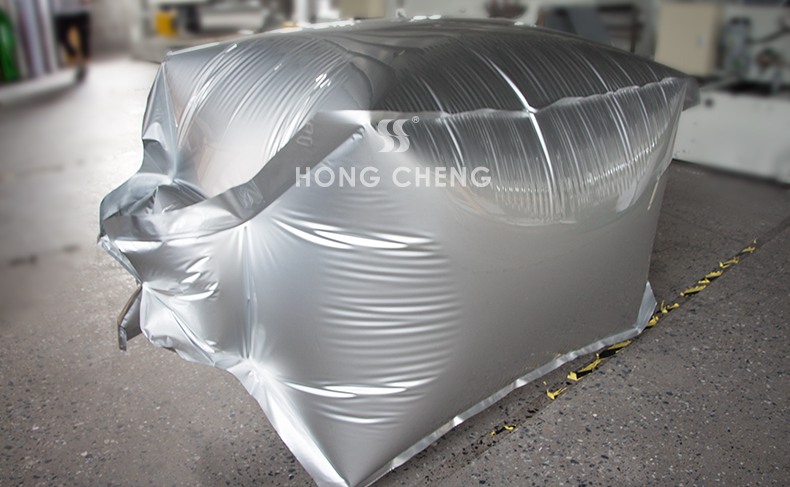
Industrial flexible packaging is one of the most demanding application categories for aluminum foil composite materials. Unlike consumer or retail packaging, industrial flexible packaging operates in environments defined by aggressive chemicals, extreme temperature cycles, prolonged outdoor exposure, and high mechanical stress during filling, transport, and storage. The consequence of a packaging failure in an industrial context — product contamination, chemical spill, or moisture ingress into a hygroscopic bulk material — is typically far more costly than the packaging itself.
For packaging engineers and procurement teams in chemical manufacturing, agrochemical distribution, and industrial goods logistics, the selection of an aluminum foil composite laminate is a technical decision that requires understanding material performance, lamination construction, and the specific environmental demands of the target application. This guide addresses the core selection parameters.
Why Aluminum Foil in Industrial Flexible Packaging
Aluminum foil's contribution to industrial flexible packaging is defined by its barrier properties: impermeability to water vapor, oxygen, light, and most organic solvents when used at gauges above approximately 9 microns. At this thickness, aluminum foil is essentially a complete barrier to gas and moisture transmission, a property that no polymeric film — regardless of surface treatment or coating — can match without a metallic or inorganic barrier layer.
For industrial packaging applications, this barrier function addresses three distinct concerns. First, moisture exclusion: many industrial chemicals, agrochemical powders, and hygroscopic bulk materials absorb moisture from the atmosphere, degrading product quality or triggering premature chemical reactions. A packaging laminate with an aluminum foil barrier layer eliminates atmospheric moisture ingress over the intended shelf life. Second, volatile retention: solvent-based products, chemical intermediates, and certain agrochemical formulations contain volatile organic compounds that must be retained within the package during storage and transit. Aluminum foil prevents permeation losses and reduces inhalation hazard during handling. Third, contamination prevention: industrial packaging must prevent external contamination from light, oxidizing agents, and trace chemical vapors in warehouse environments, particularly when the packaged product is sensitive to oxidation or photodegradation.
Laminate Constructions for Industrial Flexible Packaging
Industrial flexible packaging rarely uses aluminum foil as a standalone material. The foil layer is combined with structural films, sealant layers, and, in some constructions, woven polypropylene (PP) fabrics to create laminates with the combination of barrier performance, mechanical strength, and sealability required for the specific application.
The most common laminate constructions in industrial flexible packaging include:
Biaxially oriented polypropylene (BOPP) or polyethylene terephthalate (PET) / aluminum foil / polyethylene (PE) trilayer laminates represent the foundational construction for industrial flexible bags and pouches. The outer BOPP or PET layer provides printability, surface abrasion resistance, and structural rigidity; the aluminum foil layer provides complete barrier performance; and the inner PE sealant layer provides heat-seal integrity and chemical compatibility with the contents. Variations in the PE sealant layer — linear low-density PE (LLDPE) for improved puncture resistance, cast PE for enhanced seal strength, co-extruded multilayer PE for specific chemical resistance profiles — allow the construction to be tuned to the application.
For heavier industrial packaging applications — 10–50 kg bulk bags, agricultural chemical bags, and industrial chemical sacks — a woven PP or woven polyethylene (PE) fabric layer is incorporated into the laminate to provide the tensile strength and tear resistance required for the fill weight and drop test performance demanded by transport regulations. These constructions, typically structured as PET or BOPP / foil / woven PP / PE or as woven PP / foil laminate / PE, are used extensively in the agrochemical sector for pesticide powders, fertilizer additives, and seed treatment chemicals, and in the industrial chemicals sector for resin powders, catalyst materials, and specialty chemical intermediates.
Foil-kraft paper laminates, combining aluminum foil with kraft paper and a PE sealant, are used where the packaging assembly must balance barrier performance with the rigidity and machinability characteristics associated with paper. These constructions are common in valve bags for powdered chemicals and in overpack liners for fiber drums and corrugated containers.
For highly aggressive chemical applications — packaging of reactive intermediates, strong oxidizers, or halogenated solvents — the sealant layer selection becomes critical. Standard LLDPE sealant layers have limited resistance to many halogenated compounds, strong acids, and concentrated alkalis. In these cases, the sealant layer must be specified as a chemically resistant polymer: cast polypropylene (CPP), high-density polyethylene (HDPE), or co-extruded barrier sealant films with appropriate chemical resistance profiles.
Performance Parameters and Test Methods
For industrial flexible packaging procurement and qualification, the following performance parameters define fitness for purpose:
Water vapor transmission rate (WVTR) is the primary barrier performance indicator. For aluminum foil laminates with intact foil at gauges above 9 microns, WVTR should be effectively zero — reported as below the instrument detection limit using ASTM E96 or ISO 2528 test methods. A WVTR value that is detectably above zero in an aluminum foil laminate indicates foil damage — pinholes introduced during lamination or converting — and should trigger investigation of the foil gauge and lamination process quality control.
Oxygen transmission rate (OTR) follows the same logic. Intact aluminum foil at sufficient gauge provides zero OTR. Products claiming OTR performance should be tested per ASTM D3985 or ISO 15105.
Heat seal strength, measured per ASTM F88 or EN 15106, is the primary mechanical performance indicator for the laminate sealant layer. Industrial flexible packaging typically requires seal strengths above 35–50 N/15mm depending on application, with peel failure mode (cohesive peel) preferred over delamination failure. Seal strength consistency across the operating seal temperature range of the packaging machinery is equally important as peak seal strength.
Puncture resistance, measured per ASTM F1306 or equivalent, characterizes the laminate's ability to resist mechanical damage during filling, transport, and handling. For woven PP-reinforced laminates intended for heavy industrial use, puncture resistance is a primary performance criterion alongside barrier properties.
Peel strength between laminate layers (interlayer adhesion), measured per ASTM F904 or equivalent, ensures that the laminate does not delaminate under the temperature, humidity, or chemical exposure conditions of the storage and transport environment. Chemical migration from packaged products into the adhesive layer is a known failure mode in aggressive chemical packaging applications; specifiers should request migration test data or solvent resistance test data for the adhesive system when packaging chemically aggressive materials.
Chemical Resistance: The Critical Qualification Step
Industrial packaging engineers are often well-versed in barrier properties and mechanical performance but underestimate the importance of systematic chemical compatibility qualification. The interaction between the packaged product and the packaging laminate — particularly the inner sealant layer and the adhesive layers — must be evaluated for each specific product at the intended storage conditions.
Chemical compatibility qualification for industrial flexible packaging should include: immersion testing of the sealant film in the product formulation at the maximum storage temperature; monitoring of weight gain or loss (indicating swelling or extraction), peel strength retention after immersion, and visual assessment of surface attack or discoloration; and headspace analysis to detect any packaging components that may migrate into the product or product volatiles that may degrade the laminate.
This qualification process is particularly important in the agrochemical sector, where emulsifiable concentrate (EC) formulations contain high concentrations of aromatic and aliphatic solvents that are aggressive to many common sealant polymers. Wettable powder (WP) and water-dispersible granule (WDG) formulations, while less chemically aggressive to the sealant layer, impose dustiness and abrasion demands that affect choice of the outer and inner film layers.
Regulatory and Compliance Context
For industrial flexible packaging, the primary compliance framework is not consumer goods legislation but rather hazardous goods transport regulations and, in the agrochemical sector, pesticide product registration requirements.
Transport of dangerous goods (TDG) regulations — the UN Recommendations on the Transport of Dangerous Goods (the "Orange Book"), ADR in Europe, 49 CFR in the United States, and the IATA/IMDG regulations for air and sea transport — specify packaging performance requirements by UN packaging group. Aluminum foil laminate bags and pouches used for dangerous goods must be tested and certified per the applicable UN test protocol (drop, stack, leakproofness, and top-lift tests as required by the packaging group and substance). UN-certified packaging carries a UN mark on the package identifying the packaging code, performance group, and authorized contents.
In China, the packaging of hazardous chemicals is governed by GB 12463 (General Technical Requirements for Packaging of Dangerous Goods) and the associated GB 15606 and related standards. Packaging used for agrochemical products must comply with the registration requirements of the Ministry of Agriculture and Rural Affairs, which specify packaging types and performance requirements as part of the product registration dossier.
Market Trends in 2026
Several macro trends are shaping demand for aluminum foil composite materials in industrial flexible packaging in 2026.
Tightening environmental regulations on packaging are driving two simultaneous and sometimes conflicting pressures: demand for lighter-gauge laminates (reducing material mass per packaging unit) and demand for recyclability-compatible structures (driving interest in foil-free barrier laminates in consumer packaging). In industrial packaging, where performance cannot be sacrificed for recyclability at the scale of hazardous goods packaging, aluminum foil composites remain technically dominant for barrier-critical applications. However, procurement teams are increasingly requesting data on laminate material composition and guidance on end-of-life handling.
Nearshoring and supply chain regionalization trends are increasing demand for local sourcing of industrial packaging materials in Southeast Asia, South Asia, and Eastern Europe, creating opportunities for regional suppliers with consistent quality and reliable delivery.
The growth of specialty chemical production in China and Southeast Asia is expanding the addressable market for high-performance industrial flexible packaging laminates, particularly for products requiring barrier performance combined with chemical compatibility for non-aqueous formulations.
Hongcheng Technology supplies aluminum foil composite laminates for industrial flexible packaging applications, including BOPP/foil/PE, PET/foil/PE, and woven PP reinforced constructions for chemical, agrochemical, and industrial goods packaging. Dry lamination process with solvent-based and solventless adhesive systems. Technical data sheets, chemical compatibility guidance, and samples available on request.
Reference standards: ASTM E96, ASTM D3985, ASTM F88, ASTM F1306, ASTM F904, EN 15106, GB 12463, UN Recommendations on the Transport of Dangerous Goods.
Aluminum Foil Composite Shielding Materials for EMC Engineering: A Technical Selection Guide for Cable Manufacturers and EMC Integrators
Aluminum Foil Building Insulation Materials: A Specifier's Guide to Reflective Thermal Barriers in 2026