AL/PE and PET/AL/PE Foil Laminates for Food & Pharma Export Packaging: A Raw Material Selection Guide

1. The Barrier Challenge in Export Packaging
As China's high-end food and active pharmaceutical ingredient (API) exports continue to expand, the barrier performance of packaging materials has become the decisive factor in determining overseas compliance and customer acceptance. Whether exporting tea, nuts, and functional foods to the EU, or APIs, traditional Chinese medicine, and medical devices to Europe and North America, products face three major risks during long-distance transportation: humidity fluctuation, oxidative degradation, and light-induced deterioration.
Aluminum foil composite materials, with their near-zero water vapor transmission rate (WVTR) and oxygen transmission rate (OTR), have become an irreplaceable substrate solution for high-end export packaging. For raw material purchasers, selecting the right aluminum foil laminate structure and specifications is the critical starting point for ensuring end-package compliance and cost control.
2. Mainstream Aluminum Foil Laminate Structures Compared
For different food and pharmaceutical packaging scenarios, Hongcheng Technology offers a variety of aluminum foil composite structures. The following compares four mainstream solutions:
| Structure | Barrier (WVTR) | Barrier (OTR) | Heat Seal | Printability | Application |
|---|---|---|---|---|---|
| AL/PE (2-layer) | ≤0.1 g/m²·d | ≤0.5 cm³/m²·d | Excellent | Fair | General food inner liner |
| PET/AL/PE (3-layer) | ≤0.05 g/m²·d | ≤0.2 cm³/m²·d | Excellent | Excellent | Premium food, pharma |
| AL/PE/AL (symmetrical) | ≤0.02 g/m²·d | ≤0.1 cm³/m²·d | Good | Fair | High-value APIs |
| KPET/AL/PE (4-layer) | ≤0.01 g/m²·d | ≤0.05 cm³/m²·d | Excellent | Excellent | EU high-standard export |
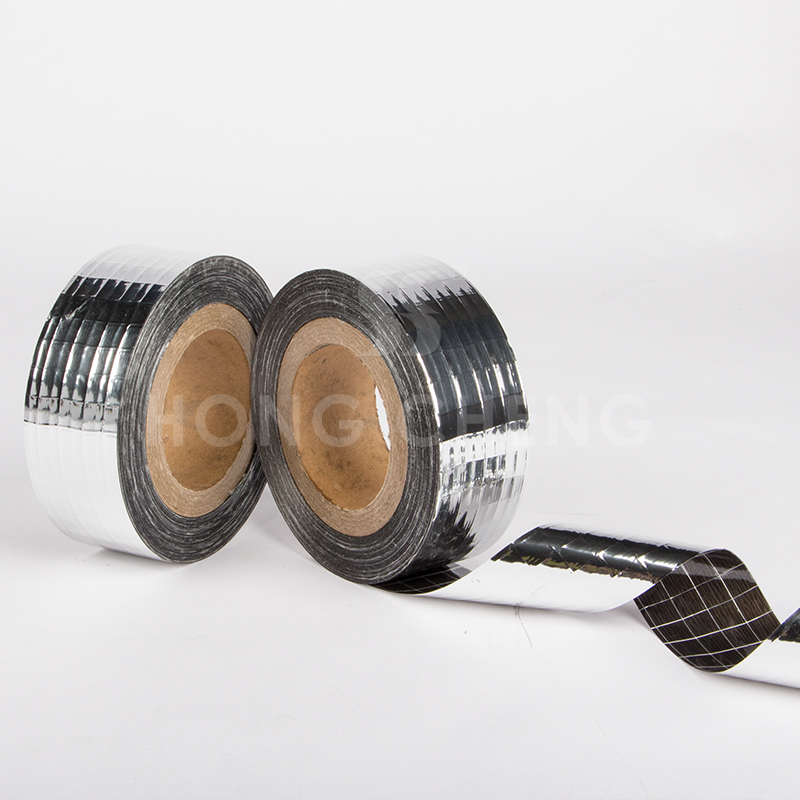
The PET/AL/PE 3-layer structure—with outer-layer PET providing excellent printability and mechanical strength, intermediate aluminum foil delivering total barrier, and inner-layer PE ensuring reliable heat sealing—has become the preferred raw material solution for high-end food and pharmaceutical export packaging.
3. Material Selection for High-End Food Export Packaging
3.1 High-Oleic Foods: Nuts, Coffee, Tea
These products have high oil content and are at significant risk of oxidative deterioration, imposing strict OTR requirements. Recommended specifications:
- Aluminum foil thickness: 7μm or 9μm (balancing cost against pinhole risk)
- Inner PE selection: Low-temperature heat-seal PE (SCT ≈ 110°C), ensuring heat seal strength ≥15N/15mm
- Lamination method: Dry lamination or extrusion lamination, peel strength ≥1.5N/15mm
3.2 Functional Food & Dietary Supplement Pouch Packaging
Flexible packaging for functional foods exported to European and American markets requires, in addition to barrier performance, compliance with FDA and EFSA food contact material regulations. Aluminum foil laminates must be supplied with:
- Third-party WVTR/OTR test reports
- Migration test reports (total migration ≤10 mg/dm²)
- Inner PE material certification compliant with EU 10/2011 or FDA 21 CFR 177.1520
4. Key Indicators for API & Medical Device Packaging
4.1 API Aluminum-Plastic Composite Bags
APIs are extremely sensitive to moisture. WVTR must be controlled below 0.1 g/m²·d. The recommended structures are PET/AL/PE 3-layer or AL/PE/AL symmetrical, with aluminum foil thickness ≥9μm to minimize pinhole risk.
4.2 Medical Device Blister Lidding Laminates
Lidding laminates must heat-seal to PVC or PET blister cavities, requiring the PE layer to have a precise heat-seal window (120–160°C). Key parameters for aluminum foil composite lidstock:
- Aluminum foil thickness: 6–9μm (thin-profile trend is accelerating)
- PE selection: EMAA or low-temperature heat-seal PE, heat seal strength ≥12N/15mm
- Breathability: Total barrier, OTR ≤0.5 cm³/m²·d·atm
5. Quantitative Relationship: Foil Thickness vs. Barrier Performance
During specification selection, purchasers frequently face the "foil thickness trade-off" question. The table below shows typical barrier performance of different aluminum foil thicknesses in composite films (PET/AL/PE structure as example):
| Foil Thickness | WVTR (g/m²·d) | OTR (cm³/m²·d) | Pinhole Risk | Cost Factor |
|---|---|---|---|---|
| 6μm | 0.08–0.15 | 0.3–0.8 | Medium | 1.0 |
| 7μm | ≤0.1 | ≤0.5 | Low | 1.15 |
| 9μm | ≤0.05 | ≤0.2 | Very Low | 1.35 |
| 12μm | ≤0.02 | ≤0.1 | Very Low | 1.7 |
Purchasing Recommendation: For high-end foods and APIs exported to the EU, 7μm or 9μm aluminum foil is recommended to balance pinhole risk control with cost pressure.
6. 2026 Export Packaging Compliance Trends
6.1 EU PPWR Regulation Impact
The EU Packaging and Packaging Waste Regulation (PPWR) will be fully implemented by 2030, introducing two new requirements for export packaging:
- Recyclable design: Laminates must provide mono-material recyclable alternatives or clearly label composite material categories.
- Recycled content ratio: Plastic components must contain no less than 35% recycled content (rPE/rPET).
Aluminum foil laminates remain irreplaceable in the short term due to their total barrier performance. However, reversible adhesive systems or mono-PE alternative structures should be considered to prepare for PPWR compliance.
6.2 Chinese Pharmacopoeia 2025 Edition: New Packaging Material Requirements
The 2025 edition of the Chinese Pharmacopoeia added control requirements for extractables and leachables from pharmaceutical packaging materials, imposing stricter testing standards for inner-layer PE migration in aluminum foil laminates. Purchasers must confirm that suppliers can provide full-test reports meeting pharmacopoeia requirements.
7. Hongcheng Technology Aluminum Foil Laminates: Product Advantages
As a professional aluminum foil composite material manufacturer, Hangzhou Hongcheng Technology provides the following product support for high-end food and pharmaceutical packaging enterprises:
- Multi-layer structure customization: AL/PE, PET/AL/PE, AL/PE/AL, KPET/AL/PE, and more
- Foil thickness range: 6–50μm, supporting thin-profile high-barrier solutions
- Width customization: Maximum width 1600mm, compatible with various pouch-making and thermoforming equipment
- Test report package: WVTR, OTR, peel strength, heat seal strength, migration, and more
- Compliance documentation: Assistance with FDA, EFSA, EU 10/2011, and other food contact material compliance declarations
8. Purchasing Parameter Checklist
To help purchasers select efficiently, here is a practical aluminum foil laminate purchasing checklist:
- Foil thickness: Select 6/7/9/12μm according to product sensitivity; ≥7μm recommended for high-end export markets
- Bond strength: Peel strength ≥1.5N/15mm (AL/PE interface)
- Heat seal performance: Heat seal strength ≥15N/15mm (food), ≥12N/15mm (pharma lidding)
- WVTR/OTR targets: Determine based on product shelf-life; OTR ≤0.5 recommended for nut products
- Inner PE compliance: Confirm compliance with target market food contact regulations (FDA/EFSA/GB 4806)
9. Conclusion
Aluminum foil laminates are the core raw material for high-end food and pharmaceutical export packaging. Structure selection and specification configuration directly affect product shelf life and overseas market compliance. With the implementation of the EU PPWR regulation and the upgrade of Chinese Pharmacopoeia standards, purchasers should place greater emphasis on suppliers' testing capabilities, compliance documentation, and customization responsiveness.
Hangzhou Hongcheng Technology continues to provide high-quality aluminum foil composite raw materials for food and pharmaceutical packaging enterprises, supporting multi-structure design, width customization, and full compliance documentation, helping Chinese high-end manufacturing go global with confidence.
Contact:
Tel/WeChat: +86 13758223270 Email: wendy@hcdxcl.com.cn Website: www.techfoil.com
© 2026 杭州鸿成科技有限公司 Hangzhou Hongcheng Technology Co., Ltd. 保留所有权利。
AL/PE Foil Laminate for Heating Cable Shielding Sleeve: Structure, Performance and Selection Guide
Reflective Film Materials for Underfloor Heating: Metalized Film vs AL/PE Foil Laminate — A Sourcing Guide