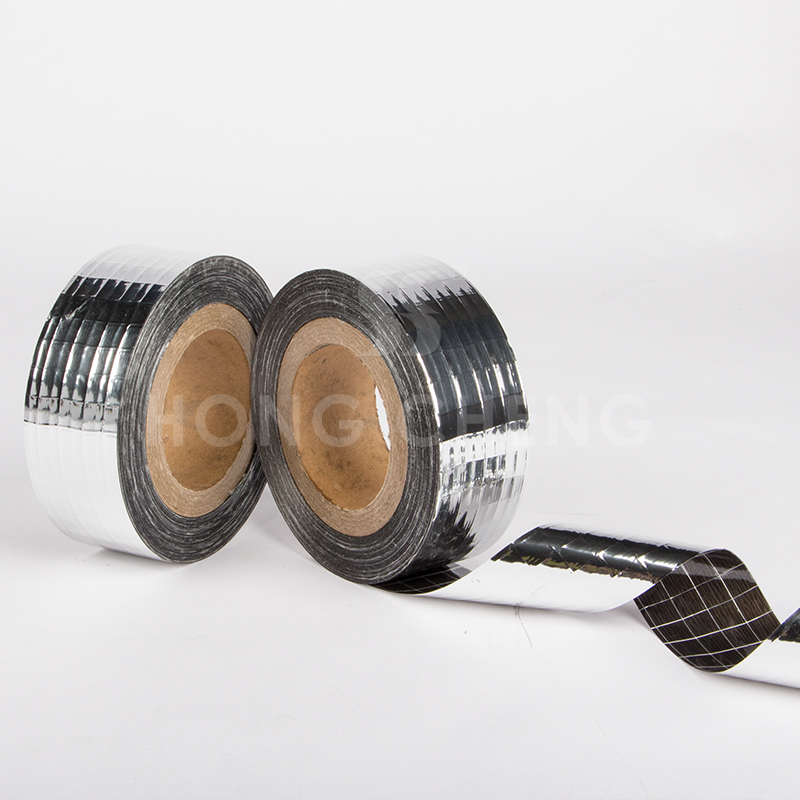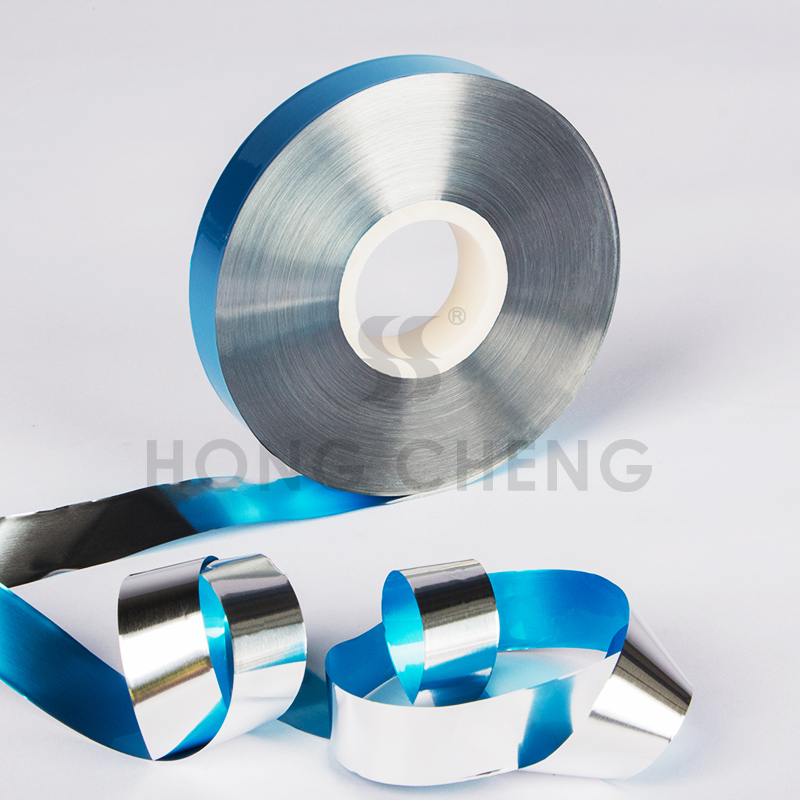
Decoding Aluminum Foil PET Substrates: The Material Behind Decorative Tapes
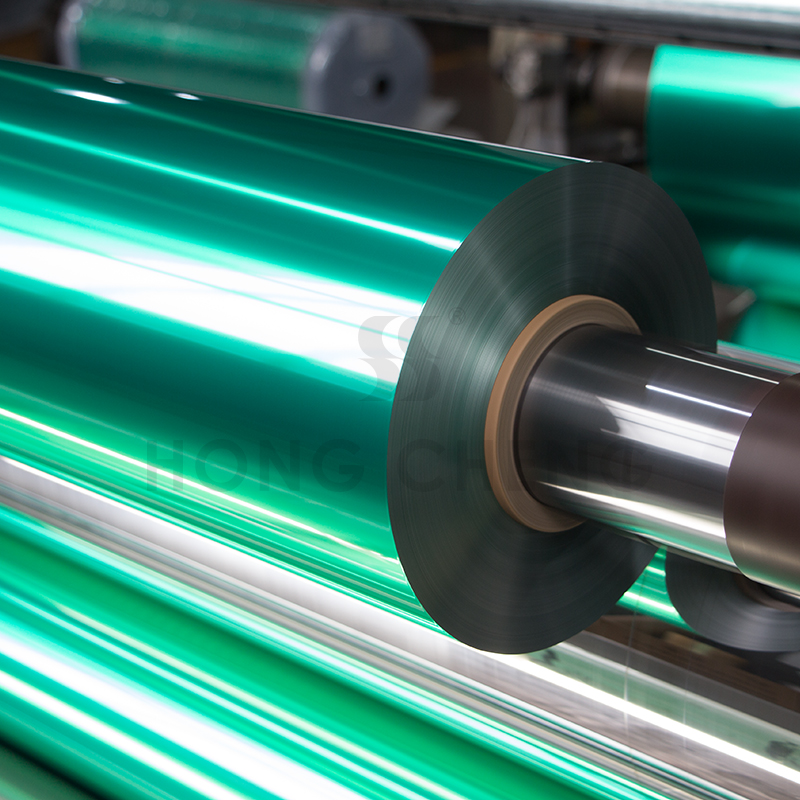
Walk through any building materials market or home improvement store, and you will find aluminum foil tapes and metallic decorative tapes everywhere. They are used for door and window sealing, decorative trim lamination, furniture edge banding, and appliance surface finishing. But have you ever stopped to wonder what gives these tapes their bright, reflective metallic appearance? The answer lies in aluminum foil PET composite substrates.
What Is an Aluminum Foil PET Substrate?
An aluminum foil PET substrate is a laminated composite material consisting of aluminum foil bonded to a PET (polyester) film. The aluminum foil delivers the metallic sheen and a degree of barrier performance, while the PET film contributes excellent mechanical strength, flexibility, and dimensional stability. After lamination, a coating process applies a lacquer or release treatment, transforming the composite into a ready-to-use backing for decorative tapes.
Two common constructions dominate the market. The first is a three-layer aluminum foil + PET + lacquer structure, where the foil side faces the adhesive layer, the PET serves as an outer protective skin, and the lacquer delivers a specific color or gloss effect. The second is a metalized film substrate, where a nanoscale aluminum layer is vacuum-deposited directly onto PET film, followed by lacquer or tinted coating. This alternative is thinner and more cost-effective.
Why Decorative Tapes Need Aluminum Foil PET Backing
Decorative tape differs from general-purpose tape in one critical way — appearance. It must deliver metallic brilliance, mirror-like reflectance, or specific color textures while maintaining reliable adhesion. Aluminum foil PET substrates meet these demands on multiple fronts.
First, lasting metallic luster. Pure aluminum foil offers excellent reflectivity but is inherently brittle. Repeated bending produces creases and micro-cracks that mar the surface. The PET layer changes the equation entirely — the composite bends cleanly without whitening or deformation, preserving the metallic finish through handling, converting, and end-use.
Second, superior dimensional stability. PET film exhibits negligible thermal shrinkage. During downstream processes such as coating, laminating, and slitting, the substrate holds its shape, which is essential for achieving flat, evenly wound tape rolls.
Third, print compatibility. Lacquer formulations can be customized to deliver red clay, gold, silver, matte, and other color effects tailored to different decorative aesthetics. High-end variants support multi-color printing on the PET side for branded or patterned tapes.
Metalized Film Substrates: A Cost-Effective Alternative
For price-sensitive applications, metalized film substrates offer a compelling alternative to full aluminum foil PET laminates. The core process involves vacuum deposition of aluminum onto PET film at thicknesses of just 30–50 nanometers — roughly one-thousandth the gauge of conventional aluminum foil.
The advantages are clear: material costs drop 30–50% compared to foil PET laminates; the thinner profile reduces total product weight; and the deposited aluminum layer bonds tightly to PET with minimal risk of delamination. The trade-off is slightly lower metallic brilliance and opacity compared to foil PET composites, which keeps the latter dominant in premium decorative segments.
Key Selection Parameters for Procurement Teams
For purchasing professionals at tape manufacturing companies, the following parameters deserve careful attention when sourcing aluminum foil PET substrates:
Foil Thickness: Common specifications are 6μm, 7μm, and 9μm. Thicker foil yields stronger metallic appearance and better light blocking, but reduces material flexibility. Decorative tapes generally favor 6–7μm foil.
PET Thickness: Typical options are 12μm, 15μm, and 23μm. PET gauge influences stiffness and tensile strength. Most decorative tape applications call for 12–15μm PET.
Lacquer Type: Red clay lacquer film suits warm-tone metallic aesthetics; clear lacquer preserves natural foil appearance; matte lacquer delivers an understated brushed-metal effect. Procurement should clarify the end-use color requirement upfront.
Total Thickness Tolerance: High-quality substrates should maintain thickness variation within ±5%, ensuring uniform adhesive coating in downstream converting.
Industry Trends and Outlook
As home improvement consumption upgrades across global markets, demand for metallic-finish decorative materials continues to climb. The application envelope for aluminum foil PET substrates keeps expanding — from traditional door and window sealing tapes to new frontiers in furniture decorative lamination and consumer electronics surface finishing. Concurrently, tightening environmental regulations are driving the industry toward solvent-free lamination and water-based lacquer coating technologies.
For decorative tape manufacturers, the strategic choice of a substrate supplier — one with stable aluminum foil sourcing, mature laminating capabilities, and responsive sampling turnaround — is fundamental to maintaining product quality and on-time delivery.
Tel/WhatsApp: +86 13758223270 Email: wendy@hcdxcl.com.cn
PET/AL/PE Foil Laminate for Tea Packaging: Barrier Performance and Freshness Preservation Guide
VMPET Metalized Film in HVAC Flexible Duct: Application Advantages and Selection Guide