FS Structure Aluminum Foil Scrim Laminate: A Lightweight Facing Solution for HVAC Duct Applications
Industry Insight | HVAC Duct Materials Technical Series
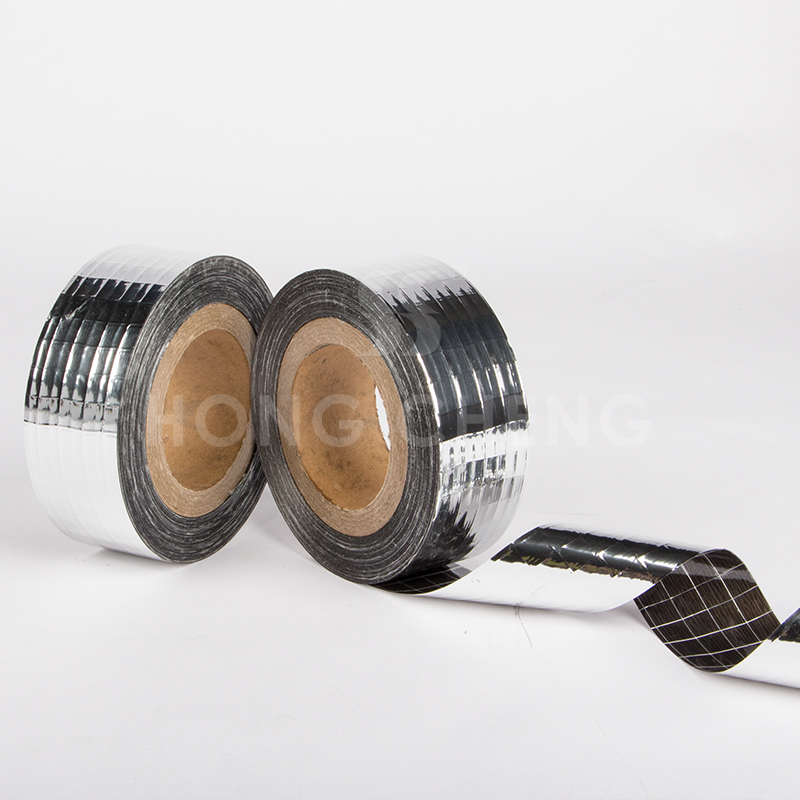
While FSK (Foil-Scrim-Kraft) composite facing has long dominated the HVAC duct insulation facing market as the traditional three-layer standard (aluminum foil + fiberglass scrim + kraft paper), a new variant—FS structure aluminum foil scrim laminate—is steadily gaining attention from contractors and duct manufacturing companies. By removing the kraft paper layer from the conventional FSK structure, FS laminate significantly reduces material weight and cost while retaining the core functions of moisture barrier (from the aluminum foil layer) and tensile strength (from the scrim layer). This makes it an increasingly viable, cost-effective option for ventilation duct and mid-to-low-tier insulation applications.
FS Structure vs. FSK: Differences and Market Positioning
FSK composite facing is the most established outer facing solution for HVAC duct insulation systems. The three-layer construction delivers excellent vapor barrier performance, moisture resistance, and tear strength, making it widely adopted in commercial buildings and industrial facilities.
FS structure (Foil-Scrim), by contrast, is a lightweight evolution of FSK. The kraft paper layer is eliminated, leaving only the aluminum foil and fiberglass scrim plies. The key motivations behind this structural optimization include:
- Weight and cost reduction: Removing the kraft paper layer reduces the basis weight by approximately 15%–25%, with material cost decreasing proportionally. This is particularly valuable for ventilation duct manufacturers and cost-sensitive insulation projects.
- Improved flexibility: Without the stiffness contributed by kraft paper, FS laminate offers better conformability and drapability, making it easier to apply on ducts with complex geometry or tight bending radii.
- Core functions retained: The aluminum foil layer continues to provide an effective vapor barrier and reflective insulation capability; the fiberglass scrim ensures adequate tensile strength in both machine and cross-machine directions, preventing tears during handling and installation.
It is important to note that FS structure is not positioned to replace FSK, but rather to complement it by offering a streamlined, budget-friendly option for applications where extreme durability is less critical but material flexibility and cost control are prioritized.
Key Performance Parameters of Aluminum Foil Scrim Laminate
For ventilation duct manufacturers and insulation contractors evaluating FS structure foil-scrim laminates, the following parameters are central to material selection:
Aluminum Foil Thickness: Common specifications range from 0.007mm to 0.03mm (7μm–30μm). Thinner foil (7–12μm) is typically used for inner-facing applications in flexible ducts, balancing barrier performance with pliability. Thicker foil (20–30μm) is preferred for outer facing to enhance puncture resistance and weathering performance.
Scrim Specification: Fiberglass scrim is the prevailing reinforcement layer. Common mesh densities include 3×3, 5×5, and 10×10 threads per inch. Higher density delivers better tensile strength but increases material stiffness and cost. For flexible duct applications, 5×5 or 10×10 scrim is most commonly specified to achieve a balance between strength and flexibility.
Lamination Process: Two primary processes dominate the market—adhesive lamination (dry lamination using adhesive glue) and extrusion lamination (using molten polyethylene as the bonding medium). Extrusion lamination is increasingly the process of choice because it is solvent-free, environmentally compliant, and produces higher bond strength with minimal risk of delamination. Manufacturers equipped with PE extrusion lamination capabilities are better positioned to meet international environmental standards.
Customization in Width and Roll Length: Flexible duct machines vary in design, and facing material width must be matched accordingly. Quality suppliers offer slitting capability across a range of widths (commonly 1m, 1.2m, 1.25m, etc.) and can customize roll length to minimize on-site splicing for contractors.
Application Scenarios: Beyond Ventilation Ducts
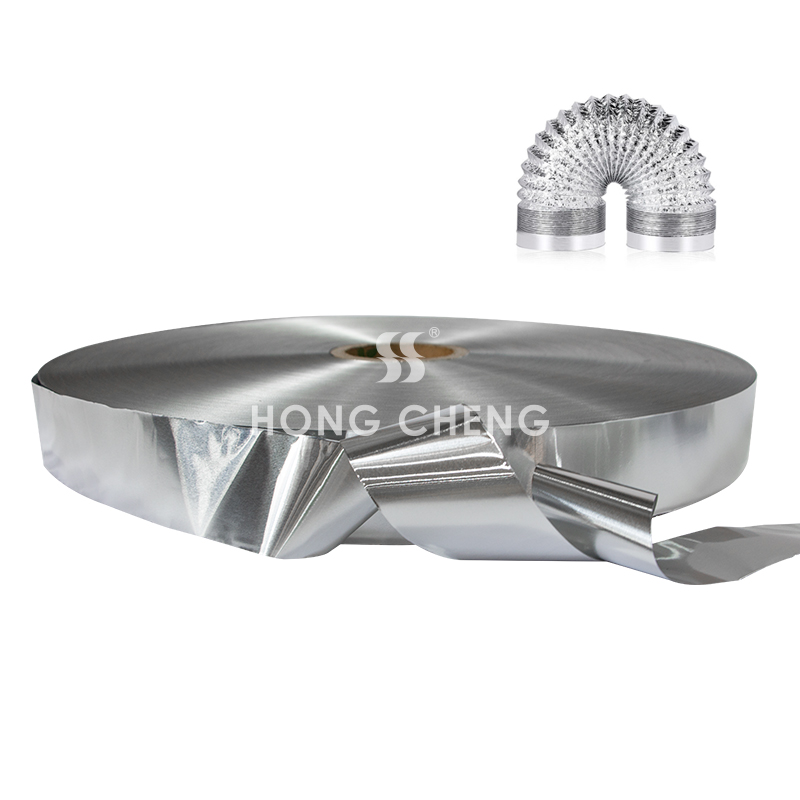
Although FS structure aluminum foil scrim laminate finds its most typical application as the outer facing of flexible ventilation ducts, its application scope is expanding:
- Fan coil unit (FCU) insulation jacketing: After wrapping thermal insulation on FCUs in central air conditioning systems, FS laminate is often used as the outer protective facing. Its flexibility makes it easier to apply on small, irregularly shaped units.
- Light-duty insulation jacketing for small-bore pipes: In industrial piping insulation projects, FS facing is easier to manually conform to pipes with small diameters and numerous bends, compared to the stiffer FSK structure.
- Prefab housing / container house insulation facing: Cost control is a major consideration in these applications. FS laminate provides vapor barrier and reflective insulation in a single material layer, at a lower cost position than FSK.
Selection Guidance: When to Choose FS Structure
When deciding between FS and FSK structures, duct manufacturers and insulation contractors can use the following reference:
| Consideration | FS Structure Preferred | FSK Structure Preferred |
|---|---|---|
| Cost control priority | High | Low |
| Many bends in application | Yes | No |
| Outdoor weathering exposure | Moderate | High |
| Puncture / abrasion resistance requirement | Moderate | High |
| Project specification level | Mid-to-low tier | Mid-to-high tier |
In essence, FS structure aluminum foil scrim laminate is not a substitute but a market-segmented complement to FSK, providing the supply chain with more granular material choices across different price-performance points.
Industry Trends: Sustainability and Customization
Two prominent trends are shaping the aluminum foil composite facing industry (covering both FS and FSK structures):
Eco-friendly process transition: Solvent-based adhesive lamination is facing increasing regulatory pressure due to VOC emissions. Extrusion lamination using polyethylene (PE) as the bonding medium is solvent-free, safer, and delivers higher bond strength. Manufacturers with PE extrusion lamination capacity are gaining competitive advantage in both domestic and international markets.
Growing demand for customization: Flexible duct manufacturers differ in equipment specifications and product positioning. Custom requirements for foil thickness, scrim density, material width, roll length, and core diameter are becoming more frequent. Suppliers capable of offering "multi-spec, small-batch, fast-delivery" service are more likely to secure long-term customer relationships.
About Hongcheng Technology
Hongcheng Technology (Hangzhou) Co., Ltd. specializes in the development and production of aluminum foil composite materials and PE laminated composite materials. Equipped with complete extrusion lamination (PE coating) production lines, the company produces FSK, FS, AL/PE, and other aluminum foil composite structures for applications in flexible ducts, HVAC insulation, building insulation, and industrial packaging.
The company offers customization on foil thickness, scrim specification, material width, roll length, and other parameters to meet diverse customer requirements. Whether your need is for conventional FSK facing or the more cost-advantaged FS structure aluminum foil scrim laminate, Hongcheng Technology delivers reliable material solutions with stable supply for global customers.
Tel / WeChat: 13758223270
Why Aluminum Foil Waterproof Membrane Is Becoming the Standard in Construction Waterproofing
Thin-Profile AL/PET Composite Shielding Film for High-Speed Data Cables: A Material Selection Guide for HDMI, USB & DisplayPort Applications