Aluminum Mylar Tape Selection Guide: AL/PET vs AL/PE Shielding Foil for Cable Applications

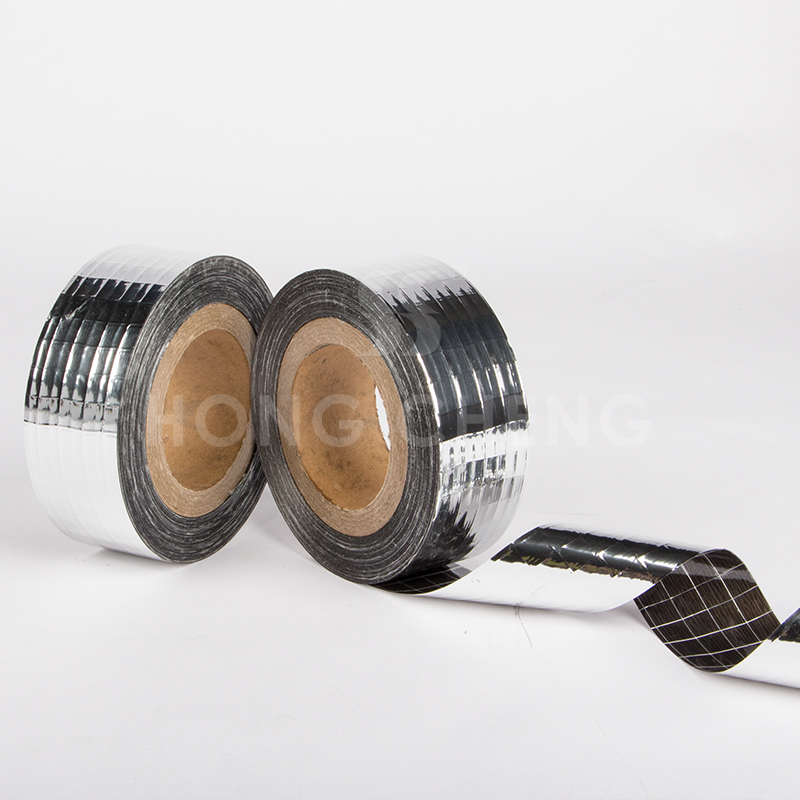
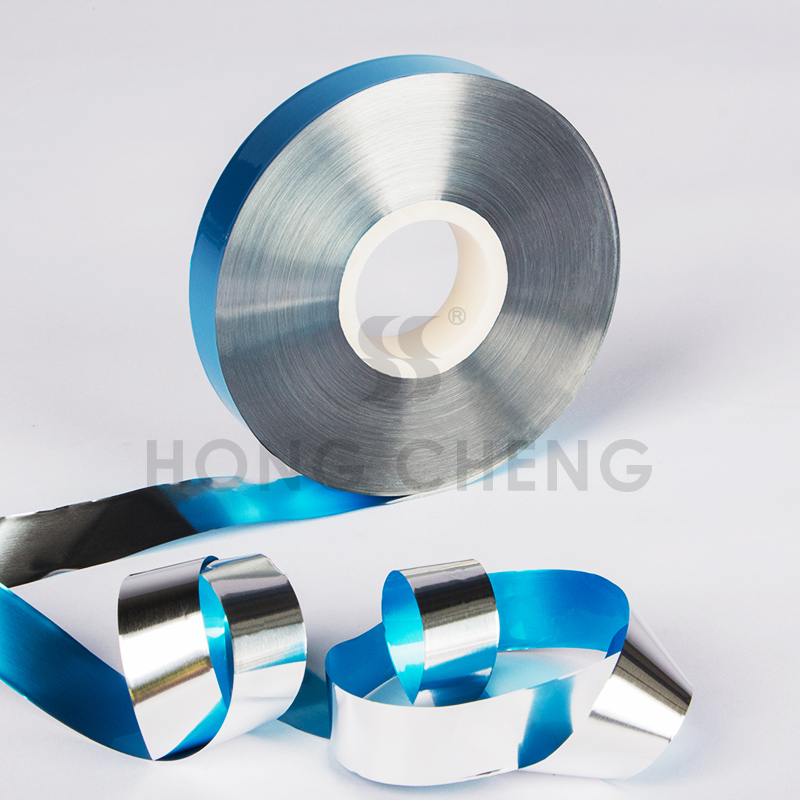
As the global demand for data cables, automotive wiring harnesses, and high-frequency communication cables continues to grow, aluminum foil shielding materials have become a critical component in cable manufacturing. Among them, aluminum mylar tape — a composite of aluminum foil and polyester (PET) film — stands out as one of the most widely used EMI shielding materials in the industry.
However, the market offers a broad range of shielding foil composites. The two most common structures — AL/PET and AL/PE — differ significantly in performance characteristics and application suitability. This article provides a practical breakdown to help procurement professionals and cable engineers make informed material selections.
What Is Aluminum Mylar Tape?
"Mylar" is a registered brand name for biaxially oriented polyethylene terephthalate (BoPET) film. In the cable industry, "aluminum mylar tape" refers to a laminated composite where aluminum foil is bonded to a PET film using an adhesive or thermal lamination process.
The resulting material offers:
- High metallic luster and surface flatness
- Excellent electromagnetic shielding continuity
- Strong mechanical resistance to winding stress
- Dimensional stability under varying temperature conditions
Typical specifications include:
- Aluminum foil thickness: 6 μm to 12 μm
- PET film thickness: 9 μm, 12 μm, or 19 μm
- Available widths: 8 mm slit rolls to full 1200 mm rolls
When applied as a spiral or longitudinal wrap around cable conductors, aluminum mylar tape forms a continuous metallic shield that attenuates incoming electromagnetic interference (EMI) and prevents signal leakage — achieving shielding effectiveness (SE) values of 55–80 dB across the 30 MHz to 1 GHz frequency range.
AL/PET vs AL/PE: A Technical Comparison
AL/PET (Aluminum Foil / Polyester Film Composite)
| Property | AL/PET Performance |
|---|---|
| Tensile Strength | High — PET backbone adds rigidity |
| Temperature Range | -40°C to +130°C |
| Flexibility | Moderate — ideal for precision wrap |
| Thickness Uniformity | Excellent |
| Surface Finish | Mirror-smooth aluminum surface |
AL/PET is the preferred specification for high-frequency data cables, 5G antenna cables, medical cables, and DAC copper cables in data centers. The rigidity of PET minimizes wrinkling during the wrapping process, ensuring consistent shielding coverage and reliable electrical continuity.
AL/PE (Aluminum Foil / Polyethylene Film Composite)
| Property | AL/PE Performance |
|---|---|
| Tensile Strength | Moderate — PE offers soft flexibility |
| Temperature Range | -30°C to +90°C |
| Flexibility | High — suitable for large-diameter harness wrap |
| Heat Sealability | Excellent — PE side can be heat-sealed |
| Cost | Slightly lower than AL/PET |
AL/PE composites are well-suited for automotive low-voltage wiring harnesses, home appliance internal wiring, and applications requiring repeated bending or tight routing paths. The heat-sealable PE layer also enables end-sealing of harness bundles against moisture ingress.
Market Trends Driving Demand in 2026
① New Energy Vehicle High-Voltage Harnesses
Global EV sales exceeded 20 million units in 2025, with 2026 continuing on a strong growth trajectory. High-voltage (HV) wiring harnesses in electric vehicles require 3–5× more shielding foil compared to conventional ICE vehicles. Material requirements include tight foil thickness tolerances, superior flatness, and resistance to mechanical deformation during high-tension wrap operations.
② AI Data Center High-Speed Interconnects
The rapid expansion of AI model training infrastructure has intensified demand for 400G/800G direct-attach copper (DAC) cables. These cables require ultra-thin aluminum foil (6 μm) laminated with high-modulus PET (19 μm), forming the backbone of AL/PET shielding tape used in high-speed server interconnects.
③ Industrial Robotics and Dynamic Flex Cables
As industrial robot adoption accelerates across manufacturing sectors, flex cables used at robot joints must endure more than 1 million bending cycles. AL/PE composites, with their superior flexibility, have become the go-to shielding material for such demanding dynamic applications.
Key Parameters for Procurement Evaluation
When sourcing aluminum foil shielding composites for cable production, procurement teams should verify the following technical criteria:
- Foil Thickness and Tolerance: Specify 6 μm / 9 μm / 12 μm with ±0.5 μm tolerance control
- Lamination Peel Strength: AL-to-PET/PE bond ≥ 1.0 N/15mm (dry state) per GB/T 8808 or equivalent
- Pinhole Count: ≤ 50 pinholes/m² at 9 μm; ≤ 20 pinholes/m² at 12 μm — critical for shielding continuity
- Surface Resistivity: Aluminum face ≤ 0.03 Ω/□ to ensure conductive integrity
- Slit Width Accuracy: ±0.3 mm tolerance; clean, burr-free edges
- Core Size and Roll Weight: Match to winding machine specifications to minimize downtime
Why Partner with Hongcheng Technology?
Hongcheng Technology (Hangzhou) is a specialized manufacturer of aluminum foil composite and PE laminated materials for the cable and electronics industries. Our shielding foil product range covers:
- AL/PET composites: 6–12 μm aluminum foil × 9–19 μm PET, in full-width rolls or precision slit tapes
- AL/PE composites: 6–12 μm aluminum foil × 20–50 μm PE, including heat-sealable grades
- Custom structures: Single-conductor face, double-conductor face, or bonded foil with special coatings
- Narrow slit capability: Starting from 8 mm width for precision cable applications
- Stable bulk supply: Consistent material quality across production batches with full QC documentation
Contact us through www.techfoil.com to request samples or discuss your specific shielding foil requirements.
FSK Facing Material for HVAC Ducts: Structure, Benefits & Sourcing Guide
Aluminum Foil Composite Materials for Industrial Packaging: Barrier Performance, Structure Types, and Raw Material Selection Guide