Let's Talk About the Key Material for Packaging Pouch Batteries - Aluminum-Plastic Film
2025-06-13
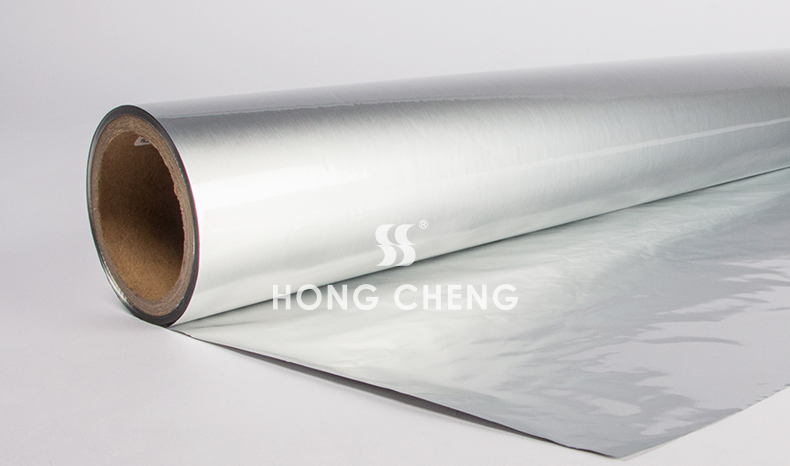
In the upstream materials of the lithium battery industry chain, the aluminum-plastic film that plays a packaging role is the core material of pouch batteries, accounting for 10-20% of the total material cost. The production technology of aluminum-plastic film is far more difficult than that of separators, electrolytes, positive and negative electrodes, etc., and it is currently the only material in lithium batteries that has not been fully localized in China. In recent years, with the technological progress and capacity improvement of relevant enterprises, aluminum-plastic film has gradually embarked on the path of localization. Next, the editor will elaborate on the key material for packaging pouch batteries - aluminum-plastic film.
1. Overview of Aluminum-Plastic Film by China Aluminum Industry Exhibition
Aluminum-plastic composite film, referred to as aluminum-plastic film, is a composite soft packaging shell material used for packaging lithium-ion batteries, commonly applied in pouch batteries and blade batteries. Sealing the assembled single cell with aluminum-plastic film plays a vital role in protecting internal electrodes and isolating the external environment. Since the cell packaging material must withstand the swelling, dissolution, and absorption of electrolytes while ensuring strict barriers against oxygen and moisture, aluminum-plastic film must possess five major properties: puncture resistance, high barrier property, electrolyte resistance, high-temperature insulation, and cold stamping formability.
2. Composition of Aluminum-Plastic Film by China Aluminum Industry Exhibition
To ensure the above properties, aluminum-plastic film is composed of three layers of materials 复合 (composited) with adhesives, structured from outside to inside as the outer barrier layer, barrier layer, and heat-sealing layer:
- Outer Barrier Layer: Primarily made of nylon, it requires impact resistance, puncture resistance, friction resistance, and heat insulation to protect the middle aluminum foil from scratches. It also prevents air penetration and ensures the packaging aluminum foil has good deformation ability.
- Barrier Layer: Usually composed of aluminum foil, featuring good pinhole resistance and double-sided compositing, which allows stable molding after processing. Metallic aluminum reacts with air at room temperature to form an oxide film, preventing water vapor penetration and protecting internal cells. This layer is also the main structure for the deep drawing deformation of aluminum-plastic film.
- Heat-Sealing Layer: The material must have good heat-sealing adhesiveness, insulation, and electrolyte corrosion resistance, so cast polypropylene (CPP) film is generally used. Its main role is to melt and bond the PP layer during packaging, while preventing leaked electrolytes from corroding the aluminum foil.
The adhesive used to composite the above three layers has strong electrolyte resistance, high-temperature and aging resistance, and good bonding performance. The materials are typically solvent-free polyurethane adhesives or benzene-free polyurethane adhesives (alcohol-soluble or water-based).
3. Manufacturing Processes of Aluminum-Plastic Film by China Aluminum Industry Exhibition
The mainstream manufacturing processes of aluminum-plastic film can be divided into the dry method and the thermal method.
- Dry Method: The aluminum foil and CPP are directly bonded with adhesives and then pressed. Since CPP does not need to undergo secondary crystallization at high temperatures in this process, the aluminum-plastic film processed by the dry method has excellent deep drawing formability and good appearance. Its superior anti-short-circuit performance makes it mainly applicable to high-capacity pouch consumer batteries and power batteries. In the dry process, electrolytes easily corrode the CPP and react with the adhesive, so CPP requires better barrier properties.
- Thermal Method: The aluminum foil and CPP are bonded through modified polyethylene (MPP) and thermally synthesized at a certain temperature. Long-term high-temperature baking will embrittle the metallic aluminum, reducing the overall deep drawing performance of the aluminum-plastic film. However, aluminum-plastic film produced by the thermal method has good electrolyte and water resistance, suitable for consumer batteries with low capacity requirements.
In recent years, with continuous process advancements, the electrolyte resistance of aluminum-plastic film made by the dry method has been enhanced, and the deep drawing performance of that made by the thermal method has gradually improved. Domestic enterprises have innovated processes and proposed a dry-thermal composite method, retaining the advantages of both approaches.
4. Industrial Chain of Aluminum-Plastic Film by China Aluminum Industry Exhibition
Aluminum-plastic film is located in the upstream of the entire lithium battery industry chain and is a key material for battery packaging. The upstream raw materials of aluminum-plastic film include nylon, aluminum foil, CPP, and adhesives, accounting for 70% of the total product cost. Aluminum foil and CPP are the main cost components in raw materials, and for power products, the requirements for CPP are higher, so the cost proportion of CPP is slightly higher.
The midstream of the industry is the production and manufacturing link of aluminum-plastic film, where raw materials are made into aluminum-plastic film through the composite processes introduced above. This product combines the flexibility of plastic film and the extremely high barrier property of metallic aluminum foil. Consumer batteries, power batteries, and energy storage batteries packaged with aluminum-plastic film have excellent performance and are widely used in consumer electronics, new energy vehicles, medical devices, and other fields.
5. Market of Aluminum-Plastic Film Industry by China Aluminum Industry Exhibition
In the global aluminum-plastic film market, Japanese and South Korean enterprises have an early-mover advantage due to their earlier research on aluminum-plastic film, accounting for 73% of the global market share. Although domestic aluminum-plastic film started late, in recent years, relevant enterprises have achieved rapid development through the model of "independent research + acquisition". Domestic aluminum-plastic film is not only widely used in the consumer electronics field but has also achieved certain technological breakthroughs in power batteries, reaching the level of small-scale supply.
As overseas enterprises are relatively conservative in capacity expansion to meet the current rapidly growing global power battery and high-end consumer battery markets, domestic aluminum-plastic film products with higher cost performance 迎来机遇 (are embracing opportunities).
Driven by the "Double Carbon" goal, the trend of new energy is irreversible, and the demand for power batteries will continue to grow. Among the three packaging forms of lithium batteries (prismatic, cylindrical, and pouch), pouch batteries with higher energy density, better safety performance, and longer cycle life will be increasingly favored by downstream vehicle manufacturers.
Currently, the penetration rate of power pouch batteries has significant room for improvement, which is expected to drive the continuous growth of market demand for aluminum-plastic film. For example, BYD's Blade Battery adopts a secondary sealing technology of "rolled core soft aluminum packaging + blade hard aluminum shell", which not only improves the safety of power batteries but also fully exerts the advantage of high volume energy density of the pouch structure. At present, several domestic aluminum-plastic film manufacturers have reached cooperation with BYD and are expected to achieve share expansion along with the volume production of Blade Batteries.
From the perspective of the consumer electronics market, the process level of domestic aluminum-plastic film can already meet the needs of most digital products. Coupled with overseas manufacturers focusing on the high-end power battery market, the editor believes that the market share of domestic aluminum-plastic film manufacturers in the consumer electronics field will rapidly increase.
What are the characteristics of aluminum foil braided film material?
What's the Difference Between Dry Lamination and Solventless Lamination?