Core Differences Between "High-Speed" and "High-Frequency" in the Cable Industry and Material Empowerment
In the technical practice of the cable industry, "high-speed" and "high-frequency" are often confused. Many entry-level engineers narrowly define consumer products such as USB and HDMI as "high-frequency", while simply classifying high-speed copper cables as "high-speed", which is a obviously biased cognition. In fact, they are two distinct yet deeply intertwined technical paths: high-speed focuses on the "speed" dimension in the digital world, and high-frequency is based on the "level" measurement in the analog world. Under the same set of electromagnetic field physical laws, they jointly determine the integrity of signal transmission with different focuses. High-quality shielding materials, as a key support, can provide core guarantees for the integrated application of the two. Hangzhou Hongcheng Technology's high-speed aluminum foil products have shown significant technical advantages in this field.
I. Core Differences: Technical Divide Between High-Speed and High-Frequency
(I) High-Speed Cables: The Art of Precise Digital Pulse Transmission
The essence of high-speed cables is to solve digital signal transmission problems. Their core evaluation criterion is not the absolute value of signal frequency, but the rise/fall time of digital pulses. When the pulse edge is so steep that it is comparable to the transmission delay of the signal in the cable, the cable is no longer a simple conductor, but needs to be regarded as a transmission line, where impedance matching and signal integrity become core demands.
The core concerns of high-speed signals are "shape" and "arrival time": even if the clock frequency is only tens of megahertz, as long as the rise time is compressed to the picosecond level, problems such as reflection, crosstalk, and ground bounce will emerge. Measures such as impedance-controlled differential pairs, equal-length routing, termination resistors, and eye diagram testing are required to avoid bit errors caused by inter-symbol interference. Taking the PCIe 5.0 server backplane as an example, the 32 GT/s data rate corresponds to a 16 GHz Nyquist frequency, but the rise time at the chip output is only about 20 ps, and the fifth harmonic approaches 80 GHz, which drastically amplifies the impact of skin effect and conductor loss on transmission quality.
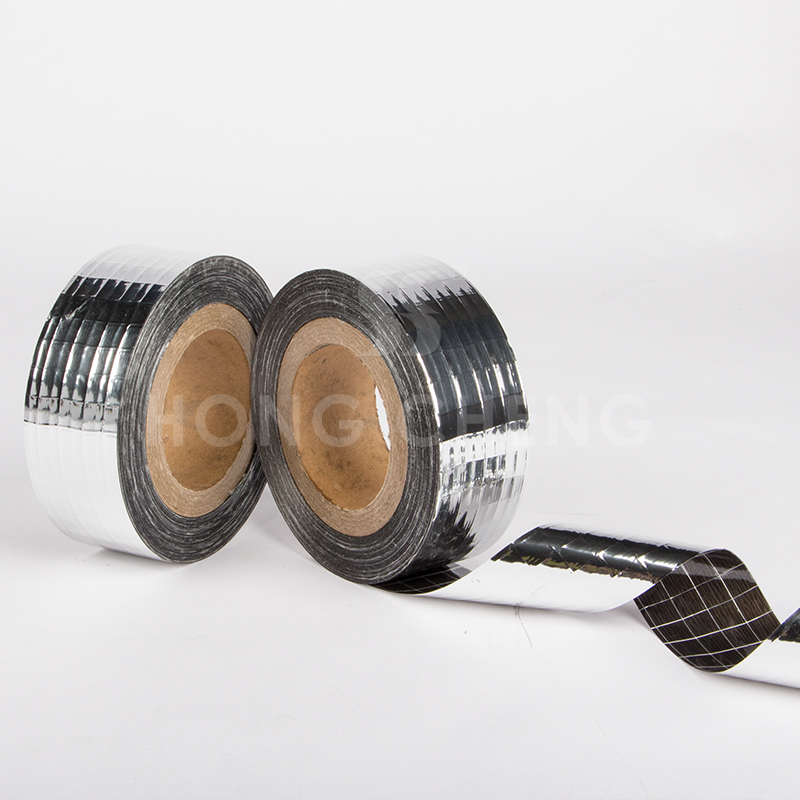
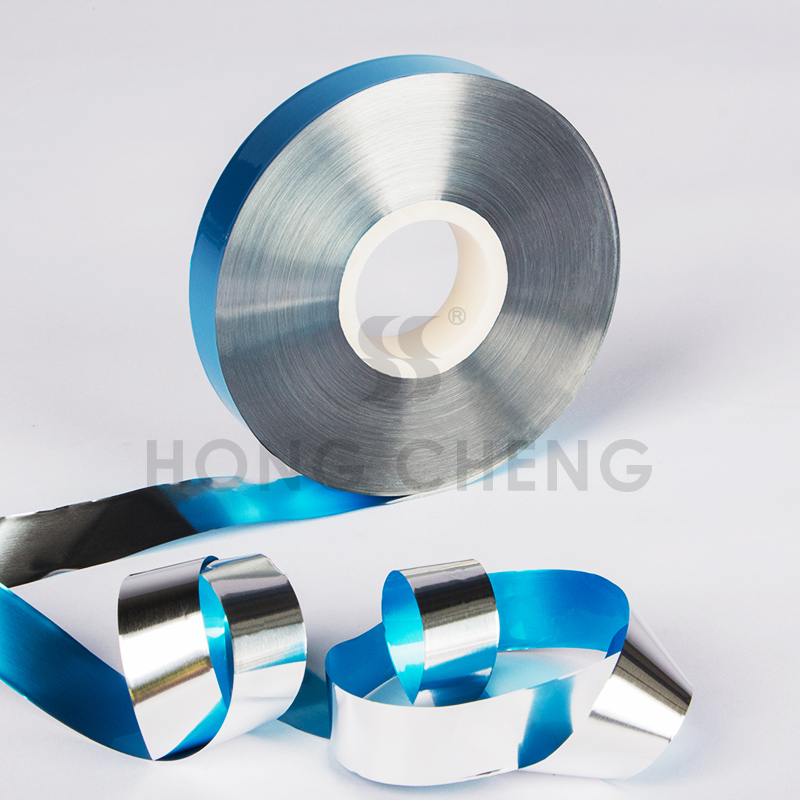
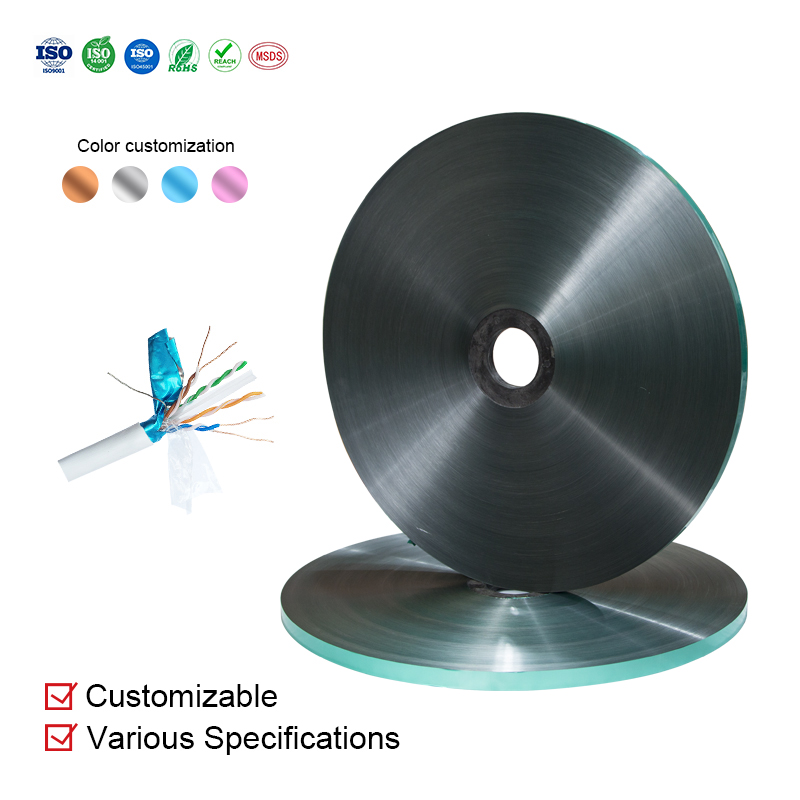
In this scenario, the performance of shielding materials directly determines signal integrity. Hangzhou Hongcheng Technology has been deeply engaged in the cable aluminum foil field for many years. Its high-speed aluminum foil and aluminum-plastic composite tape can effectively suppress crosstalk and electromagnetic radiation with precise thickness control and excellent electrical conductivity. Aiming at the problem that the shielding effect of aluminum foil in high-speed transmission is affected by the overlap rate, Hongcheng Technology stabilizes the aluminum foil overlap rate above 25% by optimizing the production process, and solves the industry pain points that over-tight aluminum foil wrapping is easy to break and over-loose leads to shielding failure, providing reliable shielding support for typical high-speed cables such as SFP+ DAC/AEC, USB4, and HDMI 2.1. Its independently developed single-sided and double-sided aluminum foil Mylar products adopt the composite process of aluminum foil and polyester film, combined with customized gluing solutions, which can achieve tight bonding with the cable core insulation. Compared with ordinary aluminum foil, the shielding efficiency is significantly improved, which can effectively protect the steep edges of high-speed pulse signals and avoid timing errors caused by high-frequency component attenuation.
(II) High-Frequency Cables: Efficient Fidelity Transmission of Analog Sine Waves
High-frequency cables focus on analog signal transmission, mainly carrying high-frequency continuous sine waves (usually hundreds of MHz to tens of GHz). Their transmission characteristics are dominated by skin effect, dielectric loss, and radiation leakage, and the design focus is on the optimization of frequency domain indicators. Unlike high-speed signals, the mission of high-frequency signals is not to transmit "0" and "1" bits, but to accurately deliver energy to antennas, mixers, or radar feeds in a specific mode, and efficiency and purity directly determine the success or failure of the system.
The core challenges of high-frequency transmission are signal attenuation, phase stability, and electromagnetic shielding: the higher the frequency, the more serious the conductor loss and dielectric loss caused by skin effect. At the same time, phase changes need to be strictly controlled to avoid signal distortion, and shielding design needs to be strengthened to prevent signal leakage and external interference. In 5G millimeter-wave base stations, after 28 GHz carrier is modulated by 400 MHz bandwidth, it is necessary to ensure that the Error Vector Magnitude (EVM) is less than 1.5% and the Adjacent Channel Leakage Ratio (ACLR) is less than -45 dBc, which puts extremely high requirements on cable shielding and loss control.
Hangzhou Hongcheng Technology's high-frequency adaptive aluminum foil products just meet this demand. Its cable shielding aluminum foil is made of high-purity aluminum base material and processed by precision composite technology, with a shielding range covering the core frequency band of 100K-3GHz, which can effectively confine high-frequency electromagnetic waves inside the cable, avoid interference of induced current on signals, and reduce energy leakage loss. For complex scenarios such as 5G base stations and satellite communications, Hongcheng aluminum foil also has excellent corrosion resistance and mechanical stability. The self-adhesive products with hot-melt adhesive coating can achieve tight wrapping with the cable structure, further improving shielding reliability and providing guarantee for the phase-stable transmission of high-frequency signals.
II. In-depth Correlation: Symbiotic Integration of High-Speed and High-Frequency
High-speed and high-frequency are not opposites, but gradually integrate with technological evolution: according to Fourier transform, fast digital pulses (high-speed) are essentially the superposition of numerous sine waves of different frequencies (high-frequency). The shorter the rise time, the richer the high-frequency components. Therefore, qualified high-speed cables must have good high-frequency transmission capabilities; with the development of 5G and 6G technologies, high-frequency links begin to carry large-bandwidth digital signals, which need to take into account digital indicators such as bit error rate and peak-to-average ratio, forming a "high-speed and high-frequency" hybrid design paradigm.
The technical commonalities between the two provide a unified direction for material selection, and Hangzhou Hongcheng Technology's aluminum foil products exactly cover these core needs: in terms of impedance control, Hongcheng aluminum foil helps cables achieve standard characteristic impedances such as 50Ω and 75Ω through precise thickness and composite structure design, reducing signal reflection; in terms of shielding design, its aluminum foil Mylar and aluminum-plastic composite tape can form double-layer shielding with braided layers, balancing flexibility and shielding efficiency, and adapting to complex electromagnetic environments such as industrial automation and data centers; in terms of material adaptability, Hongcheng Technology can customize composite structures such as PET+AL and AL+PE according to customer needs, combined with low-loss dielectric materials, effectively reducing comprehensive losses in high-speed and high-frequency transmission.
The evolution of standards also confirms this integration trend: the CEI-224G white paper released by OIF in November 2024 incorporates radio frequency indicators into digital communication specifications, requiring the insertion loss of 224 Gbps PAM4 channels at 56 GHz to be no more than -10 dB; 3GPP has upgraded the bit error rate indicator of the terahertz band to 10⁻⁹ in the 6G vision of Release 19. This means that cable materials need to meet both high-speed signal integrity and high-frequency loss control requirements. With an annual production capacity of 8,000 tons, a full set of precision production equipment, and more than ten years of process accumulation, Hongcheng Technology can stably supply shielding aluminum foil meeting high-end needs, providing mass production support for next-generation high-speed and high-frequency transmission scenarios such as 224Gbps and PCIe 5.0.
III. Application Scenarios and Material Selection: Precisely Matching Core Needs
When selecting cables, it is necessary to accurately locate core indicators according to transmission needs, and match suitable shielding materials:
- Digital data transmission scenarios (such as connections between servers and switches, and between computers and monitors): Prioritize the high-speed performance of cables (bandwidth, impedance, eye diagram performance). It is recommended to use PP aluminum foil tape or PET aluminum foil products from Hangzhou Hongcheng Technology. Their low-loss characteristics and stable shielding efficiency can effectively protect the edge integrity of high-speed pulses, adapting to transmission rates of 10Gbps and above.
- Analog radio frequency transmission scenarios (such as connections between base station antennas and radio frequency units, and test instrument calibration): Focus on high-frequency performance (operating frequency, insertion loss, VSWR). Hongcheng's high-purity shielding aluminum foil can be selected, and its excellent phase stability and anti-interference ability can ensure the fidelity transmission of high-frequency sine wave signals.
- Hybrid application scenarios (such as 5G infrastructure, high-speed computing centers): Both high-speed and high-frequency characteristics need to be considered. Hongcheng Technology's customized aluminum foil composite products can achieve a balance of impedance control, shielding efficiency and loss control through structural optimization, meeting multi-dimensional performance requirements.
IV. Conclusion: From Division to Integration, Material Empowers Technological Upgrade
The difference between high-speed and high-frequency lies in the different technical starting points and concerns: high-speed fears "delay" and "distortion", focusing on solving the timing and integrity of digital signals; high-frequency fears "loss" and "pollution", focusing on ensuring the energy and purity of analog signals. However, they share the same physical essence and gradually integrate into a hybrid design paradigm with technological evolution.
Adhering to the business philosophy of "exploring industry trends, seeking innovative products, and pursuing customer satisfaction", Hangzhou Hongcheng Technology, with its professional aluminum foil R&D and production capabilities, its cable shielding aluminum foil, aluminum-plastic composite tape and other products provide key material support for high-speed and high-frequency cables. From consumer electronics to 5G base stations, from data centers to satellite communications, high-quality aluminum foil materials are breaking the technical boundary between digital and radio frequency, helping systems achieve dual goals of bit accuracy and energy efficiency at the sub-nanosecond and sub-millimeter scales, and promoting the cable industry to upgrade towards higher transmission rates and better stability.
Etched Aluminum Foil: The Core Force of Functional Aluminum Processing Materials
How to Choose Floor Heating Reflective Film? 5 Key Points to Avoid Pitfalls, Double Energy Saving and Comfort!