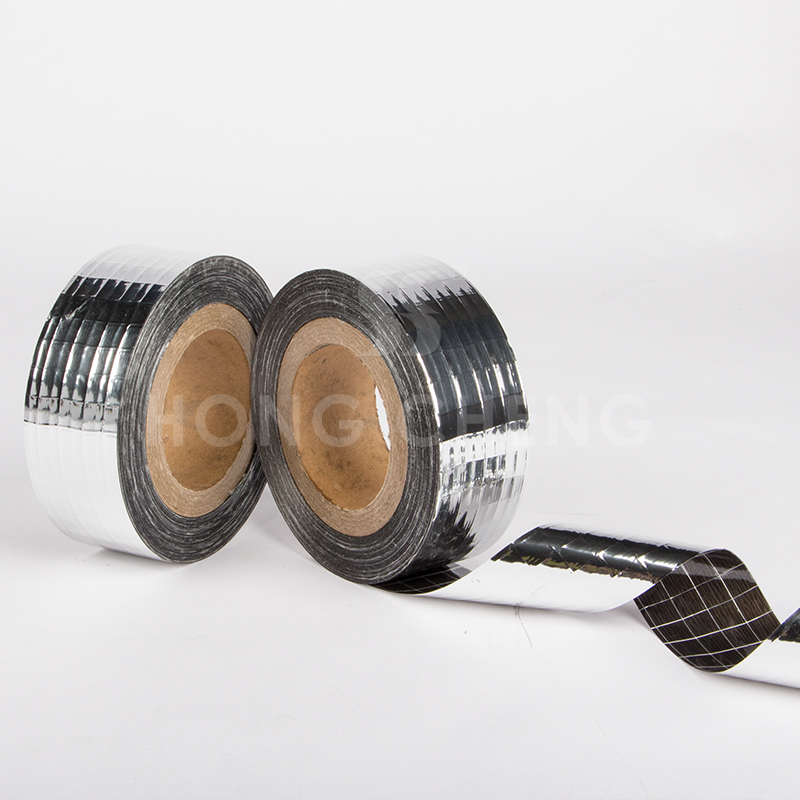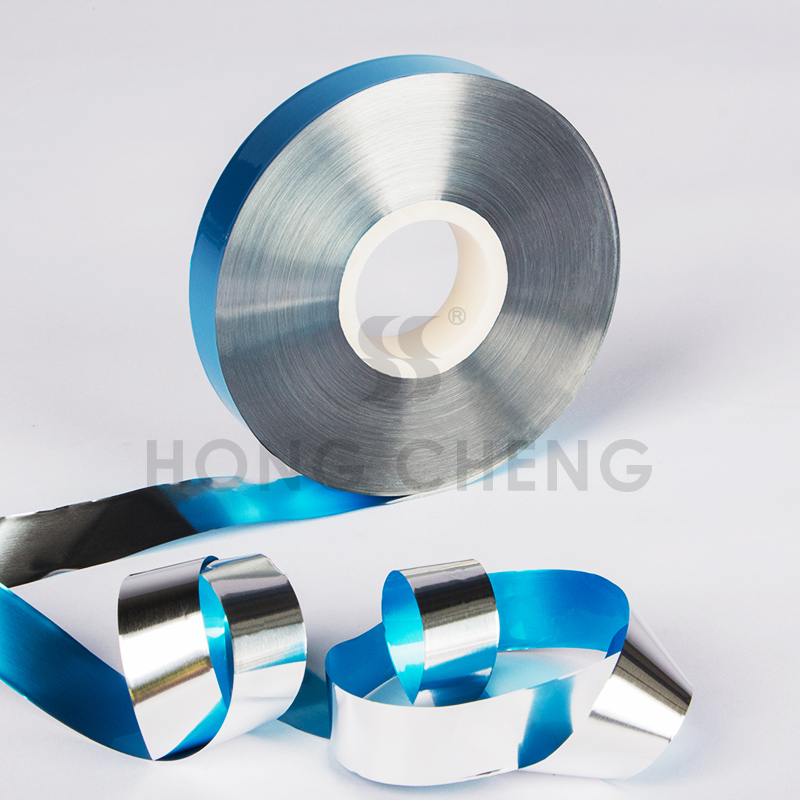
Aluminum Polyester Shielding Tape for Cat5e/Cat6/Cat7 LAN Cables: Material Selection Guide
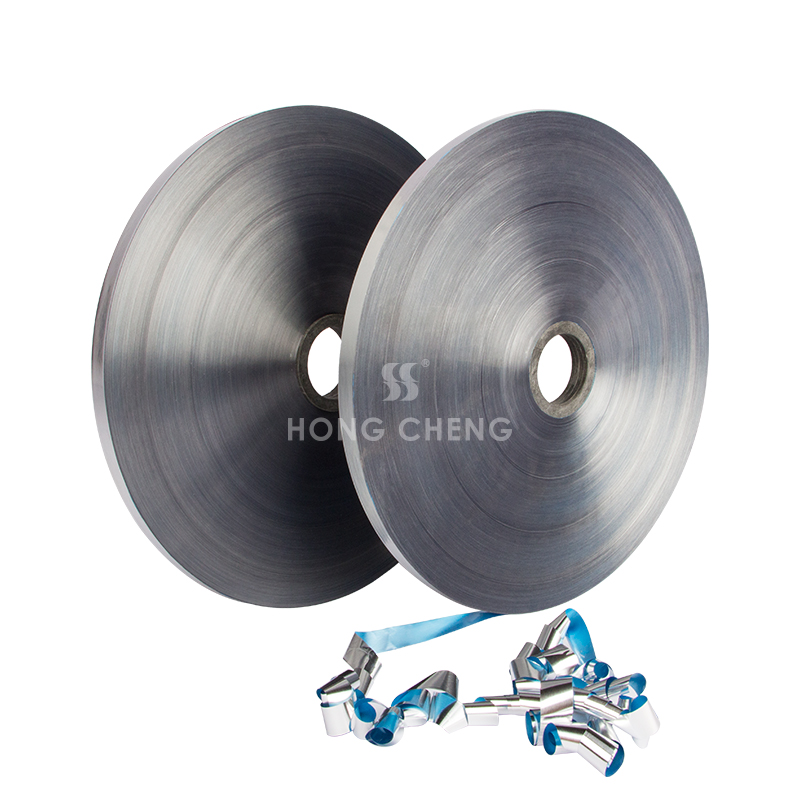
As 5G infrastructure rollouts accelerate and demand for high-performance structured cabling continues to climb in data centers and smart buildings, aluminum polyester composite tape — widely known in the industry as AL/PET shielding tape — has emerged as an indispensable raw material in the production of Cat5e, Cat6, and Cat7 network cables.
Why LAN Cables Need Aluminum Polyester Shielding Tape
In FTP (Foil Twisted Pair) and STP (Shielded Twisted Pair) cable constructions, the shielding layer serves two critical functions: blocking external electromagnetic interference (EMI) and minimizing crosstalk between wire pairs. Depending on the cable category, shielding is applied either as an overall shield around all pairs, or as individual pair shields combined with an outer braid.
AL/PET composite tape consists of an aluminum foil layer (typically 6–9 microns thick) laminated onto a polyester (PET) film substrate (typically 12–25 microns). The aluminum layer reflects and absorbs electromagnetic waves, while the PET backing provides dimensional stability, tear resistance, and the mechanical rigidity needed for reliable longitudinal wrapping on high-speed cable production lines.
Specification Differences Across Cable Categories
Cable categories impose distinct requirements on the AL/PET shielding tape:
| Cable Category | Typical Al Foil | PET Thickness | Shield Structure | Key Requirements |
|---|---|---|---|---|
| Cat5e | 6–7 μm | 12 μm | Overall foil | Basic conductivity |
| Cat6 | 7–9 μm | 12–15 μm | Overall foil | Flat wrap, no wrinkling |
| Cat6A | 8–9 μm | 15–18 μm | Individual pairs + overall | Flex resistance, precision wrapping |
| Cat7 | 9 μm | 18–25 μm | Individual pairs + braid | High shielding effectiveness, 600 MHz+ |
Cat7 cables must maintain high shielding effectiveness up to 600 MHz and beyond, placing stringent demands on foil continuity, overlap width (typically ≥3 mm), and PET dimensional stability under repeated flexing.
Critical Quality Parameters for Cable Manufacturers
When sourcing AL/PET shielding tape for LAN cable production, the following parameters are most critical:
1. Foil Thickness and Pinhole Density Thinner foil reduces cost but increases the risk of pinholes and reduced shielding effectiveness. For Cat6 and above, a minimum foil thickness of 7 μm is recommended, with pinhole density controlled below 0.5 pinholes/m².
2. Aluminum Face Orientation In FTP constructions, the aluminum face must contact the drain wire to ensure grounding continuity. If the foil is oriented with PET facing out, the shielding circuit cannot be properly grounded — directly compromising EMI suppression performance.
3. Wrappability and Stiffness Balance The tape must balance stiffness and flexibility. Too soft leads to loose, uneven wrapping; too stiff causes foil cracking at bend points. PET thickness and lamination uniformity are the key control variables.
4. Peel Strength Adequate peel strength (typically ≥1.5 N/15 mm; ≥2.0 N/15 mm for demanding applications) ensures the tape remains intact during high-speed wrapping operations and cable flexing in the field.
5. Width Tolerance For individual pair shielding, dimensional accuracy is critical. Width tolerance should be within ±0.3 mm to ensure consistent feeding on automated wrapping equipment without jamming or drift.
Product Offering from Hongcheng Technology
Hangzhou Hongcheng Technology Co., Ltd. supplies AL/PET aluminum polyester shielding tape in the following standard and custom configurations:
- Aluminum foil thickness: 6 μm / 7 μm / 9 μm
- PET backing thickness: 12 μm / 15 μm / 18 μm / 25 μm
- Slit width: 10 mm – 300 mm, tolerance ±0.3 mm
- Lamination structure: AL/PET (single-sided), AL/PET/AL (double-sided, for special applications)
- Surface finish: matte aluminum face or bright aluminum face (as required)
- Core size: 3-inch (76 mm) or 6-inch (152 mm) paper cores
Both sample orders and large-volume OEM supply are available, with stable lead times for domestic cable manufacturers and export customers across Southeast Asia, Europe, and the Americas.
Market Outlook: Cat8 and Data Center Cabling Drive Higher Performance Demands
Since 2025, the push toward Cat8 (40GBase-T, 2000 MHz) and other ultra-high-speed cabling formats for hyperscale data centers has raised the bar for AL/PET shielding tape — demanding thinner, more uniform foil with exceptional high-frequency performance. Simultaneously, global smart building retrofits and large-scale structured cabling projects continue to drive strong demand for Cat6A and Cat7 cables, creating sustained volume growth for quality shielding tape suppliers.
Cable manufacturers increasingly view material consistency, flexible specification support, and reliable on-time delivery as key differentiators in a competitive market. Partnering with a dedicated composite materials manufacturer — rather than relying on commodity traders — delivers measurable advantages in quality control and supply chain stability.
About Hongcheng Technology: Hangzhou Hongcheng Technology Co., Ltd. is a China-based professional manufacturer of aluminum foil composite materials, supplying AL/PET shielding tape, FSK facing laminates, aluminum foil PE composites, and more to the cable, HVAC, building insulation, and industrial packaging industries worldwide. Website: www.techfoil.com
AL/PE Composite Film for Flexible Duct Jackets: Structure Analysis & Material Guide
PET/AL/PE Three-Layer Composite Film for Tea Packaging: Structure, Performance & Sourcing Guide