Classification and Application Analysis of Cable Aluminum Foil
1. Introduction
As a core material in modern cable manufacturing, cable aluminum foil is widely used in communication, power, and electronics industries due to its excellent electromagnetic shielding, mechanical protection, and weather resistance. With the rapid development of 5G communication, new energy vehicles, and other industries, the technical requirements and market demand for cable aluminum foil are continuously upgrading. This article systematically sorts out the classification system of cable aluminum foil from the perspectives of material properties, production processes, and application scenarios, combined with industry standards and market trends.
2. Core Classification System of Cable Aluminum Foil
2.1 Classification by Alloy Composition and Mechanical Properties
- 1000 Series Pure Aluminum Foil
Mainly composed of 1235, 1060, 1145, etc., with purity ≥99%, high electrical conductivity, and flexibility. Suitable for low-voltage communication cables and data transmission lines. For example, 1235 alloy foil (0.025-0.05mm thickness) is widely used in the aluminum-plastic composite shielding layer of video cables. Its annealed state (O temper) elongation can exceed 25%, meeting high-speed winding requirements.
- 8000 Series Aluminum Alloy Foil
Represented by 8011 alloy, containing Si, Fe, etc., with 30%-50% higher tensile strength than pure aluminum. Suitable for high-voltage power cables and industrial special cables. For example, 8011-H18 foil (0.1-0.2mm thickness) can withstand voltages above 10kV after aluminum-plastic compounding. By optimizing the Fe/Si ratio (3.5-4.0), fatigue resistance and processing stability are significantly improved.
2.2 Classification by Production Process and Surface Properties
- Rolling Process Classification
- Single-Sided Bright Foil: One side polished, the other matte, used for single-sided bonding, such as the inner layer of aluminum-plastic composite tapes.
- Double-Sided Bright Foil: Mirror finish on both sides, surface roughness Ra ≤0.1μm, suitable for high-frequency signal cable shielding layers.
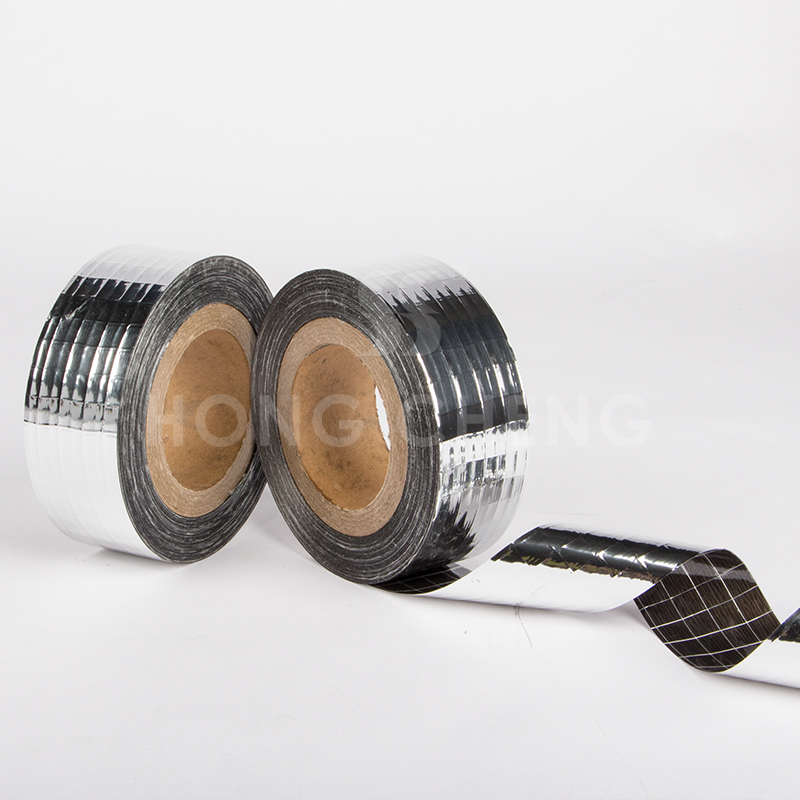
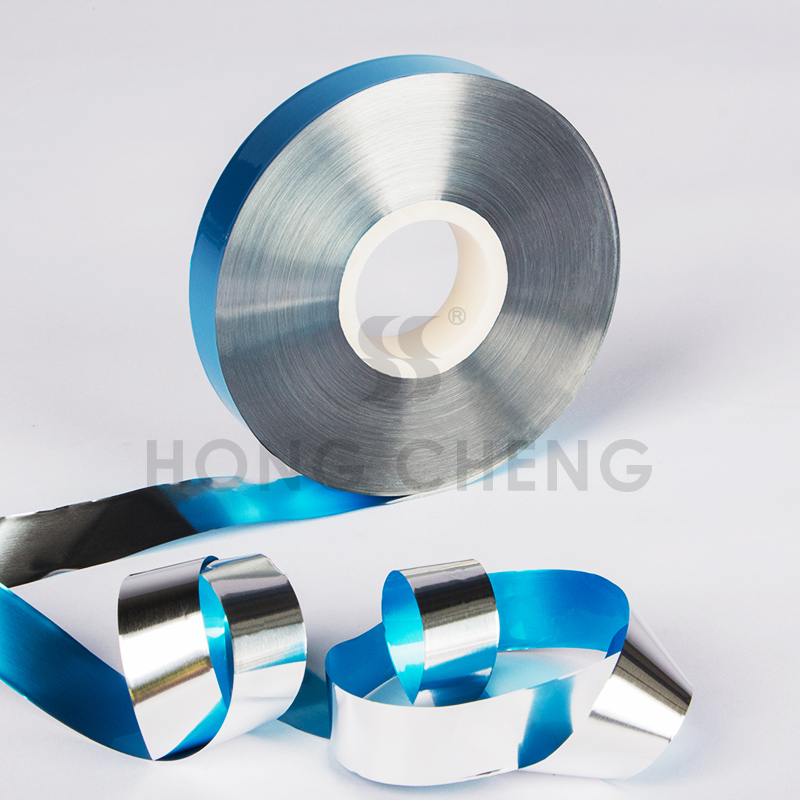
- Aluminum-Plastic Composite Foil: Formed by extruding or laminating PE/PP films on one or both sides of aluminum foil, combining shielding and insulation functions for longitudinal wrapping of communication cables.
- Surface Treatment Classification
- Adhesive-Coated Foil: Coated with acrylic or epoxy adhesive for self-bonding in cable wrapping, e.g., fiber optic ribbon foil.
- Hydrophilic Foil: Coated with hydrophilic layer for air conditioner heat exchangers, enhancing heat transfer efficiency by 15%-20%.
- Painted Foil: Coated with polyester or polyurethane paint for corrosion resistance in submarine and wet environment cables.
3. Industry Standards and Technical Requirements
- Chinese Standards
- GB/T 3198-2020: Specifies mechanical properties (e.g., 8011-O tensile strength ≥70MPa), surface quality (pinholes ≤3/m²), and dimensional accuracy (thickness tolerance ±5%).
- GB/T 18194-2008: Requires peel strength ≥3N/15mm and shielding effectiveness ≥80dB for aluminum-plastic composite tapes.
- International Standards
- ASTM B479: US standard specifies conductivity ≥61%IACS for 1000 series foil and tensile strength ≥125MPa for 8000 series.
- IEC 60811-2-1: International standard requires shielding efficiency ≥90dB in 100kHz-1GHz for cable shields.
4. Production Processes and Technological Innovations
- Melting and Casting
High-purity aluminum ingots (99.9%) and alloying elements are melted at 730-750℃, degassed, and filtered to produce 6-8mm thick slabs via twin-roll casting. Electromagnetic stirring reduces segregation and improves uniformity.
- Cold Rolling and Annealing
- Multi-Pass Cold Rolling: Reduces slab to 0.2-0.5mm with ≥85% reduction, forming fibrous structure.
- Homogenization Annealing: 560℃ for 30-35 hours to eliminate residual stress and refine grains.
- Final Annealing: 220-380℃ for 70-100 hours to increase elongation to 12%-25% for high-speed winding.
- High-Elongation Breakthroughs
Optimizing Fe/Si ratio (3.5-4.0) and rapid annealing (450℃×4.5h) boosts 1235 alloy foil elongation from 20% to >25%, reducing processing breakage.
5. Market Trends and Development Directions
- High-End and Differentiated Products
- Ultra-Thin Foil: 0.01-0.03mm foil for 5G and flexible electronics, projected to reach ¥3.4 billion market size by 2025.
- Integrated Functions: Graphene/nano-ceramic coated foil for combined shielding, thermal conductivity, and corrosion resistance in EV battery packs.
- Green Manufacturing
- Recycled Aluminum: Recycled content increased from 30% to 45%, reducing energy consumption and emissions.
- Recyclable Design: Peelable coatings enable efficient separation of aluminum and plastic in composite foils.
- Emerging Applications
- Power Battery Foil: Global demand to reach 1.8 million tons by 2025 for battery casings and current collectors.
- Aerospace Foil: Ultra-light Al-Li alloy foil (density ≤2.5g/cm³) for UAVs and satellite cables, with >40% gross margin.
6. Conclusion
The classification system of cable aluminum foil is closely linked to application scenarios, requiring comprehensive consideration of electromagnetic shielding, mechanical properties, and environmental adaptability. With the development of 5G and new energy industries, cable aluminum foil is evolving toward ultra-thinness, high functionality, and sustainability. Enterprises should strengthen R&D, comply with GB/T 3198-2020, and seize emerging markets like power battery and aerospace foils for sustainable growth.
Composition of Cable Aluminum Foil
Exploration of the Service Life of Aluminum Foil Woven Film