Exploration of the Service Life of Aluminum Foil Woven Film
Introduction
As a composite material widely used in various fields, aluminum foil woven film is highly favored for its unique combination of properties. It is usually composed of aluminum foil and woven materials, combining the barrier and reflectivity of aluminum foil with the strength and flexibility of woven materials. In industries such as construction, agriculture, and packaging, aluminum foil woven film plays important roles in heat insulation, moisture resistance, and protection. However, its service life is comprehensively affected by various factors and is not a fixed value. In - depth exploration of these factors is of great significance for the rational selection and use of aluminum foil woven film and the full utilization of its performance advantages.
Structure and Performance Basis of Aluminum Foil Woven Film
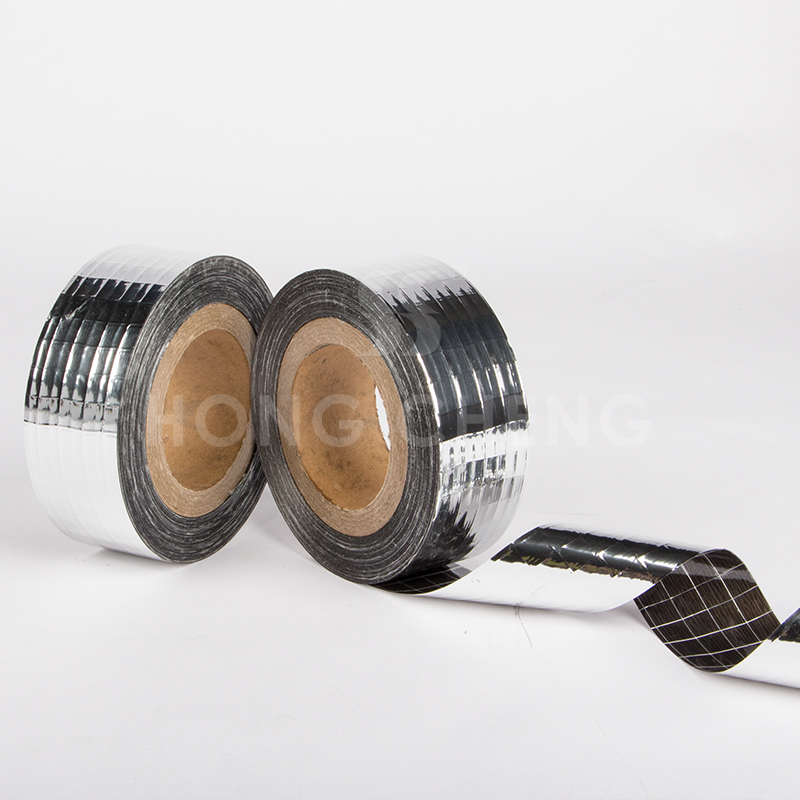
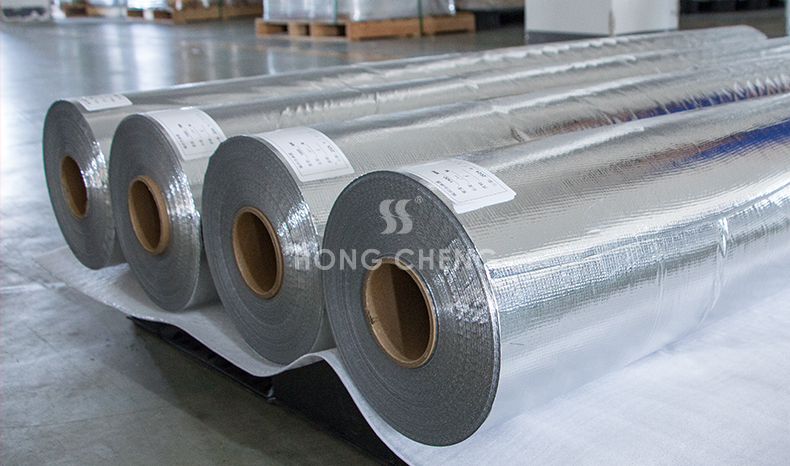
Aluminum foil woven film generally consists of an outer layer of aluminum foil and an inner layer of woven material. Aluminum foil has excellent barrier properties, which can effectively block the penetration of moisture, oxygen, and ultraviolet rays. At the same time, it has good reflectivity and can reflect heat, playing a role in heat insulation. The thickness of common aluminum foil is within a certain range, and the choice of thickness will affect its barrier and durability. For example, thicker aluminum foil has better barrier properties, but its flexibility may decrease.
The inner woven materials are usually polyester fibers, polyethylene fibers, etc. These woven materials endow the film with good strength and flexibility, enabling it to withstand certain tension and tearing. The tightness of the woven structure, that is, the weaving density, has a significant impact on the strength and protection performance of the film. A higher weaving density can improve the strength of the film, but it may reduce its flexibility, and vice versa.
Influence of Application Scenarios on Service Life
Construction Field
In the construction field, aluminum foil woven film is often used for exterior wall insulation, roof waterproofing and heat insulation, etc. Taking exterior wall insulation as an example, the aluminum foil woven film is installed on the surface of the exterior wall and is exposed to the natural environment for a long time. Under ultraviolet irradiation, the aluminum foil may oxidize, causing the surface to lose luster and the barrier performance to decline. At the same time, drastic temperature changes, such as the alternation of high temperatures in summer and low temperatures in winter, will cause the film material to expand and contract with heat and cold. Repeated expansion and contraction may cause the bonding between the aluminum foil and the woven material to loosen, reducing the overall performance of the film. In this environment, if the installation and maintenance are proper, the service life of the aluminum foil woven film is generally 5 - 8 years. However, if the climate conditions in the area are harsh, such as strong ultraviolet radiation, frequent rainstorms, and strong winds, its service life may be shortened to 3 - 5 years.
Agricultural Field
In agriculture, aluminum foil woven film is often used for greenhouse covering, agricultural product packaging, etc. In greenhouse applications, the aluminum foil woven film has to withstand the influence of the high - humidity environment inside the greenhouse on the one hand and the test of the natural environment outside the greenhouse on the other hand. In a high - humidity environment, moisture may penetrate into the interior of the film. If the corrosion resistance of the aluminum foil is not good, it is easy to corrode, affecting the service life of the film. Moreover, in agricultural production, some pesticides and fertilizers may be used, and some chemical substances may react with the film material, accelerating the aging of the film. Generally, the service life of the aluminum foil woven film used in greenhouses is about 3 - 6 years. However, if the greenhouse is maintained regularly, the debris and dust on the film surface are cleaned in time, and the long - term erosion of chemical substances is avoided, the service life is expected to be extended to 5 - 7 years.
Packaging Field
Aluminum foil woven film is mainly used for the packaging of food, electronics, and other products in the packaging field. For food packaging, the aluminum foil woven film needs to have good barrier properties to prevent food from getting damp, oxidizing, and deteriorating. However, in actual use, if the packaged food contains oil or acidic substances, it may react with the aluminum foil, causing the aluminum foil to corrode and perforate and losing its barrier function. For electronic product packaging, in addition to moisture - proof and anti - static requirements, it may also face vibrations and frictions during transportation. If the wear resistance of the film is insufficient, it is easy to be damaged. Under normal storage and use conditions, the shelf life of the aluminum foil woven film used for food and electronic packaging is usually 1 - 3 years. However, if the storage environment is poor, such as high temperature and high humidity, or if it is subject to frequent mechanical extrusion, its service life will be significantly shortened.
Factors Affecting the Service Life of Aluminum Foil Woven Film
Material Quality
The purity and thickness of aluminum foil are crucial for its corrosion resistance and barrier properties. High - purity aluminum foil is not easy to be oxidized and corroded and can better block the intrusion of external factors. Similarly, thicker aluminum foil has a stronger resistance to external erosion. For example, aluminum foil with a purity of more than 99% can extend its corrosion - resistant time by 2 - 3 times compared with aluminum foil with a lower purity in the same environment. The quality of the woven material cannot be ignored. High - quality woven fibers have higher strength and weather resistance and can better combine with aluminum foil to jointly resist external damage.
Environmental Factors
Temperature, humidity, and ultraviolet rays are the main environmental factors affecting the service life of aluminum foil woven film. High temperature will accelerate the aging of the material, reduce the flexibility of the film, and make it easy to become brittle and crack. The increase in humidity will cause the aluminum foil to corrode and rust, especially in the presence of oxygen, the corrosion process will be accelerated. Ultraviolet rays have strong energy and can damage the molecular structure of the film material, leading to material aging and embrittlement. In tropical regions, due to high temperature, high humidity, and strong ultraviolet radiation, the service life of aluminum foil woven film may be only about half of that in cold regions.
Usage and Maintenance Methods
During use, if the aluminum foil woven film is subjected to excessive tension, tearing, or friction, it will cause damage to the film surface, reduce its protection performance, and shorten its service life. For example, when using aluminum foil woven film to package heavy objects during handling, if the surface of the heavy object has sharp corners, it is easy to scratch the film. Regular cleaning and maintenance can remove dust, debris, and possible corrosive substances on the film surface and slow down the aging speed of the film. For example, for the aluminum foil woven film used on the exterior wall of a building, if it is cleaned and maintained once a year, its service life can be extended by 1 - 2 years compared with that without maintenance.
Suggestions for Improving the Service Life of Aluminum Foil Woven Film
Select High - Quality Products
When purchasing aluminum foil woven film, choose products produced by regular manufacturers, check the product quality inspection report, and ensure that the purity and thickness of the aluminum foil meet the requirements and that the woven material has good performance. For example, for aluminum foil woven film used in construction, choose products with an aluminum foil purity of more than 99%, a thickness of not less than 0.02mm, and the woven material being high - strength polyester fiber.
Optimize Installation and Usage Methods
During installation, avoid over - stretching the film, ensure that the installation is flat, and avoid wrinkles. During use, try to avoid the film coming into contact with sharp objects to prevent scratching. For example, when using it in an agricultural greenhouse, protect the iron wires and other objects that fix the greenhouse film to avoid scratching the film.
Strengthen Maintenance
Regularly inspect the aluminum foil woven film and repair damaged parts in a timely manner. For the film used on the exterior wall of a building and in an agricultural greenhouse, clean it at least once a year to remove dust, dirt, and corrosive substances on the surface. In cold regions in winter, a layer of insulation material can be covered on the film surface to reduce the impact of temperature changes on the film.
Conclusion
The service life of aluminum foil woven film is affected by many factors, and there is a large difference in its service life in different application scenarios. In the construction, agriculture, and packaging fields, measures such as selecting high - quality products, optimizing installation and usage methods, and strengthening maintenance can effectively extend the service life of aluminum foil woven film, enabling it to better play its functions and provide reliable material support for the development of various industries.
Classification and Application Analysis of Cable Aluminum Foil
What to Do If Aluminum Foil Bags Always Have Bubbles?