FSK Composite Facing (Foil+Scrim+Kraft) for HVAC Duct Insulation: Structure, Performance & Sourcing Guide

In HVAC (Heating, Ventilation, and Air Conditioning) systems, duct insulation must address multiple challenges beyond basic thermal performance: moisture resistance, tear resistance, weatherability, and ease of installation. FSK composite facing (Foil-Scrim-Kraft laminate) was developed specifically to meet these combined requirements. This article provides a systematic overview of FSK facing's structure, performance characteristics, selection methods, and application scenarios for HVAC engineers and sourcing professionals.
1. What Is FSK Composite Facing?
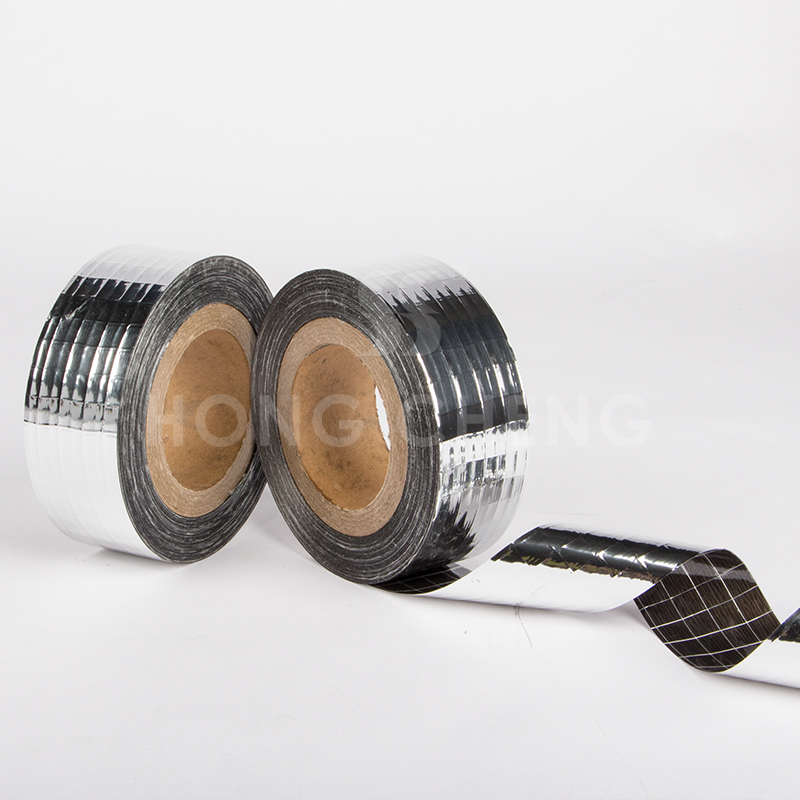
FSK is a three-layer laminated material consisting of Foil (aluminum foil) + Scrim (fiberglass mesh) + Kraft (kraft paper). It is typically supplied in roll form and serves as the outer protective jacket for duct insulation materials such as fiberglass wool or rock wool. FSK facing delivers multiple functions in a single product: thermal radiation reflection, moisture and vapor barrier protection, structural reinforcement, and installation-friendly handling.
In HVAC installations, FSK facing is used in conjunction with insulation blankets to form a complete "thermal + protective" system: the inner insulation layer resists conductive heat transfer, while the outer FSK facing reflects radiant heat, blocks moisture infiltration, and protects the insulation from mechanical damage.
2. Structure Breakdown of FSK Facing
Layer 1: Aluminum Foil (Foil)
The aluminum foil is the functional outer surface of the FSK facing. Common thicknesses range from 7μm to 12μm. The foil layer serves three primary purposes:
- Thermal Reflection: The foil surface reflects up to 95% of radiant heat, reducing heating and cooling energy losses;
- Moisture & Vapor Barrier: Aluminum foil itself has a water vapor transmission rate (WVTR) approaching zero, effectively preventing ambient moisture from penetrating into the insulation layer — a critical function, because once insulation wool gets wet, its thermal conductivity increases dramatically;
- Weather Resistance: Properly treated aluminum foil provides a degree of oxidation resistance, enabling it to withstand the indoor environmental conditions typical of HVAC equipment rooms and ceiling plenum spaces.
Layer 2: Fiberglass Scrim (Scrim)
The fiberglass mesh is sandwiched between the foil and the kraft paper, functioning as the "skeleton" of the composite. Its roles include:
- Tear Resistance: Aluminum foil alone is vulnerable to tearing under handling stress. The fiberglass scrim provides excellent tensile strength and tear resistance, preventing the FSK facing from rupturing during transportation, handling, and installation;
- Dimensional Stability: Fiberglass has an extremely low coefficient of thermal expansion, preventing wrinkling or deformation of the facing when temperature fluctuates.
The mesh density of the scrim is typically expressed in "mesh size." For HVAC applications, 3×3 mm to 5×5 mm mesh is standard.
Layer 3: Kraft Paper (Kraft)
Kraft paper forms the innermost layer of the FSK facing (the side in contact with the insulation). Its main functions are:
- Bonding Medium: Kraft paper provides an excellent adhesion interface for the laminating adhesive, ensuring a durable bond between all three layers;
- Installation Convenience: The kraft paper surface works well with aluminum foil tape for seam sealing, and also accepts staples or specialized mechanical fasteners to secure the facing to the insulation surface.
Common basis weights for the kraft paper layer are 40 g/m² to 60 g/m².
3. Key Performance Indicators of FSK Facing
| Performance Indicator | Typical Value / Requirement |
|---|---|
| Foil Thickness | 7μm / 9μm / 12μm (9μm most common) |
| Scrim Mesh Density | 3×3 mm / 5×5 mm |
| Kraft Paper Basis Weight | 40 g/m² / 50 g/m² |
| Tensile Strength (MD) | ≥120 N/25mm |
| Tensile Strength (CD) | ≥80 N/25mm |
| Interlayer Peel Strength | ≥1.5 N/25mm |
| WVTR | ≤1.0 g/m²·24h |
| Service Temperature Range | -30°C to +80°C |
| Roll Width | 1000mm / 1200mm / 1250mm (customizable) |
4. Selection Criteria for HVAC Duct Applications
When specifying FSK facing for actual HVAC projects, engineers and procurement teams should focus on the following parameters:
1. Foil Thickness Selection
- 7μm: Suitable for standard commercial buildings (offices, shopping malls) in low-humidity environments; offers a good cost-performance ratio;
- 9μm: The general-purpose specification, balancing barrier performance and cost control; the first choice for most HVAC projects;
- 12μm: Recommended for high-humidity environments (swimming pools, hospitals, food processing plants) or projects with demanding durability requirements.
2. Scrim Mesh Density
- Denser mesh provides better tear resistance but increases material cost. For typical duct insulation, a 5×5 mm mesh already satisfies most installation requirements.
3. Width Matching
- The width of the FSK facing should match the width of the insulation blanket to minimize seams during installation. Since common insulation blankets are 1200mm wide, 1200mm-wide FSK facing is the most versatile specification.
4. Flame Retardancy Rating
- FSK facing materials for HVAC applications are typically required to meet Class B1 (GB 8624) or V-0 (UL 723) flame retardancy standards. Procurement teams should request flame retardancy test reports from suppliers.
5. Installation Considerations
- Overlap Width: When wrapping FSK facing around ducts, ensure a minimum 50mm overlap at seams, and seal with aluminum foil tape to maintain vapor barrier continuity;
- Fitting at Irregular Shapes: At duct elbows, tees, and other irregular sections, the facing should be cut to fit the contour properly. Avoid excessive wrinkling at irregular sections, which affects appearance and may compromise performance;
- Storage Conditions: FSK facing should be stored in a dry, well-ventilated environment to prevent foil oxidation and kraft paper moisture absorption.
6. Hongcheng Technology FSK Composite Facing Advantages
Hangzhou Hongcheng Technology Co., Ltd. is a professional manufacturer of aluminum foil composite materials and PE laminated composite materials. FSK composite facing is one of our core product lines. Our technical strengths include:
- Multiple Specifications: Aluminum foil thickness 7μm/9μm/12μm, maximum roll width 1250mm, support for customized slitting per customer requirements;
- High-Strength Lamination: Premium laminating adhesives ensure interlayer peel strength ≥1.5 N/25mm; the composite resists delamination even under installation handling stress;
- Reliable Supply Capacity: Long-term partnerships with leading domestic aluminum foil and fiberglass suppliers ensure on-time delivery for volume orders;
- Technical Support: We provide selection recommendations based on project requirements and support sample testing.
FSK composite facing serves as the "protective armor" of the HVAC duct insulation system. Its quality directly affects the long-term performance of the insulation system. Choosing an experienced and capable aluminum foil composite material supplier is an important factor in ensuring HVAC project quality and minimizing lifecycle maintenance costs.
For product inquiries, specifications, or sample requests, visit www.techfoil.com.
Contact: +86 13758223270
Email: wendy@hcdxcl.com.cn
Thin-Profile AL/PET Laminate for Warm Edge Spacers: Structure and Selection Guide
AL/PET Composite Tape for FTP/STP LAN Cable Shielding: How Raw Materials Power the Gigabit-to-10G Network Era