FSK Facing Material for HVAC Flexible Duct Insulation: A Comprehensive Sourcing Guide
As energy efficiency standards tighten and the global HVAC market continues its steady expansion, the performance demands on duct insulation facing materials have never been higher. Among the various materials used to face flexible duct insulation, FSK laminate — Foil, Scrim, and Kraft — has established itself as the industry benchmark for flexible duct systems, air handler units, and pipe insulation in commercial and industrial construction.
This article explores the structure, performance characteristics, application scenarios, and sourcing considerations for FSK facing material, with a focus on what procurement professionals and product engineers should know when evaluating suppliers.
What Is FSK Facing Material?
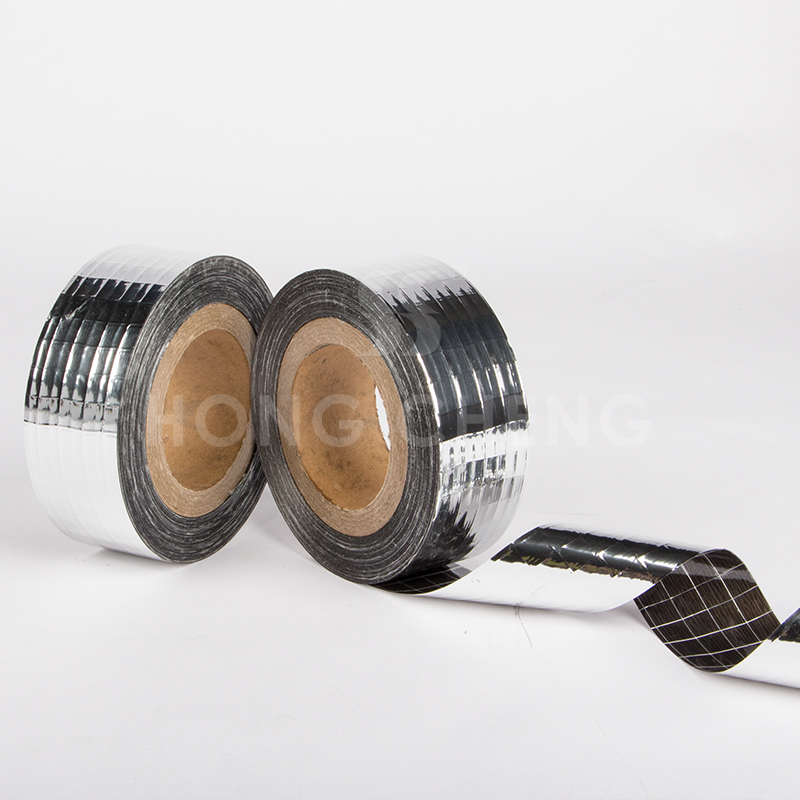
FSK is a three-layer laminated composite consisting of:
- Aluminum Foil (F): Typically 7–9 microns thick, the foil layer provides radiant heat reflection, a vapor barrier function, and a bright metallic surface finish. It is the primary functional layer of the composite.
- Scrim (S): A reinforcing mesh made from fiberglass yarns or polyester threads woven in a grid pattern (commonly 4×4 or 5×5 mesh per inch). The scrim dramatically improves tear resistance in both machine and cross directions, which is critical for field installation.
- Kraft Paper (K): A base layer of brown kraft paper that adds body, stiffness, and a printable/writable surface, making it easier for contractors to mark cutting lines and identify duct sections on the job site.
Together, these three layers are bonded using flame-retardant adhesives through a dry lamination process, resulting in a lightweight, flexible, and mechanically robust facing material.
Key Performance Characteristics
When specifying FSK laminate for HVAC insulation applications, the following performance metrics are most relevant:
| Parameter | Typical Value | Significance |
|---|---|---|
| Foil thickness | 7–9 μm | Thicker foil = better vapor barrier and durability |
| Scrim count | 4×4 to 5×5 mesh | Higher count = better tear and puncture resistance |
| WVTR (Water Vapor Transmission Rate) | ≤0.02 perms | Lower = better moisture protection |
| Tensile strength (MD/CD) | 80/60 N/50mm | Minimum for reliable field handling |
| Temperature resistance | -40°C to +120°C | Covers most HVAC operating conditions |
| Available widths | 600–1800 mm | Custom widths available on request |
Major Application Scenarios
① Flexible Duct Outer Facing
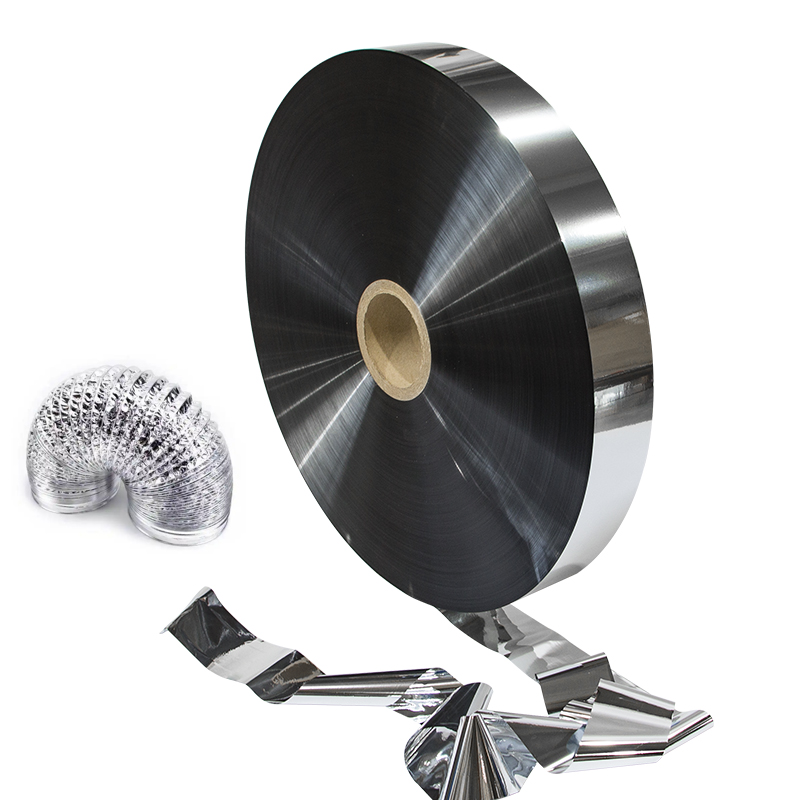
Flexible ducts used in residential and commercial HVAC systems typically consist of a spiral wire inner core, a polyester film inner liner, a blanket of glass fiber or polyester insulation, and an outer FSK jacket. The FSK layer serves three functions simultaneously: securing the insulation in place, providing a vapor retarder, and reflecting radiant heat back into the duct system to reduce thermal losses.
② Rigid Duct Board and Wrap
In large commercial and industrial projects, rectangular sheet metal ducts are often wrapped externally with fiberglass blankets faced with FSK. The self-sealing pressure-sensitive adhesive (PSA) lap edge on FSK facings allows contractors to achieve airtight seams without additional tape, speeding up installation significantly.
③ Equipment and Pipe Insulation
Chillers, fan coil units, and refrigerant piping in cold environments benefit from FSK-faced insulation. In chilled water systems, the foil's low vapor transmission rate prevents moisture from condensing inside the insulation layer — a critical requirement that extends the service life of mechanical equipment.
Market Trends: Sustainability and Lightweight Innovation
The FSK facing market is evolving in response to two converging trends:
Sustainability requirements: Green building certification programs — including LEED (Leadership in Energy and Environmental Design) and BREEAM — are pushing manufacturers to reduce the embodied carbon of construction materials. This is driving interest in FSK products that incorporate recycled kraft content, bio-based adhesives, or reduced foil thickness while maintaining performance thresholds.
Lightweight alternatives: Some product engineers are moving away from full FSK toward FS (Foil + Scrim, no kraft layer) or AL/Non-woven composites to reduce weight and improve flexibility. These variants are particularly popular in European markets and in specialized lightweight flexible duct systems for residential applications.
Why Source FSK Laminate from China?
China has emerged as one of the world's largest and most competitive suppliers of FSK facing material and related aluminum foil composites. Key advantages of Chinese suppliers include:
- Vertical integration: Access to domestically produced aluminum foil, fiberglass scrim, and kraft paper ensures raw material cost control and supply chain stability.
- Advanced lamination equipment: Both dry lamination and hot-melt lamination lines are widely available, enabling precise control over adhesive weight, bonding strength, and peel performance.
- Custom flexibility: Width, basis weight, foil thickness, scrim count, and adhesive type (water-based, hot-melt, or acrylic) can all be customized to meet specific product specifications.
- Export readiness: Leading Chinese FSK manufacturers have experience supplying to North American, Middle Eastern, and Southeast Asian markets, with products meeting ASTM C1136 and UL-relevant performance levels.
Sourcing Checklist for FSK Facing Material
When evaluating FSK laminate suppliers, procurement professionals should verify:
- Foil origin and quality control: Confirm the foil is sourced from certified mills with thickness tolerances within ±5%.
- Lamination line consistency: Request batch-to-batch performance data for peel strength and WVTR to assess process stability.
- In-house testing capability: Suppliers should be able to self-test WVTR, tensile strength, and foil adhesion without relying entirely on third-party labs.
- Custom configuration support: Can the supplier accommodate non-standard widths, heavier scrim counts, or flame-retardant adhesive formulations?
- Lead time and stock availability: Are standard configurations held in inventory for fast-turn orders? What is the typical lead time for custom runs?
Conclusion
FSK facing material is a critical component in the thermal and moisture management systems of modern HVAC installations. As building codes demand lower energy consumption and longer system lifespans, the quality of FSK laminate becomes a direct factor in overall HVAC system performance.
Sourcing from a reliable, technically capable manufacturer — one that can deliver consistent quality across custom specifications — is essential for HVAC product engineers, insulation fabricators, and construction material distributors alike.
Hangzhou Hongcheng Technology Co., Ltd. is a China-based specialist manufacturer of aluminum foil composite materials and PE laminated composites, offering FSK facing, AL/PE laminates, foil scrim composites, and custom structures for global customers. We welcome inquiries from HVAC insulation manufacturers, duct fabricators, and industrial distributors worldwide.
Website: www.techfoil.com
Metalized Film vs. AL/PE Foil Laminates for Underfloor Heating: A Material Sourcing Guide for Manufacturers
Aluminum Mylar Tape vs AL/PET Shielding Tape: A Selection Guide for EV Wiring Harness Applications