High-Temperature Foil Shielding Tape for Motor Lead Wires: What You Need to Know
As industrial motors become increasingly sophisticated — particularly with the widespread adoption of variable frequency drives (VFDs), servo motors, and high-voltage asynchronous motors — the demands placed on cable shielding materials have grown considerably. The motor lead wire, which connects the motor winding to the external terminal, operates in one of the most thermally demanding zones within any motor assembly.
Yet many cable manufacturers and motor OEMs continue to specify standard-grade aluminum foil/PET composite shielding tape for these applications, often overlooking the specific thermal and electrical requirements involved. This article provides a structured overview of high-temperature AL/PET shielding tape materials — their structure, performance characteristics, and how to select the right option for your application.
The Challenge: Why Standard Foil Tape Falls Short
Motor lead wires are typically routed through or adjacent to the motor's winding area, where continuous operating temperatures commonly reach 105°C to 180°C depending on insulation class:
- Class B insulation: rated up to 130°C
- Class F insulation: rated up to 155°C
- Class H insulation: rated up to 180°C
Standard AL/PET composite tape — using 12μm biaxially oriented PET film — has a thermal ceiling of approximately 105°C. Prolonged exposure above this threshold causes the PET substrate to shrink, embrittle, and eventually crack. Once the substrate fails, the aluminum foil layer loses its mechanical support, leading to breaks in the shielding continuity and a measurable drop in EMI attenuation performance.
For VFD-driven motors, high-frequency harmonic currents (often above 10 kHz) introduce an additional challenge: the shielding layer must maintain electrical continuity across a wide frequency range, making substrate integrity under thermal stress critical.
Material Structure Options
Several composite structures are used in high-temperature foil shielding tape applications for motor lead wires:
Option A: Aluminum Foil + Heat-Stabilized PET
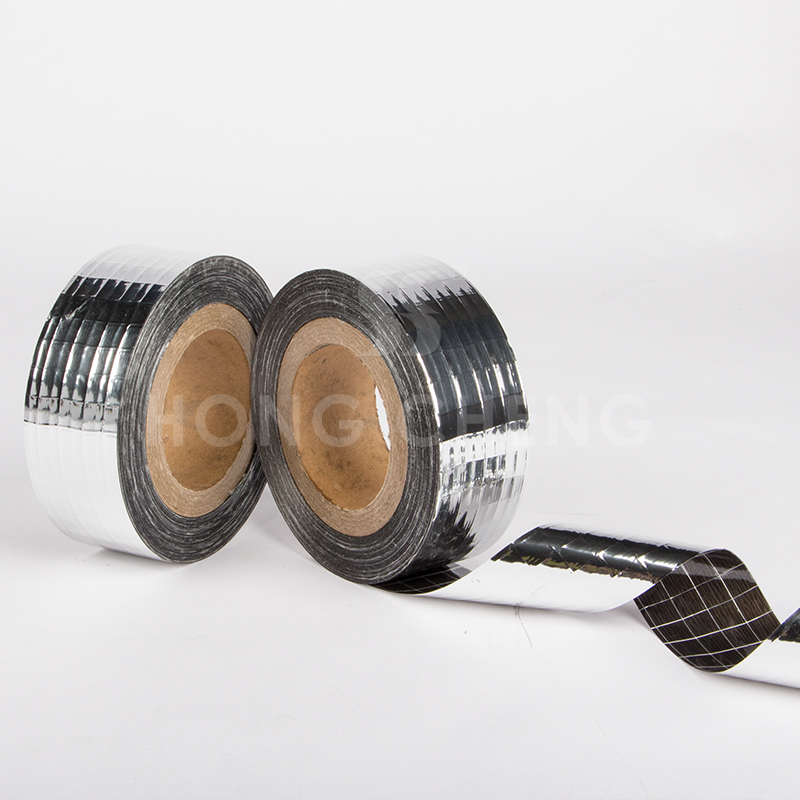
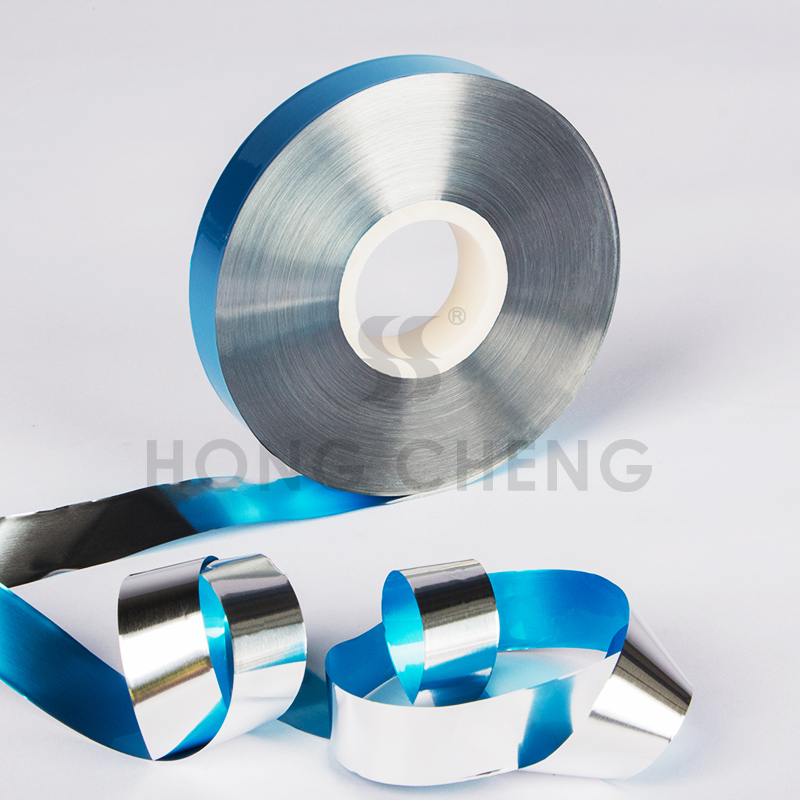
The most common upgrade from standard tape. Uses a thermally stabilized polyester film with a continuous service rating of 125°C to 150°C. Aluminum foil thickness is typically 7μm to 9μm. Overall tape thickness ranges from approximately 18μm to 25μm. This is the recommended baseline for Class F insulation motor lead wires.
Option B: Aluminum Foil + Polyimide (PI) Film
Polyimide-based substrates (commonly known under trade names such as Kapton) offer continuous temperature ratings above 200°C. The AL/PI composite delivers both high shielding effectiveness and excellent thermal stability. This structure is used in aerospace, military, and precision servo applications where cost is secondary to performance.
Option C: Aluminum Foil + Glass Fiber Woven Composite
Combining aluminum foil with a woven glass fiber fabric provides temperature resistance above 200°C, along with inherent flame retardancy and improved mechanical tear resistance. This structure is also used in electric heat tracing and industrial high-temperature winding applications.
Option D: Metalized PET (VMPET) High-Temperature Composite
Vapor-deposited aluminum on high-temperature PET film. Lighter in weight than solid foil composites, suitable for applications where shielding requirements are moderate and weight reduction is a priority.
Performance Comparison
| Property | Standard AL/PET | High-Temp AL/PET | AL + PI | AL + Glass Fiber |
|---|---|---|---|---|
| Continuous temp rating | 105°C | 125–150°C | 200°C+ | 200°C+ |
| Foil thickness | 6–9μm | 7–9μm | 7–9μm | 7–9μm |
| Peel strength (post-aging) | Moderate | Good | Excellent | Good |
| Shielding continuity | Good | Good | Excellent | Good |
| Flame retardancy | No | Optional | No | Yes (glass) |
| Relative cost | Low | Medium | High | Medium-high |
For the majority of industrial motor lead wire applications (Class B and F), high-temperature AL/PET composite tape offers the best balance of performance and cost. Class H and specialty high-temperature motors should use AL/PI or AL/glass fiber structures.
Standard Specifications
High-temperature foil shielding tape for motor lead wires is typically supplied in the following formats:
- Slit widths: 8mm, 10mm, 12mm, 15mm, 20mm (custom slit widths available)
- Total thickness: 18μm to 30μm depending on substrate combination
- Foil surface: bright finish (preferred for conductivity) or matte finish (per process requirements)
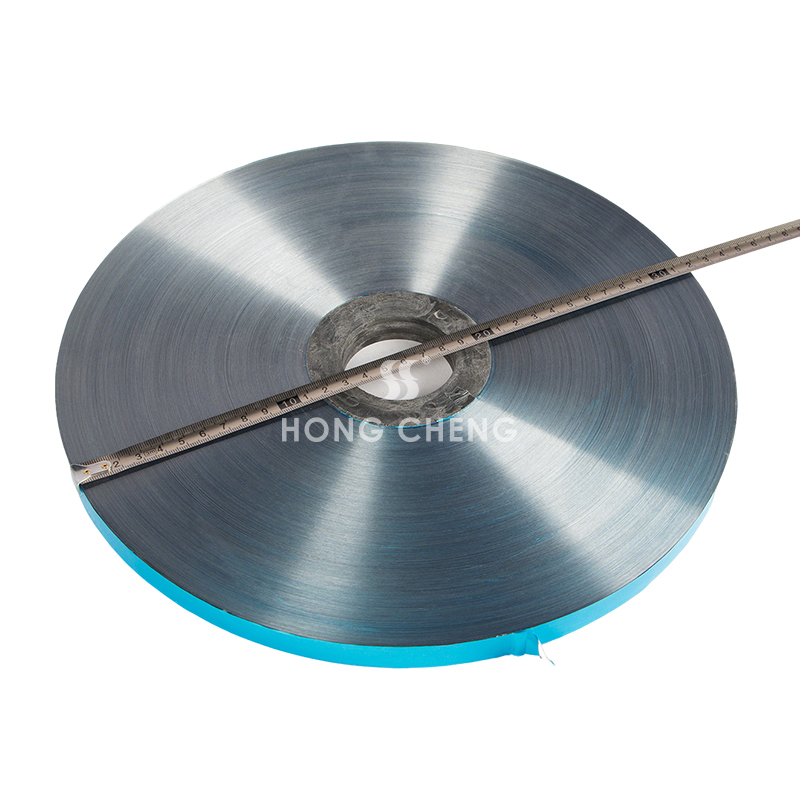
- Roll format: narrow slit rolls, 76mm or 152mm core ID, OD ≤250mm
Material is supplied in continuous roll form for direct integration into cable production lines using longitudinal lapping or spiral wrapping processes.
Key Parameters to Confirm with Your Supplier
When sourcing high-temperature foil shielding tape, ensure the following data is provided:
- Thermal rating documentation: UL, TUV, or in-house test reports specifying continuous and short-term temperature ratings
- Substrate stabilization treatment: shrinkage rate of the PET film after thermal aging (typically tested at 150°C/30 min)
- Foil thickness and alloy: 7μm vs. 9μm significantly affects shielding continuity; specify alloy (1235 or 8011) for purity assurance
- Delamination resistance: peel force data after thermal aging, to confirm the composite bond does not weaken under service conditions
- Slit width tolerance: ±0.3mm is standard for most cable applications; tighter tolerances must be agreed in advance
About Hongcheng Technology
Hangzhou Hongcheng Technology Co., Ltd. specializes in the manufacturing of aluminum foil composite materials and PE laminated composite materials. We supply high-temperature AL/PET shielding tape and related foil composite structures to cable manufacturers, motor OEMs, and industrial wiring harness producers worldwide.
Custom foil thickness (7μm/9μm), substrate combinations, slit widths, and roll formats are available to match your production line requirements.
For product specifications or samples, contact us:
Phone/WeChat: +86 13758223270
Email: wendy@hcdxcl.com.cn
Lightweight AL/PE Laminate for Flexible HVAC Duct Jackets: Market Trends and Material Selection Guide
AL/PE vs Metallized Film for Luggage Lining: A Technical Performance Comparison