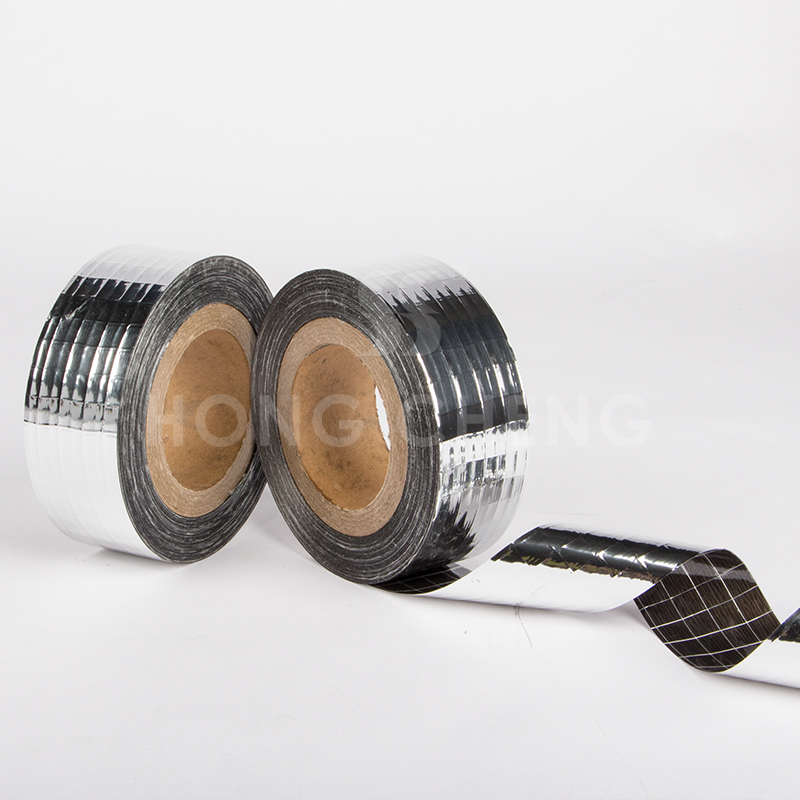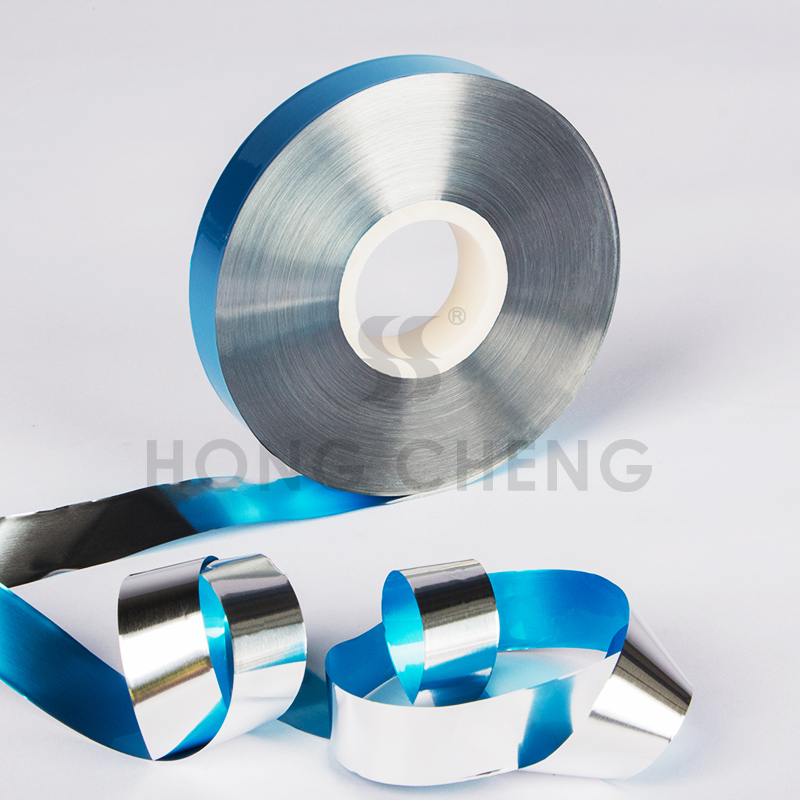
Key Parameters of Aluminum Foil Coils for Ton Bags
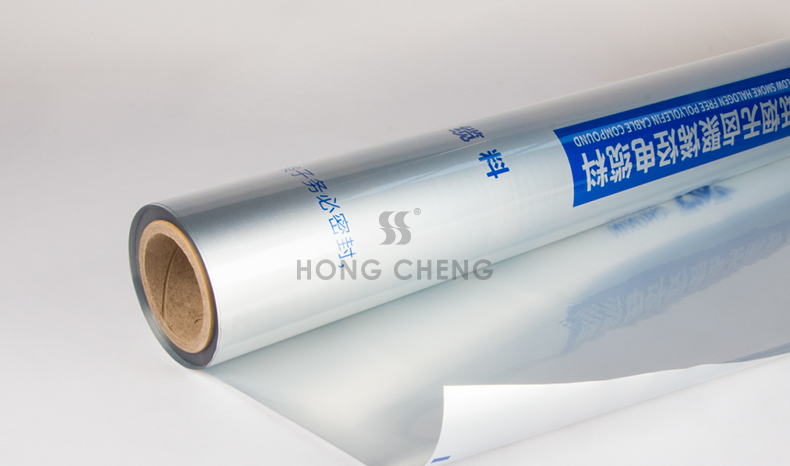
As a core packaging carrier for the transportation and storage of bulk goods, the core performance of ton bags, such as moisture resistance, oxidation resistance, and barrier properties, largely depends on the aluminum foil coils compounded inside. With excellent metal barrier properties, aluminum foil coils can effectively isolate external oxygen, water vapor, and light, ensuring the quality stability of chemical raw materials, food-grade powders, mineral products, and other materials. Understanding its key parameters is a core prerequisite for ton bag selection and production quality control.
1. Basic Physical Parameters
- Thickness: The thickness range of aluminum foil coils is usually 0.05mm-0.2mm, which is a core indicator affecting barrier properties and cost. When the thickness is less than 0.05mm, the aluminum foil is prone to pinholes and damage, resulting in reduced barrier performance and inability to meet long-term storage needs; if the thickness exceeds 0.2mm, it will increase the overall weight and production cost of the ton bag, and reduce the flexibility of the ton bag, affecting filling and handling operations. The common thickness of industrial ton bags is 0.08mm-0.12mm, which can not only ensure barrier properties but also balance weight and cost.
- Width and Length: The width needs to match the width of the ton bag, with a conventional range of 1.2m-2.4m, which can be customized according to the ton bag specifications (such as 1-ton, 1.5-ton capacity) to avoid cutting waste. The length is supplied in the form of coils, usually 500m/roll-1000m/roll, and the length deviation should be controlled within ±2% to ensure continuity during production, reduce the number of coil changes, and improve production efficiency.
- Aluminum Purity: The aluminum purity of aluminum foil coils directly affects its physical properties and corrosion resistance. The industrial standard requires a purity of not less than 99.0%, and the aluminum foil purity for high-end food-grade ton bags needs to reach more than 99.5%. High-purity aluminum foil has a more uniform metal structure, lower pinhole rate, and more stable barrier properties. At the same time, it can reduce oxidative rust caused by impurities and extend the service life of ton bags.
2. Mechanical Performance Parameters
- Tensile Strength: As part of the stress-bearing structure of ton bags, aluminum foil coils need to have a certain tensile strength. The longitudinal tensile strength should be ≥120MPa, and the transverse tensile strength should be ≥100MPa. If the tensile strength is insufficient, the aluminum foil layer is prone to tearing during the filling and lifting process of the ton bag, leading to the failure of the barrier structure. During testing, the standard test method with a tensile speed of 50mm/min should be adopted in an environment of 23℃±2℃ to ensure data accuracy.
- Elongation: Elongation reflects the flexibility of aluminum foil coils. The longitudinal elongation should be ≥3%, and the transverse elongation should be ≥5%. Good elongation performance prevents the aluminum foil from breaking during the folding and handling of ton bags, especially in low-temperature environments (below -10℃), it can still maintain a certain flexibility and avoid breakage due to increased brittleness.
- Bursting Strength: The bursting strength of aluminum foil coils should be ≥150kPa. This parameter simulates the anti-damage ability of ton bags when squeezed and collided during transportation. Insufficient bursting strength will cause holes in the aluminum foil layer, and external moisture and oxygen will penetrate, affecting the quality of the contents. Therefore, strict testing with a hydraulic bursting strength tester is required.
3. Barrier and Application Performance Parameters
- Oxygen Transmission Rate (OTR): This is a core indicator to measure the barrier property of aluminum foil. The standard requires OTR ≤0.1cm³/(m²·24h·0.1MPa). Low OTR can effectively prevent the contents from oxidative deterioration. For example, oxidizable powders in the chemical field and cereal protein powders in the food field all rely on the high barrier property of aluminum foil to extend the shelf life.
- Water Vapor Transmission Rate (WVTR): The WVTR should be ≤0.1g/(m²·24h), which is especially suitable for materials sensitive to humidity (such as chemical fertilizers, cement, and pharmaceutical intermediates). If the WVTR exceeds the standard, the contents will absorb moisture and agglomerate, affecting the service performance. Therefore, testing should be carried out in a standard environment with a temperature of 38℃ and a relative humidity of 90%.
- Temperature Resistance Range: The temperature resistance range of aluminum foil coils is -30℃-120℃. Within this temperature range, its physical properties and barrier properties remain stable. Beyond this range, low temperatures will increase the brittleness of the aluminum foil, and high temperatures may cause delamination of the composite layer between the aluminum foil and the base film. Therefore, it is necessary to select suitable aluminum foil coils according to the storage and transportation environment of the contents.
- Surface Tension: To ensure the composite firmness between the aluminum foil coil and the ton bag base film (such as polypropylene, polyethylene), its surface tension should be ≥38mN/m. Insufficient surface tension will lead to bubbles and peeling in the composite layer, affecting the overall structural stability of the ton bag. Before production, testing with a dyne pen or surface tension meter is required.
4. Parameter Selection and Quality Control
The parameter selection of aluminum foil coils for ton bags should be comprehensively judged based on the characteristics of the contents and usage scenarios: for example, when packaging food-grade materials, priority should be given to aluminum purity and hygiene indicators (heavy metal content ≤0.001%); when packaging heavy mineral products, the requirements for tensile strength and bursting strength should be strengthened. During the production process, regular sampling tests of thickness, barrier properties, and mechanical properties are required to ensure that each batch of products meets national standards such as GB/T 31985-2015 "Aluminum and Aluminum Alloy Foil for Packaging", and to ensure the safety and reliability of ton bags from the source of parameters.
5. Structural Parameters
- Number of Composite Layers: Aluminum foil coils for ton bags are mostly composite structures (not a single aluminum foil layer), commonly 2-3 layers. Typical structures include "aluminum foil + polyethylene (PE)" and "aluminum foil + polypropylene (PP) + polyethylene". The 2-layer composite structure is suitable for scenarios with ordinary moisture-proof requirements, while the 3-layer composite structure adds an intermediate PP layer, which can improve puncture resistance and mechanical strength, making it more suitable for packaging mineral products with sharp particles or heavy materials. The number of composite layers should be determined according to the hardness, weight of the contents and transportation environment, and the thickness ratio of each layer should be uniform (e.g., the aluminum foil layer accounts for 30%-40% and the base film layer accounts for 60%-70% in the 3-layer structure) to avoid easy cracking after compounding due to uneven layer thickness.
- Interlayer Adhesion Strength: The adhesion strength between composite layers is crucial for ensuring structural stability, with a standard requirement of ≥3N/15mm (T-peel test). Insufficient adhesion strength may cause delamination between the aluminum foil layer and the base film layer during folding, lifting or in low-temperature environments of ton bags, leading to failure of the barrier structure. During testing, the peel test should be conducted at a speed of 300mm/min in an environment of 23℃±2℃ and relative humidity 50%±5%, and different composite layers (such as aluminum foil-PE, PE-PP) should be tested separately to ensure they all meet the standards.
- Surface Treatment Type: The surface of aluminum foil coils needs specific treatment to improve composite performance and corrosion resistance. Common treatment methods include anodizing, oil coating, and film coating. For food-grade ton bags, anodizing (anodic oxide film thickness ≥5μm) is preferred, which can reduce the risk of heavy metal migration and comply with GB 4806.9-2016 "National Food Safety Standard for Metal Materials and Products in Contact with Food". For industrial ton bags, oil coating (oil film thickness ≤2μm) is commonly used, which can reduce the surface friction coefficient of aluminum foil, facilitating coil winding and subsequent processing. For high-humidity environments (such as sea transportation), film coating (e.g., acrylic coating) is required to further improve salt spray corrosion resistance, with coating adhesion ≥4B (cross-cut test).
- Edge Flatness: The edge flatness of aluminum foil coils directly affects the cutting and composite accuracy during ton bag production. The standard requires edge deviation ≤0.5mm/m, with no obvious burrs or wrinkles. Uneven edges may cause length differences on the sides of ton bags after cutting, and bubbles or incomplete sealing may occur during compounding; burrs may scratch operators or other packaging parts during handling. Testing should use a laser width gauge to sample every 10m along the length of the coil, and record the maximum edge deviation to ensure it meets production requirements.
Requirements for Aluminum Foil Outer Packaging of New Energy Batteries
How to Determine the Thickness of Composite Aluminum Foil Bags?