Motor Lead Wire Foil Shielding Tape: High-Temperature AL/PET Trends and Selection Guide
As new energy vehicle electric drive systems, industrial servo motors, high-speed rail traction motors, and wind generators move toward higher power density and higher rotational speeds, the operating environment for motor lead wires is becoming increasingly demanding. Lead wires must carry operating current while withstanding elevated temperatures, oil exposure, vibration, humidity, and electromagnetic interference from inverter-driven power supplies. The high-temperature aluminum foil shielding composite tape used on these leads is a critical raw material that directly affects motor insulation life, electromagnetic compatibility, and long-term reliability. This article reviews current technical trends and provides practical sourcing guidance for motor manufacturers.
1. Why Motor Lead Wires Need High-Temperature Shielding Materials
Motor lead wires connect the winding ends to the terminal box, forming the bridge between the stator winding and the external power supply. In normal operation, this region commonly reaches 120°C to 155°C, and in some variable-frequency or new energy vehicle drive motors, peak temperatures can exceed 180°C or even 200°C. At the same time, the high-frequency pulse voltage from inverters generates partial discharges on the surface of the lead insulation, producing conducted EMI that can affect nearby electronic systems.
Aluminum foil shielding composite tape uses the high conductivity of the aluminum layer to form a continuous shield. This shield reflects and absorbs electromagnetic radiation and blocks interference from propagating along the conductor. Standard aluminum foil mylar tape performs well at room temperature, but after long-term exposure to high temperatures, substrate aging and adhesive softening can cause the shielding layer to become brittle, delaminate, and lose both shielding and moisture-barrier functions. Therefore, high-temperature AL/PET composite tapes require specially upgraded substrates, adhesive formulations, and heat-resistant modifications.
2. Material Structure: From Basic AL/PET to Multi-Layer Composite Solutions
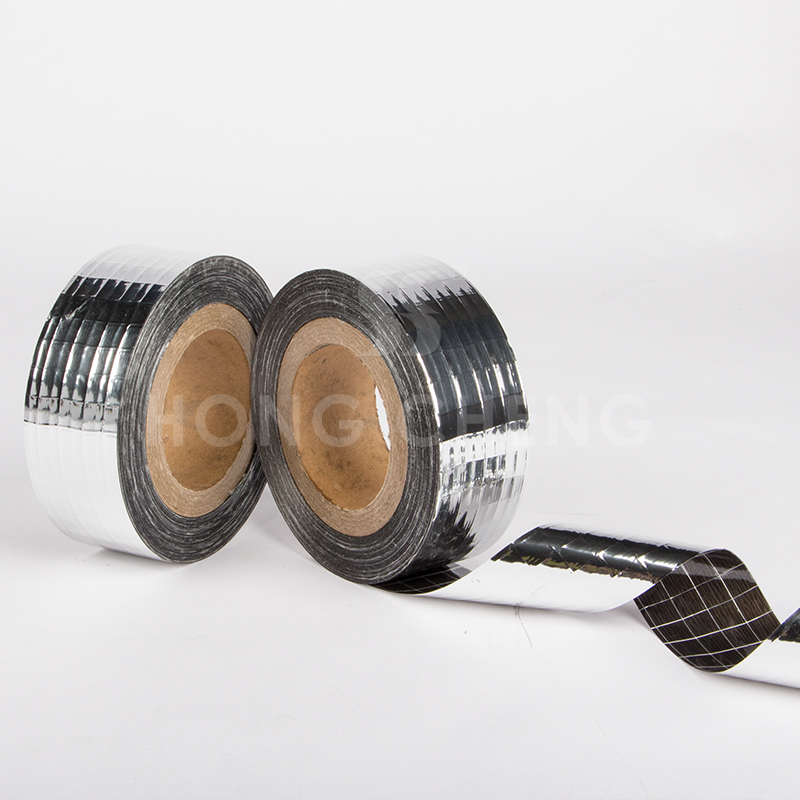
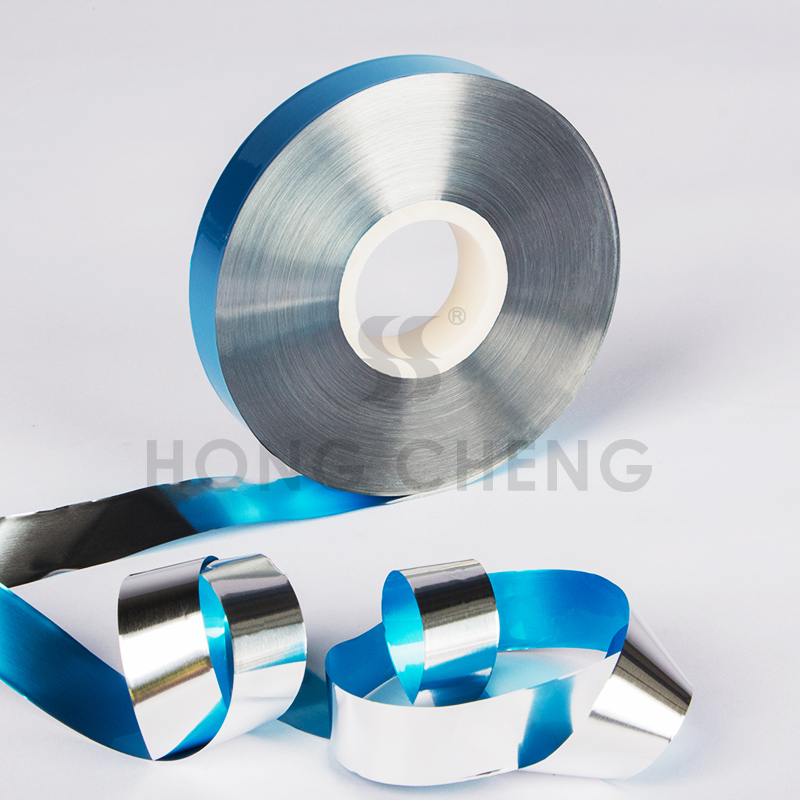
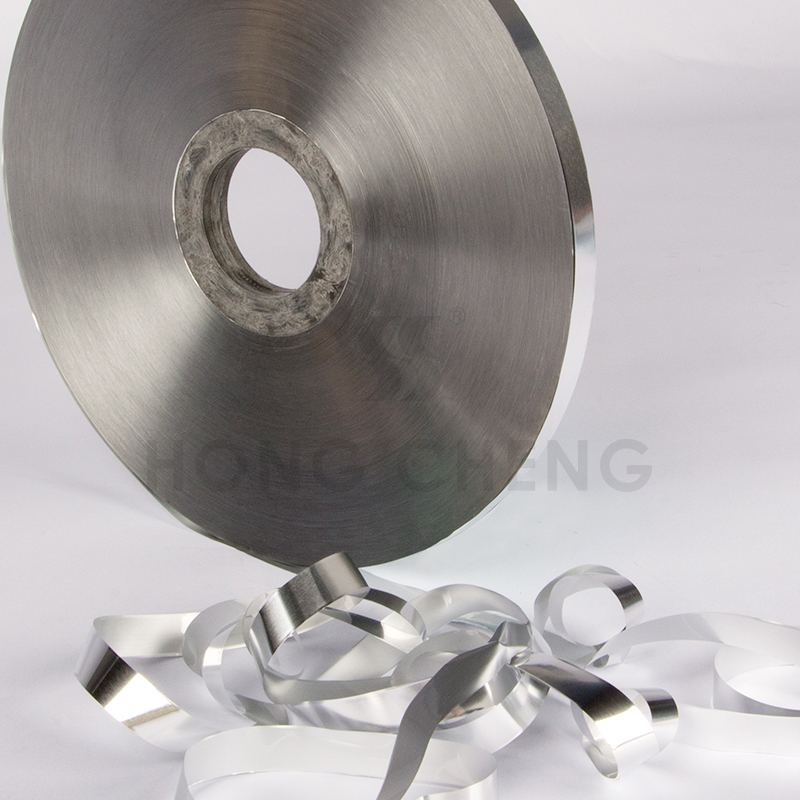
A typical high-temperature aluminum foil shielding composite tape for motor lead wires uses a multi-layer construction in which each layer performs a specific function:
- Base layer: PET polyester film (130°C to 155°C), with some high-temperature grades using PI polyimide film (180°C to 200°C)
- Functional layer: solid aluminum foil (4–7 μm), providing EMI shielding and radial moisture barrier
- Bonding layer: high-temperature acrylic or epoxy-modified adhesive, typically rated for ≥3,000 hours of thermal aging
- Reinforcement layer (optional): glass fiber or aramid scrim, improving tear resistance and mechanical strength
In recent years, to meet the requirements of inverter-duty motors, premium products have increasingly adopted an AL/PI/glass fiber three-layer construction, combining shielding, heat resistance, and corona resistance in a single tape. For general industrial motors and appliance motors, the AL/PET structure remains the mainstream choice, offering a favorable balance between cost and performance.
| Structure | Typical Temperature Rating | Typical Motor Applications | Key Advantages |
|---|---|---|---|
| AL/PET | 130°C–155°C | General industrial motors, appliance motors | Low cost, flexible, easy to wrap |
| AL/PI | 180°C–200°C | EV drive motors, servo motors | High temperature resistance, corona resistance |
| AL/PI/glass fiber | 180°C–200°C | Inverter-duty motors, rail traction motors | High mechanical strength, tear resistance |
3. Four Technical Trends Driving the Market
1. Higher Temperature Ratings Temperature classes are moving from traditional Class F (155°C) to Class H (180°C) and even 200°C. This trend is especially pronounced in new energy vehicle drive motors and high-speed rail traction motors, where PI substrates and high-temperature adhesives are becoming standard configurations for mid-range and premium applications.
2. Corona Resistance Becomes a Requirement The high-frequency pulse voltage from inverters subjects lead insulation to repeated corona stress. New-generation shielding tapes combine PI substrates with corona-resistant coatings, extending corona lifetime from a few hundred hours to several thousand hours and significantly extending motor maintenance intervals.
3. Halogen-Free, Low-Smoke, and Environmental Compliance Rail, marine, and building-service motors face increasingly strict requirements for smoke density, toxicity, and flame retardancy. Halogen-free AL/PET shielding tapes use phosphorus-nitrogen flame-retardant systems to meet standards such as EN 45545 and IEC 60332, while also complying with RoHS directives.
4. Thinner Profiles and Automation Compatibility To accommodate high slot-fill-factor motor designs, foil tape thickness is shrinking from 0.05 mm toward 0.025 mm. At the same time, downstream high-speed taping machines impose higher requirements on edge straightness, splice frequency, and unwinding tension consistency, pushing raw material suppliers to improve slitting and lamination processes.
4. Key Selection Parameters
When sourcing shielding tape for motor lead wires, focus on the following parameters:
- Temperature rating and thermal aging: Select a tape rated at least 20% above the motor's normal operating temperature, and request thermal-aging peel-strength data from the supplier
- Foil thickness and pinhole rate: 4–7 μm aluminum foil provides adequate shielding for most applications; lower pinhole rates improve moisture-barrier stability
- Adhesive heat resistance: Verify peel-strength retention after aging at 135°C or 180°C to avoid adhesive softening and delamination at operating temperature
- Oil and chemical resistance: For compressors and gearbox motors, the tape should pass IRM 902 oil-aging tests to ensure long-term resistance to swelling
- Flexibility and tear resistance: Dynamic lead wires require tapes that do not crack or wrinkle during bending; glass-fiber-reinforced structures may be used where needed
- Width and slitting tolerance: Common widths are 10 mm, 15 mm, 20 mm, and 25 mm, with tolerances of ≤ ±0.2 mm to match automatic taping machines
5. Common Sourcing Mistakes
Mistake 1: Confusing aluminum foil shielding tape with ordinary aluminum foil adhesive tape Standard aluminum foil adhesive tape is mainly used for room-temperature bonding, sealing, or thermal insulation and has no high-temperature adhesive. Motor lead wire shielding tape is a composite that integrates insulation, heat resistance, shielding, and bonding, and the two products follow different test standards and application scenarios.
Mistake 2: Focusing only on foil thickness while ignoring adhesive temperature rating Adhesive failure at high temperature is one of the leading causes of shielding layer delamination. Procurement teams should request thermal-aging peel-strength test reports rather than judging quality by foil thickness alone.
Mistake 3: Over-specifying thickness Excessively thick tape occupies valuable slot space, reduces slot fill factor, complicates winding, and can even loosen under centrifugal force at high rotational speeds. The thinnest specification that meets the required insulation and shielding levels should be selected.
6. Market Outlook and Supply Chain Opportunities
Production of new energy vehicle drive motors, wind generators, industrial servo motors, and rail traction motors continues to grow, driving demand for high-temperature, corona-resistant, and lightweight shielding materials. Industry data project the global market for motor insulation and shielding materials to grow at an annual rate of 6% to 8%. China, leveraging its aluminum foil composite film manufacturing base and supply chain ecosystem, is gradually extending from general-purpose motor applications into high-end motor export supply chains.
For motor manufacturers, a stable and traceable supplier of high-temperature aluminum foil shielding composite tape is not only a cost factor but also a key enabler of product reliability. Raw material suppliers with capabilities for custom slitting, third-party testing, and temperature-class certification will be well positioned in the next round of market competition.
Contact Us
For specifications, temperature ratings, and custom configurations of high-temperature aluminum foil shielding composite tape for motor lead wires, please contact the Hongcheng Technology team.
Phone / WeChat: +86 13758223270 Email: wendy@hcdxcl.com.cn
VMPET Duct Facing: Summer HVAC Peak Season & Shipping Window Outlook 2026
Why Metallized Film Woven Fabric Lining Is Becoming the Standard for Luggage