How to Select AL/PET Shielding Tape for FTP/STP Network Cables: A Consultant's Sourcing Guide
Your Cable Shielding May Have Been Wrong from Day One
When sourcing shielding materials for network cables, cable engineers often encounter a puzzling situation: the same "aluminum foil shield" specification works perfectly in one production run, yet the next batch from a different supplier causes impedance fluctuations or failed EMC tests. What changed?
The answer usually lies not in the cable's overall design, but in a detail many buyers overlook — whether the AL/PET shielding tape (aluminum mylar tape) specification truly matches your cable category, shielding structure, and production process.
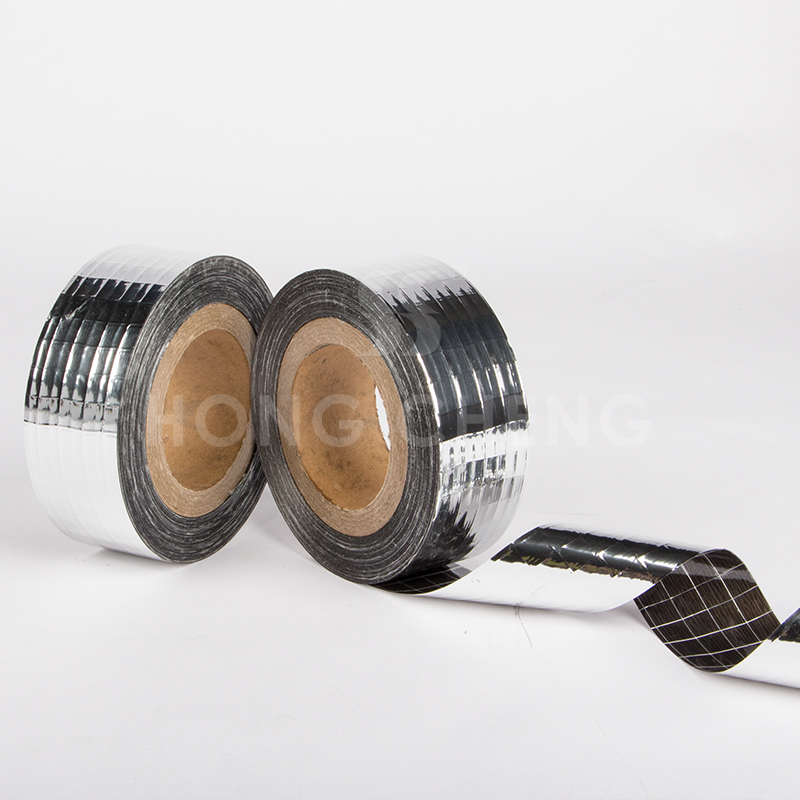
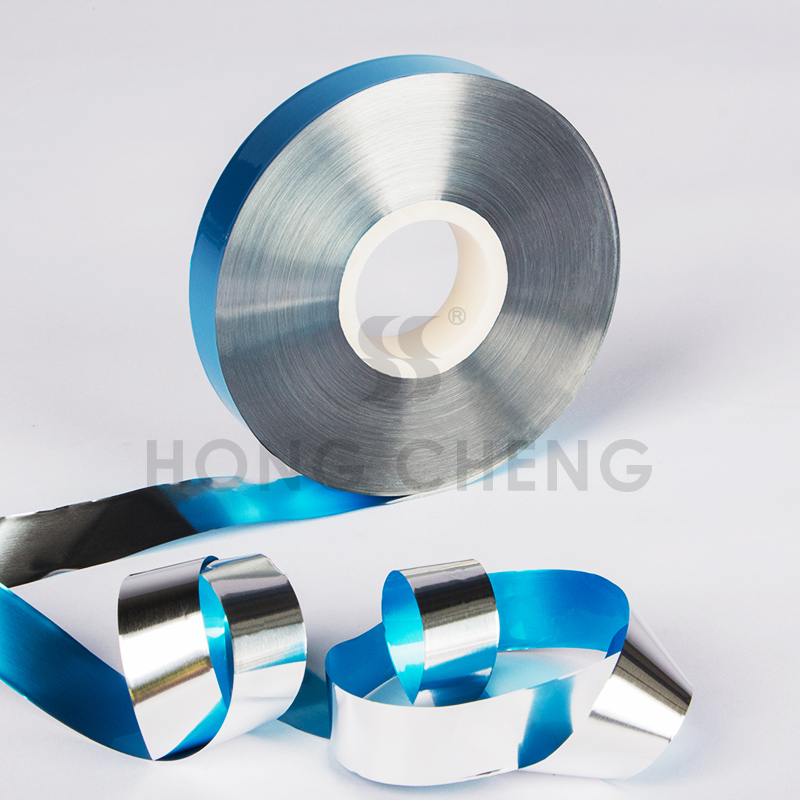
AL/PET shielding tape is the core pair-level shielding material in FTP (Foiled Twisted Pair) and STP (Shielded Twisted Pair) network cables. It consists of an aluminum foil layer laminated to a PET (polyester) film — the foil provides electromagnetic reflection shielding, while the PET layer supplies mechanical strength and dielectric isolation. This seemingly simple two-layer structure has critical variables: foil thickness, PET thickness, lamination method, tape width, and surface resistivity. Each parameter directly affects shielding effectiveness, impedance stability, and wrapping efficiency on your production line.
This article systematically breaks down the sourcing logic for AL/PET shielding tape across three dimensions: cable category (Cat5e/Cat6/Cat7), shielding structure (FTP/STP), and production process compatibility — helping you avoid the three most common procurement mistakes.
Selection by Cable Category: Cat5e, Cat6, and Cat7 Have Very Different Shielding Requirements
Cat5e Cables — The most common FTP application. Operating at 100MHz with wider pair spacing, Cat5e has relatively modest shielding requirements. A standard 7μm foil + 12μm PET structure works well, with tape widths of 12–16mm sufficient for single-pair wrapping. Surface resistivity ≤0.5Ω/sq provides adequate reflection shielding at 100MHz.
Cat6 Cables — This is the "watershed" in shielding tape selection. Cat6 operates at 250MHz with tighter twist pitch, demanding significantly higher shielding performance. Key parameter shifts:
- Foil thickness ≥9μm to ensure shielding attenuation (SE) ≥40dB at 250MHz
- PET thickness 12–15μm — too thin risks tearing during wrapping, too thick increases cable outer diameter
- Tape width must be precisely calculated based on pair diameter, typically 14–18mm; excessive overlap creates impedance non-uniformity
Cat7 Cables — Operating at 600MHz, Cat7 mandates STP structure with individual pair shielding plus overall braid shield. Requirements for AL/PET shielding tape are the highest:
- Foil thickness ≥12μm, shielding attenuation ≥60dB at 600MHz
- PET recommended at 15–25μm for both wrapping strength and inter-layer insulation
- Tape width precisely matched to pair diameter + twist pitch, typically 16–22mm
Key takeaway: Do not use Cat5e shielding tape specifications for Cat6/Cat7 orders. Shielding effectiveness requirements don't increase linearly with frequency — they jump in steps. A 7μm foil performing adequately at 100MHz may see a 15–20dB shielding effectiveness drop at 250MHz.
Selection by Shielding Structure: FTP and STP Demand Different Tape Parameters
Network cable shielding structures fall into four main types: U/FTP (no overall shield, individual pair foil), F/FTP (overall foil + pair foil), S/FTP (overall braid + pair foil), and SF/FTP (overall braid + foil + pair foil).
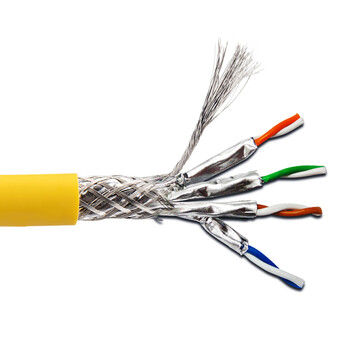
Pair-Level Shielding (all "FTP" structures) — This is where AL/PET shielding tape is primarily applied. Selection considerations:
- Longitudinal vs. transverse wrapping: Longitudinal wrapping (along the cable axis) is the mainstream process, requiring adequate flex in the tape — the PET layer must not be too stiff. Transverse wrapping suits high-speed lines, demanding clean, burr-free tape edges
- Overlap rate: Generally 25%–30%. Insufficient overlap creates electromagnetic "leak windows" at gaps; excessive overlap wastes material and distorts impedance
- Lap adhesive: Some premium cables require a heat-seal adhesive layer at the overlap to prevent wrapping loosening during subsequent sheath extrusion
Overall Shield Layer (the "F" layer in F/FTP, S/FTP) — Overall shielding typically uses wider AL/PET tape (40–60mm width) with slightly lower thickness requirements, as it serves as a secondary defense. However, the tape width must precisely match the cable's overall stranded diameter — otherwise wrinkles form during wrapping, affecting subsequent braid application or sheath extrusion.
Selection by Production Process: How Tape Parameters Affect Wrapping Operations
AL/PET shielding tape selection isn't only about shielding performance — it directly impacts wrapping line efficiency and yield rates.
Unreeling Tension — The foil layer is brittle. Excessive tension causes micro-cracks in the foil; insufficient tension results in loose wrapping. Recommended unreeling tension: 5–15N (adjusted by tape width and thickness). Always verify the supplier's tensile strength data before ordering.
Wrapping Speed — High-speed wrapping (≥80m/min) requires PET tensile strength ≥120MPa to prevent tape breakage. At lower speeds, PET strength requirements can be relaxed, but foil fold marks must be avoided.
Heat-Seal Adhesive Layer — If your line includes a heat-seal lap bonding station, you need AL/PET shielding tape with an EVA or LDPE heat-seal coating (3–5μm). The heat-seal layer activates at 80–100°C, automatically bonding overlap areas and significantly reducing wrapping loosening in downstream processes.
Storage and Pre-Treatment — AL/PET shielding tape is moisture-sensitive; PET hygroscopicity affects heat-seal bonding. Recommended storage humidity ≤60% RH, with wrapping completed within 24 hours of reel opening. For bulk orders, request vacuum packaging with desiccant from your supplier.
Three Common Sourcing Mistakes — Are You Making Them?
Mistake 1: "Thicker foil always means better shielding" — Foil thickness correlates with shielding effectiveness, but it's not the sole factor. Shielding attenuation = reflection attenuation + absorption attenuation. Reflection attenuation depends on surface conductivity (surface resistivity), while absorption attenuation depends on thickness and frequency. For FTP cables below 250MHz, a 7–9μm foil with low surface resistivity (≤0.3Ω/sq) may outperform a 12μm foil with higher surface resistivity. The key is the surface resistivity + thickness combination, not just thick foil alone.
Mistake 2: "Thinner PET saves cost" — Reducing PET thickness from 12μm to 8μm theoretically cuts per-kilometer cost by ~8%. However, 8μm PET tape breakage rates during wrapping may be 3–5× higher than 12μm, with hidden costs from line stoppages, reel changes, and scrap — total cost actually increases. For Cat6+ cables, PET below 12μm is not recommended.
Mistake 3: "One tape specification fits all cable types" — Cat5e, Cat6, and Cat7 differ in conductor diameter, twist pitch, and shielding structure, each requiring different tape widths, thicknesses, and overlap rates. Using one spec for all causes Cat6 impedance drift and Cat7 shielding attenuation failures. Best practice: maintain 2–3 tape specifications in your sourcing portfolio, precisely matched to each cable category.
Sourcing Quick Reference: AL/PET Shielding Tape Spec Table
| Cable Type | Foil Thickness | PET Thickness | Width Range | Surface Resistivity | Heat-Seal Layer | Shielding Structure |
|---|---|---|---|---|---|---|
| Cat5e FTP | 7μm | 12μm | 12–16mm | ≤0.5Ω/sq | Optional | U/FTP, F/FTP |
| Cat6 FTP | 9μm | 12–15μm | 14–18mm | ≤0.3Ω/sq | Recommended | F/FTP, S/FTP |
| Cat6a FTP | 9–12μm | 15μm | 16–20mm | ≤0.3Ω/sq | Required | S/FTP |
| Cat7 STP | 12μm | 15–25μm | 16–22mm | ≤0.2Ω/sq | Required | S/FTP, SF/FTP |
Why Hongcheng Technology
Hangzhou Hongcheng Technology Co., Ltd. has specialized in aluminum foil composite materials and PE-coated laminates for over a decade. Our AL/PET shielding tape product line covers the full specification range — foil thickness 7–25μm, PET thickness 12–50μm — supporting customized requirements for all FTP/STP network cable shielding structures.
We offer: precision width slitting (±0.5mm tolerance), optional heat-seal adhesive layers (EVA/LDPE), controlled low surface resistivity (≤0.2Ω/sq), and moisture-proof vacuum packaging. Whether you're producing Cat5e at scale or customizing Cat7 premium cables, Hongcheng Technology provides shielding tape specifications matched to your production line.
+86 13758223270、Email: wendy@hcdxcl.com.cn
VMPET Duct Facing for Industrial Exhaust & Kitchen Ventilation: A Selection Guide
Green Upgrades and Export Trends in Tea Packaging Foil Laminates