How to Choose Shielding Aluminum Foil for Automotive Cables?
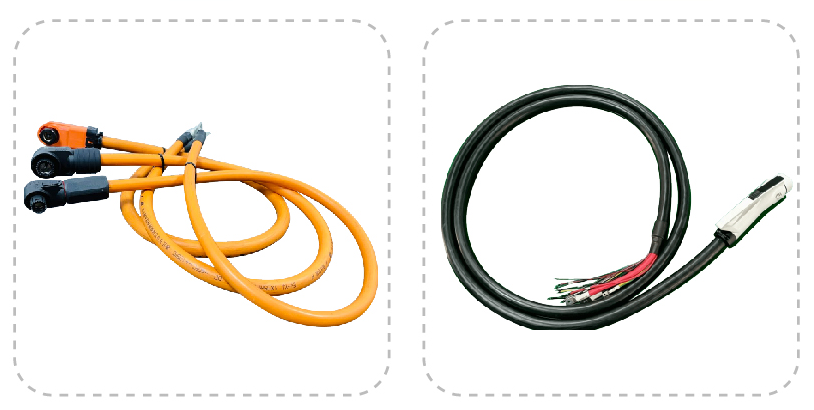
With the trend of automotive electronization and intelligence, cables, as the core carriers of signal and power transmission, are vulnerable to electromagnetic radiation from engines and interference from on-board electronic devices. Shielding aluminum foil is a key component to solve this problem. Choosing high-quality shielding aluminum foil for automotive cables requires comprehensive consideration from multiple dimensions such as functional requirements, service environment, and process compatibility. The specific principles are as follows:
1. Prioritize Core Material Parameters to Lay the Foundation for Shielding
The material of shielding aluminum foil directly determines its basic performance. The first priorities are aluminum purity and thickness. The aluminum purity should be above 99.4% (i.e., grades such as 1060 and 1235). High-purity aluminum can reduce the weakening of shielding effectiveness by impurities, especially suitable for the strong electromagnetic environment of high-voltage cables in new energy vehicles. The thickness is recommended to be controlled between 0.012-0.03mm: too thin aluminum foil is easy to break during bending, losing the shielding effect; too thick will increase the cable diameter, making it difficult to fit into the narrow installation space of automobiles (such as instrument panels and door wire harnesses). In addition, some scenarios require a "aluminum foil + base material" composite structure (e.g., aluminum-plastic composite foil). The base material is preferably PET or PP, and it is necessary to ensure strong adhesion of the composite layer to avoid separation between aluminum foil and base material after long-term vibration.
2. Focus on Shielding Effectiveness to Match Actual Interference Scenarios
Shielding Effectiveness (SE) is a key indicator, which needs to be tested by professional equipment (such as a network analyzer). It is required that the SE value is ≥60dB (i.e., the electromagnetic signal attenuation rate reaches more than 99.99%) in the frequency band of 30MHz-1GHz. Different scenarios have different requirements for shielding effectiveness: low-voltage cables of traditional fuel vehicles (such as lighting and audio cables) can choose aluminum foil with SE value of 60-80dB; high-voltage cables of new energy vehicles (such as battery pack connection cables and motor control cables) need to withstand voltages above 1000V, with stronger electromagnetic interference, so aluminum foil with SE value ≥80dB and a "aluminum foil + braided mesh" double shielding structure is recommended to further block interference signals. At the same time, attention should be paid to the grounding method of aluminum foil - if single-point grounding is adopted, it is necessary to ensure good conductivity at the edge of the aluminum foil to avoid shielding failure due to poor grounding.
3. Enhance Environmental Resistance to Adapt to Complex Automotive Working Conditions
Automotive cables need to withstand complex environments such as low temperature (-40℃) to high temperature (125℃ for general areas, up to 150℃ for engine compartments), humidity, oil pollution, and vibration. Therefore, shielding aluminum foil must have three types of resistance: first, temperature resistance - choose annealed aluminum foil to ensure no brittleness or deformation under extreme temperatures; second, aging resistance - the aluminum foil surface should be passivated (e.g., coated with chromate or chromium-free passivation layer) to prevent oxidation and rust after long-term contact with moisture; third, bending resistance - pass the "180° repeated bending test" (≥50 times) without cracks, to avoid damage to the shielding layer caused by vehicle vibration during driving.
4. Consider Process Compatibility to Reduce Wire Harness Processing Costs
When choosing aluminum foil, the convenience of wire harness processing should be considered: first, the cutting performance of aluminum foil, which should be compatible with the high-speed cutting of automated wire harness equipment (speed ≥30m/min) with no burrs at the cutting edge to avoid scratching the cable insulation layer; second, the adhesion of aluminum foil, which should have a certain flexibility to tightly wrap the cable, especially at the cable branch, to ensure seamless coverage of aluminum foil without shielding dead angles; third, cost balance - on the premise of meeting performance requirements, avoid over-pursuing high parameters (such as ultra-thick aluminum foil and ultra-high purity). Cost can be reduced through "bulk procurement + customized specifications", for example, agreeing with the manufacturer to customize rolled aluminum foil according to the cable length to reduce cutting waste.
5. Strictly Abide by Industry Compliance Standards to Avoid Quality Risks
The automotive industry has strict compliance requirements for components. Shielding aluminum foil must meet international and domestic standards: internationally, it needs to pass tests of ISO 6722 (Automotive Cables Standard) and IEC 60502 (Low-Voltage Cables Standard); domestically, it must comply with GB/T 18380 (Cable Flame Retardant Performance) and QC/T 1061 (Automotive Low-Voltage Wire Harnesses). Special attention should be paid to flame retardant performance - aluminum foil itself is non-flammable, but the composite base material must reach V0 level flame retardancy (i.e., self-extinguishing within 30 seconds after leaving the fire source) to prevent cables from intensifying combustion in case of vehicle fire. In addition, manufacturers should be required to provide material reports and performance test reports to ensure stable quality of each batch of products.
In conclusion, choosing shielding aluminum foil for automotive cables requires "taking demand as the guide and standards as the bottom line", and comprehensively considering material, shielding effectiveness, environmental resistance, process compatibility and compliance. Only in this way can reliable electromagnetic protection be provided for automotive cables and the stable operation of on-board electronic equipment be guarantee
The Role of Shielding Aluminum Foil in Network Cables and How to Distinguish Its Quality
Types and Working Principles of Common EMI Electromagnetic Shielding Materials