An Important Means to Suppress Electromagnetic Interference - Shielding!
Shielding is a technology that uses a shield to block or reduce the transmission of electromagnetic energy, and is one of the important means to suppress electromagnetic interference. Electromagnetic shielding can generally be divided into three types: electrostatic shielding, static magnetic shielding, and high-frequency electromagnetic field shielding. The purpose of the three types of shielding is to prevent external electromagnetic fields from entering a certain area that needs protection, and the principle is to use the effect generated by the induction of the shield on the external field to offset the influence of the external field. However, due to the different characteristics of the fields to be shielded, the requirements for the shield material and the shielding effect are also different. Different materials and different material thicknesses have different absorption effects on electromagnetic waves; we list the effects according to the shielding effect to share with you!
Interference Mechanism of Electromagnetic Energy and Methods to Suppress Interference
When current flows through high-frequency wires (or bus bars) in electronic products, a magnetic field is generated around the wires; high-frequency transformers of switching power supplies and all inductive components will inevitably generate leakage flux during operation. When the above magnetic flux passes through chips or sensitive circuit modules, charged particles (electrons and holes) in semiconductors are subjected to Lorentz force in the magnetic field, deviating from their original movement direction, which modulates the operating current waveform of the chips and modules due to magnetic field changes and causes distortion, leading to interference with the normal operation of these chips or circuit modules. Signal current always flows in a closed loop. When external interference magnetic flux passes through the area enclosed by the closed loop, an induced current will be generated in the closed loop, which will also cause current waveform distortion; the basic measures to suppress electromagnetic energy interference are as follows.
The most commonly used measure to suppress magnetic field radiation interference is to use conductive or magnetically permeable materials for shielding.
When changing interference magnetic flux passes through conductive materials, eddy currents will be generated in them, and magnetic flux in the opposite direction will be generated, which can weaken the interference magnetic flux passing through the conductive shielding layer; wrapping a thin copper sheet forming a short-circuit ring around the magnetic core of a high-frequency transformer can effectively suppress the leakage of transformer leakage flux; using magnetically permeable materials (iron plates or steel plates) to make the chassis of equipment is a common method for overall magnetic shielding of the whole machine. This method can not only resist external interference magnetic flux from entering electronic equipment, but also avoid internal magnetic flux leakage. The better the magnetic permeability of the shielding material, the thicker the plate, the less likely the chassis is to have magnetic saturation, and the better the shielding effect.
Aluminum Foil Mylar
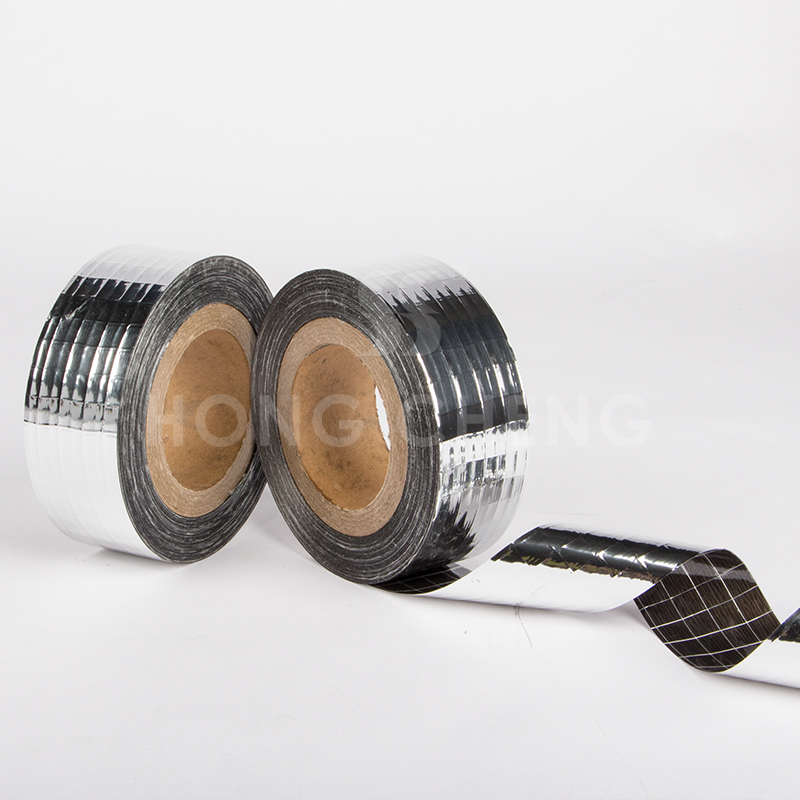
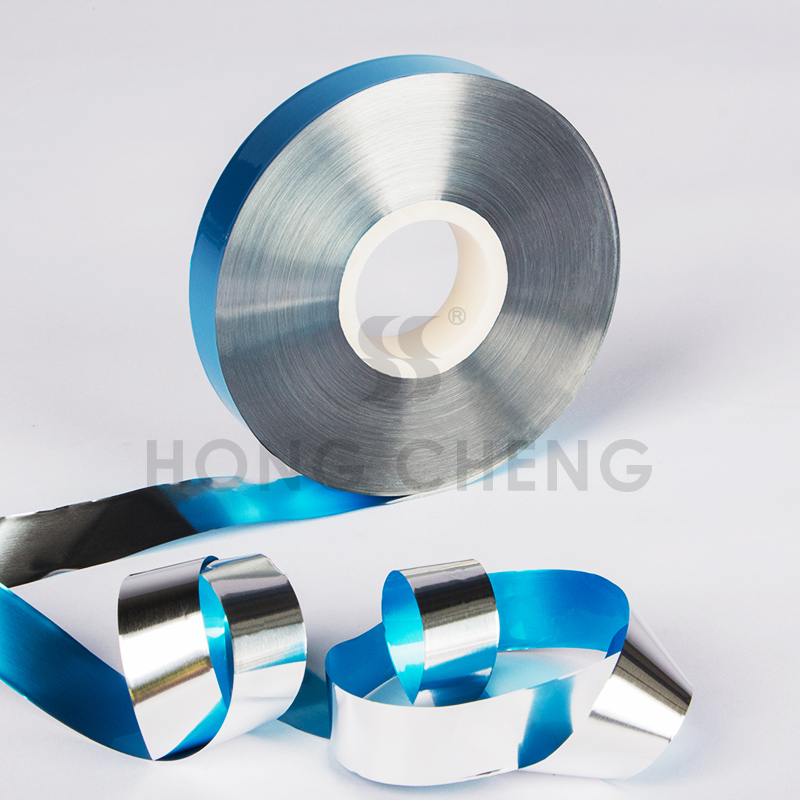
Aluminum foil Mylar uses soft aluminum foil and polyester film as raw materials, which are compounded by gravure coating, and then the aluminum foil Mylar is matured before slitting and winding. The adhesive can be formulated; after die-cutting, aluminum foil Mylar can be used for assembly shielding and grounding. Aluminum foil Mylar tape is mainly used for the interference shielding of communication cables. Aluminum foil Mylar includes: single-sided aluminum foil, double-sided aluminum foil, expanded aluminum foil, hot-melt aluminum foil, aluminum foil tape, and aluminum-plastic composite tape; the aluminum layer provides excellent conductivity, shielding effectiveness and corrosion resistance, which can adapt to various requirements in different ranges, and the shielding range is mainly 100K-3GHz. Then, the hot-melt aluminum foil Mylar is coated with a layer of hot-melt adhesive on the surface where the aluminum foil contacts the cable. Under high-temperature preheating, the hot-melt adhesive can be tightly wrapped with the cable core insulation, which helps the shielding performance of the cable. However, ordinary aluminum foil has no viscosity and is only simply wrapped on the cable core insulation, so the shielding performance of the cable is poor.
Aluminum foil Mylar is mainly used to shield high-frequency electromagnetic waves, preventing high-frequency electromagnetic waves from contacting the conductors of cables to generate induced currents and increase crosstalk. When high-frequency electromagnetic waves contact the aluminum foil, according to Faraday's law of electromagnetic induction, the electromagnetic waves will attach to the surface of the aluminum foil and generate induced currents. At this time, a conductor is needed to conduct the induced current to the ground to avoid the induced current interfering with the transmitted signal. For wires using aluminum foil as the shielding layer, the overlap rate of the aluminum foil is generally required to be no less than 25%. At present, the largest application occasion is still network cabling. This type of network cable is mainly used in hospitals, factories and other places with strong electromagnetic wave radiation or a large number of high-voltage electrical equipment; in addition, it is also used in governments and other areas with high requirements for network security.
Copper Foil
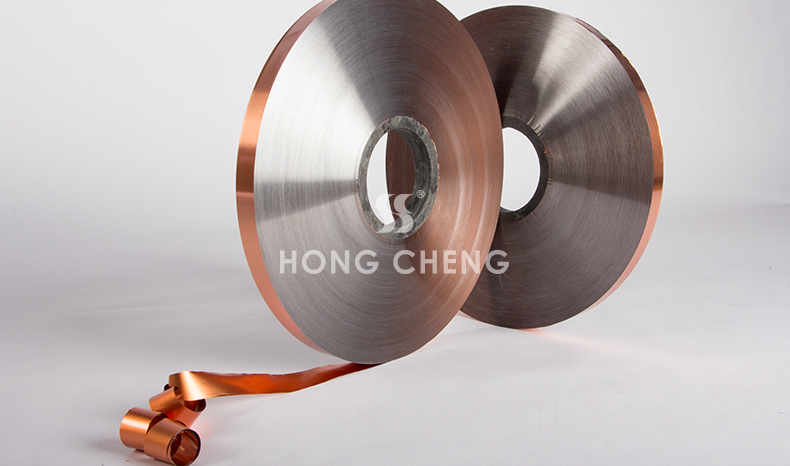
Copper foil is a good conductor, mainly shielding electromagnetic waves through reflection. However, at high frequencies, reflection alone may lead to multiple reflections of electromagnetic waves, which may eventually leak through gaps. Although copper foil has excellent electrical conductivity, its flexibility is poor. When attached to irregular surfaces, it is easy to produce gaps or poor contact, forming channels for electromagnetic leakage; copper foil has a very good shielding effect on low-frequency electromagnetic waves, but at high frequencies, its surface current (skin effect) will lead to a decrease in shielding effect.
Conductive Fabric
Conductive fabric is usually woven from conductive fibers, which can not only reflect electromagnetic waves, but also have a certain absorption capacity. Its multi-layer structure and gaps between fibers help absorb part of the high-frequency electromagnetic wave energy and reduce the impact of secondary radiation. Conductive fabric has good flexibility and elasticity, and can closely fit on irregular surfaces, reducing the problem of poor contact and improving the shielding effect; the frequency response range of conductive fabric is usually wider, especially at high frequencies, and its fiber interweaving structure helps improve shielding efficiency. At present, it is used in PCIe 6.0 high-speed lines, but the price is relatively expensive!
Copper/Aluminum-Magnesium Alloy Wire Braided Mesh (Metal Shielding)
Metal shielding is woven from metal wires with a certain braided structure through braiding equipment. The materials for metal shielding are generally copper wire (tinned copper wire), aluminum alloy wire, copper-clad aluminum, copper tape (copper-plastic tape), aluminum tape (aluminum-plastic tape), steel tape and other materials. Corresponding to metal braiding, different structural parameters have different shielding performances. The shielding effectiveness of the braided layer is not only related to the conductivity and magnetic permeability of the metal itself and other structural parameters, but also the more layers, the higher the coverage rate, the smaller the braiding angle, the better the shielding performance of the braided layer. The braiding angle should be controlled between 30-45°, and for single-layer braiding, the coverage rate should be more than 80%. In this way, it can be converted into thermal energy, potential energy and other forms of energy through mechanisms such as hysteresis loss, dielectric loss, and resistance loss, consuming unnecessary energy to achieve the effect of shielding and absorbing electromagnetic waves. The braided mesh is generally woven from tinned round copper wire or aluminum-magnesium alloy wire, mainly to prevent low-frequency electromagnetic wave interference, and its working principle is the same as that of aluminum foil. Shielded network cables using braided mesh require the density of the braided mesh to be at least greater than 80%. This type of braided mesh is mainly used in places where a large number of network cables are laid in the same trunking, which can reduce external crosstalk between a large number of network cables. In addition, it can also be used for shielding between wire pairs to increase the twist length of the wire pairs and reduce the twist pitch requirement of the cables.
Reducing the Loop Area of Signal Current
The purpose of reducing the loop area of signal current is to reduce the interference magnetic flux passing through it. Common measures:
- Use twisted pairs to tightly twist the outgoing and return lines of the signal current, which can reduce the area enclosed by the return;
- Use shielded wires as externally introduced signal lines. When in use, the core wire is used as the outgoing line of the signal current, and the shield layer woven by copper wire is used as the return line of the signal current, which must be grounded to the signal ground at a single end. The loop area of this method is smaller than that of twisted pairs, and the shield layer can also achieve magnetic field shielding;
- On the premise of ensuring insulation safety, the signal lines and ground lines in the PCB should be as close as possible to reduce the area enclosed by the signal current loop;
There are mainly two types of shielding materials used for cables. One is that we usually call materials with a certain level of shielding performance within a certain range of resistivity as semiconductive polymer materials. The classification standard is the conductive principle of the internal materials. Materials with conductive properties themselves are called structural types, and those that achieve shielding interference through fillers are called composite types. Both structural and composite semiconductive polymer materials are the most commonly used shielding materials in cable structures, because semiconductive polymer materials can not only shield electromagnetic interference, but also have strong resistance to other natural damages, especially the ability to resist lightning strikes, which makes them widely used in special application scenarios such as aircraft cables. The manufacturing process of semiconductive polymer materials is relatively complex and the cost is high, so semiconductive polymer materials have high costs. The second is metal wire braiding, which mainly refers to cable shielding materials that use metal wires as the main material to form a shielding mesh to achieve magnetic interference resistance. In cables with shielding requirements such as HDMI 2.1 and USB4, the metal wires used in the braided shielding materials are mostly tinned copper wires. This material selection method is mainly to improve the shielding performance of the cables. At the same time, the design structure and braiding rate of metal wire braiding used in cables for different purposes and application scenarios are different. Generally speaking, the effect of multi-layer braiding is better than that of single-layer braiding, and the coverage area is inversely proportional to the braiding angle, which means that to improve the shielding performance, the braiding angle should be reduced and the coverage area should be increased. In short, the effective application of metal wire shielding can achieve a good effect of shielding electromagnetic interference.
Low-frequency cables account for the highest proportion in cable manufacturing. If cables of different frequencies encounter multiple grounding points, more noise currents will be generated, which is not conducive to the entire shield layer achieving a good anti-interference effect. If a single-point grounding shielding method is adopted, it is necessary to ensure that the current can offset itself in the shield layer, so as to keep the interference current in the shield layer and effectively avoid electromagnetic interference. Due to the influence of the external grounding method of application components, the shielding method inside some cables often adopts two-point grounding. This is mainly because the two-point grounding shielding method can export the current returned by the magnetic field inside the cable, thereby reducing the intensity of current interference. High-frequency cables are generally more prone to the problem of stray capacitance, which seriously affects the normal current transmission in high-frequency cables. However, single-point grounding and two-point grounding methods cannot effectively solve this problem. Therefore, multi-point grounding shielding method should be adopted in high-frequency cables. The interference current inside the line in high-frequency cables has various frequencies and the characteristics of surface concentration, which directly doubles its interference effect and is not conducive to the normal operation of the entire line. The multi-point grounding method can reduce the impedance in the shield layer, reduce the interference of noise current, and thus improve the overall shielding effect. The shield layer of data cables is mainly made of non-magnetic materials such as copper and aluminum, generally braided copper mesh (aluminum-magnesium braided mesh) or copper foil (aluminum foil, etc.), and their thickness is very thin, much smaller than the skin depth of metal materials at the operating frequency. It should be noted that one end of it must be connected to the signal ground of the circuit, because the effect of the shield layer is not mainly generated by the reflection and absorption of electric and magnetic fields by the metal body itself, but by the grounding of the shield layer. Different grounding forms will directly affect the shielding effect. The future development trend of electromagnetic shielding materials is to develop in the direction of higher shielding effectiveness, wider shielding frequency and better comprehensive performance. The innovative application of various new materials in electromagnetic shielding will get more development. In the future technological development, electromagnetic shielding will develop in the directions of good conductivity, simple processing technology, high cost performance, and suitability for mass production. The selection of electromagnetic shielding materials should consider four factors: shielding effectiveness requirements, environmental sealing requirements, installation structure requirements, and cost requirements. According to the mechanism, it can be divided into electric field shielding, magnetic field shielding and electromagnetic field shielding.
The New Blue Ocean of Wire Harnesses & Cables: New Opportunities for Cable Shielding Aluminum Foil Driven by Humanoid Robots
Troubleshooting and Solution Guide for Common Faults of Composite Films