Tea Packaging Foil Laminate Selection Guide: By Tea Type & Barrier Grade
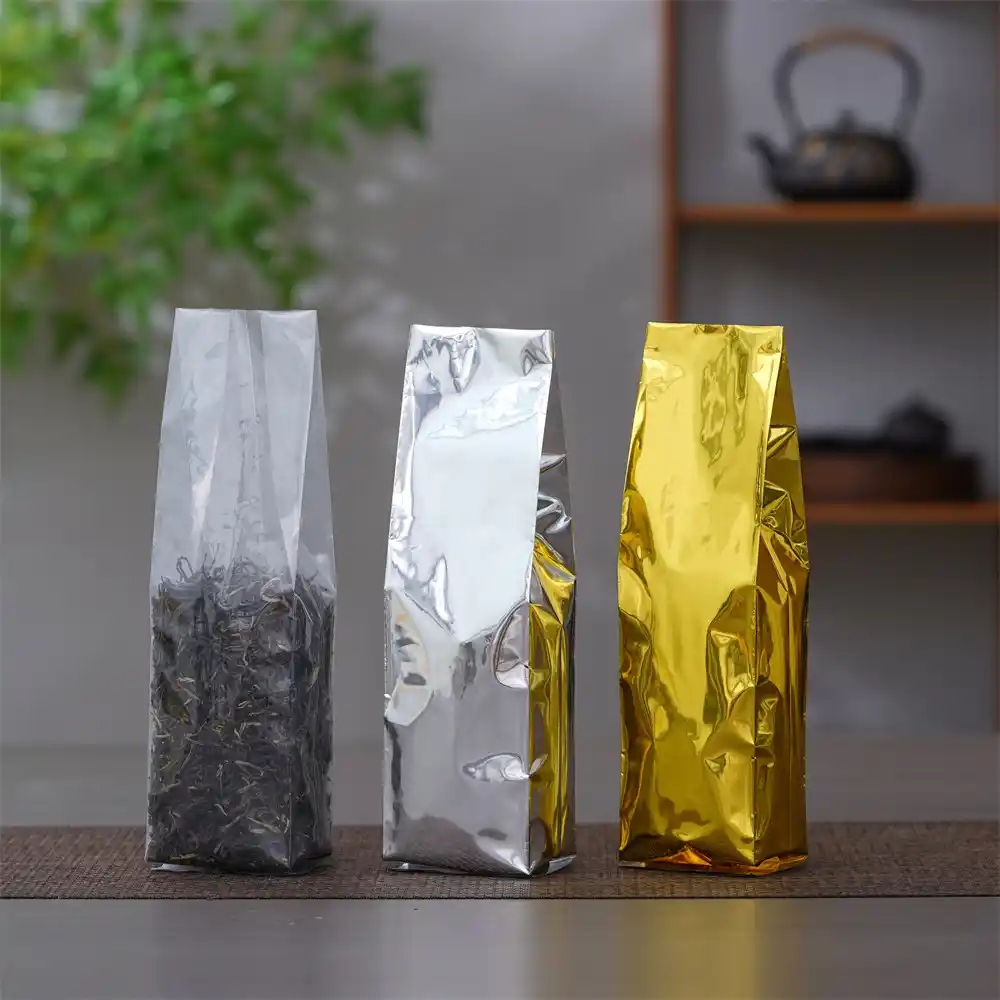
Your premium green tea oxidizes and loses freshness within three months on the shelf, while a competitor's product stays vibrant for over six months. The difference is not in the tea — it is in the packaging laminate. Selecting the wrong barrier film accelerates browning even in the finest leaves; choosing the right one can double the shelf life of ordinary black tea.
Tea demands far more from packaging than most realize: oxidation, moisture absorption, and aroma loss attack simultaneously, and different tea categories respond to oxygen, water vapor, and light with vastly different sensitivity levels. This guide walks you through a four-dimensional selection process — tea category barrier grade, heat-seal process, pouch structure, and compliance certification — so you can systematically match the film to the product and avoid the three most common procurement mistakes.
1. Start with the Tea Type, Then Define the Barrier Grade
One film does not fit all teas. Different categories require sharply different oxygen transmission rates (OTR), water vapor transmission rates (WVTR), and light barrier performance:
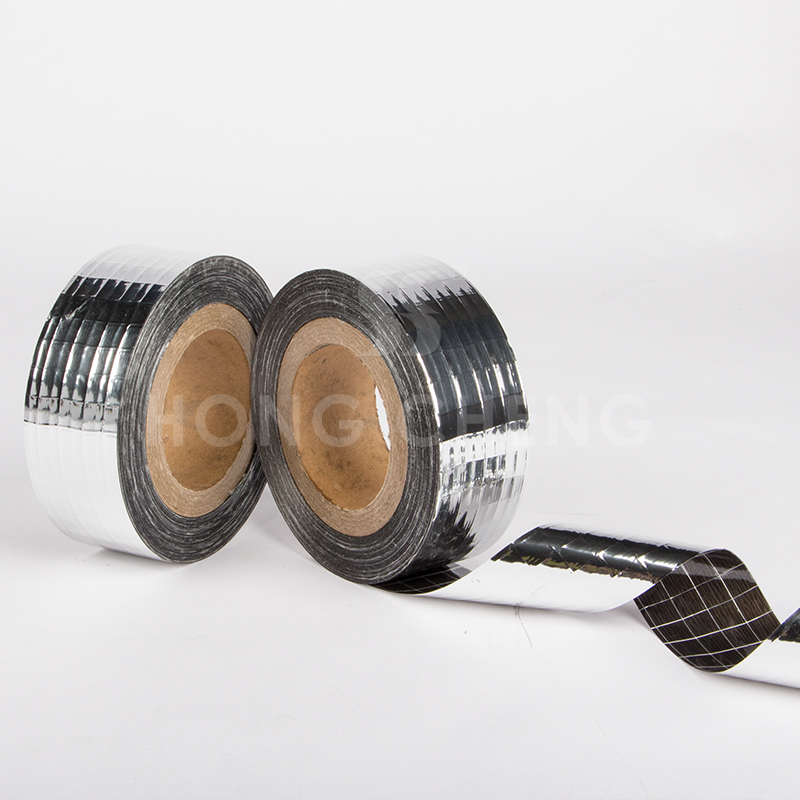
High-sensitivity teas (green tea, white tea) — OTR ≤1 cc/m²/24h, WVTR ≤0.5 g/m²/24h, and 100% light block. Green tea polyphenols oxidize proportionally to oxygen concentration; white tea's delicate fuzz aroma is extremely moisture-sensitive. The correct material: PET/AL/PE three-layer composite film (12μm PET / 7μm AL / 50–80μm PE). The aluminum foil layer delivers near-zero OTR and complete light blockage, while the PE layer ensures heat-seal strength ≥3.5 N/15mm.
Medium-sensitivity teas (oolong, lightly fermented teas) — OTR ≤3 cc/m²/24h, WVTR ≤1 g/m²/24h. Partial light transmission is acceptable but direct exposure is not. The aluminum foil layer can be 7μm or 9μm, and the PE layer can be reduced to 40–60μm to lower cost. Both PET/AL/PE and AL/PE two-layer structures perform adequately, though the two-layer option sacrifices some heat-seal strength and film stiffness compared to three-layer.
Low-sensitivity teas (black tea, dark tea, pu'er) — OTR ≤5 cc/m²/24h, WVTR ≤2 g/m²/24h. Light barrier can use metallized film (VMPET) instead of pure aluminum foil. VMPET/PE composite film costs approximately 15–20% less than PET/AL/PE, and the metallized layer's OTR of roughly 2–5 cc/m²/24h is adequate. For pu'er specifically, moderate oxygen permeability can benefit post-fermentation — complete zero-oxygen packaging actually suppresses beneficial microbial activity.
2. Heat-Seal Process: The Right Film with the Wrong Seal Is Still a Failure
Over 80% of tea packaging uses automatic filling and sealing lines (vertical form-fill-seal VFFS or rotary pre-made pouch machines). Heat-seal parameters directly determine yield rates:
Sealing temperature range — PE layer melting point 105–115°C; recommended sealing temperature 120–140°C (machine-specific fine-tuning required). Below 110°C causes weak seals and leaf fragment leakage; above 150°C over-melts PE, making seal edges brittle and prone to cracking.
Sealing pressure and dwell time — Recommended 0.2–0.4 MPa, dwell time 0.3–0.5 seconds. Thicker PE layers (70–80μm) require slightly longer dwell time for complete fusion.
Seal width — Standard tea pouch seal width 8–10mm. Insufficient width risks seal failure during filling and transport; excessive width wastes material and compromises pouch aesthetics.
Critical material parameter — Heat-seal strength ≥3.5 N/15mm for green/white tea (high standard), ≥2.5 N/15mm acceptable lower limit for black/pu'er tea. When selecting AL/PE composite heat-seal film, note the correlation between PE thickness and seal strength: 40μm PE yields approximately 2.5 N, while 80μm PE can exceed 4 N.
3. Pouch Structure Determines Film Width and Layer Count
Different pouch formats impose different structural requirements. Confirm the finished pouch type before specifying the film:
Flat three-side-seal pouch — The most common format for green/black tea small packs (5–20g). A single roll of PET/AL/PE three-layer composite film suffices. Roll width calculated from pouch width plus seal edges (typically 200–400mm stock widths).
Stand-up pouch (bottom gusset) — Used for mid-to-high-end oolong and white tea (50–200g). Requires higher film stiffness — the PET layer is non-negotiable. The 12μm PET provides necessary rigidity to prevent the pouch from collapsing at the bottom.
Side-gusset pouch (four-side-seal expandable) — Large-format pu'er and black tea (250–500g). Higher material consumption; AL/PE two-layer can reduce cost, but confirm that stiffness is sufficient for the pouch to stand upright — if not, retain the PET layer.
Vacuum pouch — Premium early-harvest green tea and silver needle white tea vacuum preservation. Requires exceptional puncture resistance. Select 9μm aluminum foil instead of 7μm, PE layer ≥70μm, heat-seal strength ≥4 N/15mm, to prevent vacuum-tight seals or film surfaces from being punctured by tea stalks.
4. Compliance Certification: The Invisible Gateway for Export Tea Packaging
Tea export packaging faces tightening compliance requirements year by year:
Food contact compliance — China GB 9685-2016, EU Regulation 10/2011, US FDA 21 CFR §174.310. The PE layer must use food-grade resin; the aluminum foil layer must pass heavy metal migration testing. Hongcheng Technology's AL/PE and PET/AL/PE series all carry food-grade test reports.
Organic tea certification compatibility — If the end tea product seeks organic certification (USDA Organic / EU Organic), packaging materials must meet zero-plasticizer and zero-solvent-residue requirements. Solvent-free laminated PET/AL/PE film (solvent residue ≤1 mg/m²) is the preferred option.
Halal certification — Tea pouches exported to Middle East and Southeast Asian Muslim markets require Halal-certified packaging. PE resin sourcing must be traceable with no animal-derived additives.
Three Common Procurement Mistakes
Mistake 1: "Thicker aluminum foil means better preservation" — 7μm aluminum foil already achieves OTR ≤1 cc/m²/24h, essentially zero oxygen transmission. Upgrading to 9μm improves barrier performance negligibly while adding roughly 10–15% cost and reducing film flexibility, which impairs heat-sealing and machine runnability. The correct approach: 7μm AL is sufficient for green/white tea; upgrade to 9μm only when puncture resistance is required.
Mistake 2: "Metallized film replaces aluminum foil — cheaper and just as good" — VMPET metallized layer OTR is approximately 2–5 cc/m²/24h, 2–50 times higher than pure aluminum foil — far inadequate for green/white tea. Metallized film is appropriate only for low-sensitivity teas like black/pu'er or as an inner light-block auxiliary. Using metallized film as a foil substitute will cause noticeable green tea browning within three months.
Mistake 3: "Thicker PE means stronger seals" — Increasing PE from 40μm to 80μm does raise heat-seal strength, but thicker PE demands correspondingly higher sealing temperature and dwell time. Otherwise, "surface sealed but interior unfused" false seals occur. Recommended PE thickness by machine type: low-speed pre-made pouch machines 40–60μm; high-speed VFFS lines 60–80μm.
Quick Specification Reference Table
| Tea Category | Recommended Structure | AL/Metallized Layer | PE Thickness | OTR Requirement | WVTR Requirement | Heat-Seal Strength | Suitable Pouch Type |
|---|---|---|---|---|---|---|---|
| Green/White tea | PET/AL/PE | 7μm AL | 60–80μm | ≤1 cc | ≤0.5 g | ≥3.5 N | Three-side seal / Stand-up / Vacuum |
| Oolong tea | PET/AL/PE or AL/PE | 7μm AL | 40–60μm | ≤3 cc | ≤1 g | ≥2.5 N | Stand-up / Side-gusset |
| Black tea | VMPET/PE or PET/AL/PE | VMPET or 7μm AL | 40–60μm | ≤5 cc | ≤2 g | ≥2.5 N | Three-side seal / Side-gusset |
| Pu'er/Dark tea | VMPET/PE | VMPET | 40–50μm | ≤5 cc | ≤2 g | ≥2.5 N | Side-gusset / Large format |
Tea packaging film selection is not about unit price — it is about the systematic alignment of "tea type + barrier grade + process compatibility + compliance." Hongcheng Technology offers customized production of AL/PE composite heat-seal film and PET/AL/PE three-layer composite film, with roll width, thickness, and aluminum layer count precisely matched to each tea category's requirements. Both food-grade and solvent-free lamination processes are available. From 5g sachets to 500g large-format pouches, from domestic QS to export FDA/EU compliance — one-stop solutions.
+86 13758223270, Email: wendy@hcdxcl.com.cn
Dual Demand Drivers for AL/PET Shielding Tape in Cable Manufacturing
Why Foil Bubble Insulation Tops Summer Building Energy Savings