PET/AL/PE Foil Laminate for Tea Packaging: Barrier Performance and Freshness Preservation Guide
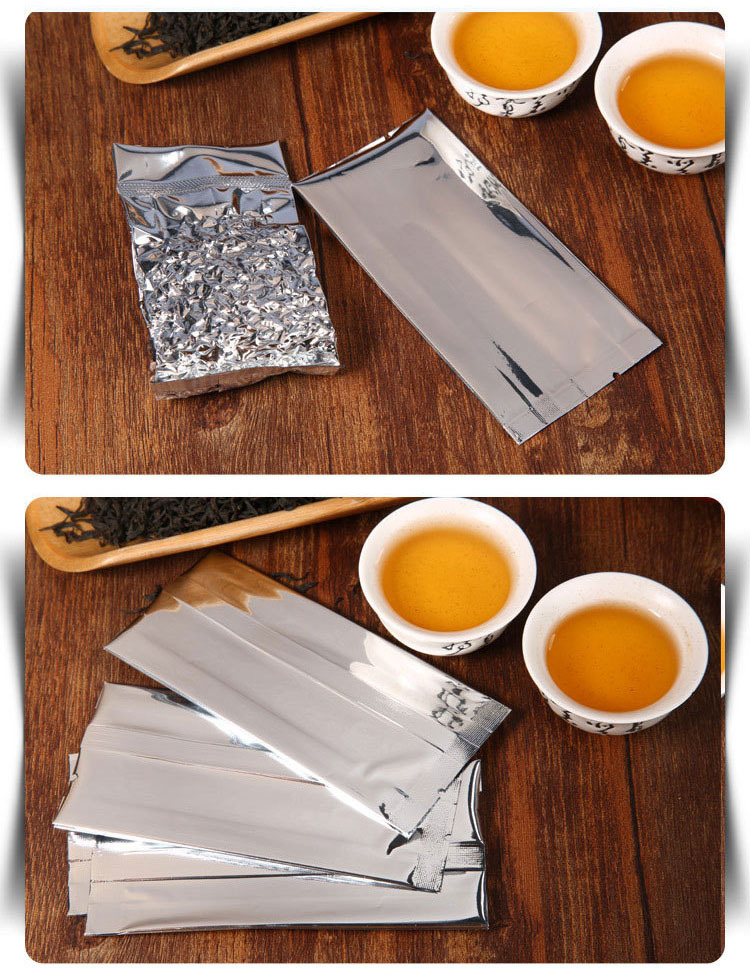
The global tea market continues to expand, with rising demand for oolong, white tea, and premium loose-leaf varieties driving stricter packaging requirements. Traditional single-layer PE bags and kraft paper pouches often fail to protect tea from moisture, oxygen, and light, leading to flavor loss, oxidation, and shortened shelf life. Multi-layer aluminum foil laminates have become the preferred barrier material for premium tea brands seeking to preserve aroma, color, and freshness over extended storage.
Two mainstream structures dominate the tea packaging foil laminate segment. The first is the AL/PE heat-sealable laminate, typically structured as AL/PE or PET/AL/PE, where the aluminum layer provides high barrier performance and the PE layer delivers heat sealability. This structure is widely used for small tea bags, single-serve sachets, and inner pouches. The second is the PET/AL/PE three-layer composite film, which adds a biaxially-oriented PET layer on one side of the aluminum foil to enhance mechanical strength, stiffness, and printing surface quality. This structure is preferred for large-format tea gift boxes, vacuum outer bags, and stand-up pouches. In terms of barrier performance, the aluminum foil layer can achieve an oxygen transmission rate (OTR) below 0.5 cm³/m²·24h and a water vapor transmission rate (WVTR) below 0.1 g/m²·24h, far outperforming metalized films and single plastic layers.
Tea quality degradation is driven by three primary factors: oxygen, moisture, and UV light. Aluminum foil laminates address all three simultaneously. The dense metal layer blocks oxygen permeation, completely shields the contents from visible and UV light, and the heat-seal layer ensures hermetic closure against external moisture. In accelerated shelf-life testing, tea packed in PET/AL/PE three-layer structures under 25°C and 60% relative humidity for 12 months shows moisture content variation below 0.5% and catechin retention above 92%, significantly outperforming standard plastic pouches and kraft paper bags.
From a manufacturing perspective, three critical control points determine the suitability of foil laminates for tea packaging: lamination bond strength, heat seal strength, and food-contact compliance. Dry lamination or solvent-free lamination processes are typically used, with adhesive coating weight, curing temperature, and curing time directly affecting interlayer peel strength. Premium laminates should achieve peel strength of at least 1.5 N/15mm. The heat-seal PE layer thickness, resin grade, and sealing temperature (typically 180-200°C) must be matched to the speed and configuration of the automatic packaging line. For food-contact applications, the laminate must comply with regulations such as GB 4806.7, EU 10/2011, and US FDA 21 CFR, with strict limits on heavy metal migration, plasticizer content, and solvent residue.
When selecting a foil laminate for tea applications, brand owners and packaging converters should evaluate product positioning, package format, and target shelf life. Short-shelf-life loose tea and e-commerce single-serve packs can use AL/PE double-layer structures, balancing cost and basic barrier performance. Premium gift boxes and export products with long shelf life are better served by PET/AL/PE three-layer structures, which deliver superior stiffness, premium appearance, and extended freshness. Tea bags and filter paper applications typically use metalized film laminated with paper substrates, prioritizing brewing permeability and cost efficiency. It is worth noting that aluminum foil thickness does not need to be excessive—7-9 micron foil is generally sufficient to meet barrier requirements, while thicker foil increases cost and may cause sealing wrinkles.
For tea packaging converters and brand owners, supplier selection should focus on three dimensions: regulatory compliance, structural customization capability, and batch-to-batch consistency. Buyers should request food-grade compliance documentation, lamination bond and heat seal test reports, and barrier performance data, and conduct on-site audits of production facilities and quality control systems. Suppliers offering flexible customization—including adjustable roll width, foil thickness, and PET/PE ratio—are better positioned to meet the diverse needs of different tea categories.
As an established manufacturer specializing in aluminum foil composite materials, Hangzhou Hongcheng Technology focuses on the R&D and production of PET/AL/PE three-layer laminates, AL/PE heat-sealable films, and related products. Custom widths, thicknesses, and laminate structures are available to serve tea packaging, food preservation, and personal care applications, with stable supply for global customers. Contact: +86 13758223270, Email: wendy@hcdxcl.com.cn.
Coaxial & Control Cable Shielding Selection: Aluminum Mylar Tape vs AL/PET Shielding Tape Comparison
Decoding Aluminum Foil PET Substrates: The Material Behind Decorative Tapes