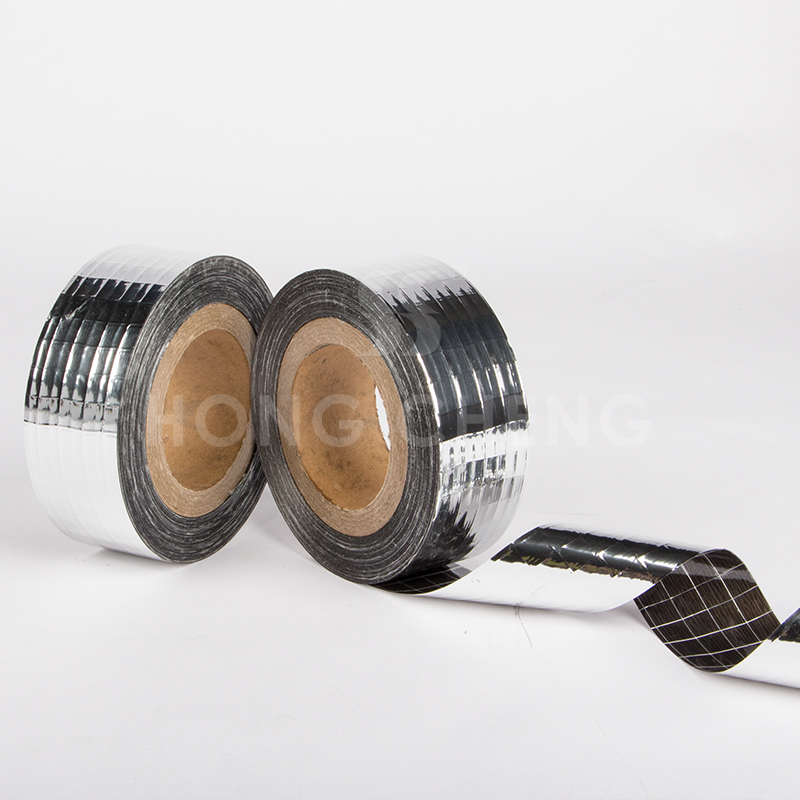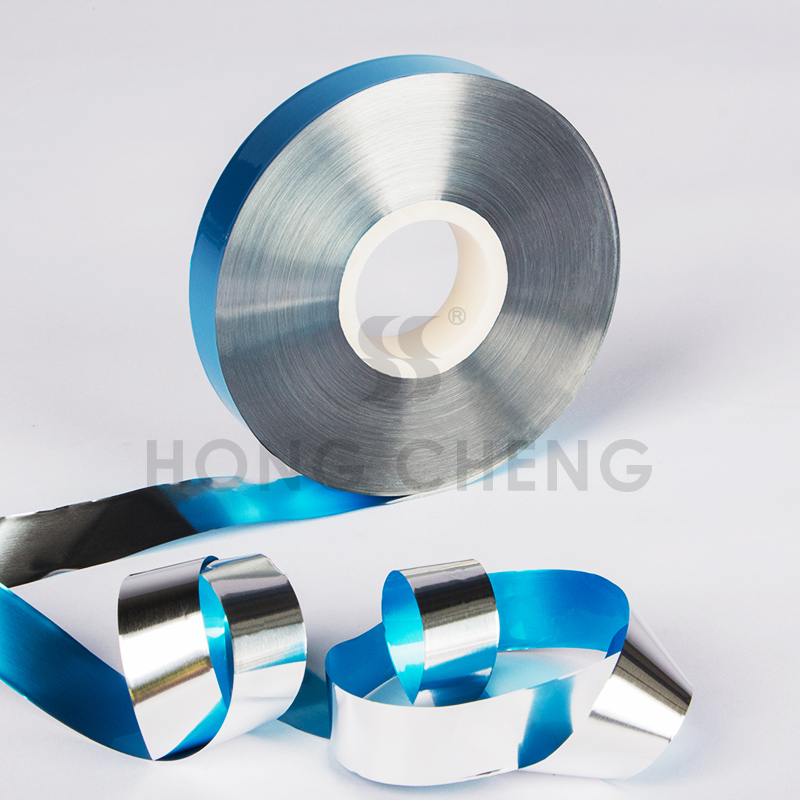
The Core Role and Application Value of Aluminum Foil Insulation Film in Takeaway Insulation Bags
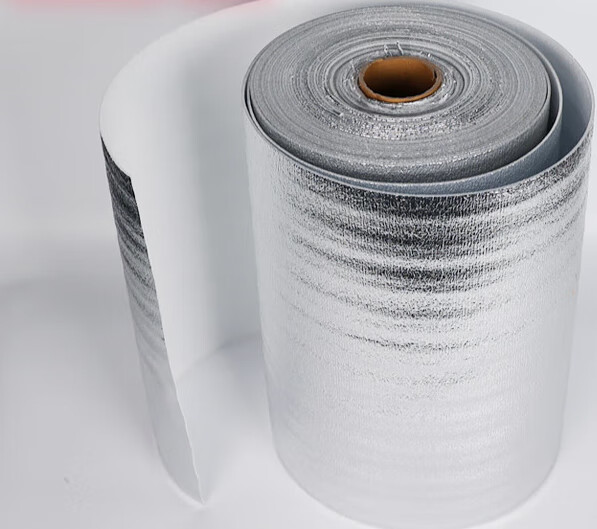
The core pain point of takeaway insulation bags lies in "temperature maintenance in dynamic environments"—during delivery, they need to cope with complex issues such as outdoor temperature differences (-10℃ to 35℃), bumps and collisions, and condensation. With the composite characteristics of "thin flexibility + high-efficiency heat insulation", aluminum foil insulation film has become the "core functional carrier" of insulation bags. It is not just a "extension of aluminum foil", but solves the problems of traditional aluminum foil such as easy damage and poor adhesion through film-forming technology and structural optimization, realizing an upgrade from "basic heat insulation" to "multi-dimensional protection".
1. Core Requirements of Takeaway Scenarios for Aluminum Foil Insulation Film
Within the "3-hour time window" of takeaway delivery, insulation bags need to meet three requirements: first, temperature stability (hot meals ≥55℃ for 2 hours, cold meals ≤10℃ for 4 hours); second, environmental adaptability (resisting rainy moisture, summer exposure, and winter cold winds); third, structural compatibility (adapting to different sizes of food containers without increasing the bag weight). The thin film form (thickness usually 3-15μm) and composite performance of aluminum foil insulation film precisely match these needs—it not only ensures high-efficiency heat insulation but also has flexible adaptability, avoiding the impact of traditional heavy heat insulation materials on portability.
2. Four Core Roles of Aluminum Foil Insulation Film
1. Precisely Block Radiant Heat Transfer: The "Core Barrier" for Temperature Maintenance
Radiant heat transfer is the primary cause of takeaway temperature loss (accounting for 45%-65% of total heat loss). Hot meals radiate heat through infrared rays, while cold meals absorb radiant heat from the external environment. With an infrared reflectivity of ≥92% (the film surface is precisely rolled, with better reflection uniformity than traditional aluminum foil sheets), aluminum foil insulation film can achieve two-way radiant blocking: for hot meals, it reflects internal infrared radiation back into the bag, reducing radiant loss by 70%-85%; for cold meals, it blocks the intrusion of external infrared rays, preventing cold energy from being "stolen". For example: When delivering iced drinks in summer, insulation bags with aluminum foil insulation film can keep the temperature of iced drinks ≤8℃ for 4 hours, while those without film will have the temperature rise to above 18℃.
2. Inhibit Conduction and Convection: The "Synergistic Link" to Strengthen Insulation Layers
Takeaway insulation bags mostly adopt a composite structure of "aluminum foil insulation film + buffer layer" (EPE foam, bubble wrap). Here, the insulation film plays dual roles of "convection blocking" and "conduction optimization":
- Block air convection: The dense and non-porous film surface can firmly lock the static air in the buffer layer, avoiding air flow (convective heat transfer) caused by delivery bumps, increasing insulation efficiency by more than 35% (without film, convection will destroy the static air layer of the buffer layer, leading to insulation failure);
- Reduce conductive loss: Although the thermal conductivity of aluminum foil itself is high (about 237W/(m·K)), the "thin characteristics" of the insulation film (thickness only 5-10μm) make its actual conductive heat loss negligible. Moreover, the film can closely fit the surface of the buffer layer, reducing direct thermal contact between the buffer layer and the outside, indirectly reducing conductive heat transfer by 30%.
3. Moisture and Vapor Barrier: The "Protective Shield" to Extend Insulation Bag Life
During takeaway delivery, cold meals (ice cream, iced coffee) easily produce condensation, and hot meals (soup noodles, congees) release water vapor. If moisture penetrates the buffer layer, materials such as EPE foam and sponge will become damp and deformed, permanently reducing insulation performance (insulation efficiency can decrease by 50% when damp). The water vapor transmission rate of aluminum foil insulation film is extremely low (≤0.08g/(m²·24h)), far better than ordinary plastic films (≥5g/(m²·24h)), forming a "full-wrap water barrier": it not only prevents condensation from penetrating the buffer layer but also blocks the overflow of water vapor from hot meals, extending the service life of insulation bags from 3-6 months to 12-18 months and reducing the consumable cost of takeaway enterprises.
4. Structural Adaptability and Safety Protection: The "Practical Attribute" for Takeaway Scenarios
- Flexible adaptation: The insulation film has good ductility and foldability, which can bend with the shape of the insulation bag (such as special-shaped bags, folding bags) and fit the outer wall of food containers, avoiding the fitting gaps caused by the rigidity of traditional aluminum foil sheets; at the same time, the film is easy to cut and can be customized in size according to needs, adapting to different specifications such as single-person meal bags and multi-person meal boxes;
- Food safety: Food-grade aluminum foil insulation film (complying with GB 4806.7-2016 Plastic Materials and Articles for Food Contact Use or FDA 21 CFR 177.1550) is non-toxic and odorless, with a smooth surface that is easy to clean. It can directly contact the outer wall of food containers, avoiding safety risks from indirect contact between buffer layer materials (such as recycled EPE foam) and food—especially suitable for leak-prone categories such as soups and sauces.
3. Composite Application Scenarios of Aluminum Foil Insulation Film
Different takeaway categories have different requirements for the composite structure of insulation films. The specific adaptation schemes are as follows:
|
Takeaway Category |
Composite Structure (Aluminum Foil Insulation Film + Auxiliary Layer) |
Core Advantages |
Temperature Maintenance Effect (Within 2 Hours) |
|
Hot meals (spicy hot pot, stir-fries) |
5μm aluminum foil insulation film + 12mm EPE foam + PE waterproof film |
High reflection + strong buffering, resisting low temperatures and soup leakage |
Hot meal temperature ≥60℃ (ambient temperature -5℃ to 10℃) |
|
Cold meals (salads, iced drinks) |
8μm aluminum foil insulation film + bubble wrap + PET vapor barrier film |
Excellent vapor barrier + dual insulation, blocking heat intrusion and condensation |
Cold meal temperature ≤7℃ (ambient temperature 28℃ to 35℃) |
|
Low-temperature frozen products (ice cream, frozen meals) |
12μm aluminum foil insulation film + vacuum insulation cotton + aluminum-plastic composite film |
Extreme heat insulation + high sealing, slowing ice melting and moisture penetration |
Frozen product temperature ≤-6℃ (ambient temperature 30℃ to 35℃) |
4. Four Key Indicators for Selecting Takeaway Insulation Bags with Aluminum Foil Insulation Film
- Film layer integrity: High-quality insulation film should be free of pinholes and wrinkles (pinholes can reduce reflectivity by more than 20%). It can be judged by the "light test"—observe against a light source, and there is no local light transmission or blackening of the film layer;
- Composite adhesion: Check the adhesion between the insulation film and the buffer layer (such as EPE foam). There is no delamination when gently torn by hand (delamination will intensify convective heat transfer and cause insulation failure);
- Food contact safety: Confirm that the product is labeled with "food-grade aluminum foil film" and certification number (such as GB 4806.1-2016), and avoid using recycled films (which may contain heavy metals or harmful additives);
- Weather resistance: No film deformation after being placed at high temperature (60℃) for 2 hours, and no brittleness after being placed at low temperature (-20℃) for 2 hours, ensuring adaptation to delivery environments in different seasons.
The Mystery of Composite Aluminum Foil for HVAC Ducts
Core Advantages and Application Adaptation of Aluminum-Plastic Composite Strip Warm Edge Strips