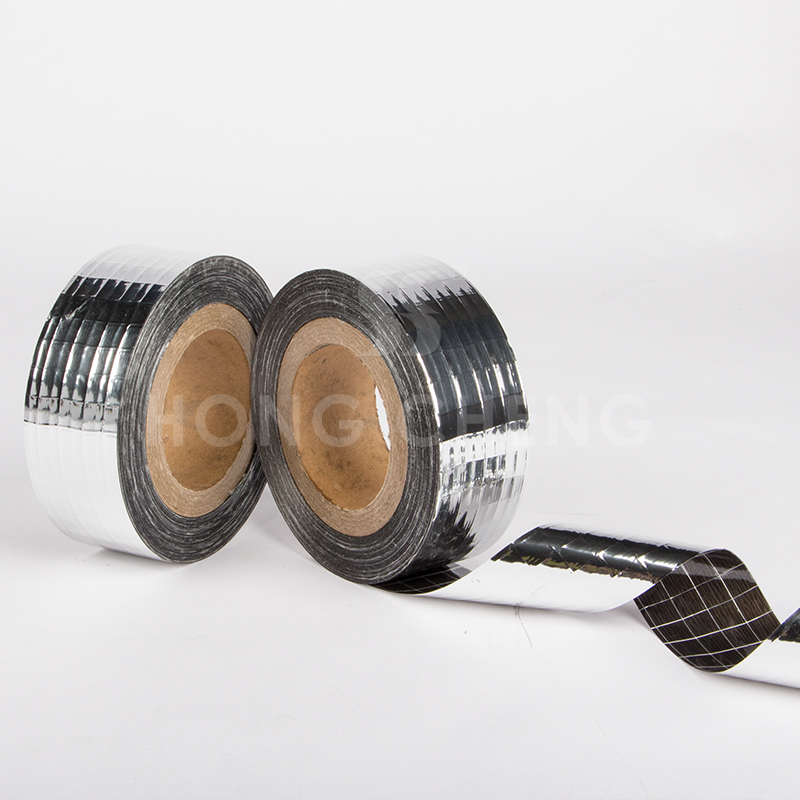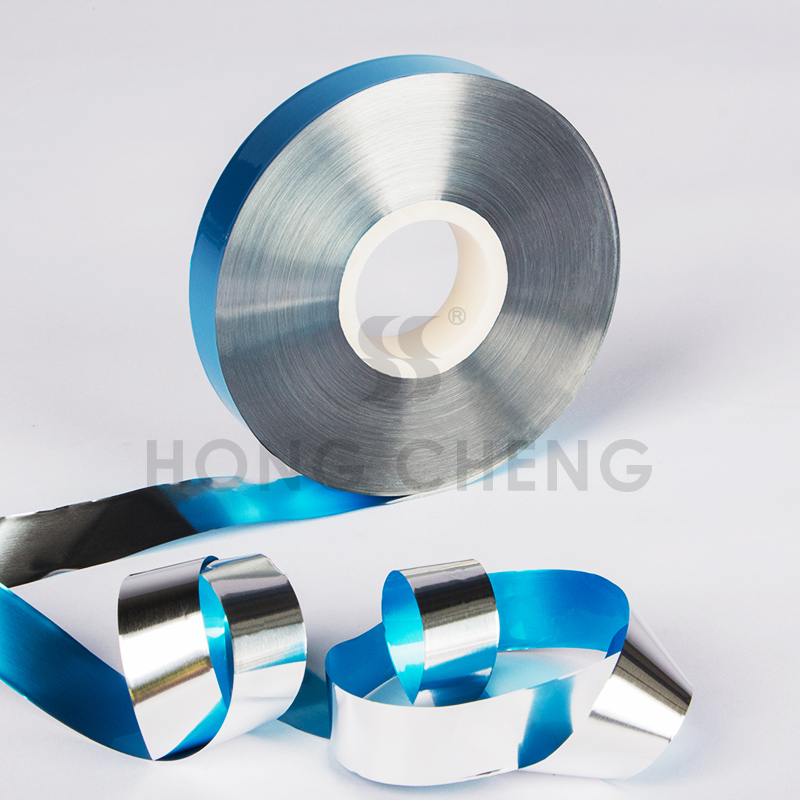
VMPET Duct Facing for Industrial Exhaust & Kitchen Ventilation: A Selection Guide
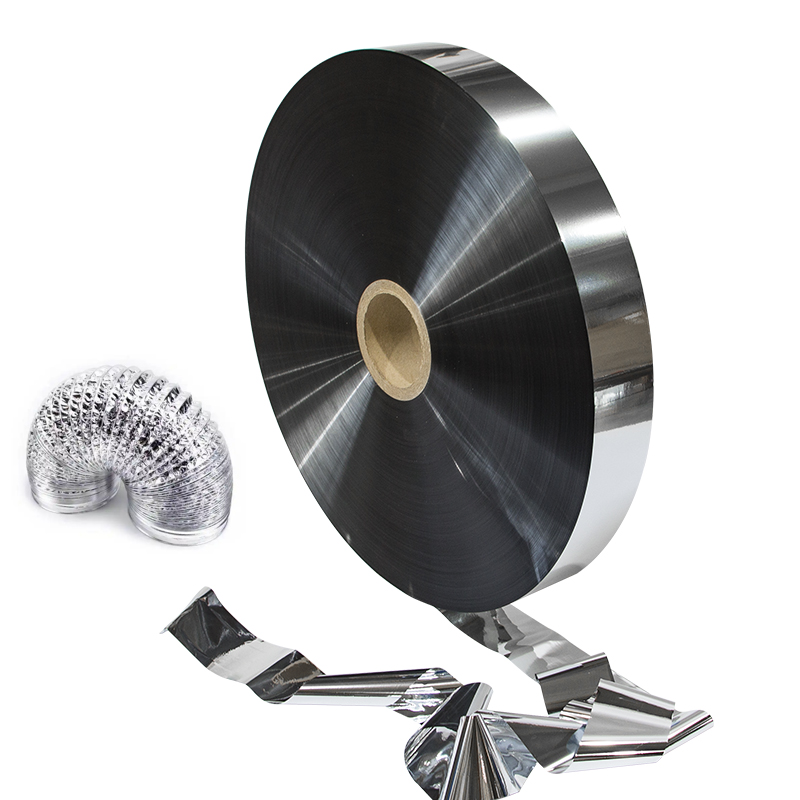
Is your duct facing tough enough for kitchen grease and industrial fumes?
"We installed exhaust ducts in a commercial kitchen, and within six months the outer jacket started yellowing and powdering. The customer kept complaining — we thought we bought aluminum foil facing, so why did this happen?" This was a call we received recently from a manufacturer of flexible kitchen exhaust ducts.
After investigation, we found that the supplier had shipped VMPET (vacuum-metallized polyester film) facing instead of pure aluminum foil facing — both were loosely quoted as "foil material," but the surface layer was actually a polyester film with a thin vapor-deposited aluminum coating. The real problem, however, was not the material substitution itself, but that the VMPET specification did not match the kitchen exhaust environment. VMPET and pure aluminum foil have different barrier performance characteristics, but each has distinct advantages in oil resistance, flexibility, and cost. Select the right specification, and VMPET facing performs excellently in industrial exhaust and kitchen ventilation applications. Select the wrong one, and you will be dealing with field failures.
This article breaks down VMPET duct facing selection across four dimensions: exhaust medium type, operating temperature, duct structure, and production line compatibility.
First, understand the real difference between VMPET and pure aluminum foil
Many procurement professionals cannot distinguish "metallized film" from "aluminum foil." Here is the key in one sentence: pure aluminum foil is a solid rolled aluminum layer (7-12μm thick), while VMPET has an extremely thin layer of aluminum vacuum-deposited onto a PET film surface (only 30-60 nanometers thick).
Key performance comparison:
| Property | Pure Aluminum Foil Facing (AL+PE/PET) | VMPET Metallized Film Facing |
|---|---|---|
| Aluminum layer thickness | 7-12μm | 30-60nm (about 1/150 of foil) |
| WVTR | 0.1-0.5 g/(m²·24h) | 1.0-3.0 g/(m²·24h) |
| OTR | 0.5-2.0 cc/(m²·24h) | 5-20 cc/(m²·24h) |
| Reflectivity | 88-92% | 70-85% |
| Flexibility | Stiffer, prone to micro-cracking on bending | Excellent bending resistance |
| Oil stain resistance | Moderate (aluminum surface retains grease) | Better (PET surface can be treated) |
| Cost | Higher | 20-35% lower |
Conclusion: VMPET is not an "inferior substitute" — it is a more cost-effective choice for specific applications. The key is matching the specification to the scenario.
Selection by four dimensions: industrial exhaust and kitchen ventilation
Dimension 1: Exhaust medium type (determines VMPET suitability)
General ventilation (office fresh air, parking garage exhaust, warehouse ventilation) — the exhaust medium is air without corrosive components, with moderate moisture barrier requirements. VMPET facing is fully suitable and offers significant cost advantages. Recommended structure: VMPET/PET/PE three-layer composite, total thickness 50-70μm.
Kitchen grease exhaust (commercial kitchens, restaurant range hoods, cafeteria ventilation) — the exhaust medium contains high concentrations of grease particles and water vapor at 40-80°C. This is the most demanding scenario for VMPET facing. Key requirements: the PET surface must have an oil-resistant coating treatment (to prevent grease penetration from causing metallized layer delamination), and the PE layer must be heat-sealable (for duct end sealing). Recommended structure: VMPET (12μm)/PET (12μm)/PE (20μm) three-layer composite, total thickness 44-50μm.
Industrial acid/alkali exhaust (electroplating workshops, chemical process ventilation, spray painting exhaust) — the exhaust medium contains corrosive acid or alkaline components. VMPET is not recommended for direct use in this scenario, because the extremely thin metallized layer oxidizes and corrodes rapidly upon contact with acids or alkalis. This application requires pure aluminum foil facing or 316 stainless steel cladding. If customers with limited budgets insist on VMPET, at minimum require the supplier to add a chemical-resistant protective layer (such as an EVOH coating) over the metallized surface.
Dimension 2: Operating temperature range (determines PET substrate specification)
The temperature bottleneck of VMPET facing is not the metallized layer (aluminum melts at 660°C) but the PET substrate and PE composite layer.
- Ambient temperature exhaust (≤40°C): Standard PET (12μm) + standard PE (15-20μm) is sufficient. PET has a glass transition temperature of approximately 70°C, maintaining stable mechanical properties at ambient temperature.
- Medium-temperature exhaust (40-70°C): This is the mainstream temperature range for kitchen exhaust. PET thickness should be increased to 16-23μm, and PE should use heat-resistant LDPE grade (Vicat softening point ≥90°C) to prevent PE layer softening and composite delamination under sustained medium-temperature exposure.
- High-temperature exhaust (70-100°C): For industrial oven exhaust, boiler room ventilation, and similar applications. PET must be upgraded to high-temperature resistant grade (such as PEN substrate or PET with silane coating), and the PE layer should be replaced with LLDPE or metallocene PE (temperature resistance up to 110°C). Alternatively, switch to a pure aluminum foil + fiberglass solution.
Critical reminder: Many suppliers do not differentiate PET grades in their quotations, substituting standard packaging-grade PET for industrial-grade temperature-resistant PET. Always request the Vicat softening point test report for the PET material.
Dimension 3: Duct structure type (determines width and stiffness)
VMPET facing is applied differently depending on duct structure:
Flexible aluminum duct (helical wire-supported) — the most common structure. VMPET facing is wrapped around the wire helix exterior, requiring excellent flexibility and bending resistance. Width is calculated based on duct diameter: 100mm diameter requires 80-100mm width, 200mm diameter requires 150-180mm width, and 300mm+ diameter requires 250-300mm width. Stiffness must be moderate — too stiff and the wrap will not conform tightly; too soft and the jacket will collapse under compression.
Insulated flexible duct (inner layer + insulation + outer layer) — VMPET facing serves as the outer protective layer wrapping fiberglass wool or PE foam insulation. This structure demands higher moisture barrier performance (to prevent insulation water absorption). We recommend double-sided VMPET structure (aluminum deposited on both sides of PET), reducing WVTR to 0.8-1.5 g/(m²·24h). Width must cover the insulation layer circumference plus lap allowance (30-50mm).
Rigid duct external wrapping — used for thermal insulation wrapping around galvanized sheet metal ducts. VMPET facing is applied flat, requiring higher stiffness. Total thickness should be ≥60μm, with an additional PE woven fabric reinforcement layer to improve tensile strength.
Dimension 4: Automated production line compatibility (determines roll specifications)
High-speed duct winding machines have specific requirements for VMPET rolls:
- Core inner diameter: Standard 76mm (3-inch) or 152mm (6-inch), matching the unwinding shaft
- Roll outer diameter: ≤600mm (standard) or ≤800mm (high-volume lines); excessive outer diameter causes uneven unwinding tension
- Splice method: For high-speed lines, request splice-free rolls (300-500m continuous length without splices), or clearly marked splices with reinforcing tape
- End face alignment: Lateral deviation ≤3mm on both sides, otherwise the auto-centering device cannot track properly, causing wrapping misalignment
Production speed and material matching: At line speeds ≤10m/min, standard VMPET facing is adequate; at 10-20m/min, PET thickness must increase to improve tensile strength (≥130MPa); at speeds >20m/min, adding a reinforcement grid layer or using double-sided VMPET structure is recommended.
Three procurement misconceptions
Misconception 1: "Metallized film is just thin aluminum foil — similar performance." This is the most dangerous misconception. The metallized layer is approximately 1/150 the thickness of pure aluminum foil, with 5-10x lower moisture barrier performance. In high-humidity environments like kitchen exhaust, VMPET facing without double-sided metallization or an additional barrier coating will show metallized layer oxidation and delamination within 3-6 months, turning the jacket translucent.
Misconception 2: "VMPET facing does not need PET grade differentiation." Standard packaging-grade PET (used for food packaging bags) and industrial-grade temperature-resistant PET perform vastly differently above 70°C. Standard PET gradually hardens and becomes brittle above 70°C, developing micro-cracks under vibration when wrapped on ducts, which exposes and oxidizes the metallized layer. Always require the supplier to provide the specific PET material grade and temperature parameters.
Misconception 3: "Comparing unit price without comparing gram weight." Two quotes for the same "VMPET duct facing" product — one at 55g/m² and another at 40g/m² — may make the lower unit price appear more attractive. But the 40g/m² product may have only 8-10μm PET and a 25nm metallized layer, with comprehensively reduced performance. When comparing prices, you must use gram weight + individual layer thicknesses + metallized layer thickness as the unified basis, not just the generic product name "VMPET facing."
VMPET duct facing procurement quick-reference table
| Application | Recommended structure | Total thickness | Metallized layer | PET thickness | PE thickness | Key indicator |
|---|---|---|---|---|---|---|
| General ventilation | VMPET/PET/PE | 44-50μm | ≥40nm | 12μm | 15-20μm | WVTR≤3.0 |
| Kitchen grease exhaust | VMPET/PET/PE (oil-resistant) | 48-55μm | ≥45nm | 16-23μm | 20μm (heat-seal grade) | Oil coating + heat seal |
| Medium-temp industrial exhaust | VMPET/PET/PE (temp-resistant) | 55-65μm | ≥50nm | 23μm | 20-25μm (heat-resistant LDPE) | Vicat SP ≥90°C |
| Insulated duct outer jacket | VMPET/PET/VMPET (double-sided) | 50-60μm | ≥40nm (both sides) | 16μm | — | WVTR≤1.5 |
| Rigid duct flat wrap | VMPET/PET/woven/PE | 80-120μm | ≥40nm | 12μm | 20μm + woven fabric | Tensile ≥60N/25mm |
With over two decades of specialization in aluminum foil composites and PE coating lamination, Hongcheng Technology supplies customized VMPET metallized film duct facing rolls to flexible duct manufacturers worldwide. Whether you produce commercial kitchen exhaust ducts, industrial ventilation systems, or building HVAC ducts, we can recommend the most suitable facing solution based on your exhaust medium, operating temperature, and production line speed. From metallized layer thickness to PET substrate grade, every layer is transparent and verifiable. Contact us by phone or message for one-on-one technical selection support.
Tel/WhatsApp: +86 13758223270 Email: wendy@hcdxcl.com.cn
Foil Bubble Insulation Selection Guide: How to Match Reflectivity and Bubble Structure to Your Application
How to Select AL/PET Shielding Tape for FTP/STP Network Cables: A Consultant's Sourcing Guide