VMPET Duct Facing: Technical Evolution and Market Trends in HVAC Flexible Duct Jacketing
The global HVAC (Heating, Ventilation, and Air Conditioning) market continues to expand in 2026, with steady growth in ventilation system demand across commercial buildings, industrial facilities, and residential projects. As the core facing material for flexible ventilation ducts, vacuum metalized polyester film (VMPET) is accelerating its replacement of traditional single-sided aluminum foil facing, becoming the preferred material for HVAC duct manufacturers. This article analyzes current industry trends from three perspectives: VMPET technical evolution, market drivers, and procurement selection criteria.
1. Technical Evolution of VMPET Film
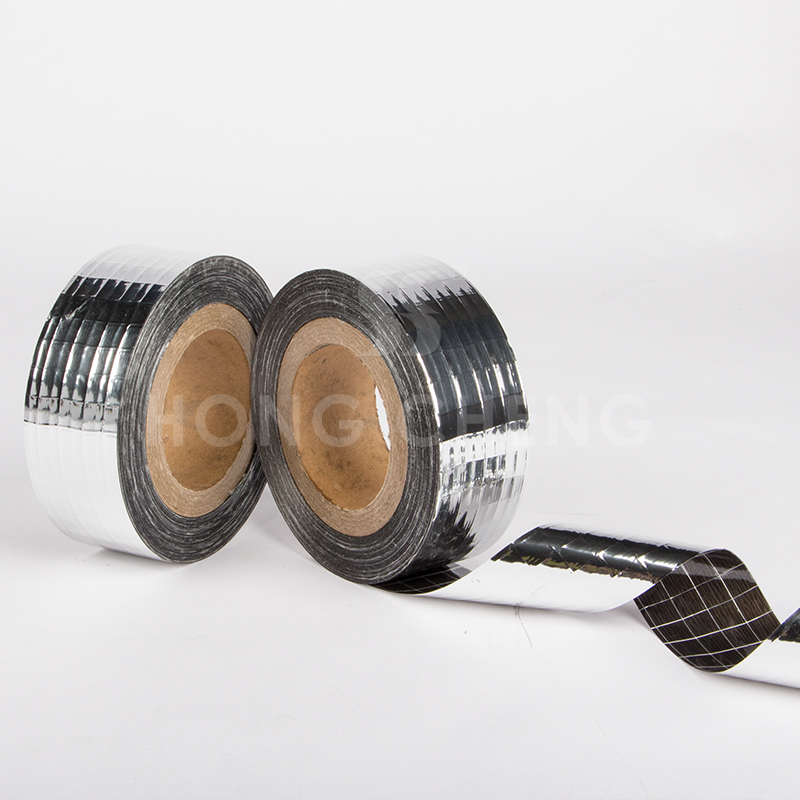
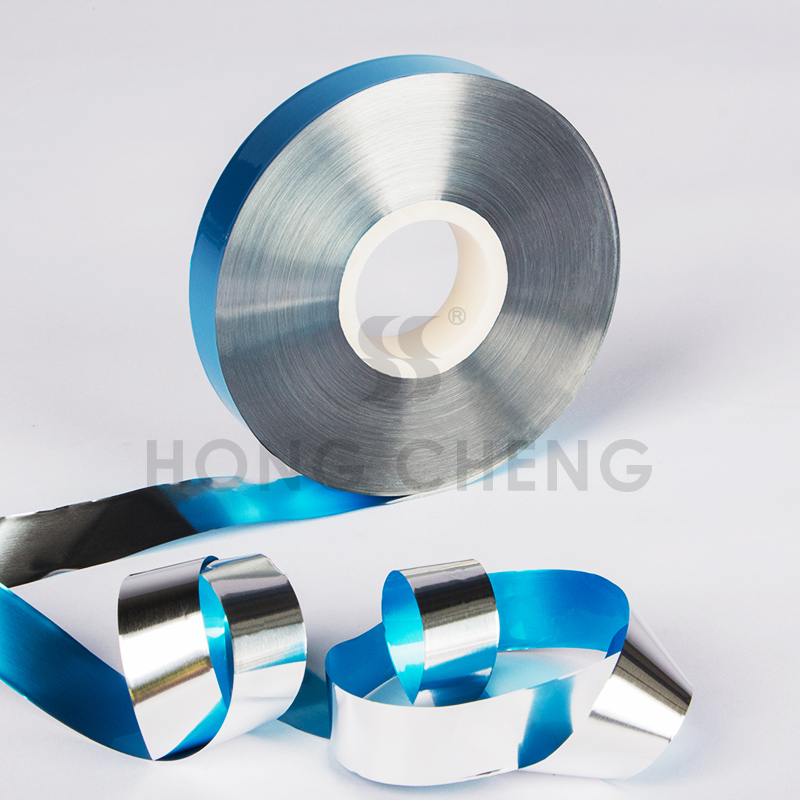
VMPET stands for Vacuum Metalized Polyester — a PET film with an ultra-thin aluminum layer deposited through vacuum metallization (typically 30–60nm), creating a highly reflective metallic surface.
Compared to traditional aluminum foil facing, VMPET film has undergone three generations of technical evolution:
| Parameter | Gen 1: Pure Al Foil Facing | Gen 2: Single-Sided Metalized Film | Gen 3: VMPET Composite Facing |
|---|---|---|---|
| Structure | Al foil + fiberglass/kraft | Metalized PET monolayer | VMPET + PE/woven fabric multi-layer |
| Reflectivity | 90%–95% | 85%–90% | 92%–97% |
| Thickness | 30–50μm Al foil | 12–25μm PET | Total 40–120μm (adjustable) |
| WVTR | Low | Moderate | Very Low (≤0.05g/m²·24h) |
| Flexibility | Moderate | Good | Excellent |
| Cost | Higher | Lower | Moderate |
| Application | Traditional foil ducts | Economy ducts | Mid-to-high-end HVAC ducts |
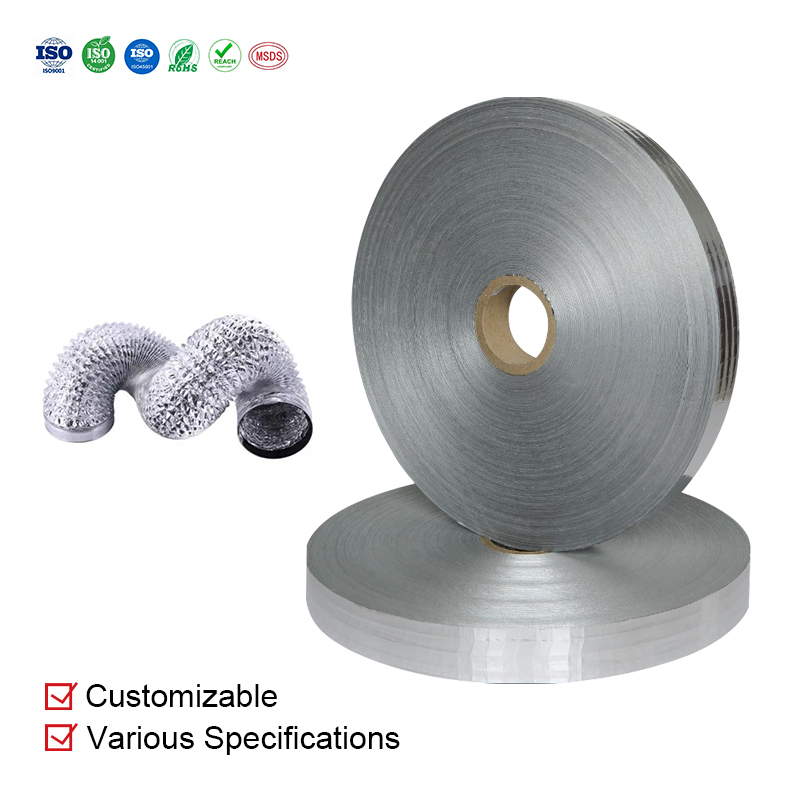
The core advantage of the third-generation VMPET composite facing lies in its multi-layer structure (VMPET + PE heat-seal layer or VMPET + woven fabric reinforcement layer). While maintaining high reflectivity, it significantly improves material flexibility and moisture barrier performance, perfectly suited for the repeated bending conditions of flexible ducts.
2. Market Drivers
1. Energy Efficiency Regulations
Major economies worldwide continue to tighten building energy standards. The EU ErP Directive, ASHRAE 90.1 in the US, and China's GB 50189 all impose stricter limits on HVAC duct thermal losses. VMPET film's high reflectivity (≥92%) effectively reduces radiative heat loss, helping duct systems meet energy compliance requirements.
2. Lightweight Trends
Commercial buildings increasingly demand weight reduction in ventilation systems. VMPET film is only 1/3 to 1/2 the thickness of traditional aluminum foil facing, reducing overall duct weight by 20%–30% while maintaining equivalent insulation performance. This reduces suspension loads and installation costs, with particularly significant advantages in high-rise buildings and light steel structure factories.
3. Export Market Growth
Infrastructure development in Southeast Asia, the Middle East, and Africa continues to drive strong import demand for mid-to-high-end HVAC flexible ducts. VMPET duct facing, with its excellent moisture resistance and cost-effectiveness, has become the standard material for export-oriented duct manufacturers. Industry data shows that China's HVAC flexible duct exports grew approximately 15% year-over-year in 2025, with VMPET-faced ducts accounting for over 40% of total volume.
4. Duct Structure Upgrading
Traditional three-layer aluminum foil ducts (aluminum foil + steel wire + aluminum foil) are being upgraded to VMPET composite ducts. New-generation ducts use VMPET film as the outer jacket, with aluminum foil or metalized film as the inner layer and spiral steel wire support in between, delivering more balanced overall performance and longer service life.
3. Procurement Selection Criteria
HVAC duct manufacturers should focus on the following parameters when sourcing VMPET duct facing materials:
1. Surface Resistance of the Metalized Layer
Surface resistance (measured in Ω/□) is the core quality indicator for VMPET metalized layers. Premium VMPET film should have surface resistance ≤2.0Ω/□. Lower resistance indicates better aluminum layer continuity, resulting in more stable reflectivity and barrier performance. Higher resistance suggests micro-pores or uneven thickness in the metalized layer, which can compromise the duct facing's moisture barrier and thermal insulation effectiveness.
2. Lamination Peel Strength
The peel strength between the VMPET layer and the PE heat-seal layer or woven fabric reinforcement layer should be ≥1.5N/15mm. Insufficient peel strength can cause delamination or blistering during duct service, particularly in high-temperature, high-humidity environments.
3. Water Vapor Transmission Rate (WVTR)
As duct facing, VMPET film should have WVTR ≤0.05g/m²·24h (38℃, 90%RH). Low WVTR means the material effectively prevents external moisture from penetrating the insulation layer, protecting glass wool or rock wool insulation from moisture condensation and maintaining long-term thermal performance.
4. Width and Roll Specifications
Common widths for VMPET duct facing include 1000mm, 1200mm, and 1500mm, with custom widths available for specific duct production lines. Roll lengths typically range from 500m to 2000m per roll. Longer rolls reduce changeover frequency and improve continuous production efficiency.
5. Environmental Compliance
Export-oriented ducts must ensure VMPET film materials comply with RoHS and REACH regulations. Quality suppliers should provide third-party test reports confirming that lead, cadmium, mercury, and other restricted substances are within regulatory limits.
4. Future Industry Trends
Looking ahead, VMPET film for HVAC duct facing is evolving in three directions. First, composite structure optimization — advancing from VMPET + PE dual-layer to VMPET + PE + woven fabric three-layer composites, balancing flexibility with mechanical strength. Second, nano-level metallization process upgrades to improve aluminum layer uniformity and adhesion, reducing surface resistance below 1.0Ω/□. Third, green manufacturing — recyclable composite structures and low-VOC emission materials will become new market entry requirements for export destinations.
Conclusion
VMPET duct facing, with its high reflectivity, lightweight properties, and excellent moisture barrier performance, has become the technical upgrade direction for HVAC flexible duct jacketing. Driven by tightening energy efficiency regulations, growing export markets, and duct structure upgrades, demand for VMPET composite facing will continue to expand. Duct manufacturers should prioritize core parameters including surface resistance, peel strength, WVTR, and environmental compliance when sourcing, selecting technically capable and supply-stable material partners to ensure long-term duct performance and market competitiveness.
📞 Phone/WeChat: +86 13758223270 ✉️ Email: wendy@hcdxcl.com.cn
Aluminum Foil PET Decorative Laminate in Wood Door Facing: Application and Selection Guide
Coaxial & Control Cable Shielding Selection: Aluminum Mylar Tape vs AL/PET Shielding Tape Comparison