VMPET Duct Facing Procurement: 5 Contract Traps to Avoid in Peak Export Season
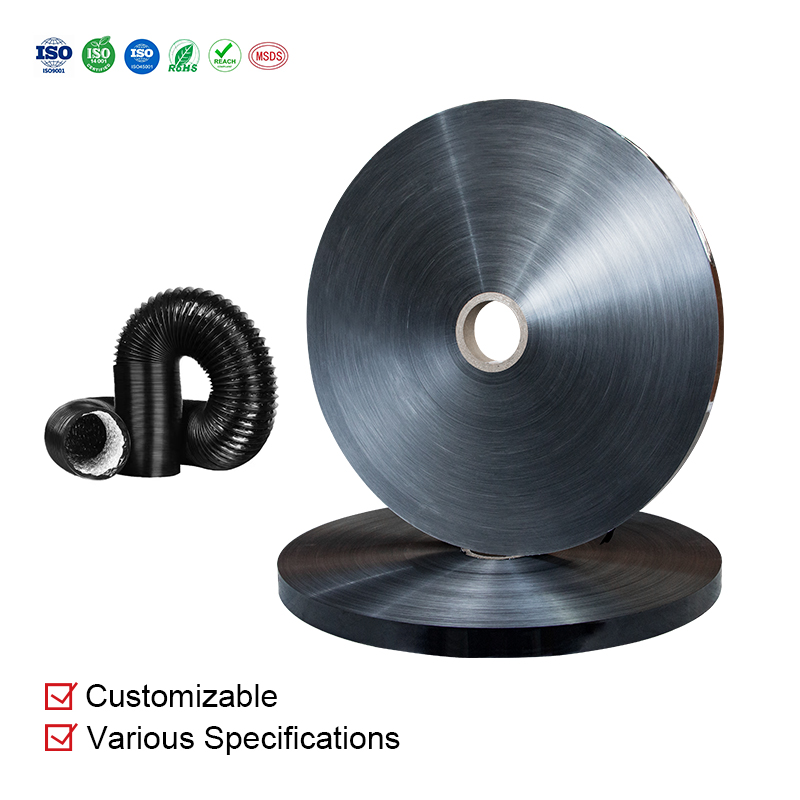
Autumn has arrived, and flexible duct manufacturers are running at full capacity. North American HVAC distributors need goods before Thanksgiving. European wholesalers are rushing to stock up for Christmas. Middle Eastern infrastructure projects are pushing for shipment. In peak season, production pace is fast, and the procurement of raw materials is where problems most often slip through.
VMPET (vacuum-metallized PET) duct facing is one of the most common covering materials for flexible ventilation ducts. Precisely because it is so common, many purchasing managers assume "it's all the same, just compare prices." The result: goods ship, the customer inspects, and things fall apart. This article skips theory and focuses on real pitfalls that duct factories have lived through.
Trap 1: Vague Inquiries — "Metallized Film Duct Facing, How Much?"
A purchasing manager sends an inquiry that reads: "Metallized film duct facing, width 1250mm, what's the price?" Quotes received against such an inquiry are impossible to compare meaningfully, because "VMPET duct facing" is a broad category. You must specify at least four structural parameters:
First, the metallized layer optical density. The thickness of the vacuum-deposited aluminum on VMPET is measured in optical density (O.D.), typically 2.5 to 4.0. Higher O.D. means better gas barrier and reflectivity, but also higher cost. For export-grade HVAC ducts, 3.0 O.D. minimum is standard. Below that, the duct's air leakage rate exceeds spec, and Western customers will reject the shipment.
Second, substrate thickness and structure. Is it single-layer VMPET, or VMPET laminated with PE? If laminated, is PE on one side or both? What is the PE thickness in microns? These directly determine duct flexibility, heat-seal performance, and tensile strength. During peak season, a supplier may quietly switch from double-sided PE to single-sided — the finished duct feels stiffer, the bend radius falls below spec, and the production line starts churning out rejects.
Third, width and slitting tolerance. Duct facing typically runs 1200–1350mm wide, with a slitting tolerance of ±2mm. When suppliers are stretched thin in peak season, slitting precision drops. A width deviation of even 3mm causes tracking issues on the lamination line, and reject rates spike. The contract must specify width and tolerance.
Fourth, surface treatment. The VMPET surface requires corona treatment to ensure adequate adhesion for subsequent lamination or printing. Some suppliers skip corona to save cost, or the corona value has decayed from extended storage. When the material arrives, the lamination bond is weak, and the duct facing delaminates or blisters.
Action: Write your inquiry with full specificity: "VMPET metallized film duct facing, O.D. ≥3.0, substrate 12μ VMPET + 25μ PE double-sided lamination, width 1250±2mm, VMPET surface corona treatment dyne level ≥38." Check every line item against the quote. If any element is missing, ask.
Trap 2: Optical Density Not Written into the Contract — Discover the Shortfall Only After Delivery
This is the most common and hardest-to-remediate trap in peak season. Optical density is invisible to the naked eye — 2.5 O.D. and 4.0 O.D. look identical, both shiny metallic films. When the finished duct fails the customer's gas barrier inspection, the trail leads back to an under-spec metallized layer, and the supplier simply says: "You didn't specify O.D. in your inquiry."
Action: The contract must state in black and white: "Metallized layer O.D. ≥3.0, random sampling upon delivery, non-conforming batches returned." If the supplier claims "O.D. can't be tested," require a metallized layer test report with each shipment, or send samples to a third-party lab. Peak season is time-pressured, but this step cannot be skipped — the cost of one rejected shipment far exceeds the cost of an extra test.
Trap 3: PE Laminate Material Switched — Heat-Seal Temperature Window Shifts
VMPET duct facing is typically laminated with a PE layer for heat-sealing during duct forming. The PE grade (LDPE, LLDPE, mPE) and melt flow index directly determine the heat-seal temperature window. During peak season, some suppliers swap LDPE for a higher-MFI recycled PE. The seal window narrows: the line temperature runs a degree too high and the film burns through; a degree too low and the seal fails. Reject rates jump from 2% to 8% overnight.
A more insidious practice is PE thickness reduction. The contract says 25μ PE; the actual delivery is 18μ. Seven microns thinner means lower compressive strength and lower seal strength simultaneously. A micrometer catches it instantly, but during peak season the line is busy, and the discrepancy often isn't discovered until batch-level customer complaints come in.
Action: Contract must specify: "PE layer: LDPE, MFI 1.5–2.5g/10min, thickness 25±1μ." Upon delivery, sample each batch: measure PE thickness at three points with a micrometer (take the average) and test the heat-seal window (run a small sample on the production line, record the onset seal temperature and burn-through temperature range). If anything is off, stop using the material immediately. In peak season, it's better to lose one day waiting for replacement stock than to run defective material and scrap the output.
Trap 4: Slitting Quality Drops in Peak Season — Burrs and Wavy Edges Appear in Bulk
Duct facing runs at high speed on the lamination line (80–120m/min), and the flatness of the slit edge is critical. When the slitting blade dulls or tension is misadjusted, the cut edge develops burrs, wavy edges, or micro-cracks. When the finished duct is flexed, the burr becomes a stress concentration point — a few bend cycles and it cracks open.
In peak season, suppliers are flooded with orders. Slitting machines run nonstop, blades that should be replaced aren't, tension that should be adjusted isn't. On a normal batch, the burr rate is below 1%. In peak season, it can spike to 5–8%. This material goes on the line, the finished duct fails the flexural test, and the entire batch must be reworked.
Action: Inspect the slit edge during incoming sampling. The method is simple: take a strip of facing, hold it up to the light and visually check for burrs or wavy patterns on the cut edge. Run your finger along the cut direction — it should feel smooth with no snagging. If you find a burr-heavy batch, reject it outright. Add a contract clause: "Slit-edge burr rate ≤2%, non-conforming batches returned for replacement."
Trap 5: Verbal Delivery Promises — Without Penalties, a Promise Is Just Talk
In peak season, the biggest risk isn't quality — it's delivery delays. The supplier says "next Wednesday delivery" over the phone. Ten days later, the material still hasn't arrived. The line is idle, the export order misses its vessel, and the penalty for late delivery to your customer exceeds the material cost.
Action: Peak-season contracts must include delivery penalties. Spell it out: "Delivery delay beyond 3 days incurs a penalty of 1% of contract value per day. Delay beyond 7 days: full return and compensation for line downtime losses." Require the supplier to provide a production schedule in writing — which day the material goes on the machine, which day it's slit, which day it ships. Confirm logistics 48 hours before expected delivery. In peak season, follow up three extra times rather than waiting for a delay to announce itself.
Peak-Season Procurement Checklist
Confirm each item before placing the order. Sample-test each item upon delivery. Peak season is won by execution of details.
- Inquiry specifies four elements: optical density, substrate structure, width tolerance, corona treatment
- Contract locks in the O.D. minimum, with test report requirement
- PE grade and thickness written into contract; micrometer sampling upon delivery
- Slit edge inspected by eye and by touch; burr-heavy batches rejected outright
- Delivery penalties in the contract; production schedule confirmed in writing
- Hold 5% of payment until the production line trial run is confirmed
Peak-season procurement isn't about who negotiates the lowest price — it's about who inspects the most thoroughly. Lock down these five contract clauses, and your duct facing procurement in peak season won't go wrong.
+86 13758223270 | Email: wendy@hcdxcl.com.cn
How to Judge Insulation Board Facing Quality? 5 Hard Metrics for Aluminum Foil PET vs VMPET
How Automotive Wiring Harness Manufacturers Choose Aluminum Mylar Tape by Application Scene