Thin-Profile AL/PET Laminate for Warm Edge Spacers: Structure and Selection Guide
In building energy efficiency, fenestration systems have long been identified as the weakest link in the building envelope, accounting for approximately 30–40% of total building energy loss. Traditional aluminum spacer bars, with their high thermal conductivity, create a pronounced "thermal bridge" at the window frame edge, allowing rapid heat transfer between indoor and outdoor environments. Warm edge spacer technology was developed to mitigate this thermal bridge effect, and thin-profile AL/PET composite film serves as a critical facing material — delivering essential performance in thermal insulation, structural stability, and manufacturing compatibility.
Warm Edge Spacer Fundamentals and the Role of AL/PET Film
The core principle of warm edge spacers is to replace conventional aluminum bars — or significantly reduce the metallic thermal conduction path — with materials of lower thermal conductivity. Mainstream warm edge spacer designs include stainless steel corrugated strips, polypropylene (PP) bars, and composite structural strips. A common feature across these designs is the application of a functional facing material on the spacer surface to fulfill sealing, insulation, and aesthetic requirements simultaneously.
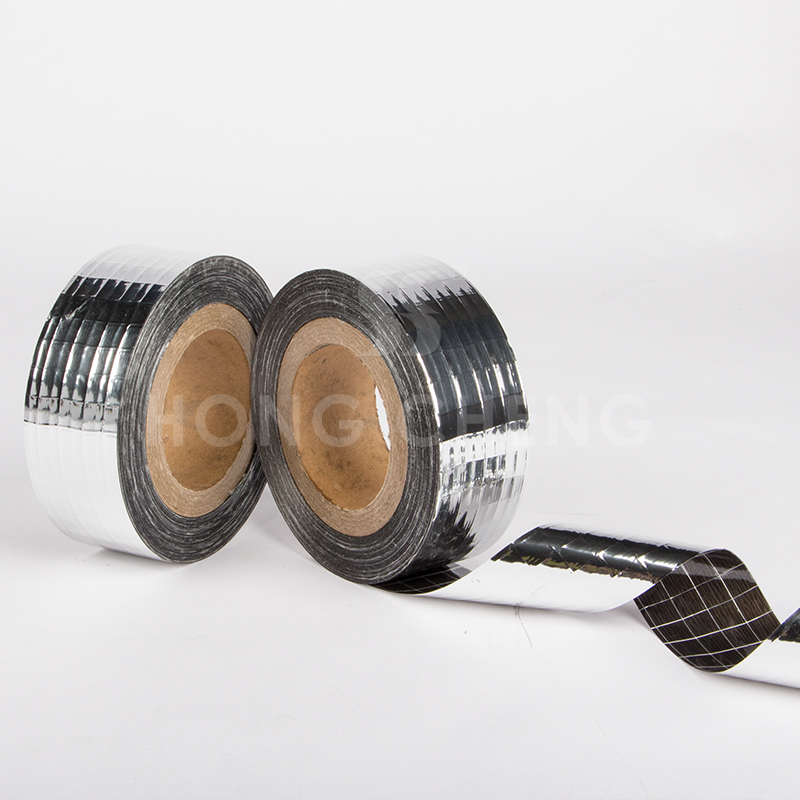
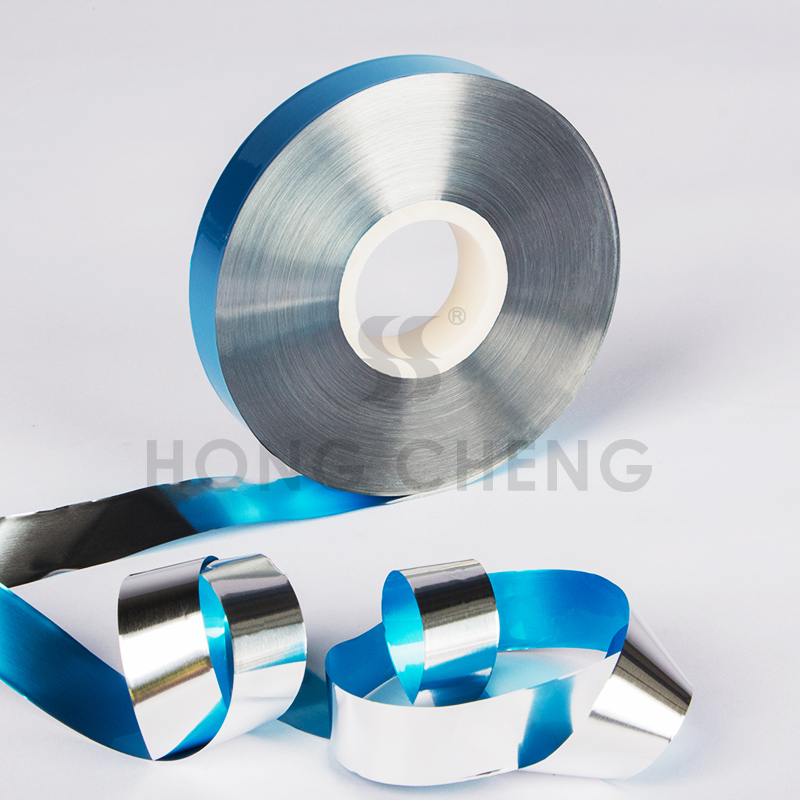
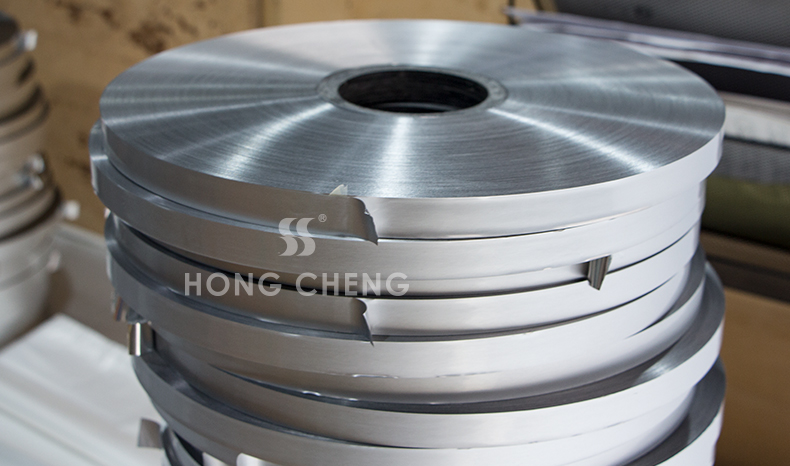
Thin-profile AL/PET composite film is one of the primary raw materials used for this facing layer. When applied to warm edge spacers, the AL/PET laminate covers the interior and exterior surfaces of the bar, performing the following functions:
Radiant Heat Blockade: The aluminum foil layer, with its high reflectivity (≥95%), effectively reflects infrared radiation from both indoor and outdoor environments, reducing radiant heat transfer through the spacer zone. This reflection effect is particularly beneficial for improving surface temperature at the window frame edge during cold winters and hot summers.
Moisture Vapor Barrier: The aluminum foil layer provides near-total resistance to water vapor transmission, preventing external humidity from penetrating the desiccant-filled cavity of insulating glass units (IGUs). This maintains the long-term dryness of the IGU cavity and avoids condensation on interior glass surfaces.
Structural Support and Surface Protection: The PET substrate delivers excellent mechanical strength and flexibility, ensuring the laminate resists cracking during bending, cutting, and lamination processing. It also provides a smooth, uniform protective surface layer that enhances the visual consistency of the finished spacer bar.
Typical Structure of Thin-Profile AL/PET Film
AL/PET composite film for warm edge spacers typically features the following structural configuration:
Foil Facing Layer: 6–9 microns thick, serving as the radiant barrier and moisture vapor barrier. Higher foil thickness delivers better barrier performance but increases material stiffness and minimum bend radius. Warm edge applications require a careful balance between barrier effectiveness and flexibility, with 7-micron foil being a commonly selected specification.
PET Substrate Layer: 12–25 microns thick, functioning as the mechanical support and carrier layer. PET film offers excellent tensile strength, dimensional stability, and weather resistance, making it an ideal substrate for warm edge spacer facing. PET thickness can be adjusted based on the spacer bar's structural rigidity requirements and the customer's bending performance specifications.
Certain high-performance warm edge products utilize a dual-sided "foil/PET/foil" composite structure, where aluminum foil is laminated on both sides of the PET carrier. This configuration achieves bidirectional radiant heat blockade, further improving the comprehensive thermal insulation at the window frame edge.
Key Parameters for Material Selection
For warm edge spacer manufacturers and window component processors, the following technical parameters warrant close attention when sourcing AL/PET composite film:
Total Thickness and Layer Ratio: The total thickness of AL/PET film for warm edge spacers typically ranges from 20–35 microns. A higher proportion of aluminum foil delivers superior thermal and barrier performance, while a thicker PET layer improves bending characteristics and tear resistance. The optimal balance depends on the spacer bar's cross-section design and minimum bend radius requirements.
Foil Surface Quality: The aluminum foil surface should be smooth, clean, and free of scratches, pinholes, and oxidation spots. Pinholes are the primary pathway for moisture vapor transmission and must be tightly controlled, especially in thin-profile foil. It is recommended that suppliers provide pinhole density test reports, with pinhole count per square meter maintained within acceptable limits.
Lamination Bond Strength (Peel Strength): The adhesion between aluminum foil and PET directly affects the facing material's durability during spacer bar bending, cutting, and long-term field service. A minimum peel strength of ≥1.0 N/15mm (T-peel) is recommended, with ≥1.5 N/15mm preferred for demanding applications.
Web Width and Slitting Precision: Warm edge spacer manufacturers typically require specific web widths, with slitting accuracy within ±0.3mm to ensure dimensional consistency in subsequent lamination processes. The supplier's slitting equipment capability and process control are critical evaluation criteria.
Customization Capability: This includes flexible customization of foil thickness, PET substrate specification, web width, roll diameter, and running length. Suppliers with stable volume production capacity and fast customization response can help spacer manufacturers reduce inventory pressure and shorten procurement lead times.
Regulatory Landscape and Market Trends
Building energy regulations have been tightening globally in recent years. China's General Code for Energy Efficiency and Renewable Energy Application in Buildings (GB 55015-2021) has imposed stricter requirements on window thermal transmittance (U-value), directly driving higher penetration of high-performance warm edge spacers. In northern heating zones and hot-summer-cold-winter regions, warm edge spacers have become standard equipment in mid-to-high-end aluminum and PVC window systems.
In the European market, the revised Energy Performance of Buildings Directive (EPBD) continues to tighten restrictions on overall window U-values, sustaining robust demand for warm edge spacers. Green building certification systems such as Passivhaus impose even more stringent thermal performance requirements on spacer bars, creating additional demand for high-performance facing materials such as dual-sided AL/PET composite film.
According to industry research, the global warm edge spacer market was valued at approximately USD 4.5 billion in 2025 and is projected to exceed USD 6 billion by 2028, representing a compound annual growth rate of over 8%. As a major global manufacturing base for windows and fenestration components, China is accelerating the localization of warm edge spacer production — creating sustained growth opportunities for AL/PET composite film suppliers.
Hangzhou Hongcheng Technology has deep expertise in aluminum foil composite materials and offers multi-specification customization capability for thin-profile AL/PET film. Whether clients require specific foil thickness, PET substrate specifications, web widths, or roll diameters, Hongcheng provides tailored solutions to help warm edge spacer manufacturers enhance product performance and market competitiveness.
Tel/WeChat: +86 13758223270 Email: wendy@hcdxcl.com.cn
Woven Aluminum Foil Composite Laminate for Vacuum Packaging: Structure, Selection & Sourcing Guide 2026
FSK Composite Facing (Foil+Scrim+Kraft) for HVAC Duct Insulation: Structure, Performance & Sourcing Guide