Warm Edge Tape Materials: Thin-Profile Aluminum PET Composite Film — Technology Trends and Sourcing Guide
As building energy efficiency standards continue to tighten worldwide, the thermal performance of windows, doors, and curtain walls has become a critical specification in both new construction and retrofit projects. Within the window insulation system, the warm edge spacer — the component that separates the glass panes in insulating glass units (IGUs) — plays an outsized role in determining the overall window U-value (thermal transmittance). This article focuses on the thin-profile aluminum PET composite film used as the facing material for warm edge tapes, analyzing its technical principles, material structure, performance parameters, and evolving market trends.
1. Technical Background: How Warm Edge Spacers Work
The edge zone of an insulating glass unit is the primary location of thermal bridging in a window system. Traditional aluminum spacers have high thermal conductivity (approximately 160 W/m·K), which leads to significant heat transfer at the glass edge and, in cold climates, condensation formation on the interior glass surface.
Warm edge spacers replace high-conductivity aluminum with low-conductivity composite materials (such as stainless steel + polymer, or glass-fiber-reinforced plastics), reducing edge heat transfer by 30%–50%. The facing material — the exposed surface layer of the warm edge spacer — further influences radiant heat exchange at the edge. By applying a highly reflective, low-emissivity aluminum PET composite film as the facing, the surface emissivity can be reduced to below 0.1, further suppressing radiant heat transfer.
2. Structure of Thin-Profile Aluminum PET Composite Film
Aluminum PET composite films for warm edge tape applications differ substantially from conventional aluminum foil laminates in their performance requirements:
| Parameter | Conventional Aluminum Foil Laminate | Warm Edge Tape Aluminum PET Composite Film |
|---|---|---|
| Aluminum Foil Thickness | 6–50μm | 6–12μm (thin-profile) |
| PET Layer Thickness | None or 12–25μm | 12–36μm (structural layer) |
| Total Thickness | 50–200μm | 30–80μm |
| Peel Strength | ≥1.2N/25mm | ≥2.0N/25mm (creep-resistant) |
| Service Temperature | -30 to 80°C | -40 to 120°C (weathering-grade) |
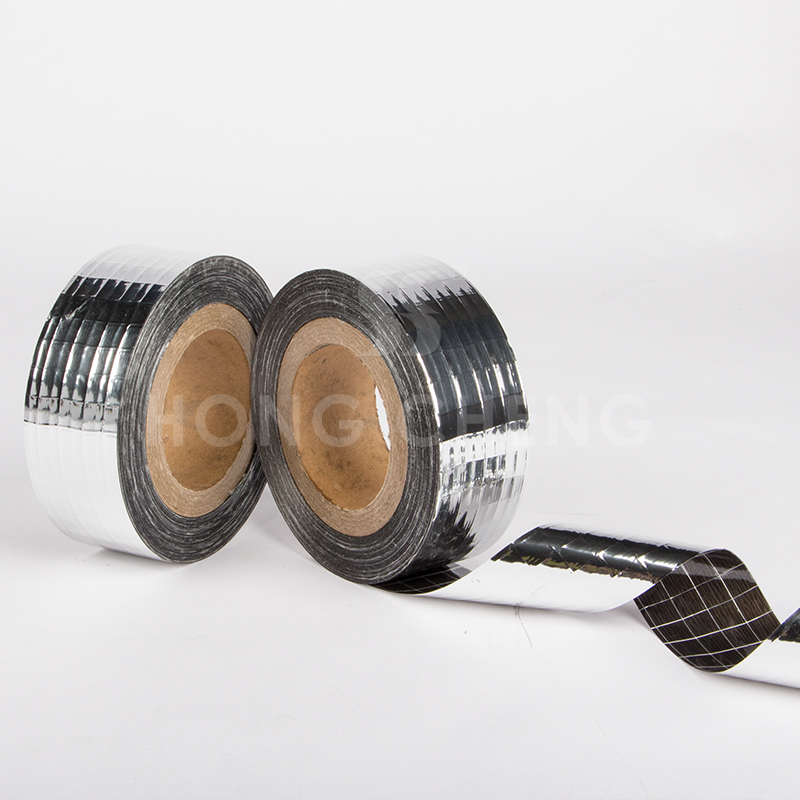
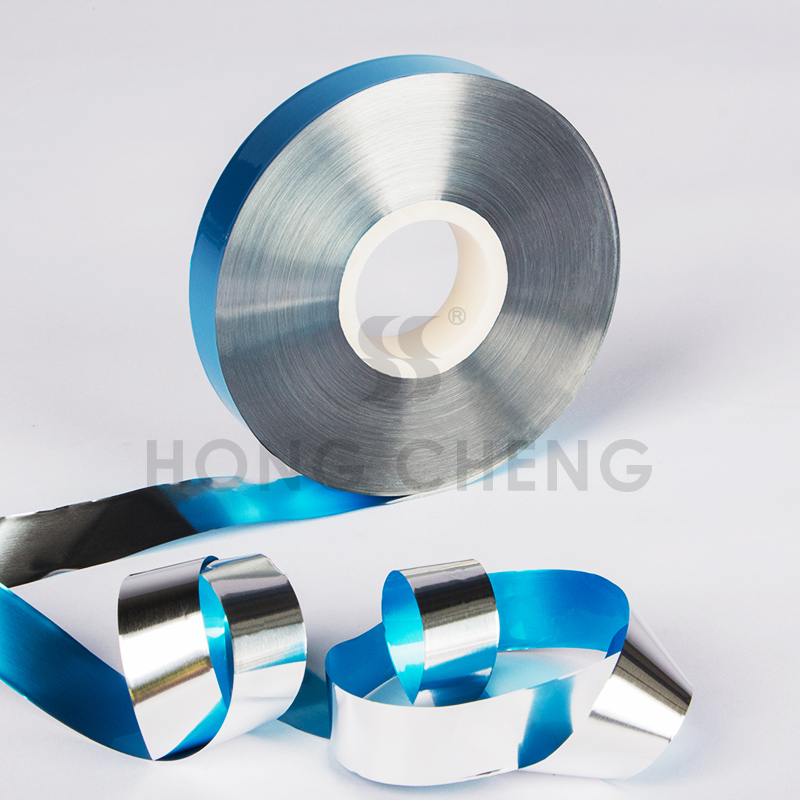
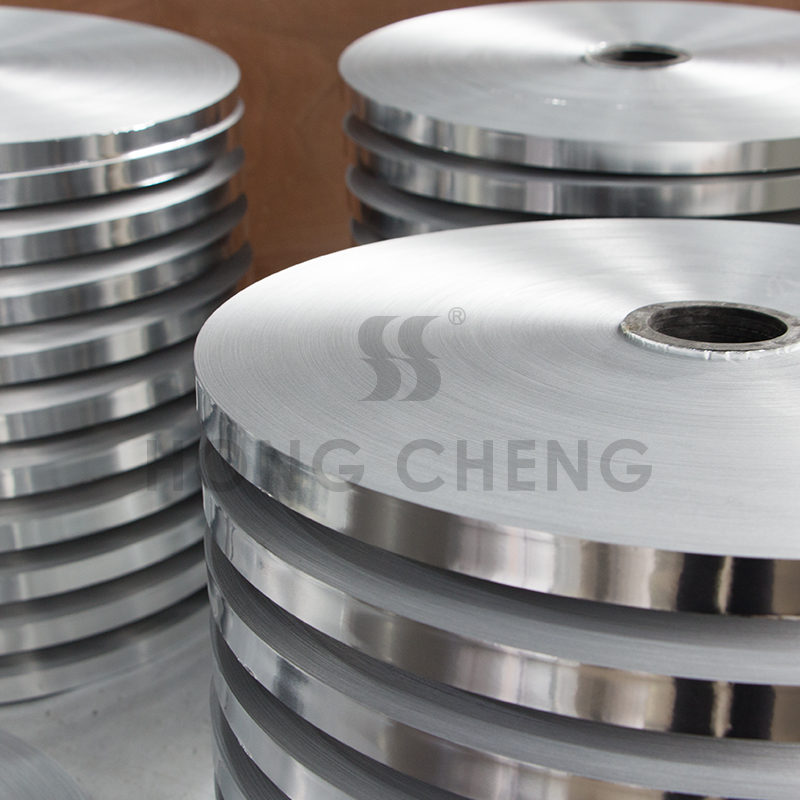
The typical structure is: aluminum foil (6–12μm) + PET (12–36μm) + functional adhesive layer (or PE-modified layer), produced through high-precision lamination to ensure bubble-free, wrinkle-free layer bonding. The aluminum foil layer provides the low-emissivity surface (ε ≤ 0.1), the PET layer provides mechanical strength and dimensional stability, and the functional adhesive layer ensures reliable bonding to the warm edge spacer substrate.
3. Key Performance Parameters and Testing Standards
The core performance metrics for warm edge tape aluminum PET composite film include:
1. Surface Emissivity
Low emissivity is the primary performance differentiator. Properly annealed pure aluminum foil achieves a surface emissivity of approximately 0.09–0.11, meeting the requirements of EN 12424 for warm edge materials. Buyers should request third-party emissivity test reports (per EN 12898 or ISO 9050) from suppliers.
2. Interlayer Peel Strength
During warm edge tape processing (bending, punching) and in service (thermal cycling), the facing material experiences sustained interfacial shear stress. The peel strength between the aluminum foil and PET layers should be ≥2.0N/25mm (per GB/T 2792 or ASTM D903), with no delamination after 100 thermal cycles between -40°C and 120°C.
3. Thickness Tolerance Control
Total thickness tolerance of the facing material must be controlled within ±0.5μm to ensure dimensional consistency in the warm edge tape extrusion or cladding process. Aluminum foil layer thickness tolerance should be specified at ±0.3μm.
4. Weathering Resistance
Since warm edge tape facings are exposed to UV radiation, temperature cycling, and humidity, the aluminum foil layer requires surface passivation treatment (chrome-based or chrome-free), and the PET layer should be a UV-resistant modified grade. Per EN 1279-3 gas permeation testing, the moisture vapor transmission rate of the assembled warm edge spacer should be ≤0.02g/m·d.
4. Market Trends and Technology Evolution
Trend 1: Passive House and New Building Standards Drive Demand Growth
With the implementation of China's General Code for Building Energy Efficiency and Renewable Energy Utilization (GB 55015-2021), the U-value requirement for new building windows has tightened to below 1.8–2.0 W/m²·K, driving the penetration rate of warm edge spacers in mid-to-high-end window projects from approximately 15% in 2020 to over 35% in 2025. The market demand for aluminum PET composite film — the core raw material for warm edge tapes — is expanding in tandem.
Trend 2: Chrome-Free Passivated Aluminum Foil Becomes Mandatory for Export Markets
EU REACH regulations and U.S. NSF certification impose increasingly strict restrictions on hexavalent chromium passivation processes. Downstream warm edge tape manufacturers are seeing significantly increased procurement demand for chrome-free passivated aluminum foil. Suppliers with in-house chrome-free treatment production lines have a distinct competitive advantage in export markets.
Trend 3: Custom Multi-Layer Structures (Aluminum/PET/Functional Layer) Gain Traction
Some high-end warm edge tape manufacturers are adopting three-layer or even four-layer composite structures (e.g., aluminum foil + PET + functional barrier layer) to simultaneously meet low-emissivity, high-barrier, and thermal-bonding requirements with the spacer substrate. Raw material suppliers capable of multi-layer lamination (3 layers and above) remain relatively scarce in the market.
5. Sourcing Checklist for Procurement Teams
When evaluating aluminum PET composite film for warm edge tape applications, verify the following before placing orders:
- Aluminum foil temper and thickness: Confirm whether the foil is O-temper (annealed, soft) or H-temper (hard). O-temper is generally preferred for warm edge facing applications to ensure conformability. Thickness specifications should include tolerance.
- Emissivity test report: Request third-party test data per EN 12898 or ISO 9050; do not rely on uncertified supplier claims.
- Peel strength and thermal cycling test: Request retained peel strength data after 100 thermal cycles (-40°C / 120°C).
- Width and roll specifications: Common widths for warm edge tape facing materials are 200–600mm. Confirm custom slitting availability and joint quality control (maximum 1 joint per roll).
- Compliance certification: For EU export markets, confirm that the aluminum foil passivation process complies with REACH regulations; request chrome-free treatment certification if required.
6. Conclusion
Thin-profile aluminum PET composite film for warm edge tape facing represents a small-cost, high-impact component in the window energy efficiency equation. As building energy codes continue to tighten and the Passive House market expands globally, raw material suppliers with low-emissivity aluminum foil treatment capabilities and multi-layer lamination expertise are well-positioned for sustained growth in this specialized segment.
For warm edge tape manufacturers, selecting the right facing material supplier is not merely a cost decision — it is a performance partnership that influences the thermal credentials of every window that leaves the factory.
Contact Us
For specifications, custom configurations, and quotations on aluminum PET composite film for warm edge tape applications, please contact the Hongcheng Technology team.
📞 Phone/WeChat: +86 13758223270
📧 Email: wendy@hcdxcl.com.cn
Woven Aluminum Foil Composite for Vacuum Packaging: A Technical Selection Guide
Lightweight AL/PE Laminate for Flexible HVAC Duct Jackets: Market Trends and Material Selection Guide