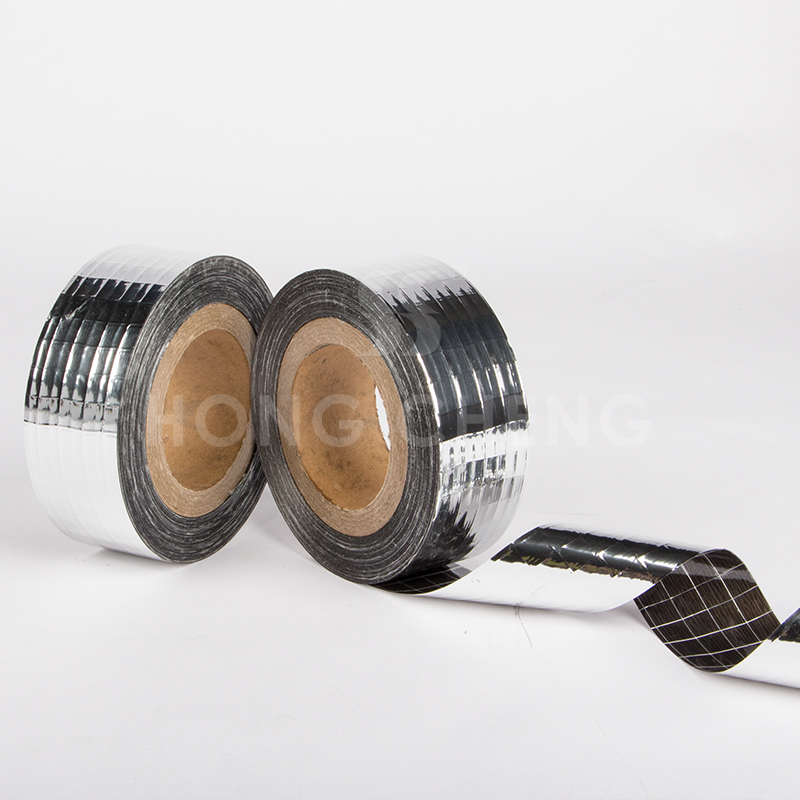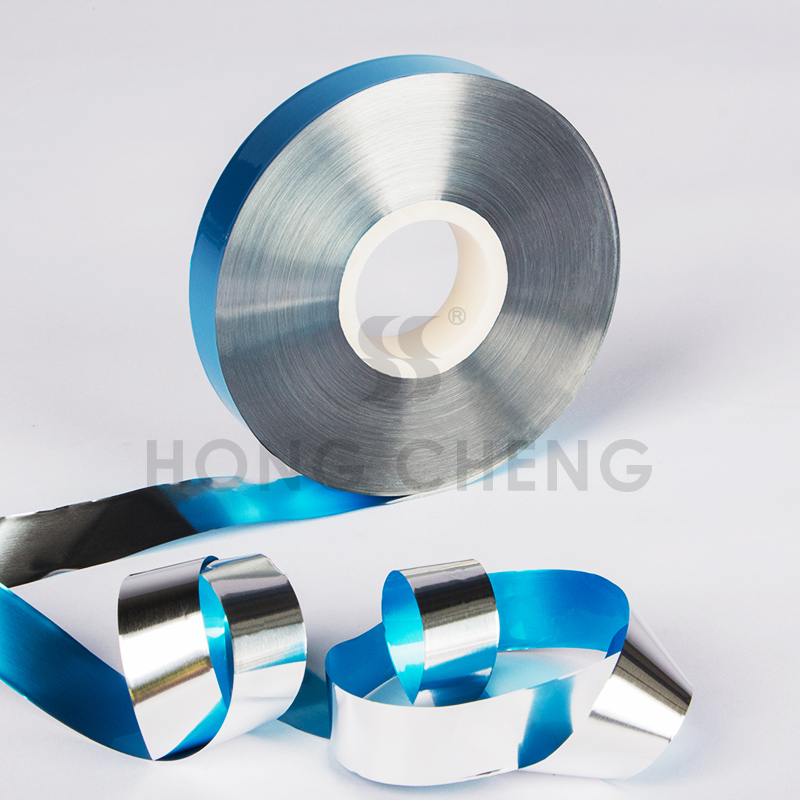
Woven Aluminum Foil for Crate Lining: Summer Moisture Protection Guide
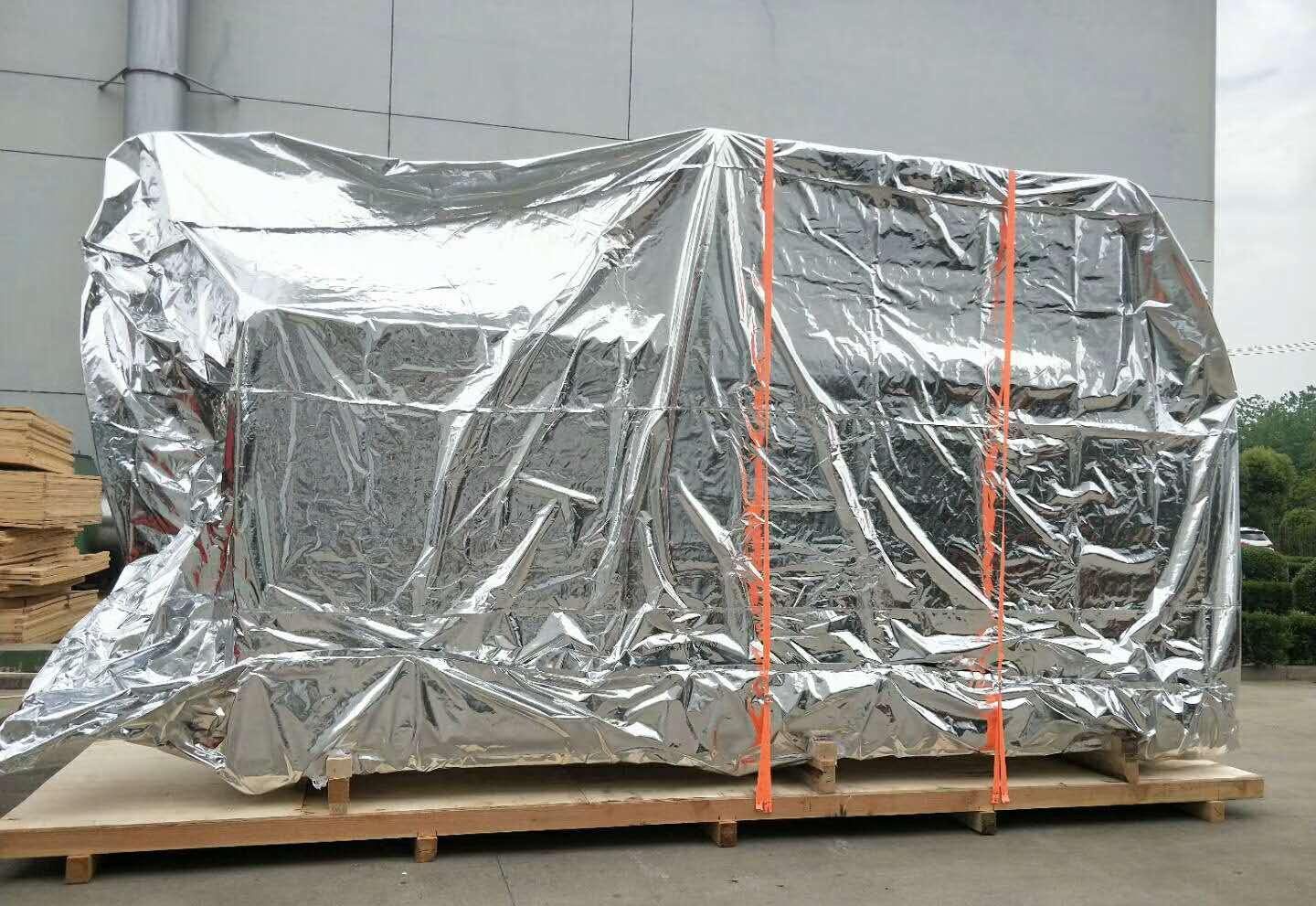
Every year from June through September, during the plum rain season and high-temperature, high-humidity months, we receive urgent inquiries from equipment exporters: machines shipped to Southeast Asia, the Middle East, and Africa arrive with mold spots, moisture penetration, and oxidized aluminum layers on the crate lining woven foil, leading to customer claims. The root cause is almost always the same — lining materials not specified to match the transport conditions. Today, from a material supplier perspective, we will walk you through how to select woven aluminum foil for wooden crate lining under summer long-distance ocean freight conditions.
Why Standard Aluminum Foil Fails in Summer Ocean Freight
Many equipment exporter buyers share a common misconception: "any aluminum foil will work." In reality, ocean freight conditions are far more demanding than expected:
- Temperature swings: Container interior temperatures can reach 60-70°C during the day and drop to 30-40°C at night, causing repeated thermal expansion and contraction between the aluminum layer and substrate
- Humidity exposure: Relative humidity stays at 85-95% for extended periods during ocean transit, approaching 100% on routes crossing equatorial high-temperature zones
- Salt spray corrosion: Marine environment accelerates oxidation of the aluminum layer
- Mechanical stress: Equipment handling, lifting, and loading expose crates to severe impact; once the foil is punctured, moisture penetrates directly
Standard aluminum foil (simple aluminum + PE lamination) fails in three ways under these conditions: aluminum layer oxidation and blackening, delamination between PE and aluminum, and poor puncture resistance. Woven aluminum foil composite (multi-layer structure: aluminum foil + woven fabric + PE or aluminum foil + woven fabric + kraft paper) is purpose-designed for these heavy-duty applications.
1. Selection by Transport Mode: Ocean vs Land vs Air
Different transport modes place very different demands on lining materials. Confirm transport mode first, then select specifications.
| Transport Mode | Primary Threat | Recommended Structure | Key Parameters |
|---|---|---|---|
| Long-distance ocean (>30 days) | High humidity + salt spray + thermal cycling | Aluminum + woven + PE + kraft paper (4-layer) | Woven ≥80g/m², foil ≥7μm |
| Short-distance ocean (<15 days) | Medium humidity + salt spray | Aluminum + woven + PE (3-layer) | Woven ≥60g/m², foil ≥7μm |
| Land/rail transport | Mechanical stress dominant | Aluminum + woven (2-layer) | Woven ≥90g/m² (high puncture resistance) |
| Air freight | Lightweight requirements | Thin foil + lightweight woven | Woven ≥50g/m², foil ≥7μm |
Critical reminder: Many buyers use "air-freight-grade" thin materials for ocean shipments, only to discover at the destination that the lining has oxidized and blackened. Transport mode dictates the minimum specification.
2. Selection by Equipment Weight: Woven Fabric Weight is the Core Indicator
Woven fabric weight (g/m²) directly determines puncture resistance and tear strength — the most critical specification for crate lining woven aluminum foil.
Light equipment (single unit <500kg):
- Woven weight: 60-80g/m²
- Typical applications: Small motors, valves, precision instruments
- Recommended structure: 7μm aluminum + 60g/m² woven + PE lamination
Medium equipment (500-2000kg):
- Woven weight: 80-100g/m²
- Typical applications: Machine tools, water pumps, medium motors
- Recommended structure: 7μm aluminum + 80g/m² woven + PE + kraft paper
Heavy equipment (>2000kg):
- Woven weight: 100-120g/m²
- Typical applications: Large machinery, lifting equipment, transformers
- Recommended structure: 9μm aluminum + 100g/m² woven + PE + double kraft paper
Note: Woven fabric weight correlates with weave density. 14×14 thread count (14 warp + 14 weft threads per inch) is the industry standard, balancing strength and cost. 10×10 thread count is too sparse, suitable for light applications; 16×16 thread count is denser, suitable for ultra-heavy or military export applications.
3. Selection by Ocean Route: Aluminum Thickness and Moisture Barrier Performance
Aluminum thickness directly determines moisture barrier performance. Water Vapor Transmission Rate (WVTR) is the core metric, measured in g/(m²·24h).
| Aluminum Thickness | Typical WVTR | Applicable Route Duration | Recommended Scenario |
|---|---|---|---|
| 7μm | ≤0.5 g/(m²·24h) | <30 days ocean | Standard equipment export |
| 9μm | ≤0.3 g/(m²·24h) | 30-60 days ocean | High-end equipment / precision instruments |
| 12μm | ≤0.1 g/(m²·24h) | >60 days ocean | Military / precision medical / ultra-long routes |
Critical reminder: 7μm aluminum foil is sufficient for standard ocean routes, but for long-distance ocean freight (>30 days) or extreme humidity routes (Southeast Asia, Middle East, Africa), we recommend stepping up to 9μm or 12μm. Each 2μm increase in aluminum thickness raises material cost by approximately 15-20%, but improves moisture barrier performance by 30-50%.
4. Selection by Equipment Dimensions: Roll Width and Cutting Strategy
Woven aluminum foil for crate lining is typically supplied in roll form, cut to match crate interior dimensions during installation. Width selection directly impacts cutting waste and installation efficiency:
| Crate Interior Width | Recommended Roll Width | Cutting Method |
|---|---|---|
| <1m | 100cm | Single-width lay, lowest waste |
| 1-1.5m | 120-150cm | Centered lay, fold both sides |
| 1.5-2m | 150-180cm | Centered lay, multi-layer fold |
| >2m | 200cm custom | Custom width to minimize seams |
Common roll lengths: 100m/roll, 200m/roll, 500m/roll. Export equipment manufacturers typically use 200m/roll, balancing handling convenience and single-order quantity.
5. Critical Reminders: Four Common Misconceptions
Reminder 1: Do not order based on "woven aluminum foil" alone. Specifications vary widely — from the thinnest "foil + 50g/m² woven" to the thickest "foil + 120g/m² woven + PE + kraft paper" — with price differences up to 2-3x. You must specify woven weight, aluminum thickness, PE lamination, kraft paper layer, and other parameters before requesting quotes.
Reminder 2: PE lamination thickness is not "the thicker the better." PE lamination serves heat-seal bonding + moisture barrier assistance. Standard specification is 20-30μm. Above 50μm causes problems — the material becomes too stiff, making it difficult to conform to crate interior corners and irregular surfaces, and increasing the risk of delamination between PE and the woven layer.
Reminder 3: Do not skip PE lamination for ocean freight. To cut costs, some buyers choose "aluminum + woven" two-layer structure without PE. This works for short-term land transport, but in ocean freight, water vapor seeps through the woven fabric's gaps and the aluminum layer oxidizes quickly upon prolonged moisture contact. Ocean freight requires PE lamination or composite layer.
Reminder 4: Aluminum foil orientation matters. The aluminum side should face the equipment side (the crate interior wall facing the equipment), with the woven side facing the crate boards. Two reasons: first, the aluminum layer is the last moisture barrier if water does penetrate the crate; second, the woven side in contact with the wood provides cushioning, preventing the foil from being scratched by crate splinters.
Conclusion
Woven aluminum foil for crate lining may seem like a "packaging auxiliary," but it is the last line of defense for exported equipment. Wrong specifications lead to customer complaints, rework, and claims in mild cases, and equipment write-off at destination in severe cases. Hongcheng Technology specializes in aluminum foil composite materials and PE lamination manufacturing, offering customized aluminum + woven + PE + kraft paper multi-layer structures (aluminum thickness 7-12μm, woven weight 50-120g/m²), with sample testing and ocean freight condition simulation available. If you are planning a packaging upgrade for exported equipment, please contact us for one-on-one material selection guidance.
Tel/WhatsApp: +86 13758223270 Email: wendy@hcdxcl.com.cn
How to Select Aluminum Fiberglass Shielding Tape for Heat Tracing Lines?
How to Choose Reflective Film for Underfloor Heating: Metalized vs AL/PE Laminates