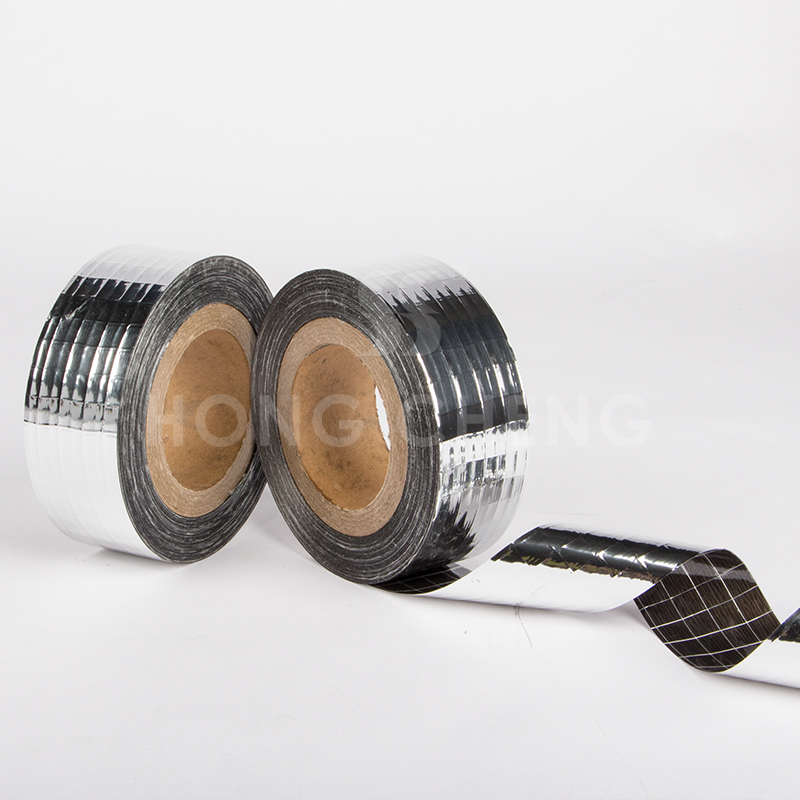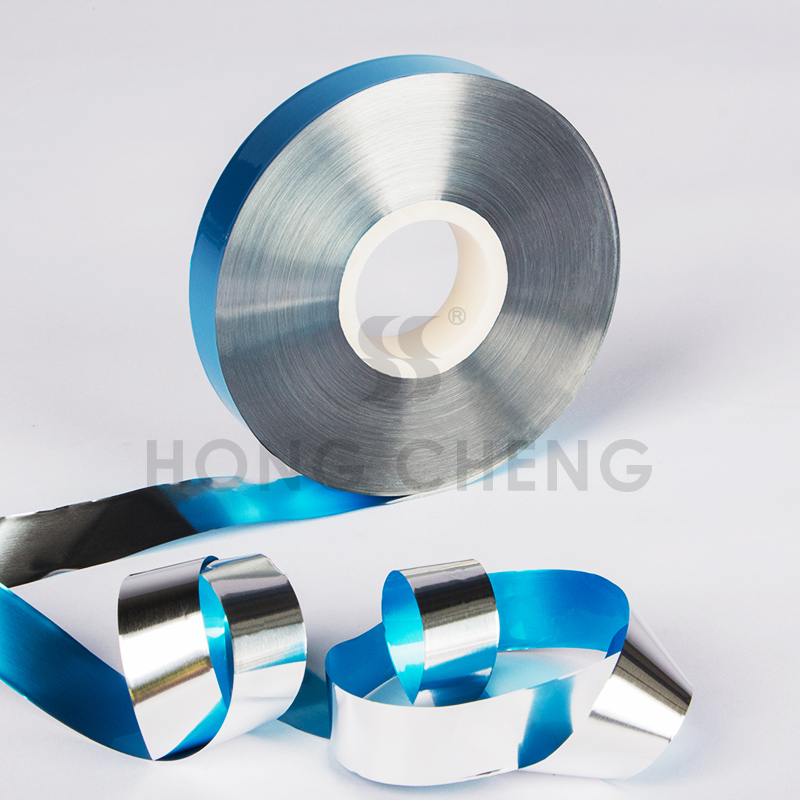
How to Choose Woven Foil Vacuum Bag Thickness: A Full Guide from Equipment Packaging to Wooden Crate Lining

As a manufacturer of aluminum foil composite materials, we've noticed that many customers feel lost when specifying woven aluminum foil vacuum bag laminates—some assume thicker is always better, only to find wrinkles and seal failures during vacuum extraction; others choose thin-gauge films that puncture during hoisting, leaving expensive equipment exposed to moisture. In reality, woven foil laminates are not about "the thicker the better." The right thickness and structure depend on your packaging scenario, equipment weight, and moisture protection class.
Let's break this down systematically, so you can make confident specifications for every application.
1. Choose Thickness by Equipment Weight
This is the most straightforward starting point. Heavier equipment generates greater impact forces during hoisting and transit, requiring stronger woven fabric layers and more resilient foil layers.
Light Equipment (≤50 kg): Instruments, Electronic Control Panels
- Foil layer: 7μm — sufficient for barrier performance
- Woven fabric: 100 g/m² PP woven cloth (approx. 30 mils)
- Total laminate thickness: approx. 120-150μm (12-15 mils)
- Typical structure: Woven/AL/PE three-layer laminate
- Best for: Workshop turnover, short-haul transport, vacuum storage 3-6 months
Medium Equipment (50-200 kg): Motors, Pump Units, Small Machine Tools
- Foil layer: 9μm — enhanced puncture resistance
- Woven fabric: 120-150 g/m² PP woven cloth (36-45 mils)
- Total laminate thickness: approx. 180-220μm (18-22 mils)
- Typical structure: Woven/AL/PE or Woven/AL/PET/PE four-layer laminate
- Best for: Domestic long-haul transport, export sea freight, moisture protection 6-12 months
Heavy Equipment (>200 kg): Large Transformers, Hoisting Machinery, Generator Sets
- Foil layer: 12-15μm, paired with reinforced woven fabric
- Woven fabric: 180-200 g/m² high-strength PP woven cloth (54-60 mils)
- Total laminate thickness: approx. 250-300μm (25-30 mils)
- Typical structure: Woven/AL/PET/PE four-layer laminate (PET layer adds structural rigidity)
- Best for: Hoisting and lifting operations, overseas long sea freight, moisture protection 12-24 months
Key Reminder: For heavy equipment vacuum packaging, simply increasing foil thickness won't solve the problem. Foil above 15μm loses flexibility and tends to crack at fold points. The correct approach is to increase woven fabric weight and add a PET intermediate layer — not to blindly thicken the aluminum foil.
2. Choose Structure by Moisture Protection Class
Beyond load-bearing, moisture barrier performance is the core purpose of vacuum packaging. Different industries have vastly different requirements for water vapor transmission rate (WVTR), which directly determines how many composite layers you need.
Standard Moisture Barrier (WVTR ≤ 1.0 g/m²·24h): General Industrial Equipment
- Structure: Woven/AL/PE three-layer laminate
- Foil 7-9μm + PE coating layer 25-35μm
- Application: Indoor storage, dry-environment transport
- Moisture barrier rate: ≥95%
Enhanced Moisture Barrier (WVTR ≤ 0.5 g/m²·24h): Precision Instruments, Electronic Devices
- Structure: Woven/AL/PET/PE four-layer laminate
- PET intermediate layer 12-25μm, provides secondary barrier + structural reinforcement
- Application: Export sea freight, cross-border logistics, humid-region storage
- Moisture barrier rate: ≥98%
Maximum Moisture Barrier (WVTR ≤ 0.1 g/m²·24h): High-Precision Chip Equipment, Medical Imaging Systems
- Structure: Woven/AL/PET/PE + double-sided coating or reinforced foil layer
- Foil 12μm + double-sided PE coating, oxygen transmission rate ≤ 0.1 cc/m²·24h
- Application: Overseas long-cycle projects, tropical installation sites
- Moisture barrier rate: ≥99.5%
Key Reminder: Many procurement professionals assume "thicker foil = better moisture protection," but the critical factor is foil integrity — once foil develops pinholes or cracks during handling, even the thickest foil can't block moisture. The PET layer in four-layer laminates serves as a "second line of defense" when foil is compromised, which is far more reliable than simply thickening the aluminum layer.
3. Choose Surface Treatment by Packaging Process
Vacuum packaging isn't just "wrap it up and pump out the air." Different sealing methods and vacuum extraction processes require specific surface treatments on the laminate.
Heat Sealing Process (Most Common)
- Laminate requirement: Inner surface must have a PE coating layer (25-40μm) to ensure reliable sealing at 130-150°C
- Seal width: ≥ 5mm; recommended 8-10mm for seal strength assurance
- Compatible laminate: Woven/AL/PE (PE on inner side as heat-seal layer)
Cold Seal / Tape Seal Process (Common for Large Equipment)
- Laminate requirement: Inner PE layer can be reduced (15-25μm) since heat sealing isn't relied upon
- Sealing method: Aluminum foil tape adhesive seal + vacuum valve
- Compatible laminate: Woven/AL/PET/PE (PET layer provides rigidity for tape adhesion)
Vacuum + Nitrogen Filling Dual Protection
- Laminate requirement: Oxygen transmission rate must be ≤ 0.5 cc/m²·24h, otherwise nitrogen leaks rapidly
- Structure required: Minimum four-layer laminate (Woven/AL/PET/PE)
- Foil layer ≥ 9μm, PET layer ≥ 12μm, dual barrier against both oxygen and moisture
Key Reminder: Heat seal quality is the first checkpoint for vacuum packaging success. If the PE coating layer is too thin (below 15μm), heat seal strength is insufficient, and seals can crack during transport. We recommend PE coating of at least 25μm — this is the safety line for reliable sealing performance.
4. Three Key Reminders to Avoid Specification Mistakes
1. "Thicker woven fabric = stronger" — Not exactly right
Increasing woven fabric weight from 100 g/m² to 200 g/m² does double tensile strength, but flexibility drops simultaneously. Excessively thick woven fabric cannot conform tightly to equipment surfaces during vacuum extraction, creating cavities at edges and corners — which become moisture ingress channels. Generally, equipment under 200 kg works well with 120-150 g/m² woven fabric.
2. "Export packaging always needs the thickest specification" — That's wasteful
Export equipment does require longer moisture protection cycles, but this is achieved through structural layer count (adding a PET intermediate layer), not simply thickening individual layers. Our comparative testing shows: Woven/AL(9μm)/PET(25μm)/PE four-layer laminate delivers significantly better moisture barrier than Woven/AL(15μm)/PE three-layer — WVTR is 60% lower, while total thickness is actually thinner.
3. "No need to check after vacuum extraction" — Dangerous
After vacuum packaging is completed, we recommend testing seals and film surfaces for micro-leaks using soapy water. Aluminum foil laminates bear approximately 1 atmosphere of differential pressure after vacuum extraction — any pinhole or seal defect will cause noticeable vacuum loss within 48 hours. If leakage is detected, re-seal or replace the laminate promptly.
Conclusion
Precise thickness and structure design maximizes the core advantages of woven aluminum foil laminates — high strength + high barrier — while controlling packaging costs. Hongcheng Technology has specialized in aluminum foil composite materials for over 20 years, offering Woven/AL/PE, Woven/AL/PET/PE and other composite structures, with customizable foil thickness from 7-30μm and woven fabric weight from 100-200 g/m². We support sample analysis, application-based recommendations, and trial samples.
Feel free to contact us anytime — we provide one-on-one customized service for your specific needs!
Phone/WeChat: +86 13758223270 Email: wendy@hcdxcl.com.cn
What Thickness for Heating Cable AL/PE Shielding Sleeve? A Full Selection Guide
Cooler Box Liner Foil Bubble Composite Film: Trends, Structure, and Selection Guide