Woven Aluminum Foil Composite Laminate for Vacuum Packaging: Structure, Selection & Sourcing Guide 2026
1. Market Background: Why Vacuum Packaging Demands Superior Barrier Materials
In 2026, the global advanced manufacturing supply chain is more interconnected—and more demanding—than ever. Precision mechanical components, semiconductor materials, high-value foodstuffs, and sensitive electronic equipment are crisscrossing borders in increasing volumes, all sharing one critical requirement: zero moisture ingress and zero oxidation throughout the logistics chain.
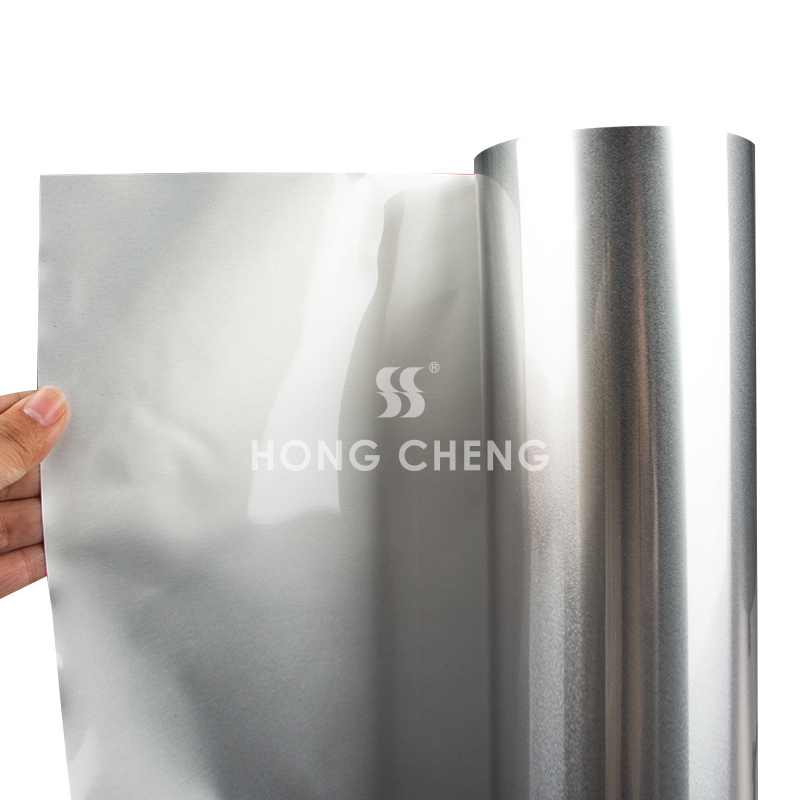
Standard aluminum foil laminates no longer meet all vacuum packaging demands. Once a product requires vacuum sealing, the packaging material must maintain structural integrity under negative pressure—no rupture, no delamination, no leakage. This is exactly the value proposition of woven aluminum foil composite laminate: combining the outstanding moisture barrier properties of aluminum foil, the heat-sealability of PE film, and the mechanical strength of woven fabric into a single, high-performance industrial packaging substrate.
2. Structure Analysis: How Three-Layer Lamination Delivers Combined Performance
The standard woven foil vacuum laminate structure is:
Outer Layer (Woven Fabric) + Middle Layer (Aluminum Foil) + Inner Layer (PE Heat-Seal Film)
| Layer | Material Options | Core Function |
|---|---|---|
| Outer | HDPE/PP woven fabric (80–120 g/m²) | Tensile strength, tear resistance, puncture resistance |
| Middle | Aluminum foil (7–12 μm, purity ≥99%) | Moisture barrier (WVTR), oxygen barrier (OTR), light exclusion |
| Inner | LDPE/LLDPE heat-seal film (30–80 μm) | Heat-sealability, low-temperature performance, anti-blocking |
For premium applications, an additional PET layer (12 μm) is added to the foil exterior:
PET / Aluminum Foil / Woven Fabric / PE
This four-layer structure improves surface abrasion resistance and print adhesion, making it well-suited for export packaging requiring visible labeling.
Reference performance data (9 μm foil, 50 μm PE structure):
- WVTR: ≤0.5 g/m²·24h (38°C, 90% RH)
- OTR: ≤0.5 cc/m²·24h
- Heat-seal strength: ≥25 N/15mm
- Tensile strength (MD and TD): ≥120 N/50mm
3. Key Application Scenarios
① Metal Component Export Packaging Steel bearings, precision gears, hydraulic parts, and similar components face high-humidity marine shipping environments. Conventional VCI (vapor corrosion inhibitor) paper performance can degrade in extreme conditions. Vacuum-sealed woven foil laminate bags reduce internal relative humidity to below 30%, completely blocking oxidation pathways while providing sufficient physical toughness against handling impact.
② Semiconductor and Electronic Component Protection Bare die, MOSFETs, IGBT modules, and similar components are highly sensitive to moisture. IPC J-STD-033C requires sealed packaging with WVTR ≤0.002 g/m²·24h — fully achievable with aluminum foil laminate. ESD-sensitive items often require an additional conductive treatment layered inside the foil woven bag.
③ Large Equipment and Machinery Export Compressors, motor coils, reducers, and other large industrial components require wide-format (>1200 mm) bag materials with adequate structural strength. Woven fabric as the backbone substrate maintains dimensional stability after large-format cutting and prevents edge weld splitting during sealing.
④ Specialty Agricultural Products and Premium Food Export Coffee beans, nuts, freeze-dried products, and similar goods require simultaneous light, oxygen, and moisture barriers. Woven foil composite heat-seal film delivers superior multi-barrier performance while providing the mechanical strength needed for large-format packing (10–25 kg/bag) under logistics compression.
4. Raw Material Sourcing: Five Critical Parameters
1. Aluminum Foil Thickness and Pinhole Rate Aluminum foil is the core barrier layer. 7 μm foil is more susceptible to pinholes under tension during lamination, which can degrade WVTR performance. 9 μm is the mainstream choice for industrial vacuum packaging; 12 μm is used for high-demand or extended-storage applications. Always request a pinhole rate test report from suppliers (typically ≤200 pinholes/m²).
2. Woven Fabric Basis Weight and Yarn Density Basis weight directly determines tensile and puncture resistance. 80 g/m² fabric suits lightweight component packaging; 120 g/m² and above is appropriate for heavy-duty or rough-handling scenarios. Test anisotropic strength in both machine and cross directions to ensure no directional weakness under vacuum-induced bag distortion.
3. Lamination Bond Strength (Peel Strength) Under vacuum, negative pressure "pulls" at each laminated layer from the inside. Insufficient peel strength between the foil and woven fabric can cause foil delamination and barrier failure. Recommended minimum: ≥1.5 N/25mm (T-peel test) between foil and woven fabric layers.
4. Heat-Seal Layer Selection (PE Type and Thickness) LDPE offers low sealing temperature and clean seal appearance but lower stiffness. LLDPE provides superior puncture resistance for heavy-duty use. Metallocene LLDPE (mLLDPE) delivers excellent low-temperature seal strength for cold-chain vacuum applications. Recommended thickness: 50–80 μm. Too thin reduces seal strength; too thick adds unnecessary weight and cost.
5. Width and Customization Capability Industrial packaging formats vary widely, from small vacuum pouches (width 200 mm) to large equipment export bags (width 1500+ mm). A qualified supplier should offer standard widths of 700 mm, 1000 mm, 1200 mm, and support custom slit-to-width, while also accommodating custom composite structure and basis weight specifications.
5. 2026 Market Outlook: Three Growth Drivers
① Increasing Demand for Precision Packaging Across Diversified Global Supply Chains As geopolitical shifts accelerate supply chain regionalization and trade route diversification, cross-border shipment of precision parts, semiconductors, and high-value machinery continues to grow, creating sustained demand for high-barrier industrial vacuum packaging materials.
② EU Packaging and Packaging Waste Regulation (PPWR 2030) Driving Design Innovation The EU PPWR regulation mandates maximum recyclability for packaging materials where technically feasible. Woven foil composites, which allow aluminum and PE to be recovered through separate recycling streams, are gaining acceptance among downstream brands seeking to align with 2030 compliance targets.
③ End-Users Increasingly Specifying WVTR Performance Requirements More and more procurement teams now include WVTR target values (e.g., ≤0.3 g/m²·24h) in their initial RFQs, requiring third-party test reports from suppliers. This trend is pushing raw material suppliers to invest in testing capabilities and technical documentation as a competitive differentiator.
Conclusion
Woven aluminum foil composite laminate represents one of the highest-performance substrate options in the industrial vacuum packaging segment—combining barrier integrity with mechanical durability in a single multi-layer structure. Whether protecting metal components from corrosion on ocean freight, shielding electronics from humidity, or enabling large-format export bags for heavy equipment, the performance ultimately depends on the raw material supplier's capability across foil thickness, fabric weight, bond strength, and heat-seal film selection.
Hongcheng Technology brings 20+ years of expertise in aluminum foil composite laminate manufacturing. We supply woven foil vacuum packaging laminates in 7–12 μm foil grades, multiple fabric weights, and fully customized widths and structures, backed by third-party test documentation. Industrial packaging material buyers are welcome to contact us.
Phone / WeChat: +86 13758223270 Email: wendy@hcdxcl.com.cn
Automotive Wiring Harness Shielding in 2026: AL/PET Shielding Tape vs Aluminum Mylar Tape
Thin-Profile AL/PET Laminate for Warm Edge Spacers: Structure and Selection Guide