Woven Aluminum Foil Composite for Vacuum Packaging: A Technical Selection Guide
Woven Aluminum Foil Composite for Vacuum Packaging: A Technical Selection Guide
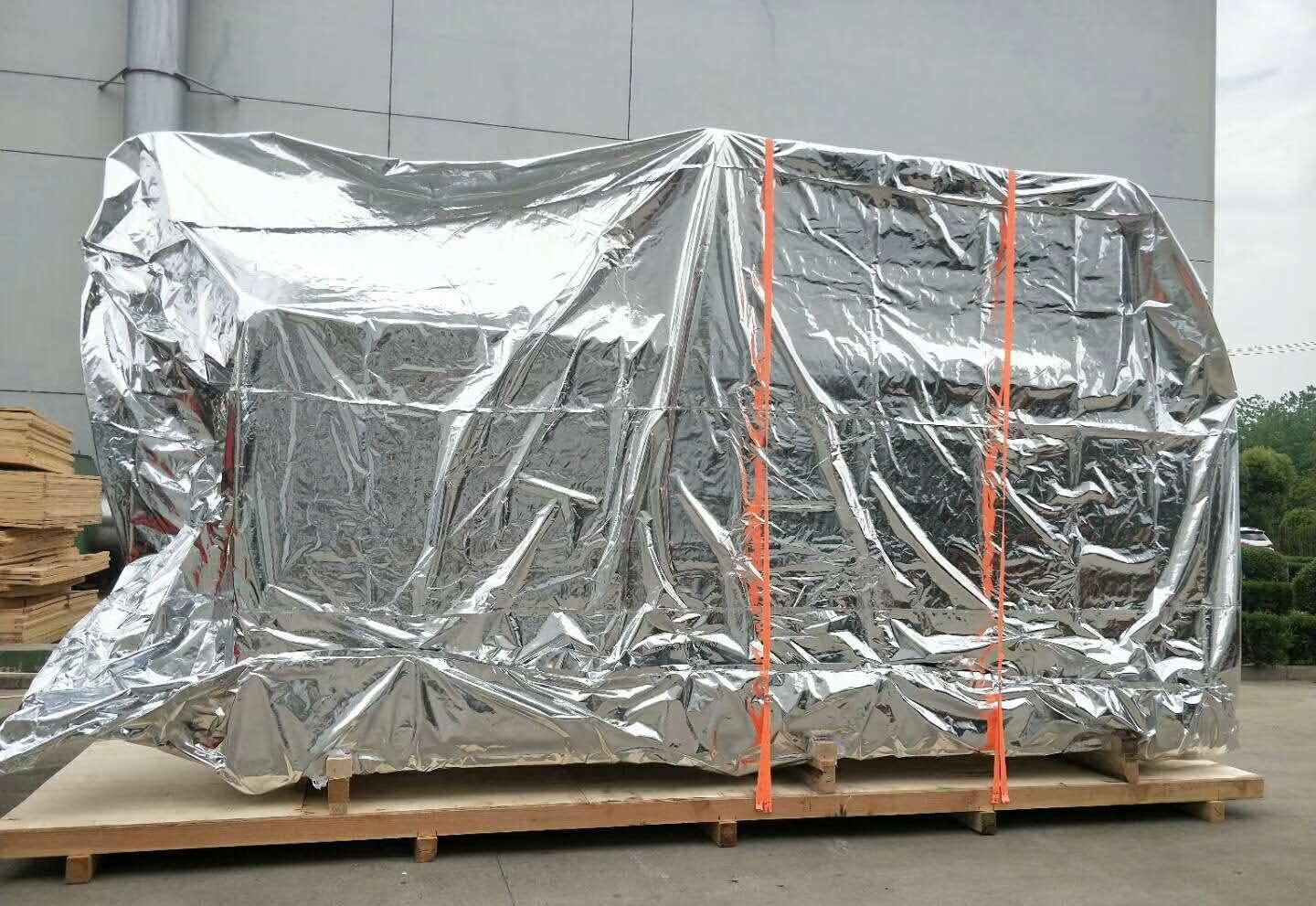
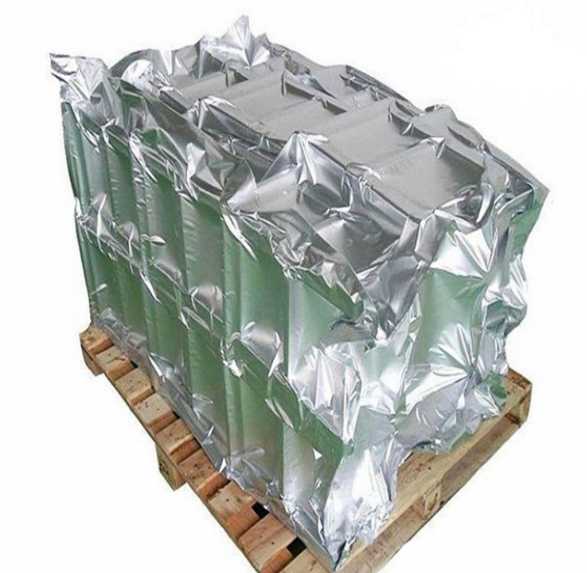
Industrial vacuum packaging has evolved far beyond food preservation. Today, it serves critical roles in protecting chemical powders, electronic components, precision machinery parts, and pharmaceutical intermediates during long-term storage and international shipping. When moisture sensitivity is the primary concern, woven aluminum foil composite materials offer a combination of mechanical strength and barrier performance that single-layer films simply cannot match.
The Structural Advantage of Woven + Foil
Pure aluminum foil delivers outstanding barrier properties — oxygen transmission rates below 0.1 cc/m²·24h and water vapor transmission rates (WVTR) near zero at 9μm thickness. However, standalone foil is fragile, prone to pinholes, and tears easily under mechanical stress. Woven fabric (typically PP or HDPE) compensates with high tensile strength and puncture resistance.
A typical four-layer structure for heavy-duty vacuum bags is: PET print layer / aluminum foil (7-9μm) / woven fabric / PE sealant layer. Each layer serves a distinct function: PET provides printability and external protection, aluminum foil blocks moisture and gas, woven fabric delivers structural integrity, and PE enables reliable heat sealing. The foil thickness is the most consequential parameter — 7μm achieves WVTR around 0.1 g/m²·24h, while 9μm pushes it close to zero, making it the preferred choice for electronics-grade vacuum packaging.
Three Critical Selection Parameters
1. Pinhole Density
Pinholes are the hidden vulnerability in aluminum foil laminates. Even microscopic perforations create moisture pathways that degrade vacuum integrity over weeks or months of warehousing. While general industry standards allow up to 200 pinholes/m² for 7μm foil, vacuum packaging applications should specify ≤50 pinholes/m². Suppliers should provide pinhole test data as part of their quality documentation.
2. Peel Strength
The bond between the woven fabric and aluminum foil determines the laminate's resistance to flex cracking and delamination during bag fabrication and handling. PE extrusion lamination typically achieves peel strengths of ≥3.0 N/15mm, outperforming dry lamination (2.0-2.5 N/15mm). For heavy-duty applications involving repeated handling or ocean freight, extrusion-laminated structures are the safer choice.
3. Heat Seal Window
The PE sealant layer's melting point and thickness define the operating window for bag-making and filling lines. Standard LDPE sealant initiates at approximately 120°C, with a recommended thickness of no less than 30μm to ensure seal integrity. For automated form-fill-seal operations, thickness uniformity across the roll width is equally critical — deviations exceeding ±3μm can cause intermittent seal failures that are costly to detect and rectify.
Application-Specific Recommendations
Chemical powders and mineral products: Woven foil + PE extrusion lamination, 9μm foil, ≥35μm PE layer, total grammage 180-250 g/m². This balances barrier performance with puncture resistance against sharp particles.
Electronics and PCB vacuum packaging: PET/AL/woven/PE four-layer structure, 9μm foil. The outer PET layer can be formulated with anti-static properties (surface resistivity 10⁶-10⁹ Ω), suitable for moisture sensitivity level MSL 3 and above components.
Pharmaceutical intermediates and fine chemicals: Regulatory compliance becomes paramount. The PE sealant layer should be food-grade LDPE, with solvent residue below 5 mg/m² total. Full material traceability documentation is often required for GMP-compliant packaging.
Industry Trends: Lightweighting and Recyclability
Driven by global plastic reduction targets and ESG requirements, the industrial packaging sector is pursuing lightweight and recyclable material solutions. Reducing aluminum foil from 9μm to 6-7μm is technically feasible when paired with high-denier woven reinforcement to maintain mechanical properties. Looking further ahead, mono-material structures — such as all-PE with metalized barrier coatings — are under active development and may partially replace foil-woven laminates within 3-5 years for certain applications.
For packaging converters and end users, sourcing from a supplier with integrated capabilities — from aluminum foil slitting and PE extrusion coating to multi-layer lamination — translates directly to more consistent quality and shorter lead times. The raw material supplier's technical competence is the first and often most critical link in the packaging performance chain.
Contact
Phone/WhatsApp: +86 13758223270 Email: wendy@hcdxcl.com.cn
Heat Trace Cable Market Expansion Drives Demand for Aluminum Foil Fiberglass Shielding Tapes
Warm Edge Tape Materials: Thin-Profile Aluminum PET Composite Film — Technology Trends and Sourcing Guide