How to Choose Single-Side and Double-Side Aluminum Foil Duct Facing for the Export Peak Season
Every September, duct manufacturers enter their tightest shipping window. North American HVAC duct replenishment orders stack on top of European pre-winter warehouse intake, and Middle East infrastructure projects pull cargo at the same time — ocean slots, customs clearance slots, and container stuffing slots all become contested. It is also the peak season for customs inspection and destination-port acceptance testing. As the core facing material on HVAC ducts, any compliance failure in the aluminum foil layer can mean a returned container at best and a rejected lot at worst.
Today we skip the chemistry lesson. In plain language for procurement teams, here is what matters when sourcing single-side and double-side aluminum foil duct facing during the export peak season.
1. Single-Side Aluminum Foil Facing: Structure and Typical Applications
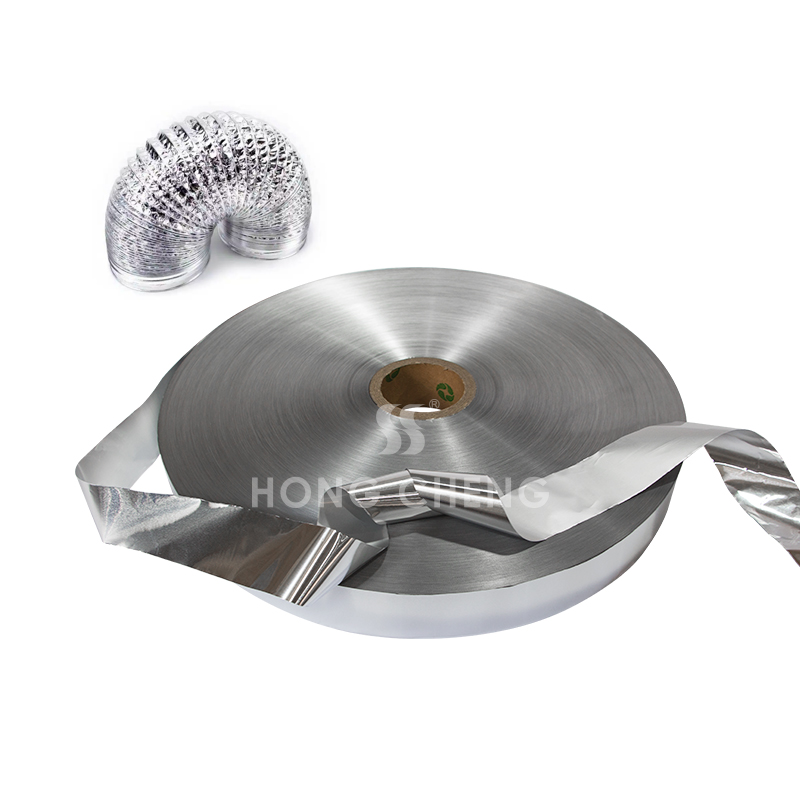
Single-side foil facing is a two-layer laminate: aluminum foil plus a substrate (PE extrusion-coated film or PET polyester film). The aluminum reflects radiant heat on the outside; the substrate bonds to the duct body on the inside. Typical specs run from 7–25 microns foil thickness, 12–50 microns substrate, and 60–120 g/m² total basis weight. This construction suits air-conditioning ducts, HVAC supply ducts, and light-duty exhaust ducts where high reflectivity matters but the inner side is not exposed to extreme heat.
During peak season, single-side orders should be checked against three numbers: foil purity (≥1235 or ≥8011 industrial pure aluminum), substrate basis weight tolerance (±5%), and peel strength (≥3.5 N/15mm — a 5 cm strip should not separate at the foil/substrate interface when peeled).
2. Double-Side Aluminum Foil Facing: When It Becomes Mandatory
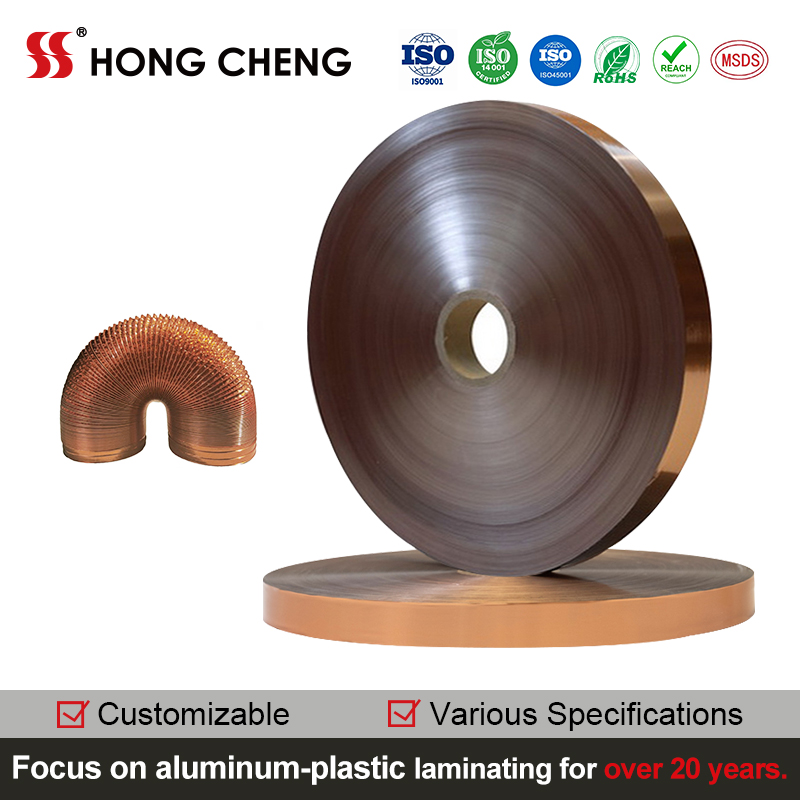
Double-side foil facing is a three-layer laminate: aluminum foil + core substrate + aluminum foil. The outer layer reflects heat; the inner layer provides barrier performance and static dissipation. Typical constructions are AL/PET/AL or AL/PE/AL, with total basis weights from 90–160 g/m². Typical end uses include pharmaceutical cleanroom supply ducts, food-processing exhaust ducts, industrial dust-collection ducts in explosion-risk zones, and cold-chain supply ducts that need bidirectional reflection.
Beyond the three numbers above, double-side facing during peak season also requires verifying that both foil sides are equally thick. The most common shortcut is using 18–20 micron pure aluminum on the outside and 7–9 micron metallized film on the inside. To the eye, the two look identical. Under ASTM E84 smoke-density testing or IEC 61340 static-dissipation testing, the difference shows up immediately. Order documentation should require per-roll thickness, purity, and peel-strength reports for both sides — do not accept "both sides the same" as an oral commitment.
3. Four Compliance Pitfalls During Peak Export Season
Pitfall One: Basis-Weight Shortfall on Board. Container holds can reach 60–70°C. Foil facing measured at 110 g/m² in a 25°C rewinding room can arrive at 100 g/m² or lower once the heat softens the laminate and the roll stress relaxes. Peak-season orders should write into the contract: "rewound actual basis weight measured per GB/T 13761 shall be no less than nominal minus 3%."
Pitfall Two: Certificate of Origin vs. Customs Declaration Mismatch. Saudi Arabia SABER, Gulf GSO, EU CE, Indonesia SNI and others all have mandatory declaration requirements for HS code (7607.11 / 7607.19), material, and specification. If the freight forwarder only writes "aluminum foil facing" without substrate type, foil thickness, and lamination structure, destination clearance can be stalled by 3–7 days.
Pitfall Three: MSDS Out of Sync With Actual Composition. Products with PE extrusion coating or PET lamination must disclose specific polymer type, flash point, and combustion products. The most common peak-season error is recycling last year's MSDS after quietly changing the adhesive or substrate grade this year. Once flagged, the container goes into laboratory retesting for up to 21 days.
Pitfall Four: Slitting Burrs Hit Your Lamination Yield. Peak capacity tightens and slitter blades wear faster. Burrs and edge wrap cause aluminum wrinkle and substrate stretch on the duct-maker's laminator. Inspect every incoming roll with a 10× loupe at three points; reject lots with burrs over 0.05 mm or rolled edges.
4. Peak-Season Sourcing Checklist and Practical Tips
Lock the following six items into the purchase contract — written specs outperform verbal promises every time:
- Aluminum foil purity certificate (≥1235 or ≥8011 industrial pure aluminum with composition report);
- Individual thickness for inner and outer foil layers (reject "20μ double-side" as ambiguous);
- Uniform peel strength across single-side or both sides (≥3.5 N/15mm after heat-seal lamination);
- Rewound actual basis weight and tolerance window;
- HS code 7607.11 or 7607.19 consistent with the Certificate of Origin;
- MSDS version number matched to the product batch.
Peak-season supply chains have less room for error. A duct plant tripping on compliance in the busiest September effectively hands its margin to the freight forwarder and customs broker. Source-side verification beats downstream claims every time — every roll of aluminum foil facing deserves to go through this checklist.
For custom specifications, per-roll test reports, or ocean-batch compliant packaging, contact Hongcheng Technology directly.
Phone/WeChat: +86 13758223270, Email: wendy@hcdxcl.com.cn
Decorative Aluminum Foil for Wood Doors: A Procurement Guide for Door Manufacturers
How to Judge the Quality of AL/PET Shielding Film for Data Cables: Five Hard Checks Every Cable Maker Should Run