Single-Sided vs Double-Sided Foil Laminate: Structure and Selection Logic for Ventilation Duct Facing
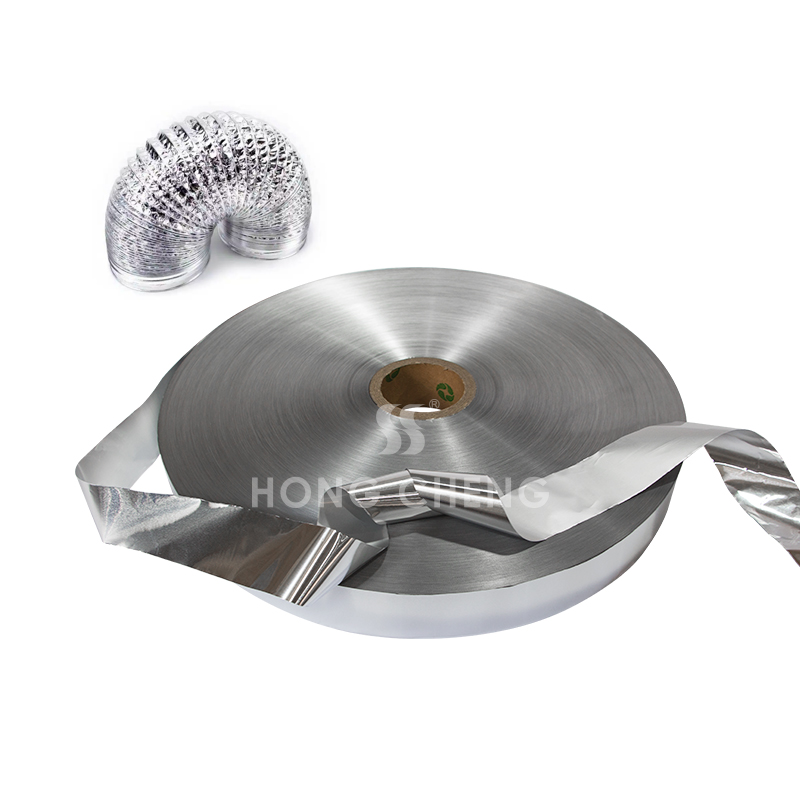
Anyone who sources flexible duct materials hears the same question: what is the real difference between single-sided and double-sided aluminum foil laminate? Both look like aluminum bonded to a carrier film, but the structure changes everything — moisture barrier, temperature resistance, mechanical strength, and cost all move in different directions. Choose correctly and a routine ventilation project stays within budget. Choose incorrectly and you either overpay for performance you do not need, or you fail to block the moisture and heat you should have stopped. This article starts with structure and explains how single-sided and double-sided foil laminates differ, and how duct manufacturers should choose between them.
1. Single-Sided Foil Laminate: One Aluminum Layer Plus a Functional Carrier
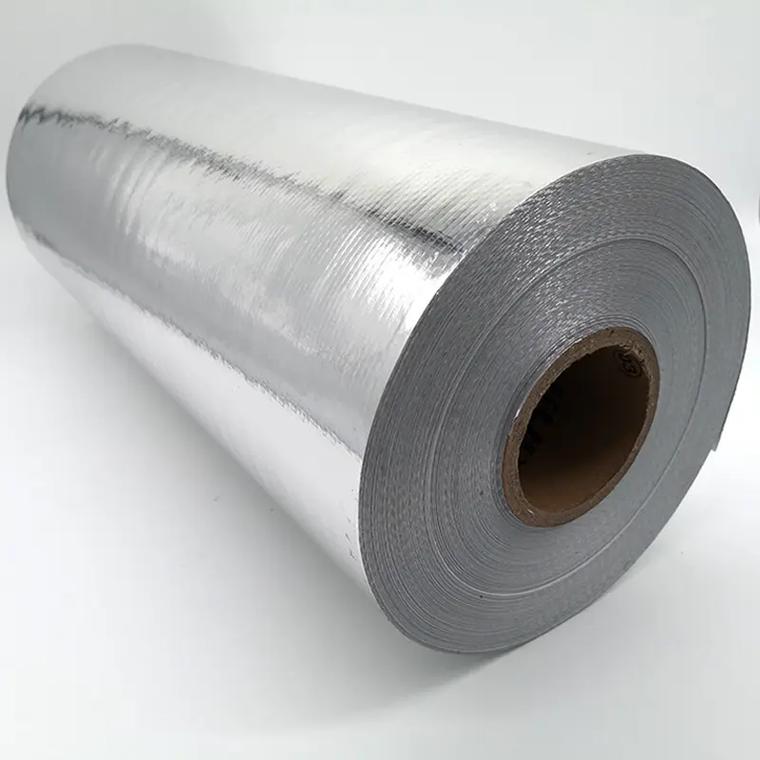
The most common single-sided foil laminate structures are AL/PET and AL/PE. The aluminum layer is on one side, and the PET or PE carrier is on the other. The aluminum layer reflects heat and blocks moisture and gases. The PET layer provides mechanical strength and temperature resistance. The PE layer gives heat-sealability so the facing can be formed into a duct jacket.
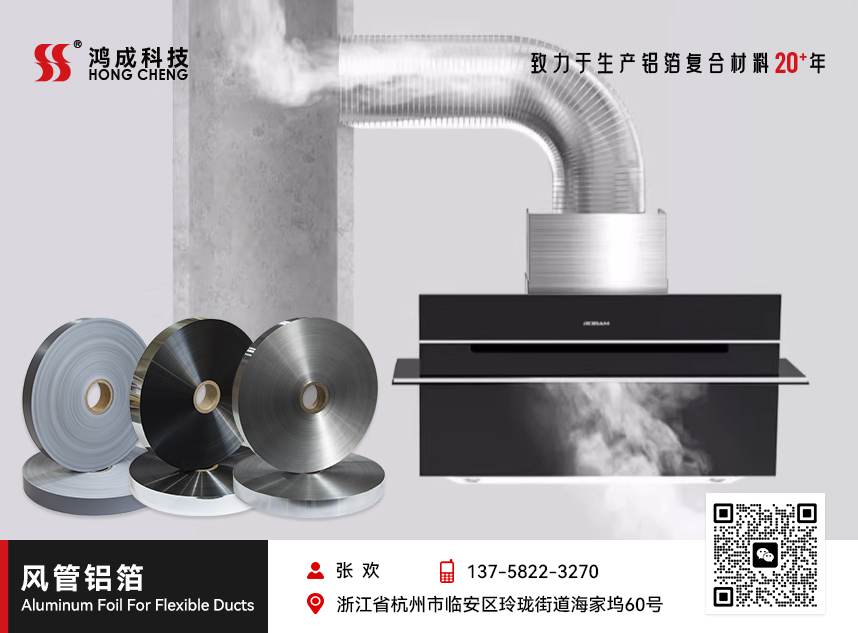
For flexible ventilation duct, single-sided foil laminate is usually installed with the aluminum side facing outward and the PET or PE side bonded to the duct core. The benefits are simple structure, lower cost, and good flexibility. It is well suited to ordinary central air-conditioning supply air, fresh-air exchange, and ambient exhaust ducts where the moisture barrier demand is moderate. The conventional aluminum layer supply range is 6μm-9μm. For ordinary ventilation, the thin 6μm grade is usually enough. For high-humidity, high-temperature, or higher-reflectance requirements, the heavy grade of 9μm is the safer choice.
2. Double-Sided Foil Laminate: Aluminum Encasing the Carrier
Double-sided foil laminates typically come in two structures. One is AL/PET/AL, where PET is coated with aluminum on both sides. The other is AL/PE/AL or a double AL/PE construction where the aluminum layers sandwich the carrier. Either way, the idea is the same: the aluminum wraps around the carrier to create a more complete reflective surface and a more continuous barrier.
The advantages of the double-sided structure are clear. The moisture barrier is more complete because water vapor must penetrate an aluminum layer from either direction. Reflectivity is higher because radiation is reflected twice, which stabilizes temperature-sensitive installations. Grounding is more reliable because aluminum is exposed on both sides and can contact a drain wire or metal helix from either face.
The downsides are higher cost and reduced flexibility. The material is stiffer, so flexible duct forming requires a little more forming pressure and may need slightly wider bending radii. Double-sided laminate is the better choice for kitchen exhaust, high-temperature exhaust, industrial dust collection, and cleanroom-style ventilation where temperature, moisture, and cleanliness requirements are stricter. When in doubt, ask the supplier for a sample roll and run it through your forming machine at normal speed; the difference in stiffness and sealing behavior becomes obvious within the first few meters.
3. PET or PE Carrier: More Than Temperature Resistance
Even when the aluminum layer is the same, the choice between PET and PE carriers makes a large difference. PET has higher temperature resistance and better mechanical strength. It suits thermal lamination and higher-temperature duty, but it normally needs an additional treatment for heat sealing. PE seals easily and gives high duct-forming efficiency, but its upper temperature limit is lower, so it is generally used for ambient and moderately warm ventilation.
When selecting, the first question is the service temperature. Ordinary fresh air and air-conditioning return ducts can use AL/PE laminate. Kitchen exhaust and equipment cooling exhaust are safer with AL/PET or AL/PET/AL laminate.
It also helps to think about how each layer is processed on your own line. If your duct forming relies on heat sealing the jacket, the PE carrier saves a step and keeps line speed up; if your product needs to survive higher service temperatures or a stiffer jacket for larger diameters, the PET carrier earns its premium. Neither carrier is "better" in the abstract — the right question is which failure mode you are buying insurance against: a soft seal in a warm duct, or a deformed jacket in a hot one.
4. Thickness Is Not Always Better; the Right Structure Saves Money
Moving from 6μm to 9μm aluminum raises cost noticeably. Yet structure matching matters more than a single thickness number. For ordinary ventilation, a single-sided laminate with 6μm aluminum is fully adequate. For high-humidity, high-temperature, or high-reflectance duty, a double-sided construction within the standard 6μm-9μm range usually does the job without automatically jumping to the heavy 9μm grade.
Uniformity is even more important than the nominal thickness. If the aluminum layer varies along the roll, tension becomes unstable during duct forming and the finished duct may wrinkle or bulge. Require the supplier to provide strip-by-strip thickness data, and recheck several points with a micrometer on receipt. A double-sided laminate with 6μm aluminum on each face can outperform a single-sided laminate with 9μm aluminum in barrier-sensitive applications, because pinholes and micro-defects in one foil layer are unlikely to align perfectly with defects in the opposite foil layer. That redundancy is one reason double-sided structures are specified for demanding installations even when the total aluminum budget is similar.
5. Three Practical Suggestions for Duct Manufacturers
First, define the application before selecting the material. Ordinary ventilation and fresh-air exchange call for single-sided AL/PE or AL/PET. High-temperature, high-humidity, oil mist, and industrial exhaust call for double-sided AL/PET/AL or heavier AL/PET. Once the scenario is clear, the structure usually follows. A useful rule of thumb is to ask what happens if the facing fails: in a residential fresh-air duct, a little extra moisture might cause cosmetic issues; in a commercial kitchen exhaust, failure means grease-laden air escaping the jacket and fire-risk concerns. The higher the consequence of failure, the stronger the argument for double-sided construction.
Second, write the structure into the purchase contract. Do not just specify "foil laminate." State clearly whether it is single-sided or double-sided, whether the carrier is PET or PE, and what aluminum thickness is required. Include peel-strength and width-tolerance acceptance criteria if your line is sensitive to small variations. Vague descriptions leave room for substitute materials that look similar but perform differently, and they are the most common source of quality disputes between duct plants and facing suppliers.
Third, verify the structure on receipt. Pure aluminum foil and metallized film look alike, but their performance is a class apart. A quick multimeter continuity test distinguishes them, and a peel-strength test confirms that the lamination bond is adequate. Keep a sealed reference sample from the approved batch so future deliveries can be compared side by side for color, stiffness, and weight. Batch-to-batch consistency is often more important than any single outstanding property on one particular roll.
Hangzhou Hongcheng Technology Co., Ltd. specializes in aluminum foil laminates and PE-coated laminates, supplying flexible duct manufacturers with single-sided and double-sided foil laminates, AL/PE duct facing, and VMPET metallized duct facing. Custom widths, thicknesses, and structures are available, and sample runs for comparison are welcome. For samples or technical data, contact +86 13758223270 or email wendy@hcdxcl.com.cn.
Judging AL/PET Shielding Film Quality for HDMI, USB and DisplayPort High-Speed Data Cables