How to Judge Duct Facing Quality: Five Inspection Checks for Flexible Duct Manufacturers
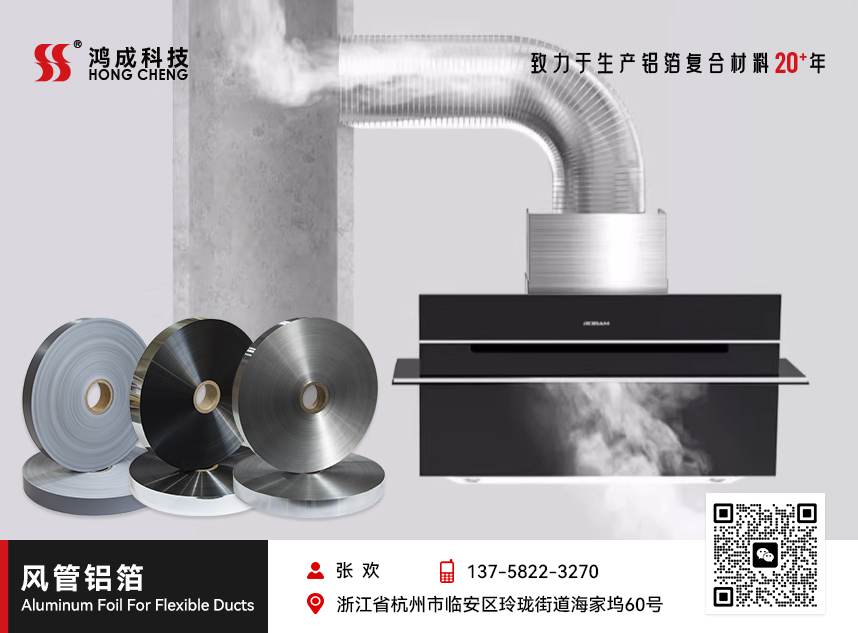
Every flexible duct manufacturer has run into this situation: one batch of duct facing runs smoothly on the line, and the next batch wrinkles, delaminates, or falls apart after a few months in the field. In most cases, the material did not "go bad" between orders — the incoming batch was never truly qualified, and the problem simply slipped through receiving inspection.
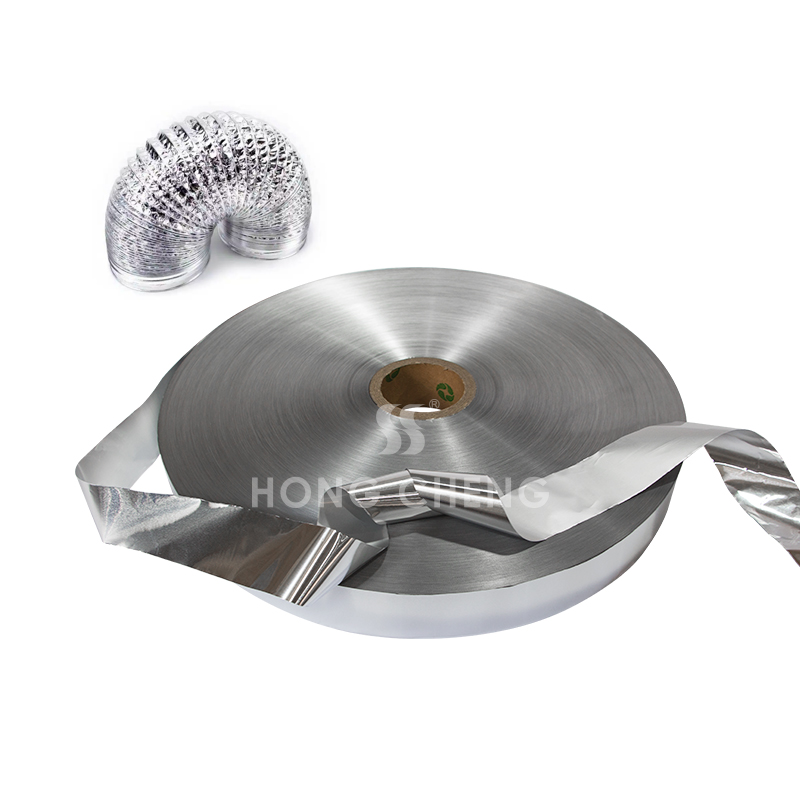
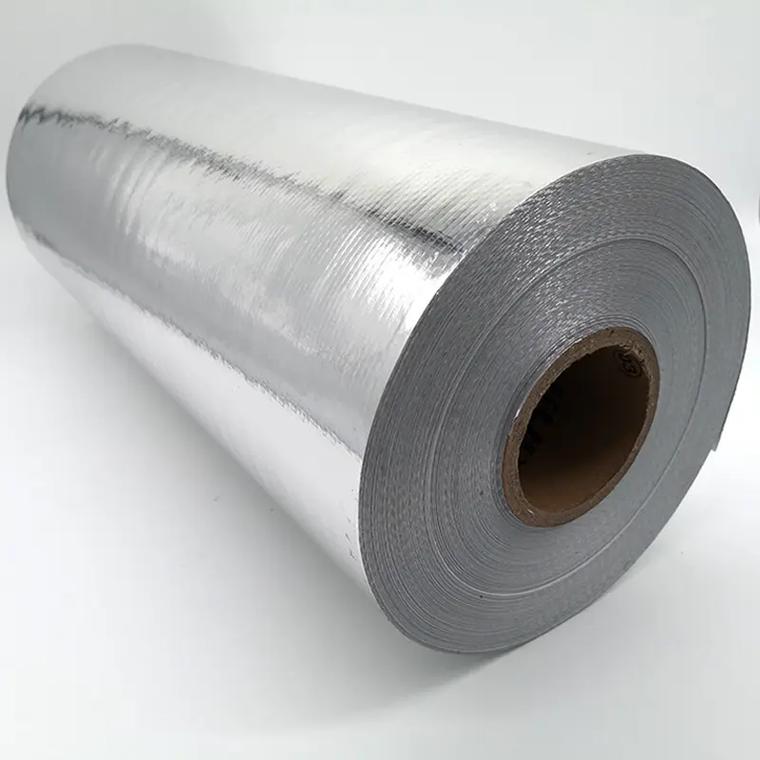
Today the mainstream duct facing materials fall into three groups: metallized VMPET duct facing, AL/PE laminated duct facing, and single-side or double-side aluminum foil laminated films. The structures and price levels differ, but the way to judge quality is largely the same. The five checks below take less than half an hour per batch and will catch most problem material before it reaches your production line.
Check 1: Verify the foil layer — measure it, don't trust the datasheet talk. First, confirm whether you actually received pure aluminum foil or metallized film. Pure aluminum foil conducts electricity; touch a multimeter probe to both surfaces of a sample and you will get continuity. Metallized film does not conduct. This is the simplest and most effective way to stop a supplier from quoting foil structure and shipping metallized structure — a substitution that looks similar but performs very differently in moisture barrier and durability.
For foil thickness, the standard commercial supply range is 6μm to 9μm, with 9μm as the heavy-duty grade. Take micrometer readings at several points across the web and across the roll, then check the total roll weight against the theoretical value calculated from width, length, and basis weight. For VMPET, the equivalent check is sheet resistance: unstable ohm-per-square readings mean uneven aluminum deposition, and uneven deposition means unpredictable barrier performance. Ask for the test data per batch, not just a product brochure.
Check 2: Test bond strength — one peel tells you everything. Weak lamination is the root cause behind wrinkling and delamination once the facing is heated, formed, and spirally wound onto the duct core. The worst cases show up in the field, when the outer jacket separates from the duct body after installation. A quick shop-floor test: tear a strip of laminate by hand between the foil layer and the PE layer, and observe whether the failure is clean interfacial separation or material tearing. A proper assessment uses a 180-degree peel test; a common acceptance benchmark is 1.5 N/15mm or higher. Put that number in the purchase contract as a receiving criterion — relying on hand feel and appearance alone is how most quality disputes start.
Check 3: Inspect the surface and slit edges before the roll goes on the machine. Unroll one meter of material under a light and look for wrinkles, scratches, stains, bright spots, and shadow marks. Wrinkles transfer directly onto the finished duct as visible defects. Scratches locally destroy the aluminum layer, which means the moisture barrier fails in exactly those spots even though the rest of the roll measures fine. Then check the slit edge of every roll: burrs, saw-tooth edges, or loose-and-tight winding will cause web breaks and tracking problems during unwinding. Wherever possible, run one full roll as a trial through your machine before releasing the batch to production.
Check 4: Confirm heat-sealing compatibility with your own equipment. AL/PE facings are heat-sealed into the duct jacket, and the PE layer's sealing window must match your machine's temperature, pressure, and line speed. On receipt, make small sample seals using the supplier's recommended parameters and inspect the seal edge: is it flat and uniform, and does peeling show material failure (good) or a clean open seal (bad)? If a supplier changes the PE grade without telling you, the sealing window shifts and your scrap rate climbs overnight. This is why material changes should always be confirmed in writing before shipment — it is a fair, reasonable requirement, and serious suppliers will accept it.
Check 5: Use retained samples to police batch-to-batch consistency. Good material is not the batch that happens to be excellent; it is the batch that matches the last one. Set up a simple retention system: keep a sample strip from every incoming batch, labeled with batch number and date, and compare it side by side with the next delivery for appearance, stiffness, and weight. Combine this with first-middle-end sampling — cut strips from the head, middle, and tail of each roll for thickness measurement, and re-inspect the whole roll if the spread is wide. "The sample was perfect, the bulk was different" is exactly the failure mode that retention samples expose.
Three traps worth avoiding. First, comparing price without comparing structure. Two films both called "foil laminate" can differ in foil versus metallized layer, PE thickness, and adhesive system — the cost and service life gaps are large, so always reconcile the structure sheet before negotiating on price. Second, assuming thicker is always better. Thickness should match the application; standard ventilation work runs well on conventional grades, while hot and humid environments justify the heavy 9μm grade plus a heat-resistant adhesive — verified, not assumed. Paying for thickness you don't need just inflates cost. Third, accepting a batch on the strength of a golden sample. Samples are hand-picked; production runs are what actually arrive. Receiving inspection is not a formality to skip when the schedule is tight.
For duct manufacturers, the practical takeaway is to standardize five quick actions at receiving: measure thickness, check roll weight, do a hand-peel test, make a trial seal, and retain a sample. Thirty minutes of checks prevents weeks of after-sales arguments. When evaluating facing suppliers, look beyond price and lead time: can they provide consistent per-batch test data, and do they notify you in writing before any material change? Suppliers who accept these terms in the contract are usually the ones whose quality management you can rely on.
Hongcheng Technology is a Chinese manufacturer of aluminum foil laminates and PE-coated laminates, supplying flexible duct producers with VMPET metallized facing, AL/PE laminated film, and single- and double-side aluminum foil laminates. Custom widths, thicknesses, and structures are available, and sample runs for comparison are welcome.
+86 13758223270, Email: wendy@hcdxcl.com.cn
Greenhouse Thermal Screen: AL/PE vs VMPET Woven, 3 Spec Mistakes to Avoid
Using AL/PET Shielding Tape on FTP/STP Cable Lines: A Practical Guide for Cable Makers