Why Moisture Barrier Liners Are Becoming a Must-Have for Export Container Packaging
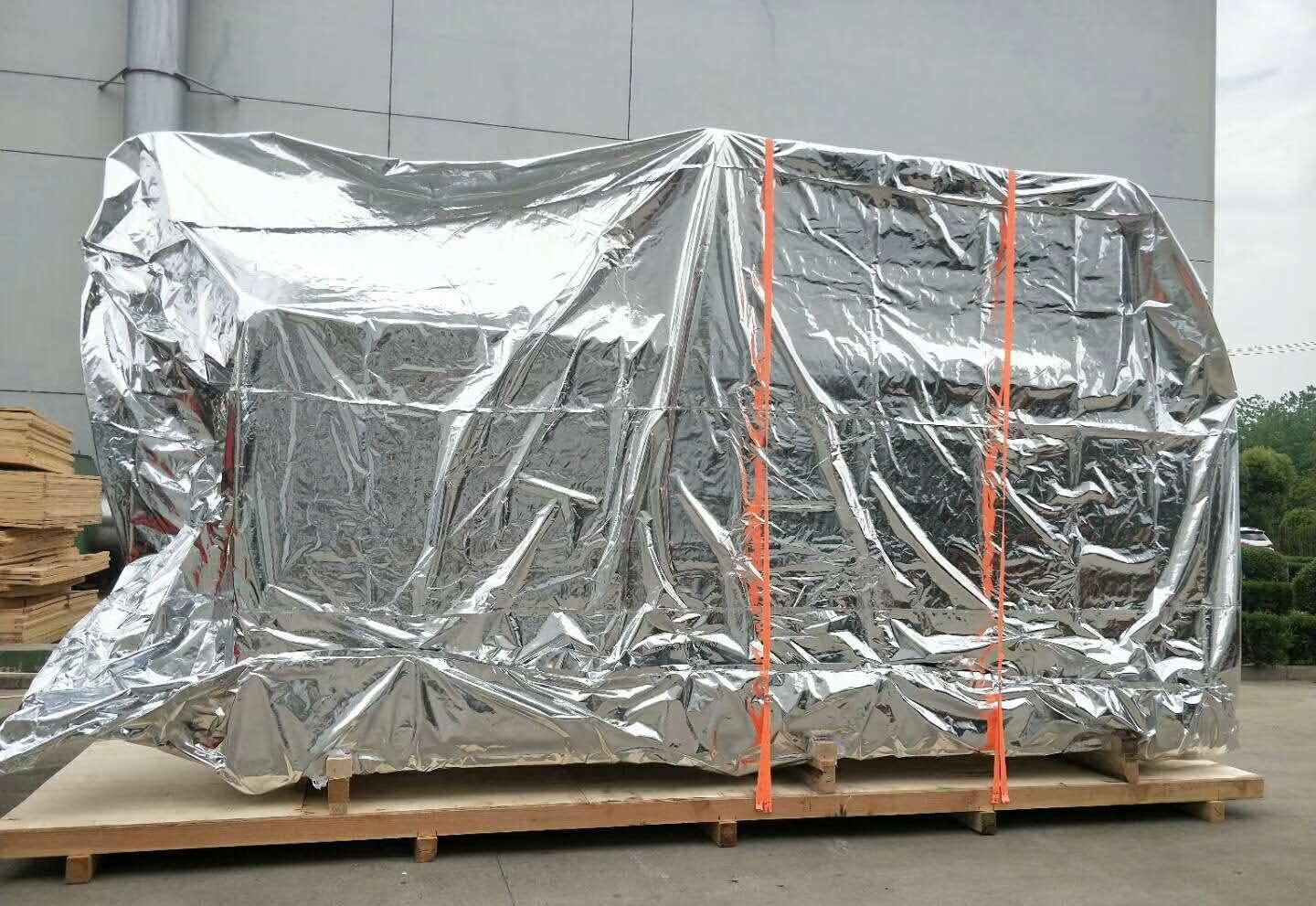
For exporters, the worst-case scenario is not losing an order during negotiation—it is opening a container at the destination port and finding torn bags, wet cartons, collapsed packaging, or rusted metal parts. Cargo damage caused by condensation and moisture penetration inside containers accounts for a significant share of maritime freight losses every year. The risk is even higher during late summer and autumn, when wide temperature swings and long transits turn a standard container into a humidity chamber.
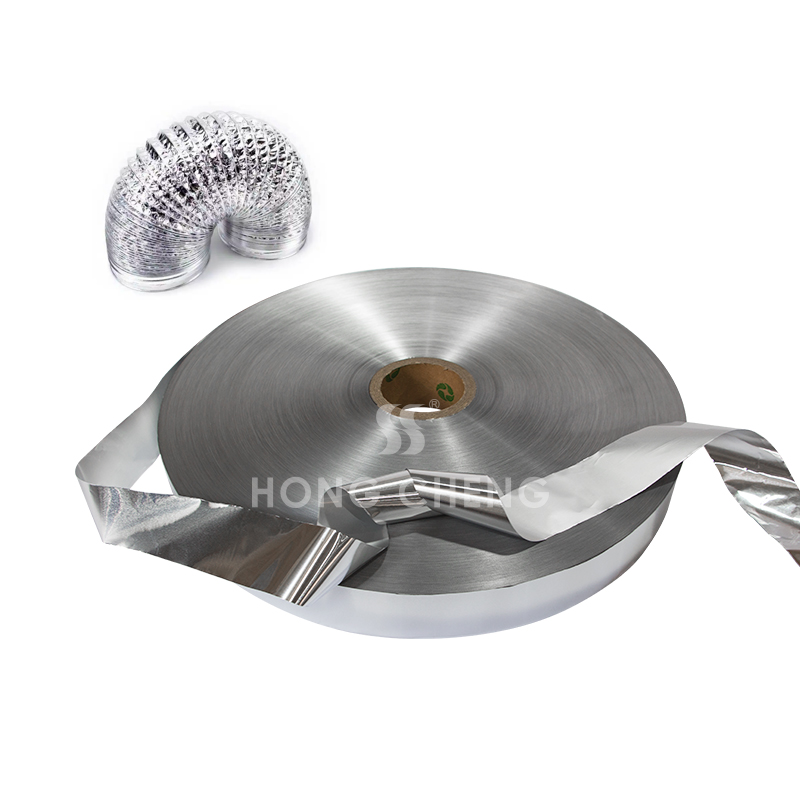
Traditional methods—laying a sheet of plastic film on the floor and tossing a few desiccant bags into the corners—are increasingly inadequate. Desiccants have limited absorption capacity, and ordinary plastic film blocks liquid water but not water vapor. What really keeps moisture out is a high-barrier container liner made from aluminum foil woven fabric laminate or VMPET metallized film composite.
From Passive Absorption to Active Barrier
The old export packaging mindset was simple: if the container gets humid, put something inside to absorb the moisture. The problem is that desiccants can saturate and re-release moisture, their required quantity is often estimated by guesswork, and they are rarely sufficient for voyages lasting 40 days or more.
Moisture barrier liners take a different approach. They wrap the entire internal space of the container with a multi-layer composite material that blocks external moisture, salt spray, and dust. Instead of absorbing humidity, they rely on an extremely low water vapor transmission rate to keep the cargo environment stable over long periods.
Three common constructions dominate the market:
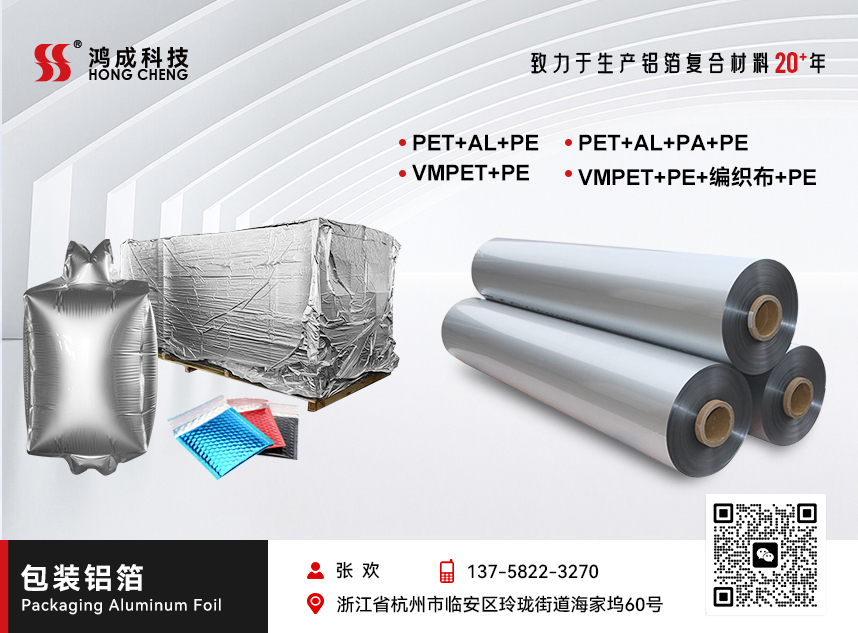
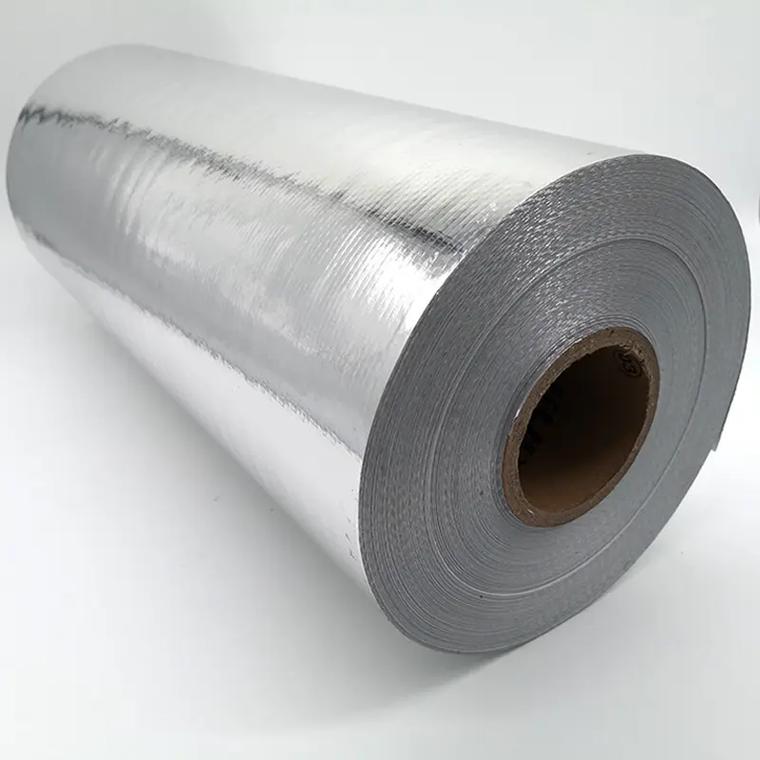
1. Aluminum Foil Woven Fabric Barrier Liner This structure uses pure aluminum foil as the barrier layer, laminated with PP or PE woven fabric for tear and puncture resistance, and a heat-sealable PE inner layer for airtight sealing. It is the preferred choice for heavy machinery, metal castings, and chemical raw materials that demand high moisture protection.
2. VMPET Woven Fabric Container Liner Replacing pure aluminum foil with vacuum-metallized PET film reduces weight and improves flexibility, making this option popular for foodstuffs, agricultural products, and plastic goods where handling efficiency matters.
3. Aluminum Foil / PE Composite Liner A lighter construction often used as a secondary lining inside wooden crates or clean-room packaging for precision instruments and electronic components.
Four Cargo Categories That Need Protection Most
Not every shipment requires a full moisture barrier liner. The real demand comes from four categories:
Agricultural and Food Materials: Coffee beans, cocoa, nuts, milk powder, and sugar are highly hygroscopic. Mold growth or caking after moisture absorption can trigger full rejection at customs.
Chemicals and Plastic Pellets: Engineering plastics such as PVC, PA, and PE can suffer degraded extrusion quality after moisture uptake. Some powdered chemicals even pose reaction risks if they absorb water.
Metal Parts and Machinery: The combination of salt spray and high humidity during ocean transport can cause surface rust on unprotected metal within days, affecting customer acceptance.
Electronics and Components: Circuit boards, LED modules, and connectors are sensitive to humidity. Even if no immediate failure occurs, trapped moisture can create long-term reliability problems.
Five Parameters That Matter More Than Thickness
When sourcing container liners, many buyers focus on thickness alone. In reality, performance depends on a combination of properties:
Water Vapor Transmission Rate (WVTR): This determines how long the liner will protect the cargo. Pure aluminum foil laminates generally outperform metallized film, so foil-woven structures are preferred for long-haul or high-humidity routes.
Puncture and Tear Resistance: Forklifts, pallets, and sharp cargo corners can puncture a liner easily. Woven fabric weight and weave density—commonly ranging from 120 g/m² to 180 g/m²—are decisive factors.
Heat-Seal Strength and Sealing Method: The bottom seams, side joints, and door frame area are the most likely leakage points. Quality liners use double heat seals or reinforced welding and include dedicated straps and door-frame sealing accessories.
Width and Loading Efficiency: 20-foot, 40-foot, and high-cube containers require different liner dimensions. Working directly with a manufacturer that cuts liners to container size saves both labor and time on-site.
Environmental and Regulatory Compliance: For food or chemical exports to Europe and North America, recyclability and compliance with REACH or FDA migration requirements should be verified.
Three Common Mistakes Buyers Make
Mistake 1: Comparing only unit price without looking at the full construction. Two products labeled "aluminum foil woven fabric" may use 7-micron or 12-micron foil, and woven fabrics of very different densities. The price gap reflects material quality, not just margin.
Mistake 2: Treating desiccants as a substitute for barrier liners. Desiccants are suitable for short-term, small-space humidity control. Barrier liners are designed for full-container, long-duration active protection. They can be used together, but one cannot replace the other.
Mistake 3: Ignoring installation fit. A liner is not just a sheet thrown into the container. The door frame, ventilation holes, and floor recesses all need proper treatment. Whether the supplier provides installation guidance and container-specific customization directly affects performance.
Conclusion
Export competition is intensifying, and a single moisture damage claim can erase the profit from an entire order. Rather than arguing over compensation after arrival, it makes more sense to get the moisture protection right at the packaging stage. Aluminum foil woven barrier liners and VMPET container liners are moving from optional add-ons to standard export packaging practice.
Hangzhou Hongcheng Technology Co., Ltd. specializes in aluminum foil composite materials and PE extrusion laminates. We supply customized rolls and semi-finished products including aluminum foil woven fabric moisture barrier liners, VMPET container liners, and AL/PE composite barrier films, tailored to container size, width, thickness, and structure requirements. For samples or technical support, contact us at +86 13758223270 or Email: wendy@hcdxcl.com.cn.
How to Judge the Quality of AL/PET Shielding Film for Data Cables: Five Hard Checks Every Cable Maker Should Run
How to Choose Greenhouse Thermal Screens: A Guide to Foil-PE and Metallized Screen Materials