How Aluminum Foil Composite Materials Boost Building Energy Efficiency
1. Policy Background: China's Dual-Carbon Goals Accelerate Building Energy Upgrades
In 2026, China's building energy efficiency policies continue to intensify. The Ministry of Housing and Urban-Rural Development's latest "14th Five-Year Plan for Building Energy Conservation and Green Building Development" sets a clear target: all new buildings must meet green building standards by 2030, with accumulated retrofitting of existing buildings exceeding five billion square meters. Against this backdrop, insulation materials for key structural components — roofs, exterior walls, and floors — are experiencing a wave of large-scale upgrades.
Aluminum foil composite materials, with their superior radiant heat reflection properties and ultra-lightweight characteristics, are emerging as a key raw material in green building thermal management systems. From flat commercial roofs to pitched residential rooftops, from light-gauge steel industrial facilities to standard residential developments, aluminum foil composite applications are becoming increasingly diverse.
2. The Science Behind Aluminum Foil Insulation: Three-Way Thermal Barrier
Heat loss through building envelopes occurs primarily through three mechanisms: radiation (accounting for over 50% of total heat transfer), convection, and conduction. Conventional insulation materials such as rock wool and extruded polystyrene (XPS) primarily address conduction and convection. The distinctive advantage of aluminum foil composite materials lies in their high-efficiency reflection of radiant heat.
Aluminum foil surfaces exhibit extremely low emissivity — typically below 0.05 — compared to standard construction materials with emissivity values above 0.85. This means aluminum foil reflects over 97% of radiant heat, substantially reducing heat gain through roofs and walls, especially during summer months.
When aluminum foil is laminated with bubble film, PE foam, or nonwoven fabric, it simultaneously enhances convection and conduction resistance, delivering a combined three-mode thermal barrier effect. The resulting composite materials achieve overall thermal resistance values three to five times higher than conventional insulation of equivalent thickness.
3. Key Product Structures in Building Applications
The most commonly used aluminum foil composite insulation products in construction include:
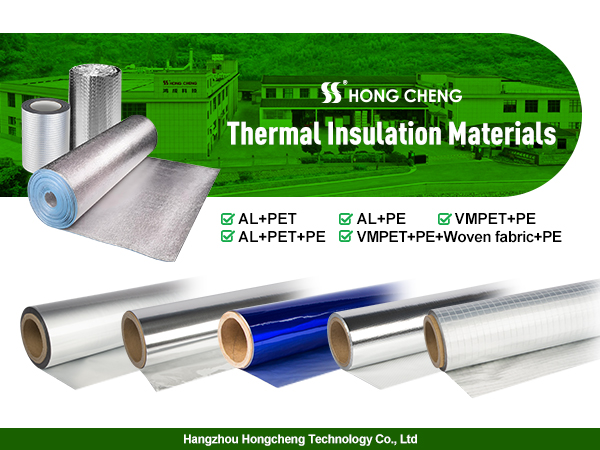
① Foil Bubble Insulation (Double or Single Face) Structure: aluminum foil + bubble film + aluminum foil (double-face), or single-face variants. Lightweight and easy to install, these products are ideal for pitched roofs, attic floors, and light steel envelopes. Aluminum foil thickness typically ranges from 7 to 14 μm. Bond strength is critical, as the composite must withstand mechanical stress during nailing and stapling.
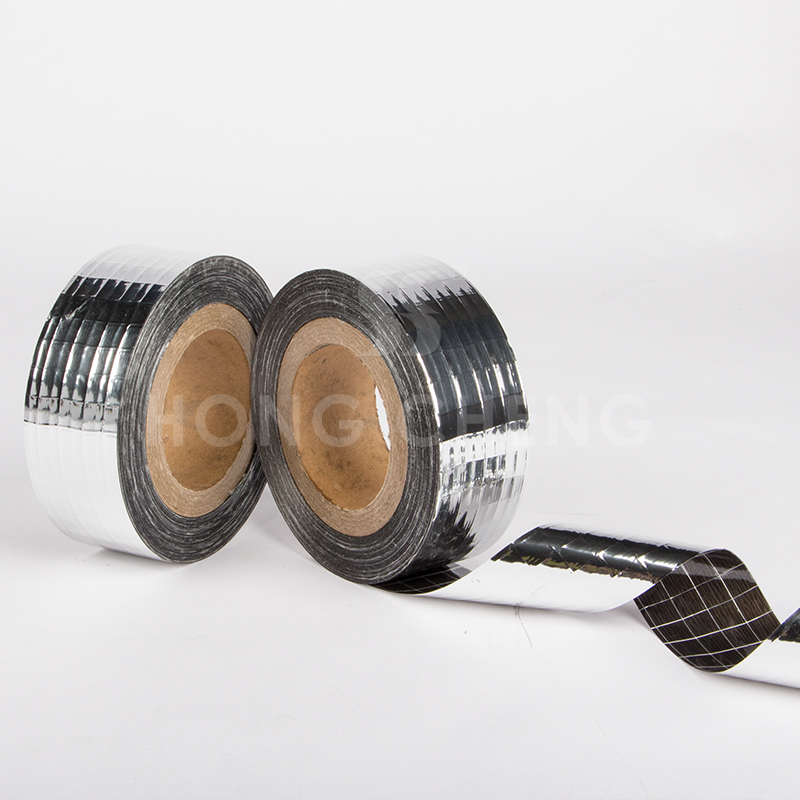
② Aluminum Foil / PE Laminated Composite A PE coating is applied to a base substrate (fiberglass cloth, kraft paper, or nonwoven) by extrusion lamination, then bonded to aluminum foil under heat and pressure. This structure combines moisture barrier and reflective insulation functions. Common uses include back-side insulation layers on roofing membranes and container liner insulation blankets.
③ Aluminum-Faced Multi-Layer Insulation Board Aluminum foil face layers are bonded to a polyester (PET) or polypropylene (PP) foam core under heat and pressure. The resulting panel offers structural rigidity, making it suitable for direct application as a roof or wall covering layer. Widely used as internal lining in steel structure industrial buildings.
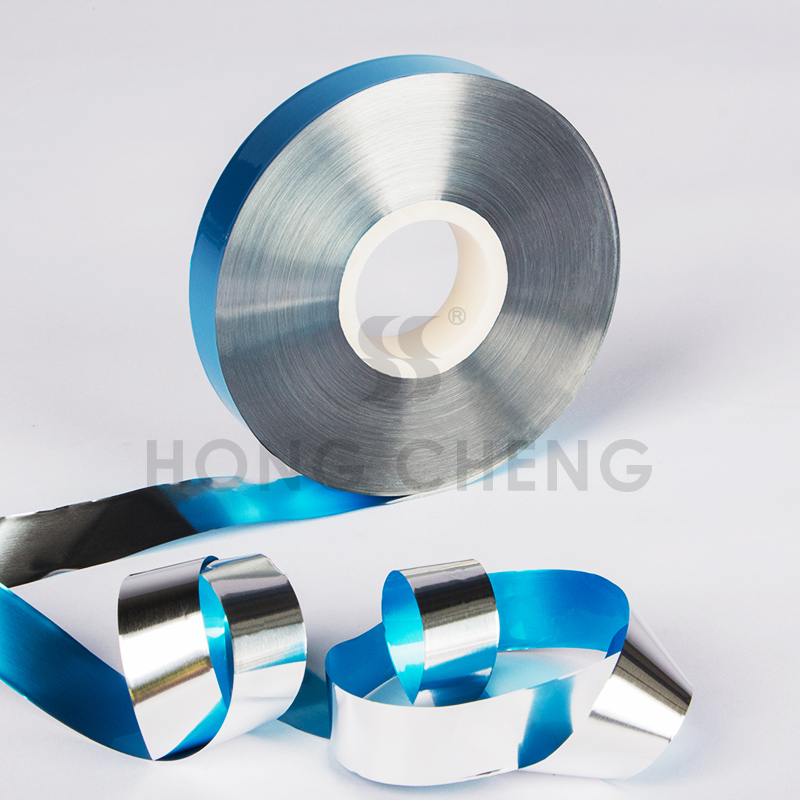
④ Metallized (Aluminized) Film Aluminum is deposited on PET or PE film surfaces through vacuum metallization, creating an ultra-thin aluminum layer of approximately 0.05 μm with reflectivity exceeding 85%. Low cost and minimal weight make metallized films ideal for solar shading curtains, agricultural greenhouse covers, and lightweight thermal packaging.
4. Critical Purchasing Parameters
Building material companies and construction contractors should pay close attention to the following parameters when sourcing aluminum foil composite insulation materials:
- Aluminum Foil Thickness and Purity: 7 μm foil is suitable for lightweight insulation films; 12–14 μm foil offers higher strength for heavy-duty applications. Aluminum purity directly affects reflectivity; 99%+ pure aluminum is recommended.
- Composite Bond Strength (Peel Force): Inter-layer peel strength should meet ≥1.0 N/cm to prevent delamination during installation and service life.
- Flame Retardancy: Building insulation materials must comply with Class B1 or B2 flame retardant requirements. Always request test certification from suppliers.
- Width and Customization: Roofing applications typically require 1.0–1.6 m roll widths, with some projects needing custom cut sizes. Select raw material suppliers with flexible production capabilities.
5. Supply Chain Perspective: Hongcheng Technology's Raw Material Support
As a specialized aluminum foil composite manufacturer, Hangzhou Hongcheng Technology Co., Ltd. provides stable raw material supply to building insulation product manufacturers. The company's main product lines include: aluminum foil composites with PE, PP, and PET films; aluminum foil composites with fiberglass cloth, nonwoven fabric, and kraft paper; and aluminum-coated substrates for bubble insulation production.
Hongcheng Technology continuously refines its thermal lamination processes to achieve uniform, high-strength bonding between aluminum foil and diverse substrates, meeting the stringent stability and weathering resistance requirements for building-grade applications. The company offers flexible customized production, adjusting foil thickness, substrate specifications, and roll widths to client requirements, with reliable lead times and global export capability.
6. Outlook: Sustained Market Growth for Aluminum Foil Reflective Insulation
Driven by the expanding green building certification ecosystem, rising adoption of prefabricated construction methods, and the widespread use of light steel structures in commercial and industrial buildings, demand for aluminum foil composite insulation materials is set for continued growth. Industry analysts project a global compound annual growth rate exceeding 7% for reflective insulation materials from 2026 to 2030, with the Asia-Pacific region representing the largest incremental market.
For aluminum foil composite raw material suppliers, this represents both a significant opportunity and an ongoing test of product consistency, quality stability, and customization service capabilities. Hongcheng Technology remains deeply committed to this sector, providing the global building energy efficiency supply chain with reliable, high-performance raw material solutions.
Aluminum Foil Composite Materials for Industrial Packaging: Barrier Performance, Structure Types, and Raw Material Selection Guide
Aluminum Foil Shielding Tape: The "Signal Guardian" of Cable & Electronics Industry