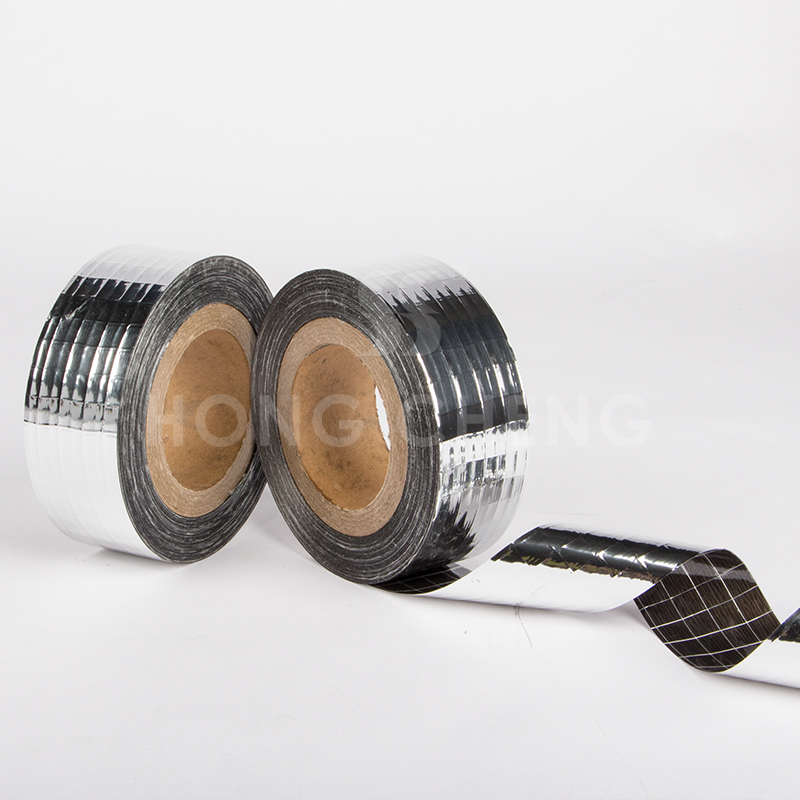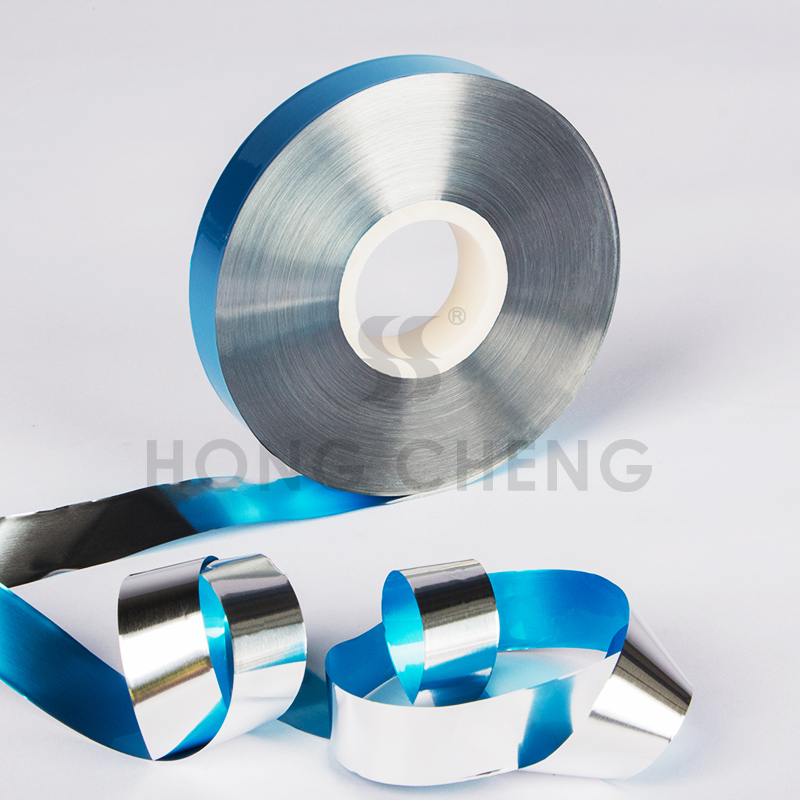
Dual Demand Drivers for AL/PET Shielding Tape in Cable Manufacturing
The third quarter of each year is traditionally the peak export season for communication and industrial control cables. In the Northern Hemisphere, the summer construction window opens up, overseas telecom operators accelerate base station access line installations, and industrial automation projects ramp up equipment procurement for mid-fiscal-year deadlines. Meanwhile, China's domestic 5G base station deployment continues at full scale—new 5G base stations added in the first half of 2026 alone have already surpassed the total for all of 2025.
These two trends converge to drive strong demand for AL/PET shielding tape (aluminum foil polyester composite tape), the core raw material for cable shielding layers. The selection of AL/PET shielding tape directly determines the cable's shielding effectiveness, bending durability, and long-term reliability.
Many procurement professionals focus only on thickness and price, overlooking the differentiated structural requirements imposed by specific application scenarios. This guide examines AL/PET shielding tape selection through four practical dimensions: cable type, shielding structure, production process compatibility, and export compliance.
Dimension 1: Matching Tape Structure to Cable Type
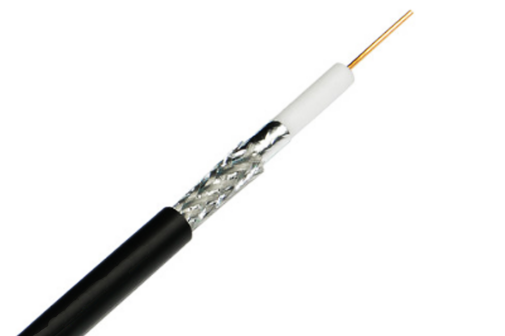
Coaxial Cables (RF Cables): Coaxial cables demand extremely high shielding effectiveness because signal transmission frequencies typically exceed 1 GHz. Any shielding defect causes signal leakage and external interference ingress. A single-side composite of 7μm aluminum foil + 12μm PET (AL7/PET12) is recommended, with a total thickness of approximately 19μm. For high-frequency coaxial cables (such as LMR series), consider 5μm thin-profile aluminum foil to reduce attenuation.
Industrial Control Cables: Control cables transmit low-frequency control signals; the primary shielding purpose is to resist external electromagnetic interference (power-frequency interference, variable-frequency drive noise) rather than prevent signal leakage. A 9μm aluminum foil + 15μm PET structure (AL9/PET15) is recommended—moderate thickness with better mechanical strength to withstand tension during armoring and extrusion processes.
Flexible Cables (Robot/Drag Chain Applications): In frequent-bending scenarios, the flex resistance of the PET substrate matters far more than aluminum foil thickness. A double-sided structure of 12μm PET + 7μm aluminum foil + 12μm PET (PET12/AL7/PET12) is recommended, where PET layers on both sides protect the central aluminum foil from bending fracture.
Dimension 2: Shielding Structures Compared
| Structure Type | Typical Spec | Shielding Coverage | Application | Procurement Notes |
|---|---|---|---|---|
| Single-side (AL/PET) | AL7/PET12, AL9/PET15 | 85%-90% | General coaxial, control cables | Most common, lowest cost; ensure overlap rate ≥25% |
| Double-side (PET/AL/PET) | PET12/AL7/PET12 | 90%-95% | Flexible cables, high-frequency data cables | Good flex resistance but larger total thickness; extrusion die must match |
| Sandwich (AL/PET/AL) | AL7/PET12/AL7 | 95%+ | Military/aerospace, ultra-high shielding | Highest cost, longer lead time, custom order required |
Procurement myth: Many buyers assume "thicker is better." In reality, shielding effectiveness depends on the continuity and overlap rate of the aluminum foil layer, not on thickness alone. A 7μm aluminum foil with 25% overlap often outperforms a 12μm foil with only 15% overlap.
Dimension 3: Production Process Compatibility
The longitudinal wrapping (纵包) process for AL/PET shielding tape demands tight compatibility with the cable production line. Many procurement professionals focus on material parameters while overlooking these production-matching issues:
1. Wrapping Die Gap: For every 2μm increase in shielding tape thickness, the wrapping die gap must be adjusted by approximately 0.02mm. Mismatched die gaps cause wrinkling, wavy edges, or tape breakage. Confirm current die specifications with the cable production workshop before purchasing.
2. PET Heat-Sealing Temperature Window: Standard PET heat-seals at 130-150°C. If the extrusion die temperature exceeds 160°C, the PET layer may soften prematurely, causing the shielding tape to deform. Confirm extrusion process temperature before material selection; high-temperature PET substrates (rated up to 180°C and above) are available when needed.
3. Slitting Width Tolerance: Shielding tape slitting width tolerance directly affects overlap-rate stability. Standard tolerance is ±0.5mm; high-precision cables require ±0.2mm. Hongcheng Technology's precision slitting equipment achieves ±0.3mm, meeting the requirements of most cable manufacturers.
Dimension 4: Export Compliance — Four Certifications Overseas Clients Always Check
During peak export season, overseas clients scrutinize material compliance documentation more rigorously. These are the four most frequently requested certifications for AL/PET shielding tape exports:
- RoHS 2.0: EU mandatory certification restricting lead, cadmium, mercury, and other hazardous substances. Both aluminum foil and PET require testing.
- REACH SVHC: EU chemical registration regulation requiring a declaration of Substances of Very High Concern. PET additives are a key audit item.
- UL Certification: North American cable markets often require shielding tape materials to carry UL certification (e.g., UL758 standard). Not all AL/PET shielding tapes hold UL file numbers—confirm before purchasing.
- Halogen-Free Declaration: Some European clients require shielding tape to meet halogen-free standards (IEC 61249-2-21). Standard AL/PET contains no halogens, but a third-party test report must be provided.
Three Common Procurement Pitfalls
Pitfall 1: "Thicker aluminum means better shielding." Shielding effectiveness is primarily determined by the continuity and overlap rate of the aluminum foil layer. A 7μm aluminum foil with proper overlap fully meets the requirements of most coaxial and control cables.
Pitfall 2: "Focus on aluminum, ignore PET." The thickness and heat-sealing performance of the PET layer directly affect longitudinal wrapping stability and the mechanical strength of the shielding tape. Thin PET reduces cost but is prone to breakage on high-speed extrusion lines.
Pitfall 3: "Overlooking overlap rate." Overlap rate is the proportion of overlap between adjacent wrapping turns. Below 20%, shielding gaps appear, causing a direct drop in shielding effectiveness. Confirm the recommended overlap range (typically 25%-30%) with the supplier during procurement.
Quick Spec Reference Table
| Application | Recommended Structure | Foil Thickness | PET Thickness | Total Thickness | Overlap Rate |
|---|---|---|---|---|---|
| General coaxial cable | AL/PET single-side | 7μm | 12μm | 19μm | 25%-30% |
| High-frequency coaxial (LMR etc.) | AL/PET single-side thin-profile | 5μm | 12μm | 17μm | 30%+ |
| Industrial control cable | AL/PET single-side | 9μm | 15μm | 24μm | 25% |
| Flexible drag-chain cable | PET/AL/PET double-side | 7μm | 12μm×2 | 31μm | 25% |
| High-shielding cable | AL/PET/AL sandwich | 7μm×2 | 12μm | 26μm | 20%-25% |
Hongcheng Technology: From Material to Process, One-Stop Support
Hongcheng Technology specializes in aluminum foil composite material R&D and production. Our AL/PET shielding tape product line covers aluminum foil thicknesses from 5μm to 12μm and PET thicknesses from 12μm to 25μm, supporting single-side composite, double-side composite, and sandwich structures. Slitting precision reaches ±0.3mm, with customizable wrapping core diameter, inner core dimensions, and packaging methods. Products are RoHS and REACH certified, with halogen-free declarations and third-party test reports available.
During the summer peak export season, orders are concentrated. We recommend placing production plans 2-3 weeks in advance to avoid delivery delays caused by tight production scheduling.
+86 13758223270、Email: wendy@hcdxcl.com.cn
How to Choose AL/PE Flexible Duct Facing: A Buyer’s Guide
Tea Packaging Foil Laminate Selection Guide: By Tea Type & Barrier Grade