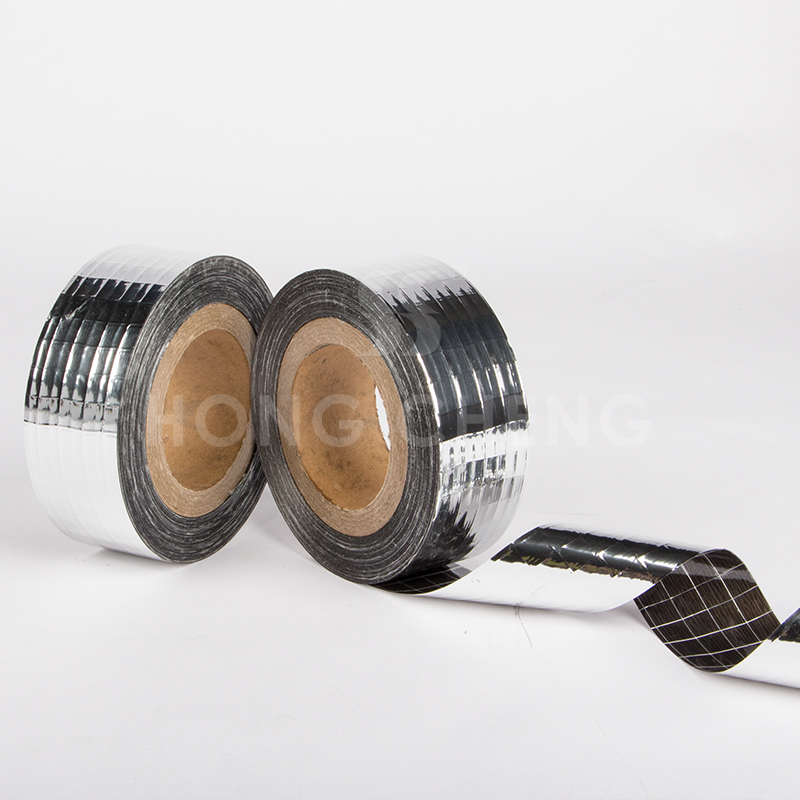
Requirements of the Duct Industry for Aluminum Film(II)
2025-03-24

I. Thermal Performance Requirements
(I) Thermal Insulation Performance
As a part of the air duct, the aluminum film is required to have certain thermal insulation performance to reduce the heat loss of cold and hot air during the transportation process in the air conditioning system and improve the energy utilization efficiency. Generally, the thermal conductivity of the aluminum film is required to be no higher than 0.15W/(m·K). During the winter heating in cold northern regions or the summer cooling in hot southern regions, using an aluminum film with excellent thermal insulation performance can significantly reduce the building energy consumption. For example, in the ventilation and air conditioning system of a large shopping mall, the air ducts made of aluminum film with a low thermal conductivity can save 15% - 20% of the air conditioning energy consumption per year compared with those made of ordinary aluminum film.
(II) High-temperature and Low-temperature Resistance Performance
The air ducts may operate in different temperature environments, and the aluminum film needs to be able to adapt to both high-temperature and low-temperature conditions. In high-temperature environments such as kitchen exhaust air ducts, the aluminum film needs to withstand high temperatures of 200℃ - 300℃ without deformation, melting, or performance degradation. In low-temperature environments such as cold storage, the aluminum film should maintain flexibility and strength at low temperatures of -20℃ - -40℃ without brittle fracture. For example, in the ventilation system of a food freezing warehouse, using an aluminum film processed by a low-temperature treatment process can ensure the stable operation of the air ducts in a long-term low-temperature environment and maintain a good ventilation effect.
II. Surface Quality Requirements
(I) Flatness
The surface of the aluminum film should be flat and smooth, without obvious unevenness, scratches, pockmarks and other defects. An uneven surface will increase the air flow resistance, reduce the ventilation efficiency, and may also lead to the accumulation of dust and impurities, affecting the air quality. For the surface flatness, generally, the height deviation within an area of 1m² should not exceed 0.5mm. In places with extremely high requirements for air cleanliness such as electronic clean workshops, the requirements for the surface flatness of the aluminum film are even more stringent, and the deviation needs to be controlled within 0.2mm to ensure uniform and stable air flow inside the air ducts and reduce the generation and carrying of dust particles.
(II) Glossiness
According to different application scenarios and aesthetic requirements, there are corresponding requirements for the surface glossiness of the aluminum film. In some commercial buildings, office buildings and other places with high requirements for the building appearance, using an aluminum film with a certain glossiness (for example, the 60° glossiness is between 40 - 60GU) to make the outer surface of the air ducts can enhance the overall aesthetic appearance of the building. While in places such as industrial plants that focus on practical functions, the requirements for the glossiness of the aluminum film are relatively low, generally between 20 - 40GU, with more emphasis on cost control and practicality.
III. Processing Performance Requirements
(I) Processability
The aluminum film needs to be easily processed into various shapes of air duct components. During the processing processes such as cutting, welding, riveting, and bonding, it should be able to ensure the dimensional accuracy and connection strength. For example, during the air duct manufacturing process, the aluminum film should be able to be quickly and accurately cut into the required shape by laser cutting, with a neat cut and no burrs, and the cutting edge should not affect the quality of subsequent welding or riveting. In terms of welding, when using high-frequency welding or argon arc welding, the aluminum film should be able to be well welded with other components, with a firm weld seam and good sealing performance to ensure the integrity and airtightness of the air duct system.
(II) Compatibility with Other Materials
In the manufacturing of air ducts, the aluminum film is often used in combination with other materials such as thermal insulation materials and sealants. The aluminum film needs to have good compatibility with these materials and should not undergo chemical reactions to ensure a firm and stable combination among various materials during long-term use. For example, in insulated air ducts, after the aluminum film is bonded to the thermal insulation materials (such as glass wool, polyurethane foam, etc.), it should be able to maintain good adhesion under different temperature and humidity conditions without delamination or detachment. In the sealing process, after the aluminum film comes into contact with the sealant, the sealant should not fail or the aluminum film should not be corroded due to chemical effects to ensure the airtightness of the air duct system.
Requirements for Cable Aluminum Foil: A Multidimensional Analysis(I)
Requirements of the Duct Industry for Aluminum Film(I)