Glass Fiber Aluminum Foil
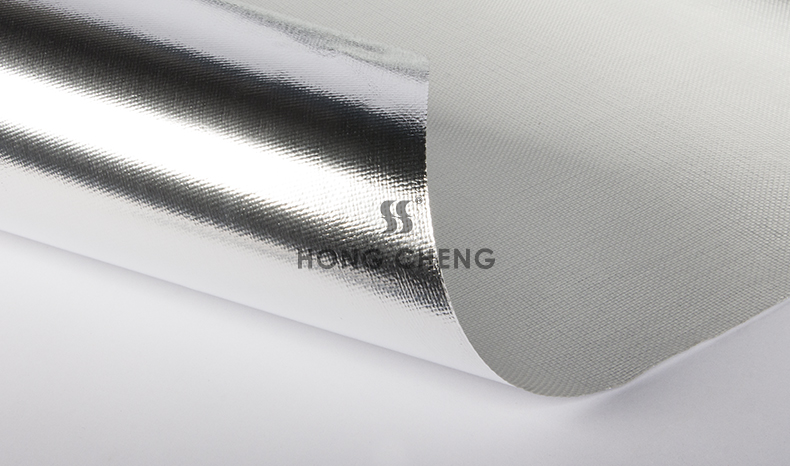
Against the backdrop of increasing demands for "temperature resistance, strength, and thermal insulation" of materials in industrial energy conservation, building insulation, transportation, and other fields, glass fiber aluminum foil, with its unique composite structure (glass fiber cloth as the base material and aluminum foil composite on the surface), has become a preferred solution to address the pain points of traditional materials such as "poor thermal insulation, easy damage, and low temperature resistance." It not only inherits the high reflective and thermal insulation properties of aluminum foil (reflectivity ≥88%) but also achieves a performance breakthrough of temperature resistance range from -40℃ to 200℃ and tensile strength ≥300N/25mm relying on the glass fiber base material. It is widely suitable for high-demand application scenarios and provides dual guarantees of "long-term thermal insulation + structural protection" for various industries.
1. Construction Industry: A Weather-Resistant Insulation and Protection Material
In the construction field, glass fiber aluminum foil mainly focuses on the two core needs of "insulation in extreme environments" and "structural protection," suitable for roof, exterior wall, and special space scenarios.
In the roof insulation and waterproofing system, glass fiber aluminum foil is often used as a "thermal reflective layer" laid between the waterproof layer and the roof surface layer: on one hand, the aluminum foil layer reflects more than 88% of solar radiant heat, which can reduce the roof base temperature by 8℃~12℃ in summer and indirectly reduce the indoor air conditioning load by 15%~20%; on the other hand, the aging resistance of the glass fiber base material (outdoor service life ≥10 years) can protect the waterproof layer from ultraviolet radiation, avoiding the problem that the traditional roof waterproof layer cracks in 3~5 years. After application in a commercial complex in a southern region, the service life of the roof waterproof system was extended from 5 years to 12 years, and the maintenance cost was reduced by 60%.
In special spaces such as high-temperature workshops/boiler rooms, the temperature resistance advantage of glass fiber aluminum foil is particularly prominent: it can be directly used as a wall thermal insulation layer, with a thermal shrinkage rate of ≤1% at 200℃, far lower than that of PET aluminum foil (which shows obvious shrinkage at 50℃). At the same time, the fire resistance of the glass fiber cloth (complying with GB 8624-2012 Grade B1 flame retardancy) can improve the fire safety level of the space, suitable for high-temperature workshops of electronics factories, boiler rooms of food factories, and other scenarios. After application in a food factory, the surface temperature of the workshop wall was reduced from 65℃ to 40℃, improving the working environment.
2. Industrial Field: A Thermal Insulation and Protection Material for Pipes and Equipment
In industrial scenarios, glass fiber aluminum foil, with "temperature resistance + high strength" as its core advantages, is mainly used for pipe insulation and equipment thermal insulation, especially suitable for high-temperature fluid transportation and scenarios around industrial kilns.
In the insulation of high-temperature pipes in chemical plants/power plants, glass fiber aluminum foil is often used as the "outer protective layer" of the insulation layer: the traditional outer protective layer of pipe insulation mostly uses iron sheets, which are easy to corrode and heavy (weight per meter ≥5kg), while the weight of glass fiber aluminum foil per meter is only 0.8kg, and it is acid and alkali corrosion resistant (no aging in pH 2~13 environment), suitable for acid-base wastewater pipes in chemical enterprises and steam pipes in power plants (temperature ≤200℃). After a power plant replaced the outer protective layer of steam pipes with glass fiber aluminum foil, not only the construction efficiency was increased by 50% (no welding required, direct winding and fixing), but also the rust removal maintenance of the iron sheet protective layer every 3 years was avoided, saving about 200,000 yuan in annual maintenance costs.
In the thermal insulation around industrial kilns/drying equipment, glass fiber aluminum foil can be cut into any shape and wrapped around the equipment shell: its aluminum foil layer blocks the outward radiation of heat, reducing the ambient temperature around the equipment by 10℃~15℃, reducing heat waste while protecting the surrounding electrical components from high-temperature aging. After application in a drying furnace of an automobile coating factory, the service life of electrical components around the furnace body was extended from 1 year to 3 years, and the equipment failure rate was reduced by 40%.
3. Transportation Field: An Efficient Insulation Material for Mobile Scenarios
The transportation field has high requirements for "lightweight, vibration resistance, and temperature difference resistance" of materials. Glass fiber aluminum foil is suitable for the insulation needs of mobile carriers such as vehicles and ships, especially focusing on cold chain transportation and special vehicle scenarios.
In the refrigerated compartment of cold chain logistics trucks, glass fiber aluminum foil is used as the "reflective core layer" of the insulation layer: its aluminum foil layer reflects the cold energy in the compartment from radiating outward, and together with the polyurethane insulation layer, it can reduce the cold loss rate of the refrigerated compartment from 12% to less than 5%. After application in a cold chain enterprise, the endurance mileage of the truck (in refrigerated state) was increased from 300 kilometers to 450 kilometers, and the energy consumption of a single transportation was reduced by 25%. At the same time, the vibration resistance of the glass fiber base material (no delamination after 100,000 vibration tests) can adapt to the bumpy road conditions of trucks, avoiding the problem of delamination of traditional PET aluminum foil during vibration.
In the ship engine room/high-temperature pipes, the moisture resistance and salt spray resistance of glass fiber aluminum foil (no corrosion after 1000 hours of salt spray test) become core advantages: the ship engine room environment is humid and contains salt, and traditional aluminum foil is easy to oxidize and rust. However, glass fiber aluminum foil can be used as the thermal insulation layer of the engine room pipes, which not only blocks the heat diffusion of high-temperature pipes (protecting the safety of engine room personnel) but also resists salt spray corrosion. After application in an ocean-going cargo ship, the service life of the thermal insulation layer of the engine room pipes was extended from 2 years to 8 years, and the maintenance frequency was reduced by 75%.
With the upgrading of material performance requirements in various industries, the application of glass fiber aluminum foil will further expand to "higher temperature resistance" (such as adapting to 300℃ industrial kilns) and "more lightweight" (such as thermal insulation of new energy vehicle battery packs). In the future, by optimizing the glass fiber cloth density (increasing strength to 400N/25mm) and improving the aluminum foil composite process (enhancing weather resistance), it will further meet the needs of high-end scenarios and become a core material for "energy conservation + protection" in multiple fields.
How to Extend the Service Life of Aluminum Foil Woven Film
Flame-Retardant Black Adhesive Aluminum Foil