Green Upgrades and Export Trends in Tea Packaging Foil Laminates
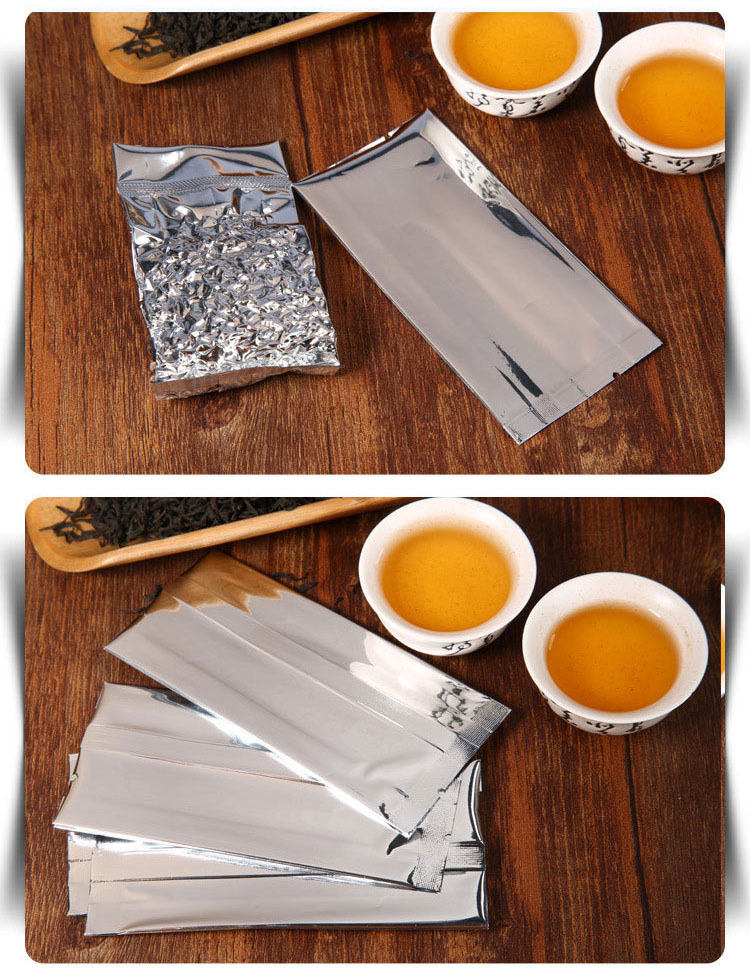
The domestic tea market in China continues to expand, and tea exports are showing signs of recovery. According to data from the China Chamber of Commerce of Foodstuffs and Native Produce, the export volume of green tea, oolong tea, scented tea, and other major categories remained stable in 2025. At the same time, packaging requirements for Europe, North America, the Middle East, and Southeast Asia are upgrading rapidly. Tea is highly sensitive to moisture, oxygen, light, and foreign odors. The barrier performance and freshness-preservation capability of its packaging materials directly determine the final product quality. Aluminum-plastic composite films, valued for their excellent light shielding, moisture resistance, heat-sealability, and printability, have become the mainstream material for small tea pouches, stand-up bags, vacuum packages, and gift-box inner bags.
1. Structural Evolution of Foil Laminates in Tea Packaging
Traditional tea packaging relied mainly on plain aluminum foil or metallized film. While these materials provided some light protection, they lacked stiffness and heat-seal strength, making them unsuitable for high-speed automatic packaging lines. With the maturation of lamination and extrusion coating technologies, PET/AL/PE three-layer laminates and aluminum foil PE composite heat-seal films have gradually become the industry standard.
In the PET/AL/PE structure, the PET outer layer provides mechanical strength, dimensional stability, and a printable surface. The aluminum foil middle layer, typically 6 to 12 microns thick, blocks light, oxygen, and water vapor. The inner PE layer acts as the heat-sealant, creating a stable and leak-free seal at the sealing temperature. For premium teas or products requiring a long shelf life, some manufacturers use a four-layer structure such as PET/AL/PA/PE, adding a nylon layer between the foil and PE to improve puncture resistance and retort performance.
Aluminum foil PE composite heat-seal films offer a simpler structure, controllable cost, and a wide heat-seal window. For everyday tea, tea bags, and small hotel packs, this material delivers adequate barrier performance while reducing unit packaging cost, making it a common choice for large-scale procurement.
2. Green Packaging Trends Drive Downgauging and Recyclable Design
Under the dual-carbon targets and tightening EU packaging regulations, the tea packaging sector is undergoing a green transformation. Material downgauging is the first priority. By optimizing aluminum foil thickness, partially replacing foil with high-barrier metallized film, and enhancing the functionality of the PE layer, some tea packaging structures have been reduced from over 120 microns to below 80 microns. This reduces both raw material consumption and transportation-related carbon emissions.
Recyclable design is another major trend. Conventional aluminum-plastic composite films combine PET, aluminum, and PE, which are difficult to separate and have low recycling value. The industry is therefore exploring mono-material solutions, such as all-PE metallized films or co-extruded laminates compatible with specific recycling streams. However, for green tea, light-style oolong, and scented tea that demand high barrier performance, aluminum foil-based laminates remain irreplaceable. A more practical current approach is to reduce redundant material through structural optimization while sourcing traceable, environmentally responsible substrates from upstream suppliers.
In addition, the use of water-based inks, solvent-free laminating adhesives, and biodegradable heat-seal coatings is expanding. These process improvements reduce volatile organic compound emissions and make it easier to pass food-contact material compliance reviews in Europe and North America.
3. New Requirements in Export Markets for Tea Packaging Films
The structure of China's tea export market is changing. European buyers focus more on food safety and environmental compliance, requiring packaging materials to meet EU Regulation (EC) No 1935/2004 on food contact materials. They also impose clear requirements on heavy metal migration, sensory testing, and substance declarations. North American buyers prioritize reproducibility, compatibility with automatic packaging lines, and clarity of printed labeling. Although Middle Eastern and Southeast Asian markets are price-sensitive, they also value stiffness, print gloss, and moisture resistance.
To address these differences, tea packaging aluminum-plastic composite films for export orders need to focus on several points. First, water vapor transmission rate matters. For tea sold to high-humidity regions, aluminum foil thickness should generally be no less than 9 microns, combined with a high-barrier PE inner layer. Second, oxygen barrier performance depends on the integrity of the aluminum foil layer. Any pinholes or wrinkles can significantly reduce overall barrier performance. Third, odor control is critical. Residual adhesive odor and substrate smell must be kept to a minimum to avoid affecting tea aroma. Fourth, printability is important. Overseas clients often require multi-color printing, matte finishes, or spot UV effects, which place higher demands on the corona treatment and ink adhesion of the PET outer layer.
4. Procurement Considerations for Tea Packaging Foil Laminates
Tea packaging companies should not evaluate aluminum-plastic composite films on price alone. Instead, they should assess material structure, functional fit, and supply stability. For ordinary tea bags and everyday tea, aluminum foil PE composite heat-seal films offer a simple structure and good cost performance. For premium green tea, rock tea, and pu-erh tea, PET/AL/PE three-layer laminates are recommended to balance barrier, stiffness, and print quality.
In terms of specifications, common roll widths range from 200 mm to 800 mm, and thicknesses range from 60 to 140 microns. The exact choice depends on bag type, filling speed, and sealing temperature. The melt flow index and co-polymer ratio of the PE heat-seal layer affect seal strength and open time. High-speed packaging lines usually require low coefficient of friction and high heat-seal strength formulations. The surface quality, pinhole rate, and tensile strength of the aluminum foil layer are key indicators determining barrier performance, and these should be specified in the purchase contract.
When selecting a supplier, priority should be given to lamination equipment stability, slitting accuracy, batch consistency, and availability of food-contact material test reports. For export orders, the supplier should also be able to provide material composition declarations, migration test reports, and traceable batch records.
Tea packaging aluminum-plastic composite films are now at the intersection of green upgrading and export expansion. When selecting materials, companies must respond to environmental regulations and consumer expectations for sustainable packaging, while also meeting foreign standards for food safety, barrier performance, and print quality. Hangzhou Hongcheng Technology specializes in the research, development, and production of aluminum foil composite materials and PE extrusion-coated laminates. We supply PET/AL/PE three-layer laminates and aluminum foil PE composite heat-seal films for tea packaging, with customization available for thickness, width, and structure. Customers with relevant needs are welcome to contact us.
+86 13758223270、Email: wendy@hcdxcl.com.cn
—Techfoil
How to Select AL/PET Shielding Tape for FTP/STP Network Cables: A Consultant's Sourcing Guide
How to Select AL/PE Waterproof Foil Laminate by Roof Type and Climate?